Pacman Frog Cleanup Crew
The honest answer is that a Pacman frog flips the usual cleanup crew question around: instead of asking whether the crew is safe around your animal, you have to ask whether your animal is safe to keep a crew around, because Pacman frogs are ambush predators that will strike at almost anything that moves and fits in their mouth. Springtails are the safest default, since they are too small and fast to be worth a strike. If you want isopods too, keep it to Powder (Porcellionides pruinosus) or Dwarf White (Trichorhina tomentosa) only, in small numbers, in a heavily planted tank with plenty of cover, and go in with realistic expectations: yes, your frog will eat some. Our springtail cultures are the place to start.
Too small and fast to be worth a strike
Small enough that a loss is minor, not a size risk
A real, expected trade-off, not a failure
The honest answer: springtails first, isopods with caution
Most cleanup crew guides spend their time asking whether the isopods are safe around your animal. For a Pacman frog the question flips: the frog is the one with the appetite, and it will eat a meaningful share of whatever small, moving things share its tank. That does not mean skip a cleanup crew entirely, it means pick species that are a low-stakes loss and set expectations honestly from the start.
Springtails are the safe default for exactly that reason. Isopods are optional, and if you add them, keep the crew small, cheap, and easy to replace rather than treating it as a serious breeding colony you expect to hold steady.
Why a Pacman frog is not a ball python or a gecko
Every other cleanup crew guide on this site is about protecting the animal from a large, protein-hungry isopod. A Pacman frog reverses that relationship entirely. These frogs are ambush predators, sitting still and striking hard at anything that wanders within range and looks bite-sized, a well-documented feeding style that is exactly why keepers are warned not to house them with tankmates in the first place.
That means the isopod safety question here is not about the isopod hurting the frog, it is about the frog eating the isopod, and possibly overreaching on something too large in the process. A Pacman frog's enthusiasm for a meal is well known to outrun its judgment about size, so the crew you choose should never give it a reason to try.
Springtails: the safe default
Springtails are the pick with the least downside. They are tiny, fast, and simply are not worth the effort for a frog that hunts by ambush rather than active pursuit, so a springtail culture can establish and do its mold control job with minimal predation pressure. This is why springtails alone are a perfectly complete answer for many Pacman frog keepers who want the mold benefit without any isopod-loss math at all.
Seed a springtail culture into the damp substrate and leaf litter, where they will do the real work of grazing mold and fungus in a tank that is kept genuinely humid. Our springtail cultures ship as living, reproducing colonies ready to establish.
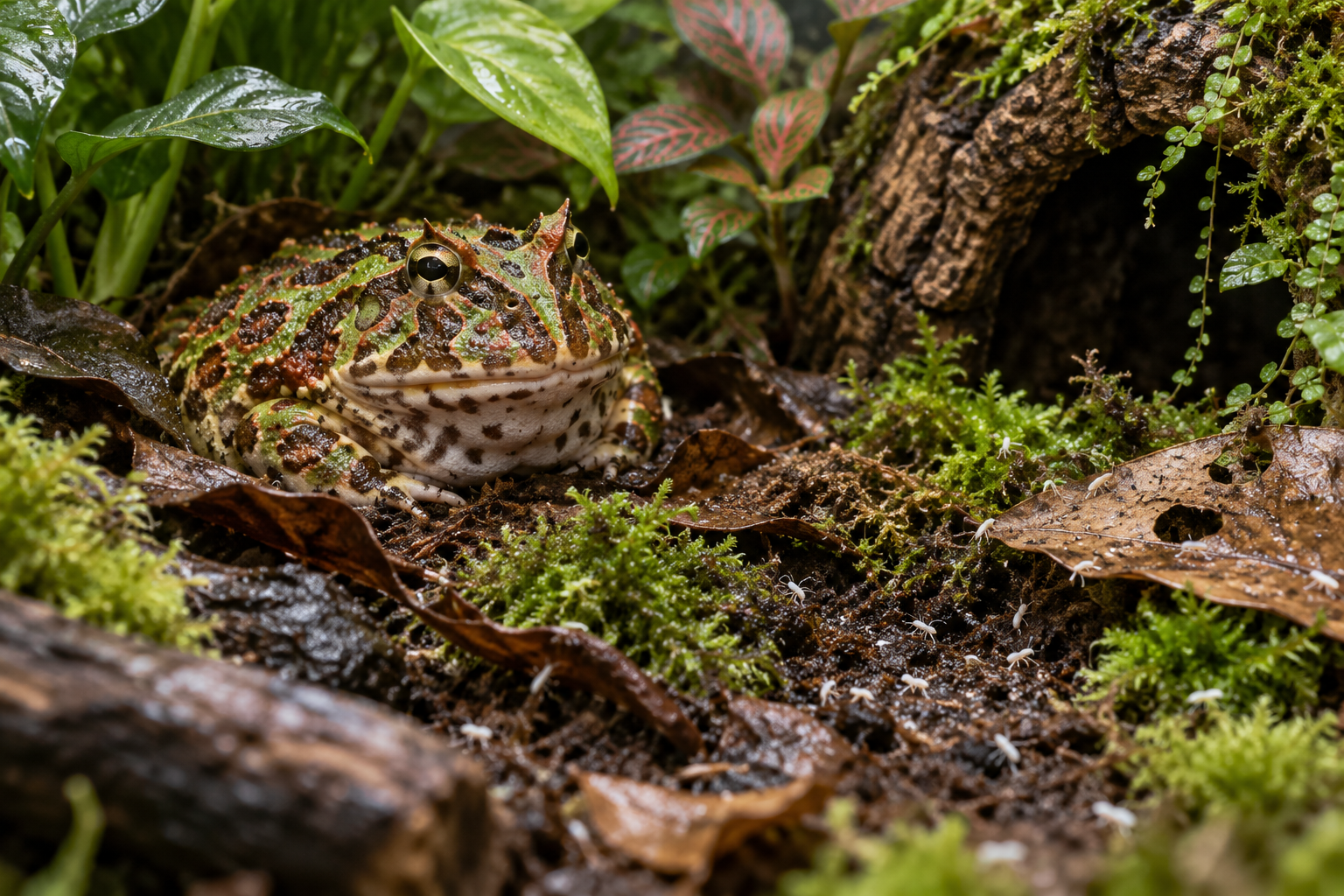
If you want isopods anyway: Powder or Dwarf White only
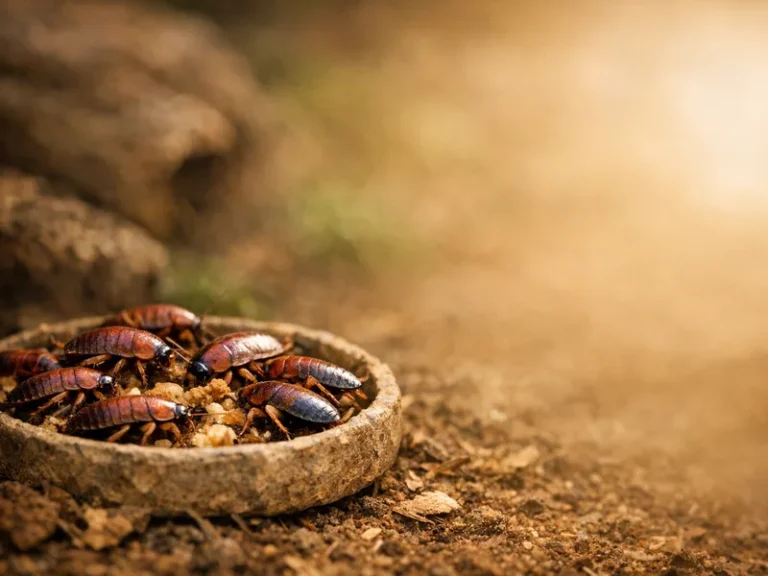
If you would still like isopods in the mix, keep it to Powder (Porcellionides pruinosus) or Dwarf White (Trichorhina tomentosa). Both are small enough that a loss is a minor one, not a large, prized colony, and small enough that a strike is a normal-sized meal rather than a gape or choking risk for the frog. That size logic is the whole reason to pick them over anything larger.
This is also exactly why large species like Dairy Cow (Porcellio laevis) or big Porcellio do not belong here. They are the wrong pick for every cleanup crew guide on this site when a live animal is involved, and with a Pacman frog the concern simply shifts from the isopod biting the animal to the animal attempting to eat something needlessly large. Keep any Dairy Cow you own in its own separate colony instead. You will find the right small species on our beginner isopods page.
Set up for maximum cover
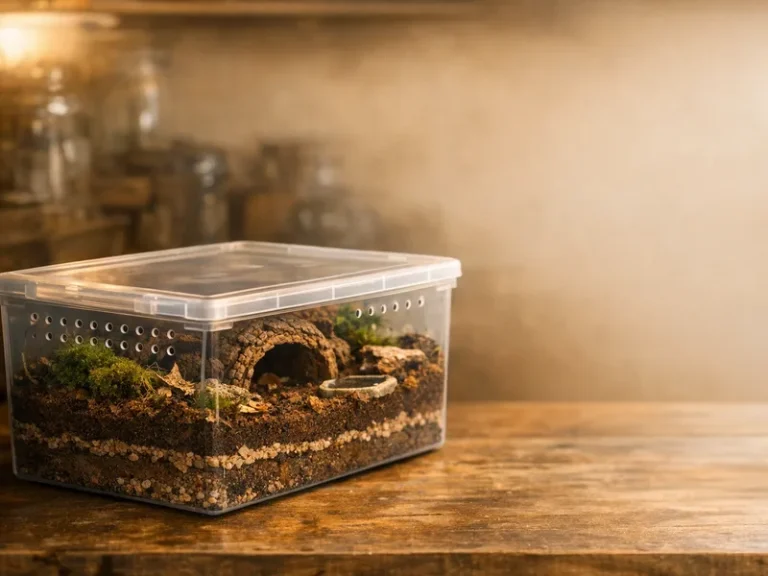
A heavily planted tank with real leaf litter depth gives isopods and springtails places to disappear into that a bare enclosure does not, which meaningfully cuts down how much the frog actually encounters. Deep substrate, live plants, and a generous leaf litter layer are not just aesthetic choices here, they are what let a small isopod population survive at all alongside an ambush predator.
Feed your frog on a normal schedule with appropriately sized feeders like dubia roaches so it is not hunting out of hunger, and resist the urge to dig through the substrate looking for isopods. The less you disturb the tank, the more cover the crew actually gets to use.
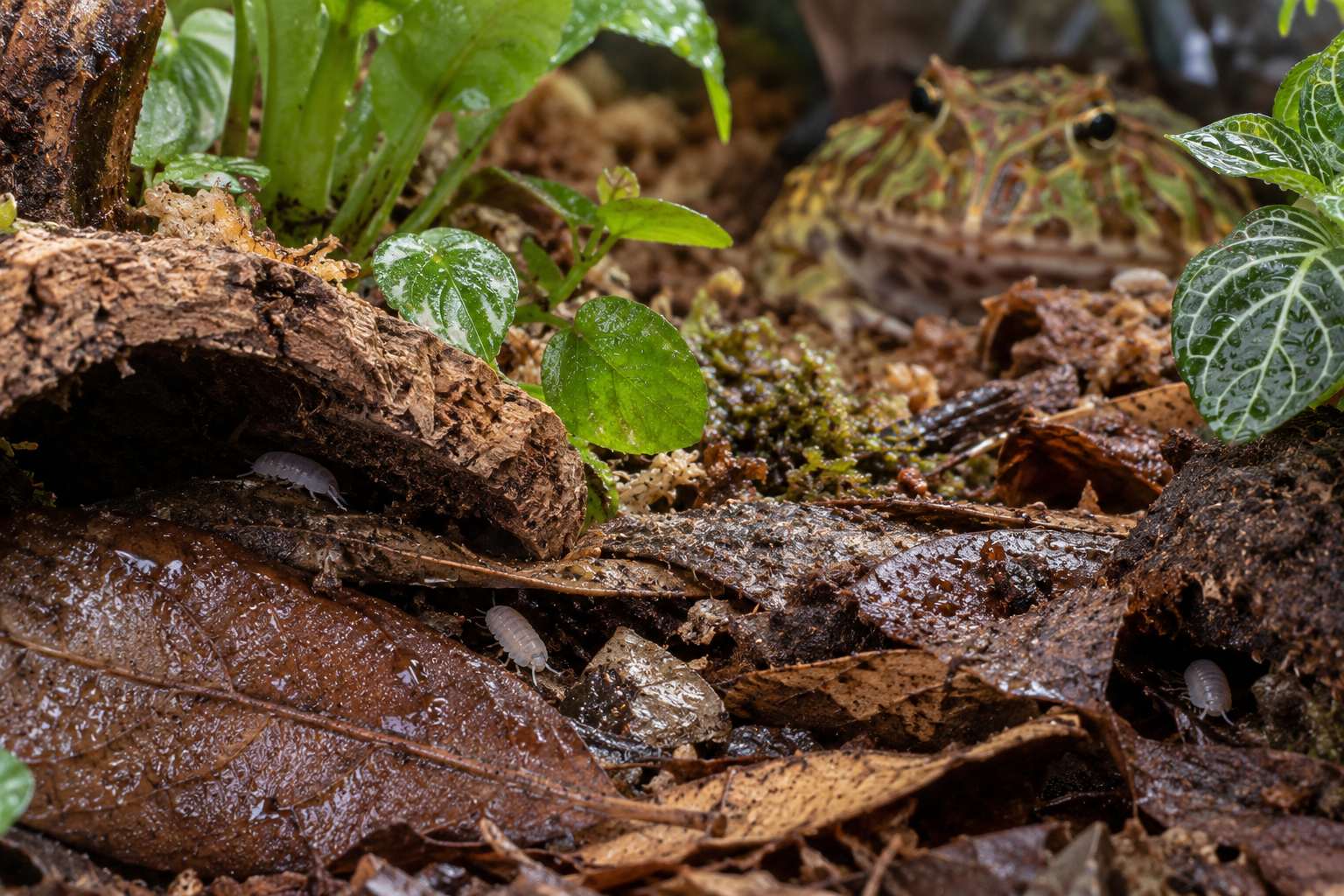
Realistic expectations, seeding, and timing
Go in expecting a Pacman frog's cleanup crew to run smaller and less self-sustaining than one in a snake or gecko enclosure, since predation is a constant, low-level drag on the population. A modest springtail culture on its own, or paired with a small starter batch of Powder or Dwarf White, is a reasonable starting point, and it is fine if the isopod side never turns into a booming colony the way it would in a predator-free tank.
Seed the crew into the finished, planted enclosure a few weeks before the frog moves in, or before adding it to an established tank, so the springtails in particular have time to settle in. Even a crew that stays modest in size is still doing real mold control work, which is the main benefit you are after here.
The Safe Crew for a Pacman Frog Tank
Springtails first, small isopods only if you want them. Tap to add, then check out in one trip.
Frequently Asked Questions
Written by the TC INSECTS breeding team · Porter, Texas · Live Arrival Guarantee on every order
Have a care question? Ask our community.
Join Reptile Keepers USA, our free Facebook group for reptile, amphibian and invert keepers. Share your setups, get care help and swap feeder tips.
Join the free group