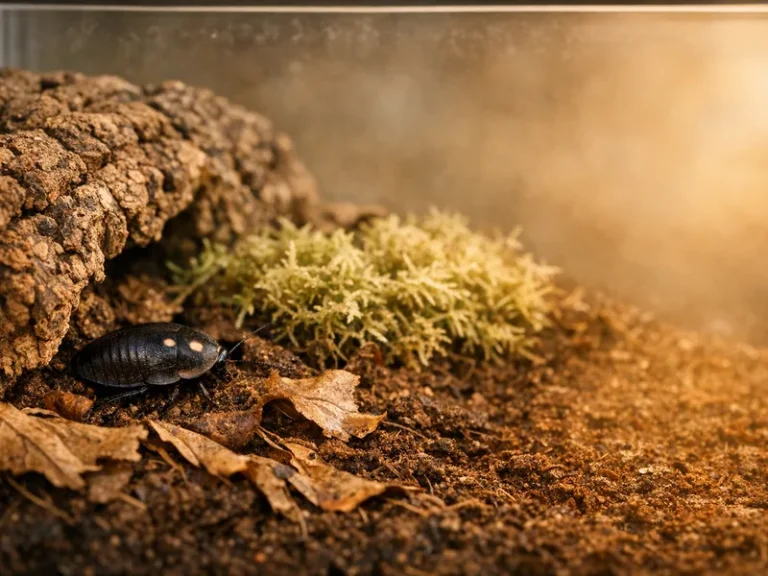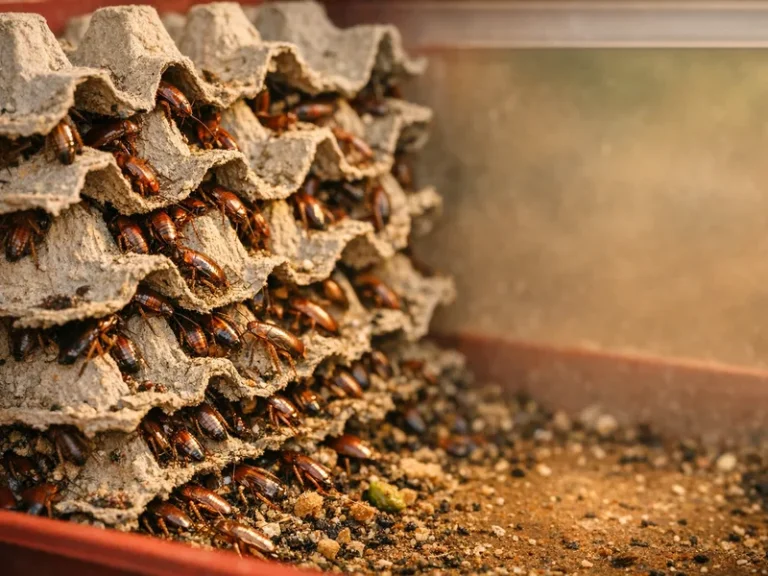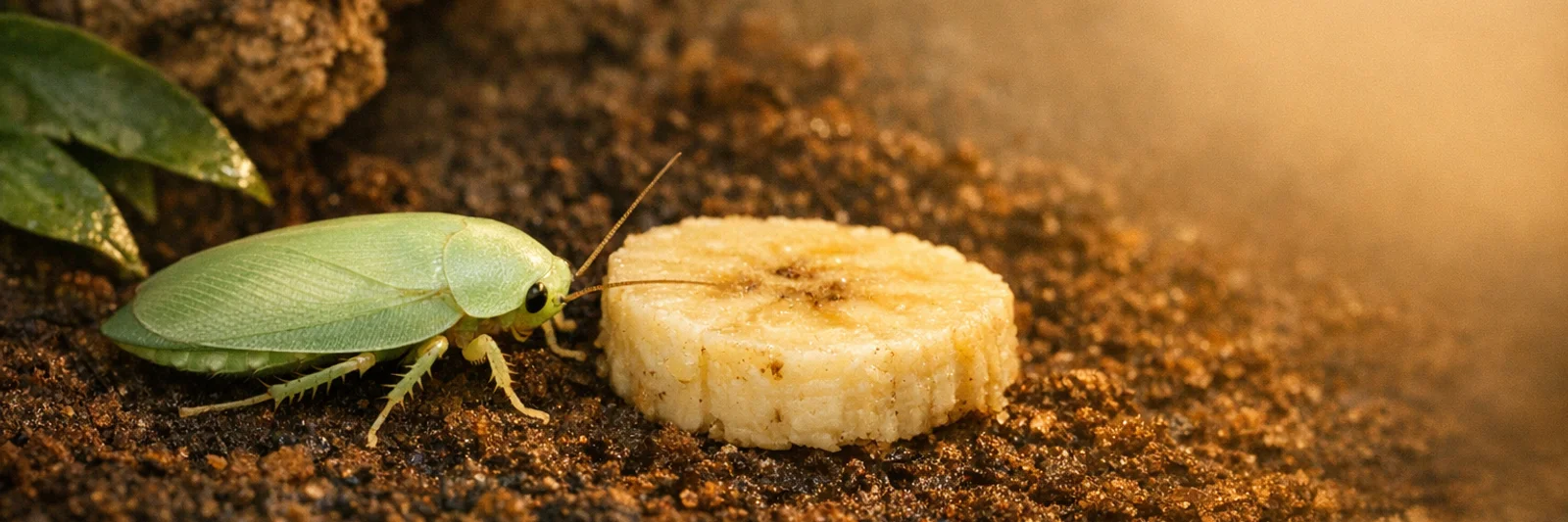
The Giant Green Banana Roach (Panchlora sp. "Giant") is the larger, rarer sister species to TC's standard Green Banana Roach, with pale green adult females reaching about 28 mm against the standard species' 24 mm. Keep the substrate consistently moist, never let it dry out, at 72 to 85F, since this species tolerates care lapses less forgivingly than its smaller cousin. Adult males fly strongly toward light, and female flight is genuinely unsettled in the hobby, so plan for both. The exact species identification is still unconfirmed in the hobby, sold under the "sp." designation rather than a formal scientific name.
About 17 percent larger than the standard Green Banana Roach.
Breeding peaks near 80F; below the low 70s, output drops.
Never let it dry out; that lapse is what crashes this species.
Giant Green Banana Roach vs. the Standard Species: What's Different
The "Giant" name is honest but modest: adult females of this line reach about 28 mm against the standard Green Banana Roach's 24 mm, roughly a 17 percent size increase that is noticeable side by side but not dramatic. Males show a bigger jump, about 18 mm here versus 12 to 15 mm on the standard species. Color differs too; Giant adults run a paler, more washed-out green than the standard species' brighter green with its yellow side stripe.
Why it's sold as Panchlora sp. instead of a formal species name
Genus-level identification is certain; this is a true Panchlora, matched on body shape, color pattern, and reproductive biology. What's unconfirmed is the exact species: some breeders speculate it may be Panchlora exoleta, but no one has verified that against type specimens, so the trade name "Giant" identifies the captive hobby line rather than a formally described species. For nearly every buyer, feeder use, display, or casual collecting, that distinction doesn't change anything about how the animal is kept.
Temperature, Humidity and the One Mistake That Crashes This Species
Run the active range at 72 to 85F, with the best breeding near 80F; the colony tolerates brief cool dips but will not breed actively once temperatures drop into the low 70s. Substrate is the part that separates this species from most other exotic roaches TC sells: it needs to stay consistently moist, at roughly a wrung-out-sponge consistency, not just damp on the surface.
Letting the substrate dry out completely is the single most common way keepers run into trouble with this species. Unlike the standard Green Banana Roach, which tolerates a missed misting or two without much drama, the Giant line is documented by breeders as more sensitive to care lapses: forgetting water for a week, or letting humidity drop too low, can stall breeding faster than it would in a more forgiving species. A colony with steady care is genuinely easy; the risk sits mostly in the first few weeks after arrival or after a lapse in attention.
Setting Up a Moist, Escape-Proof Enclosure
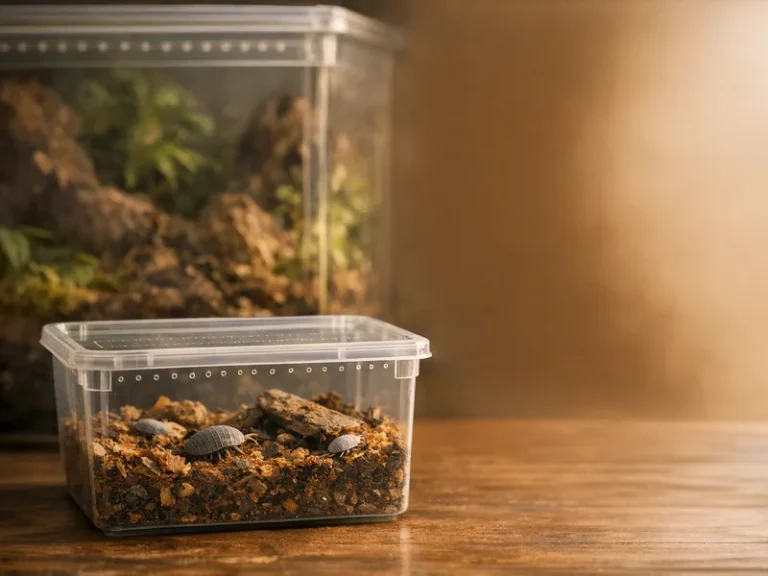
Use 2 to 3 inches of coco fiber, peat moss, or organic potting soil, kept consistently damp, since nymphs burrow and need moist ground to do it in. A 5 to 10 gallon container suits 25 to 50 starter nymphs, with room to scale up as the colony matures.
Containment needs to plan for flight from both sexes: adult male flight is confirmed, and female flight is still an open question in the hobby (see TC's full flight guide for the species-by-species breakdown). The safest plan treats both sexes as flight risks either way, since a gasket-sealed lid or a tight-fitting container with a petroleum-jelly barrier band around the rim handles either outcome without extra work.
What Giant Green Banana Roaches Eat, and Why Mold Is the Real Risk
This species is omnivorous and not picky: banana especially, plus apple, pear, melon, and starchy vegetables like squash or sweet potato, alongside a dry feed for balance. The moist substrate this species needs also makes mold and pest issues more likely than in a dry-leaning setup, so remove uneaten fresh food within a day or two rather than letting it sit.
A bioactive cleanup crew earns its keep here more than in most roach enclosures. Springtails and isopods process leftover fruit and help keep the moist substrate from turning into a mold problem, which matters more for this species given its documented sensitivity to care lapses. TC's bioactive combos pair springtail and isopod cultures sized for a setup like this one.
Breeding Timeline: How Long Until You See Nymphs?
Females give birth to live nymphs rather than laying an egg case, and adult lifespan is short, 6 to 12 months, typical of the genus, so colony stability comes from overlapping generations rather than a few long-lived breeders. Breeding is meaningfully slower than the standard Green Banana Roach: a starter group of 25 to 50 mixed nymphs reaches productive output within roughly 4 to 6 months under warm, consistent care, somewhat behind the standard species' faster pace.
Plan for ongoing nymph production rather than a single breeding event, since individual adults do not live long enough to anchor a colony on their own. This is also why the species costs more per nymph than the standard line: slower breeding limits supply, care lapses cost more colony output, and the larger adult size and rarer hobby availability add to demand. All three factors push the price up together rather than any single cause.
Who Should Buy the Giant Line, and Who Should Start With the Standard Species
The Giant Green Banana Roach suits reptile keepers who want a more substantial soft-bodied feeder than the standard species provides, small chameleon and larger-gecko keepers among them, plus collectors building out the full Panchlora lineup and anyone already comfortable with the standard species wanting the size-up option. Shop TC's exotic roach lineup for current counts, sold in mixed-nymph groups of 10, 25, 50, or 100.
First-time exotic roach buyers are better served starting with the standard Green Banana Roach: it is cheaper, more forgiving of an early mistake, and breeds faster, so mistakes cost less while you learn the basics. Keepers who travel often without arranging colony care should also think twice, since this species tolerates neglect worse than most of TC's other roaches. Once you have a season of experience, the Giant line is a natural next step, and for an entirely different kind of roach, one that climbs but never flies, TC's Halloween Hissing Cockroach is worth a look too.
The Giant Green Banana Roach Kit
A moisture-focused setup for a species that doesn't forgive a dried-out bin: substrate, cover, and a vented starter-cup lid.
Frequently Asked Questions
Written by the TC INSECTS breeding team · Porter, Texas · Live Arrival Guarantee on every order
Have a care question? Ask our community.
Join Reptile Keepers USA, our free Facebook group for reptile, amphibian and invert keepers. Share your setups, get care help and swap feeder tips.
Join the free group