Mulberry Leaves or Chow? Feeding Silkworms for Best Growth

Silkworms (Bombyx mori) are obligate mulberry specialists after thousands of years of domestication, so the real question is not whether to feed mulberry, it is whether you feed fresh leaves or prepared chow. The honest answer for most keepers: no, you do not need a mulberry tree. TC's pre-made silkworm chow, which needs no mixing and keeps about a month in the refrigerator, is a complete, reliable diet that works without any foraging at all, while fresh pesticide-free mulberry leaves are the traditional option if you have access to a tree. Below is the real comparison, including how to test a new tree safely, how often to feed for the fastest growth, and the daily frass cleanup that keeps a silkworm bin healthy.
Fresh leaves or prepared chow; nothing else will do
No mulberry tree or mixing; keep it refrigerated
More frequent feeding drives faster growth
Why silkworms only eat mulberry
Silkworms are obligate specialists on the mulberry tree, genus Morus, a trait bred into them over thousands of years of silk cultivation. Unlike a mealworm or a superworm, which will eat a wide range of grain-based food, a silkworm offered anything else will simply refuse it and eventually starve.
That single fact scares off a lot of first-time buyers, since it sounds like keeping silkworms requires access to a mulberry tree. It does not, and the rest of this guide is the honest comparison between the tree route and the no-tree route.
Option 1: Commercial mulberry chow
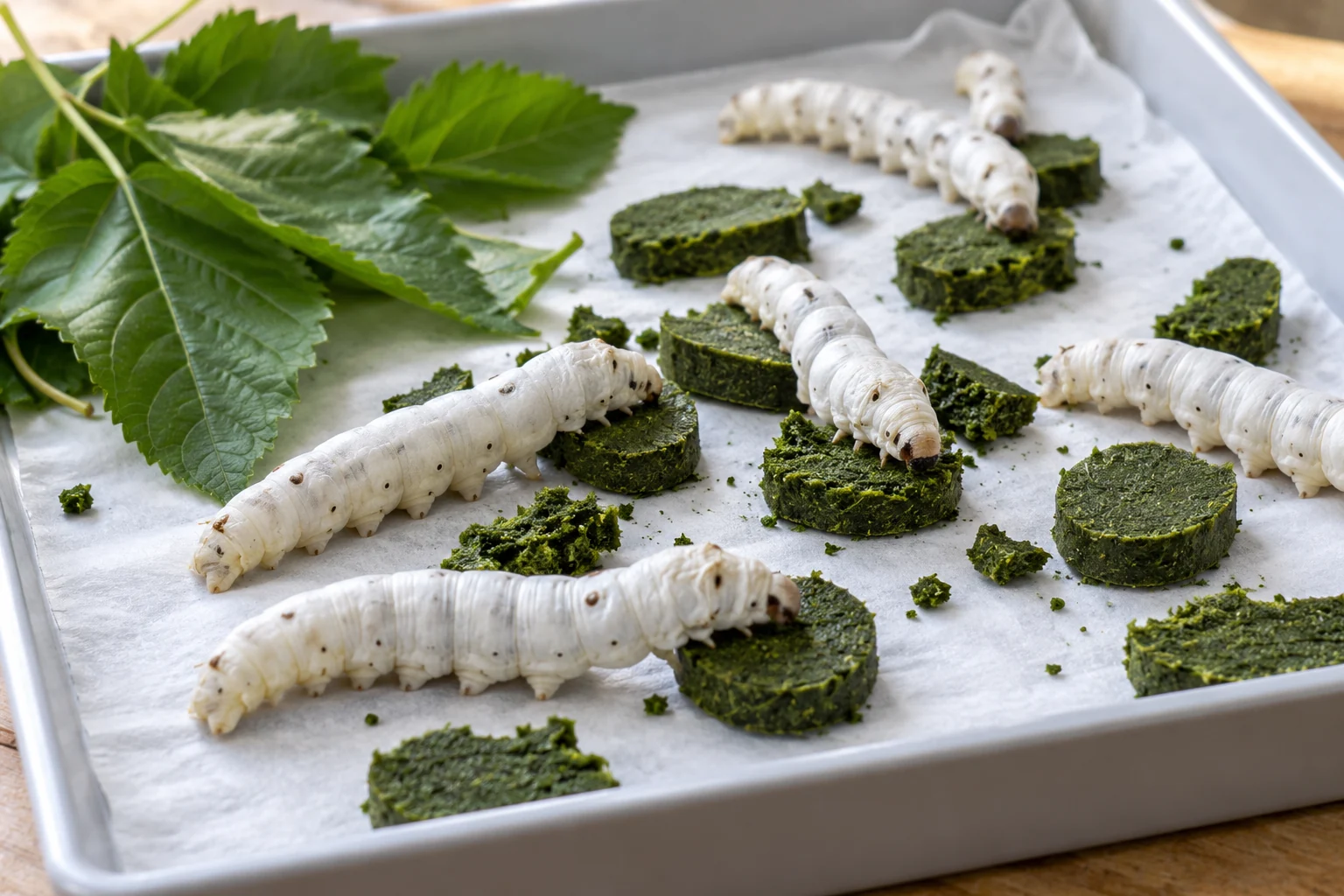
TC's pre-made silkworm chow is built on mulberry leaf powder and arrives fully sterilized and ready to use, so there is nothing to mix. It is a complete, reliable diet on its own with no foraging or seasonal tree access required. It is also consistent batch to batch, which fresh leaves from a real tree cannot always promise.
Refrigerate the chow as soon as it arrives, where it keeps for about a month, and keep the worms themselves at room temperature. Offer it right in the container the silkworms are already living in, not cold straight from the fridge, and add more as they eat through it. This is the simplest path for most keepers, especially anyone without a confirmed pesticide-free mulberry tree nearby, or feeding through a winter when leaves are not available at all. Our silkworm chow storage guide covers portion sizes and spoilage signs.
Option 2: Fresh mulberry leaves
If you have reliable access to a mulberry tree you are certain has never been sprayed with any pesticide or herbicide, fresh leaves are the traditional feeding method and plenty of keepers prefer them. The one rule that matters most: test a new tree's leaves on just a few worms first before committing your whole bin to it, since trees vary and you cannot always know a tree's full treatment history.
Never feed wet leaves. Rinse leaves if you need to, but let them dry fully first, since silkworms feeding on wet foliage are more prone to mold exposure and digestive upset. Fresh leaves are also a seasonal, location-dependent option in most of the country, which is the real practical tradeoff against year-round chow.

Which one grows silkworms faster?
Diet choice matters less for growth speed than feeding frequency does. Offering fresh food daily, or twice daily once the worms are actively growing, drives noticeably faster growth than feeding every few days, regardless of whether that food is chow or leaves. Both options support a silkworm reaching full size on a normal timeline when fed consistently.
Whichever you choose, replace food before it dries out, molds, or gets buried in frass, since silkworms will slow down or stop eating from a fouled bin. A steady supply of fresh food, offered often, is the actual growth lever, more than the leaves-versus-chow decision itself.
Daily frass cleanup and bin hygiene
Silkworm frass, the droppings, builds up fast for how small the worms look, and a bin that goes uncleaned for more than a day or two starts inviting mold, which is bad news whether the food underneath is chow or leaves. A quick daily pass, lining the container with paper towel you swap out, keeps things fresh with minimal effort.
Handle silkworms gently at all times, since they are soft-bodied and genuinely delicate, and never refrigerate them the way you might a mealworm. Cold does not pause a silkworm, it harms it, so room temperature is the rule regardless of which food is in the bin. Our hornworm growing guide covers the same container-and-cleanup logic for that other soft-bodied worm, if you are running both.
Which should you choose?
If you do not have a confirmed pesticide-free mulberry tree, are feeding through winter, or just want the simplest possible routine, choose prepared chow. If you have a tree you trust and enjoy the more hands-on, traditional route, fresh leaves work just as well, tested on a few worms first.
Either path raises a healthy silkworm, and for a full picture of where silkworms fit against dubia, superworms, and the rest of what we sell, see our staple versus treat guide and our nutrition comparison chart.
Buy Silkworms and Chow by Size
Four silkworm sizes plus the pre-made chow from the comparison above, so you can start feeding today, tree or no tree.
Frequently Asked Questions
Written by the TC INSECTS breeding team · Porter, Texas · Live Arrival Guarantee on every order
Have a care question? Ask our community.
Join Reptile Keepers USA, our free Facebook group for reptile, amphibian and invert keepers. Share your setups, get care help and swap feeder tips.
Join the free group