Cubaris murina Care
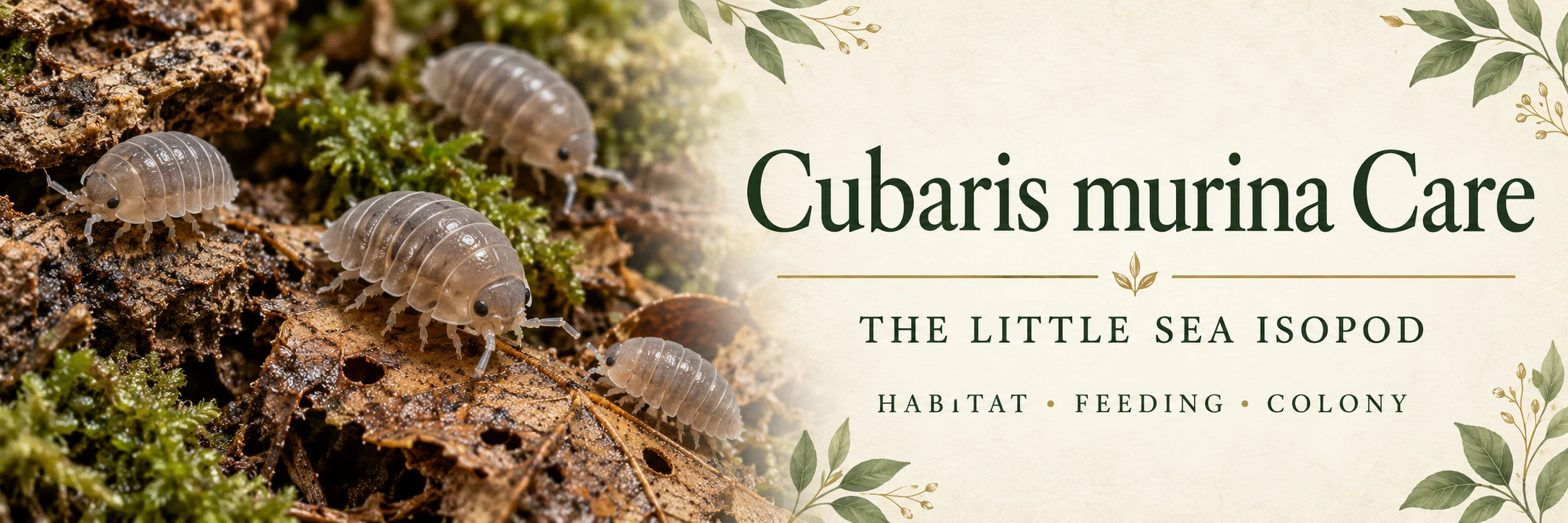
Small and quick, hides in leaf litter
65 F is the cool edge for Cubaris; sources disagree, so aim warm
Reaches a self-sustaining colony in a few months
The Little Sea isopod. The easy Cubaris.
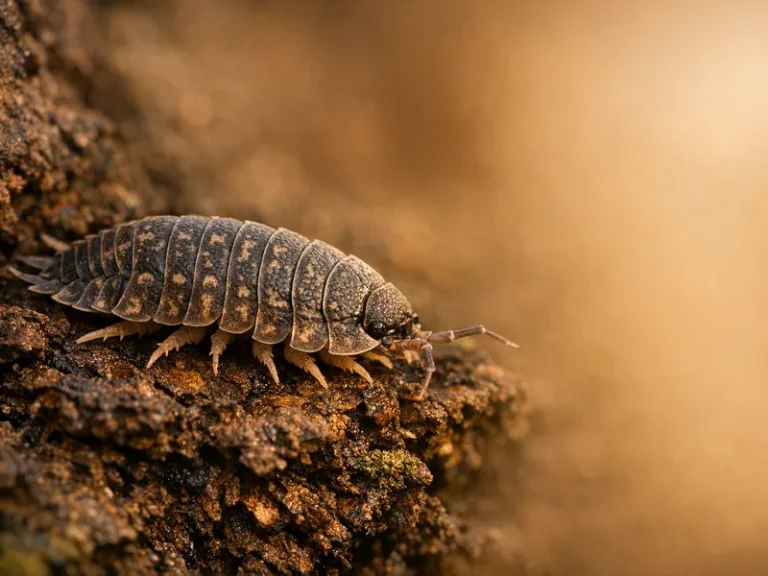
Cubaris murina, sold as the Little Sea isopod, is the Cubaris to start with: a small gray-to-tan isopod around a quarter inch long that breeds readily, tolerates a wider range than the rare cave species, and thrives in a warm, humid bin kept in the low to mid 70s F with a real moisture gradient and 2 to 3 inches of organic substrate. It is the species behind popular morphs such as Anemone and Papaya, and a starter group of 15 becomes a busy colony within a few months. This guide covers what makes murina different from the fussy Cubaris, the exact setup, feeding, the gradient that keeps them breeding, the named morphs, and the honest limits of the name Cubaris in the hobby.
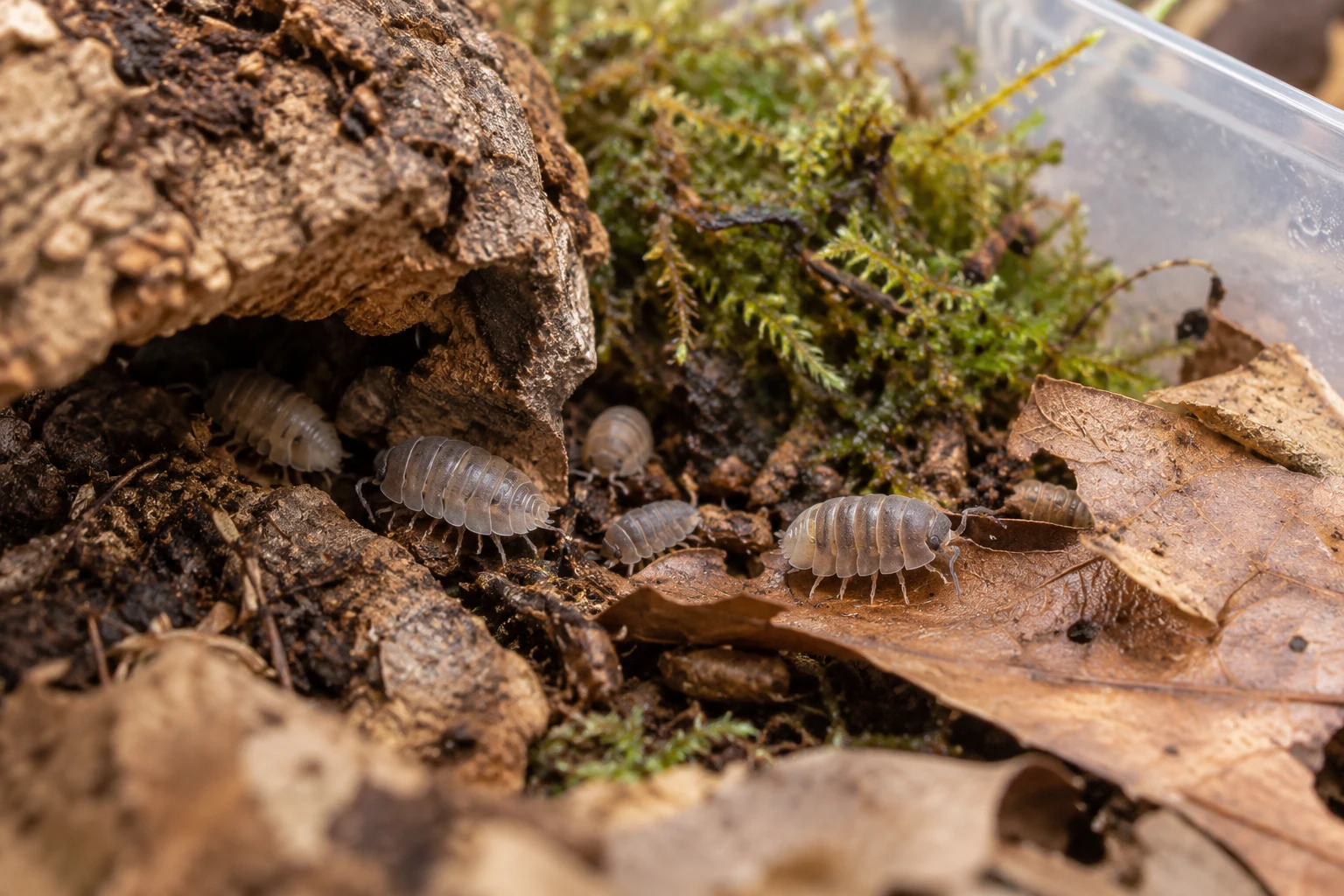
Leaf litter, warmth, and a real moisture gradient.
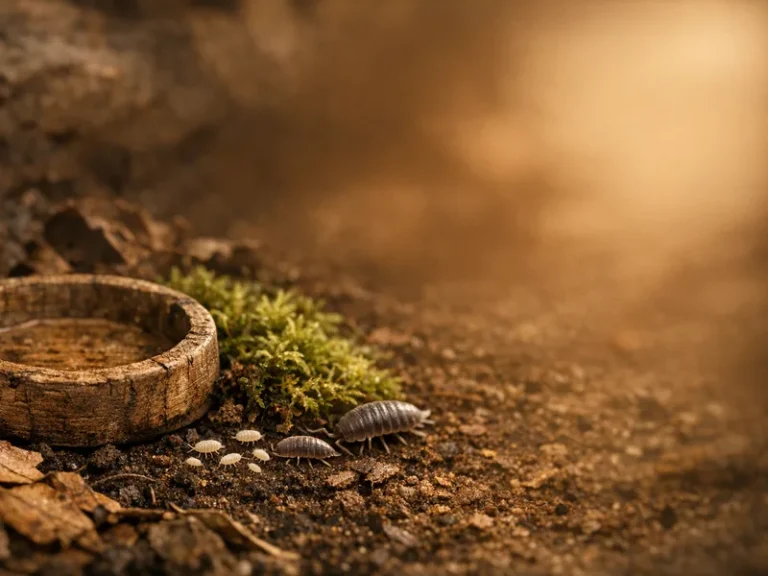
Keep a damp refuge at one end, cover the substrate with leaf litter, and let the colony settle beneath its hides.
What Cubaris murina is, and what it is not
Cubaris murina is a widespread tropical isopod, originally from the Old World tropics and now found around warm coasts and greenhouses worldwide, which is part of why it is called the Little Sea isopod. It is a true Cubaris, unlike many of the cave species sold under that genus name whose identity is unsettled, a point our beginner isopod guide calls the Cubaris name game. In the hobby, murina is the reliable, fast-breeding end of the genus, and the named color morphs, Anemone, Papaya, and others, are all selections from this one species.
Compared with Rubber Ducky, White Shark, and the other cave Cubaris, murina is smaller, faster, far more prolific, and much more forgiving of a slightly wrong bin. It is also a good deal cheaper, which makes it the right species to learn Cubaris husbandry on before spending on a rare one. The husbandry that keeps murina booming is the same husbandry the cave species need, minus their intolerance for mistakes.
Enclosure and substrate
A ventilated 6-quart shoebox suits a starter group of 15 to 30; move up to a 12 or 16-quart tote as the colony climbs into the hundreds. Fill it with 2 to 3 inches of organic substrate that doubles as food: topsoil or coco fiber blended with decayed hardwood and crushed leaf litter. Cover the surface with a thick layer of leaf litter, which is the staple diet, and add a piece of cork bark or a curl of rotting wood as a hide. Cross ventilation, a few holes on two sides, keeps the air moving without drying the bin.
Cubaris are burrowers and hiders, and a murina colony you never see is usually a healthy one. Resist the urge to dig. Lift the bark once a week to check the population and the moisture, then put it back. The Cubaris humidity and substrate guide goes deeper on substrate blends and is written for exactly this genus.
Temperature and the moisture gradient
Keep murina in the low to mid 70s F. Published sources disagree on the cool edge for Cubaris, and 65 F is where most keepers draw the line; murina tolerates a cooler night better than the cave species but breeds fastest when the bin never drops out of the 70s. No heat mat is needed in a normal home unless the room stays below about 60 F, and a bin on a shelf away from windows and vents is usually right.
Moisture is where Cubaris colonies live or die. Dampen roughly one third of the substrate, one end of the bin, and keep the rest merely moist and the far end nearly dry, so the isopods can choose. Never waterlogged. Cubaris need more humidity than a Porcellio, and murina's mancae dry out quickly, so the damp end must stay damp; mist it every few days rather than soaking the whole bin. A bin that is uniformly wet grows mold and mites and stalls breeding, while a bin that goes fully dry kills the young first.
Feeding for growth and breeding
Leaf litter and decaying hardwood are the staple and should always be present. Add a small piece of vegetable, squash, sweet potato, or carrot, once or twice a week and remove it before it molds. Protein sparingly: a pinch of fish flake or a small piece of dried shrimp weekly, because excess protein drives nipping and mites, and offer a calcium source such as cuttlebone or a calcium-bearing clay so molts go smoothly. A commercial isopod feed used lightly covers the protein and calcium in one step.
Murina is not fussy, but it is small, and a colony that looks like it is not growing is usually short on the damp end or short on leaf litter, not short on treats. If numbers stall, add litter, fix the gradient, and wait; our guide to why an isopod colony will not breed walks through the six usual reasons in order.
Morphs: Anemone, Papaya, and the rest
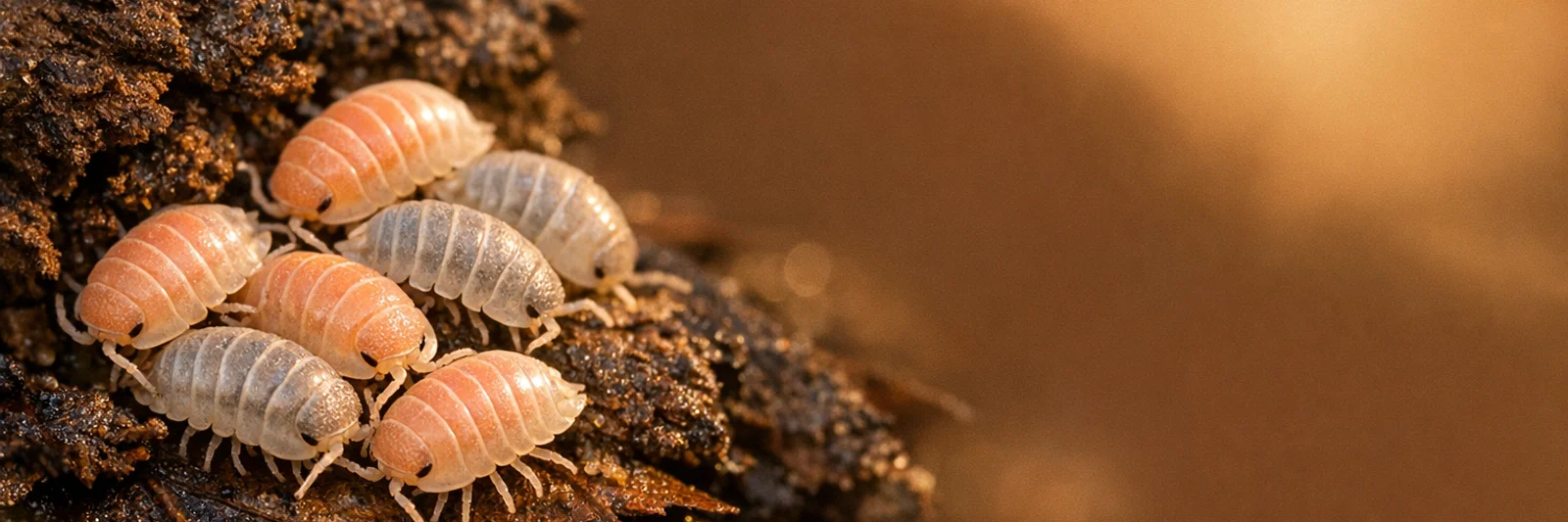
Because murina breeds fast and has been kept for years, it has produced a string of selected color lines. Anemone shows pale bodies with pink to orange tones; Papaya runs orange to peach; there are white, pied, and high-contrast lines as well. They are all the same species with the same care, and they interbreed, so keep morphs in separate bins if you want to hold a line true. Morph lines are usually sold in smaller starter counts, so give them a few months before judging the colony.
The Cubaris section carries murina morphs alongside the cave species. If you want the cheapest route into a large Cubaris colony, start with a plain murina group; if you want color, start with one morph line and resist mixing until you have a stable colony to work from.
Cleanup crew use, and when not to use them
Murina is a workable cleanup crew for warm, humid bioactive enclosures, the kind that house dart frogs, tropical geckos, and small tropical inverts, where its small size and love of damp leaf litter fit. It is a poor choice for a dry or temperate enclosure, where the Powder isopods (Porcellionides pruinosus) and Dwarf Whites (Trichorhina tomentosa) do better, and it should not be used as a crew in an enclosure that runs cool at night. Because it is small and not protein-driven, it is safe around a live animal in the way large Porcellio are not; big, hungry species belong in their own display bins, never loose with a resident.
Seed the enclosure 3 to 4 weeks before adding the animal, alongside springtails, so the crew establishes first. Otherwise, keep murina as what it is best at: a fast, forgiving, inexpensive Cubaris that teaches the genus and fills a shoebox with hundreds of isopods in a year.
The Little Sea Cubaris Kit
A murina morph group to start the colony, the leaf litter and substrate it lives in, and calcium clay for clean molts.
Frequently asked questions
Is Cubaris murina good for beginners?
Yes, it is the best Cubaris to start with. It is small, breeds quickly, tolerates a slightly wrong bin far better than the rare cave species, and costs much less. Keep it in the low to mid 70s F with a real moisture gradient and plenty of leaf litter and a group of 15 becomes a busy colony within a few months.
What temperature does Cubaris murina need?
Low to mid 70s F. Published sources disagree on the cool limit for Cubaris, and 65 F is the edge most keepers respect; murina handles a cool night better than cave Cubaris but breeds fastest when the bin stays in the 70s. No heat mat is needed unless the room drops below about 60 F.
How humid should a Cubaris murina bin be?
Humid, with a gradient. Keep one end of the substrate damp, the middle moist, and the far end nearly dry so the isopods choose, and never let the bin go waterlogged or fully dry. Murina needs more humidity than a Porcellio, and its tiny mancae dry out first if the damp end is neglected.
What is the difference between Cubaris murina and Rubber Ducky?
Murina is a small, fast, prolific tropical Cubaris that forgives mistakes and costs little; Rubber Ducky is a larger, slow-breeding cave species that needs stable warmth and humidity and is priced accordingly. The care is the same in principle, so keepers learn on murina before investing in the cave species.
Are Anemone and Papaya isopods the same species?
Yes. Anemone, Papaya, and the other named lines are color morphs selected from Cubaris murina and need identical care. They interbreed, so keep each morph in its own bin if you want to hold the line true, and give small morph starter groups a few months before judging growth.
Can Cubaris murina be a cleanup crew?
In warm, humid enclosures such as dart frog or tropical gecko vivariums, yes; it is small, not protein-driven, and safe around a live animal. It is a poor fit for dry or cool enclosures, where Powder and Dwarf White isopods do better. Seed it with springtails 3 to 4 weeks before the animal goes in.
Keep learning
Have a care question? Ask our community.
Join Reptile Keepers USA, our free Facebook group for reptile, amphibian and invert keepers. Share your setups, get care help and swap feeder tips.
Join the free group