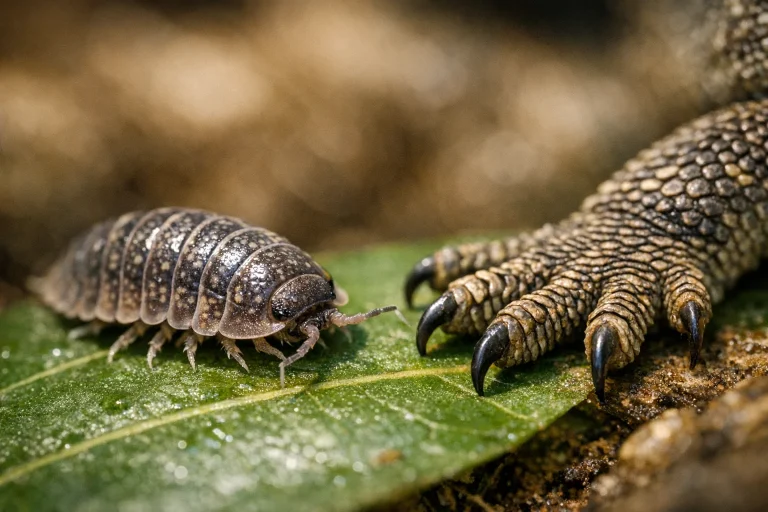
To sex a terrestrial isopod, flip it over and look at the underside of the last few segments: males carry a small extra structure, the appendix masculina, on their second pair of pleopods, while females grow no such appendix but develop a pale, plate-like brood pouch, called the marsupium, on their underside whenever they are gravid. Neither feature is obvious to the naked eye on most species, so a 10x hand lens or a macro phone camera makes the difference between guessing and knowing. Size and body shape offer a soft secondary clue, since females often run a little broader through the midsection, but that alone is not reliable enough to sex a colony. Larger-bodied genera like Porcellio and Armadillidium are the easiest starting point for a beginner, and once you can tell males from females you can pair or ratio a colony deliberately instead of leaving it to chance, whether you are building a new culture from our isopod and springtail combos or working with an existing bin.
A slender extra structure only males grow, visible with magnification
Marsupium plates show on the underside only when she is gravid
Large enough to sex with a 10x hand lens or macro photo
Flip it over: where to actually look
Sexing an isopod is a ventral-side job. Dorsal (top-down) viewing, which is how you normally watch a colony move around the bin, will not show you anything useful, so gently pick up an adult and turn it belly-up, or catch one climbing the glass and photograph it from below. Handle isopods gently and briefly for this; they are not fragile the way a millipede's legs can be, but repeated flipping and poking is stress they do not need.
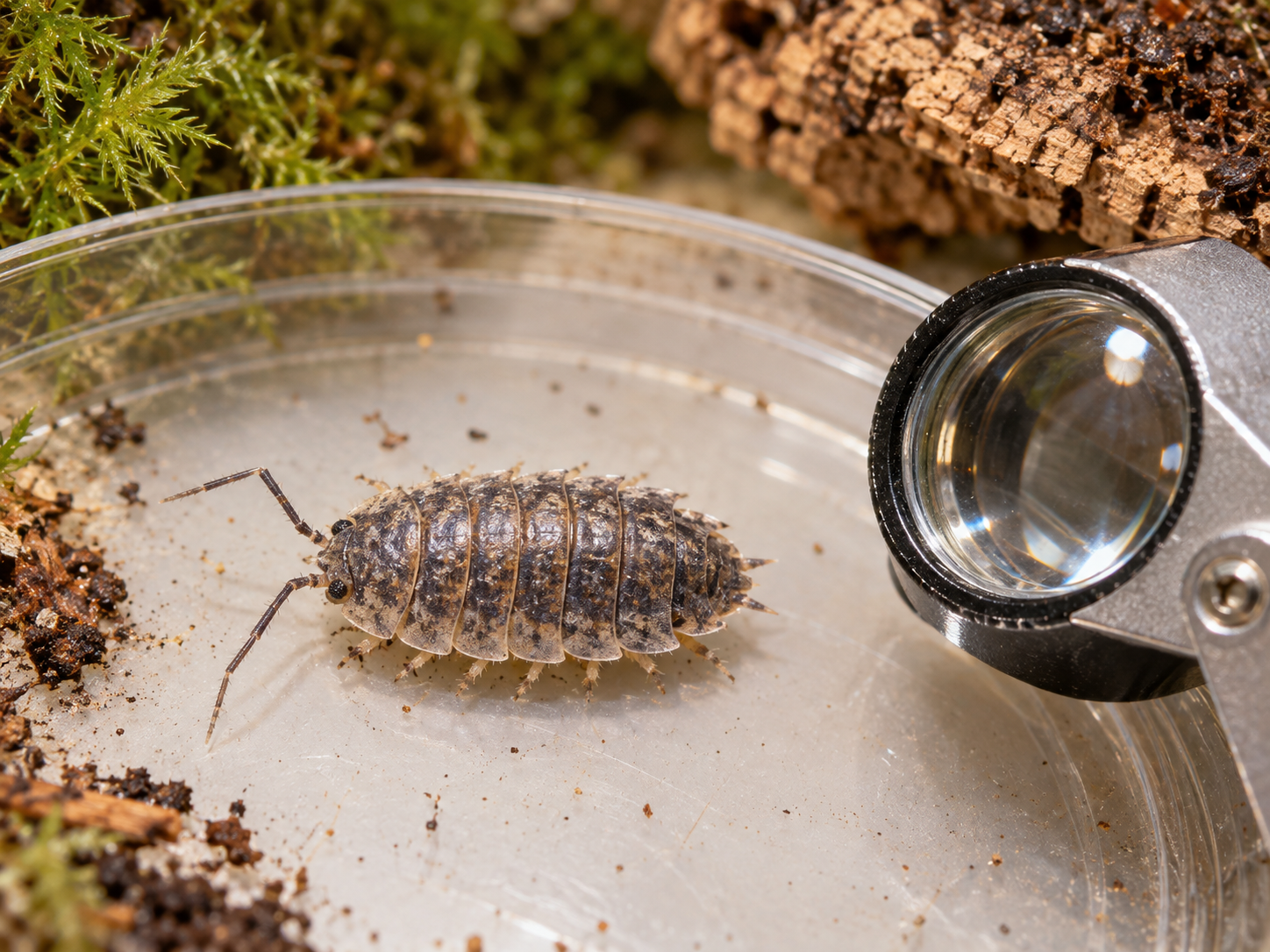
Work from the back end forward. Adult terrestrial isopods have seven pairs of true walking legs, and the structures you are looking for sit just behind the last pair, on the underside of the abdomen (the pleon), where the flattened, leaf-like pleopods overlap like shingles. This is a small area on anything but the biggest Porcellio, so a jeweler's loupe, a 10x hand lens, or your phone's macro mode is the difference between a confident answer and a shrug.
The definitive male sign: the appendix masculina
Adult male isopods carry genital papillae near the base of the last pair of legs, and just behind that, on the second pair of pleopods specifically, they grow a slender extra rod called the appendix masculina. It runs alongside the normal pleopod and is used to transfer sperm during mating. This is the single most reliable sexing feature in the hobby, because unlike body shape or size, no female structure resembles it.
It is also the hardest feature to see without help. On a large adult Dairy Cow (Porcellio laevis) or a mature Armadillidium, a decent hand lens usually shows it clearly enough once you know where to look. On small-bodied species and on juveniles of any species, the appendix has not developed yet or is simply too small to resolve without a microscope, so do not expect to sex young isopods with any confidence.
The definitive female sign: the brood pouch (marsupium)
Females do not have an appendix masculina, but they have their own unmistakable tell, and it is arguably easier to spot: the marsupium, a brood pouch formed from overlapping pale, almost translucent plates on the underside of the thorax. The catch is that it only shows up when a female is gravid, meaning she is actively carrying fertilized eggs or the tiny, pale newborn mancae before releasing them.
A non-gravid, resting female looks flat and unremarkable underneath, with no papillae and no visible pouch, which is exactly why sexing works best as a two-step process: check for the male's appendix first, and if you do not find one, watch that same individual over a few weeks to see whether a brood pouch ever develops. If it does, you have your female confirmed. If a colony is actively breeding, our guide on why isopod colonies stall covers what a healthy gravid female and a booming culture should look like.
Which species are actually easy to sex
Size decides more than anything else. Porcellio species, including the Dairy Cow and the Powder Orange and Powder Blue color forms of Porcellionides pruinosus, and larger Armadillidium like A. vulgare, are the most approachable for a beginner because the pleopods and papillae are large enough to resolve with a basic hand lens. Small, dense-bodied Cubaris and other tiny dwarf isopods carry the same anatomy, just packed into a much smaller package, so plan on a stronger loupe or a microscope if you want to sex those confidently (our beginner-friendly Cubaris guide has more on handling that genus).
One species you cannot sex the normal way at all: Dwarf White isopods (Trichorhina tomentosa) reproduce parthenogenetically, meaning the entire culture is female and produces fertile eggs without mating. There are no males to find, and that is exactly why Dwarf Whites build numbers so fast with zero pairing effort on your part, which makes them a great low-maintenance choice even though the sexing question simply does not apply.

Using what you find: pairing and ratios
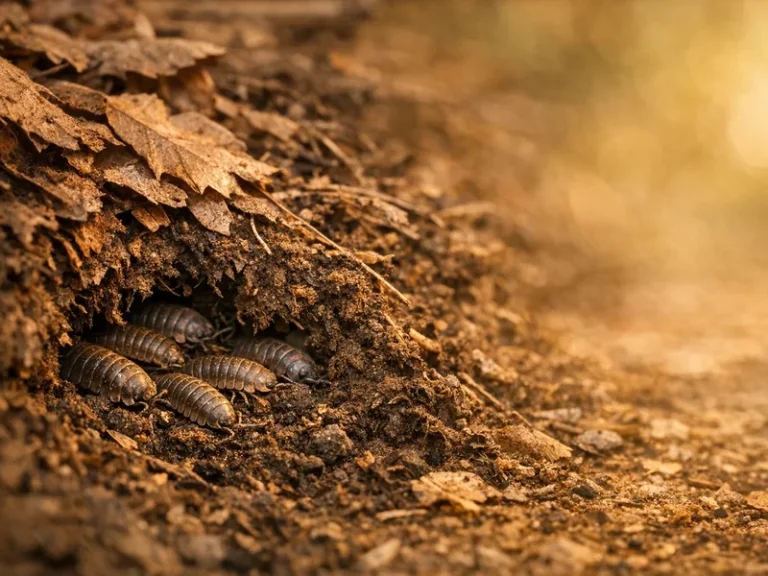
Once you can pick out a handful of confirmed males and gravid females in a mixed colony, you can start making deliberate decisions instead of hoping the numbers work out. A colony with a healthy spread of both sexes and a range of adult sizes is a good sign of an actively breeding, self-sustaining culture, while a bin where you cannot find a single male after real searching may be skewed enough to slow reproduction.
If you are building a dedicated breeding project rather than just a cleanup crew, buying a slightly larger starter group, on the order of 15 to 30 individuals rather than a bare handful, gives you better odds of an even sex ratio right out of the gate. See our guide on how many isopods to start with for counts by species, and our isopod and springtail combos are sized with that in mind.
Tools that make sexing easier
You do not need lab equipment, but a little magnification changes sexing from frustrating to straightforward. A 10x jeweler's loupe is the classic cheap option, and most modern phone cameras have a macro or portrait mode that gets close enough to photograph the underside of a still isopod and zoom in afterward on a bigger screen, which is often easier on the eyes than squinting through a loupe.
Whatever tool you use, work over a shallow dish or container rather than a bare tabletop so a dropped isopod lands somewhere safe, and keep the session short. A calm, unstressed isopod sits still long enough for a clear look; a stressed one curls up or bolts, and you will get a better look next week than by chasing it around today.
Everything You Need to Sex Your Isopods
The easy-to-sex species and pairing setup behind the guide above, ready to add in one tap.
Frequently Asked Questions
Written by the TC INSECTS breeding team · Porter, Texas · Live Arrival Guarantee on every order
Have a care question? Ask our community.
Join Reptile Keepers USA, our free Facebook group for reptile, amphibian and invert keepers. Share your setups, get care help and swap feeder tips.
Join the free group