Why Are My Springtails Climbing the Glass?
Springtails climbing the glass is almost always harmless, and it usually comes down to one of three things: the substrate is too wet or heavily condensed and they are riding the water film up the wall, the culture has boomed past what the enclosure's food and space can support, or the air near the substrate is running a little low on oxygen. None of those is an emergency, and none of them mean your Collembola or Folsomia culture is dying. The fix in most cases is simple: improve airflow, let the top layer of substrate dry back slightly, and make sure there is actually food, yeast, charcoal, or leaf litter, for the population you have. The one time to pay real attention is a sudden mass exodus paired with a bad smell or a substrate that has gone stagnant, which can point to a crash rather than a normal boom.
Riding the water film, or outgrowing the space
Crack the lid and let the top layer dry slightly
A sudden exit plus a bad smell can mean a crash
The short answer: usually normal, not a warning sign
Springtails climbing the walls of a terrarium or culture container looks alarming the first time you see it, but on its own it is not a sign of a dying colony. Springtails are surface dwellers by nature. They live and feed at the substrate's surface and in the leaf litter, and climbing is just them moving across whatever surface is available, including glass.
What pushes a normal population from a few springtails on the glass to a wall covered in them is almost always one of three things: excess moisture, an overcrowded population, or low oxygen right at the substrate surface. Work through those three and you will almost always find your answer.
Cause 1: too much moisture (they are riding the water film)
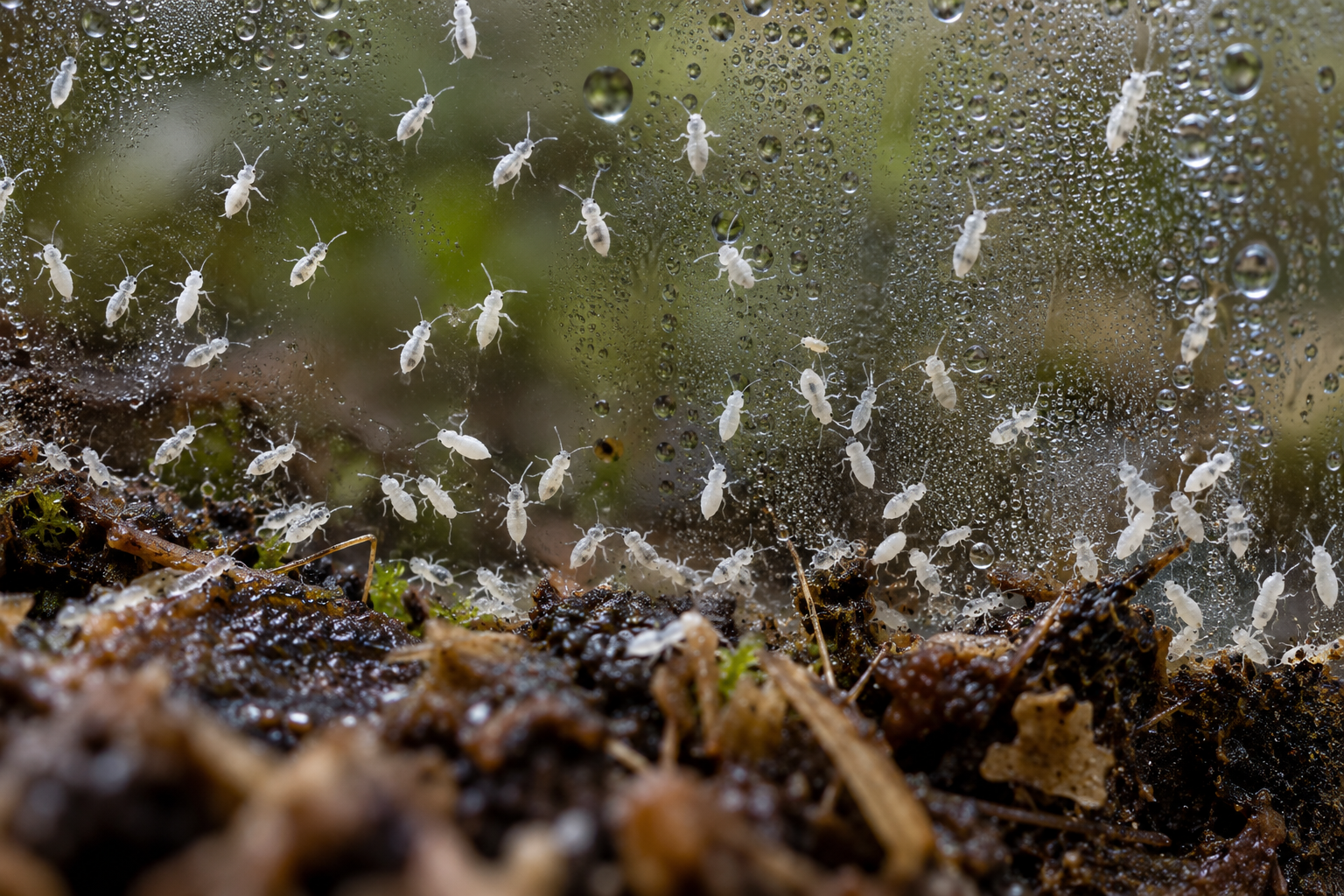
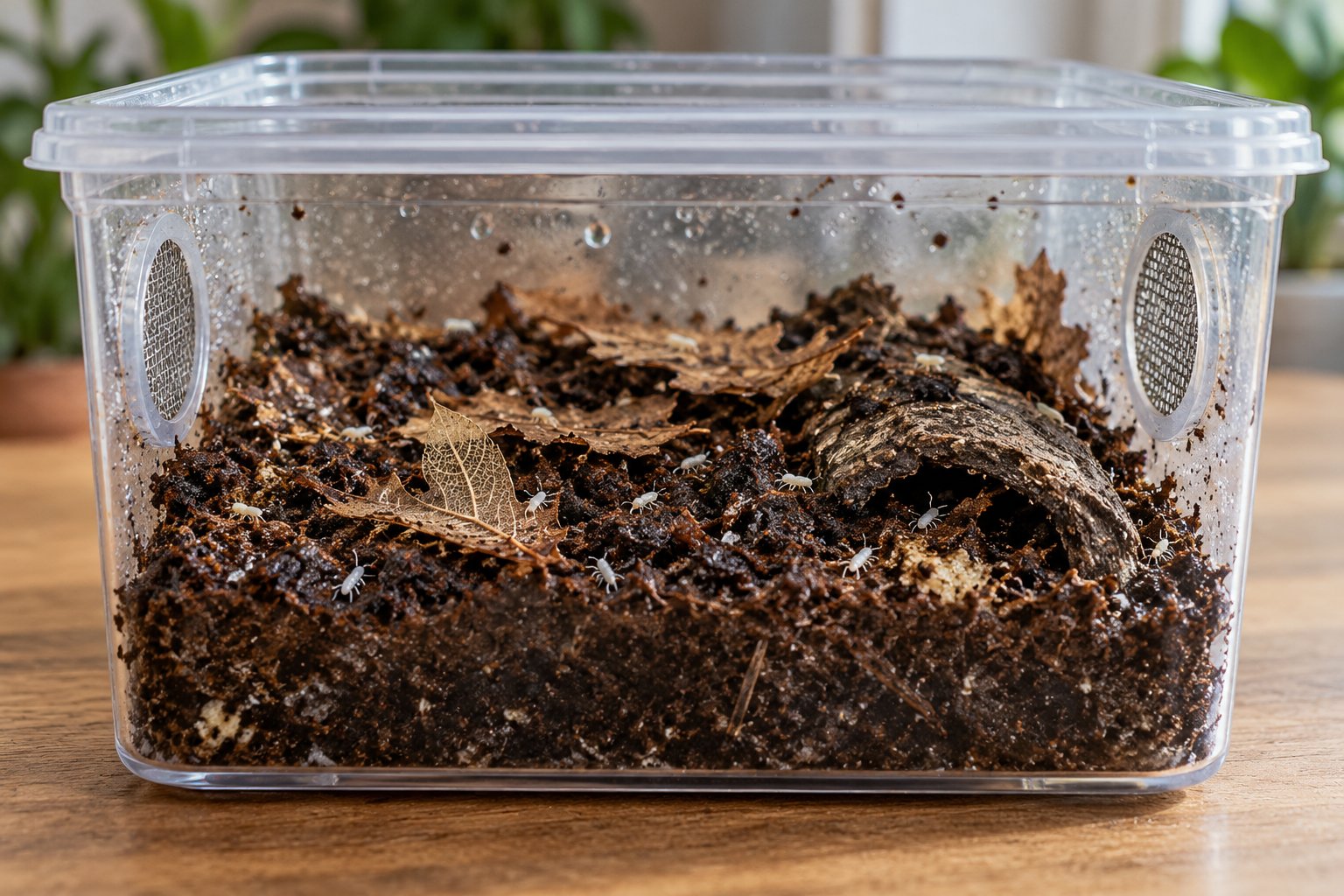
This is the most common reason. A heavily misted or overwatered enclosure builds a thin film of condensation on the glass, and springtails, which move easily across wet surfaces, end up riding that film straight up the wall. A substrate that stays soaked rather than just damp pushes them up out of it and onto any drier or more interesting surface nearby, including the glass.
The fix is to back off. Let the misting schedule ease up and give the top layer of substrate a chance to dry back slightly between waterings, without letting the whole enclosure go bone dry. Better ventilation, a cracked lid or a few extra air holes, helps the excess moisture leave instead of sitting on the glass in the first place, which our springtail culture care guide also flags as a top fix for a struggling culture.
Cause 2: a population boom outgrowing its space
A booming culture is a good problem, but it is still a reason for springtails to spread out and explore, including up the glass. If your culture has been thriving, expect to see more individuals on the move simply because there are more of them and the substrate is getting crowded.
Give them more to work with. Make sure there is actually food available, a light sprinkle of yeast, a scoop of springtail culture booster, or a scattering of leaf litter and charcoal, since a population that has eaten through its food is more likely to go wandering. If the culture has genuinely outgrown its container, splitting a portion into a fresh cup gives the crowded half somewhere to spread into besides your glass.
Cause 3: low oxygen near the substrate
Less commonly, a run of springtails on the glass points to poor air exchange down at the substrate surface, especially in a container that is sealed tight or overly saturated. Springtails and the microbes in the substrate use up oxygen and produce carbon dioxide, and in a stagnant setup that gas can build up enough to push them up and out of the substrate.
Ventilation solves this the same way it solves the moisture problem. Crack the lid, add a few pinholes, or give the enclosure a few minutes of fresh air exchange, and let the substrate breathe rather than sit sealed and soggy. A springtail population with healthy airflow and a properly drained substrate rarely needs to leave it in the first place.
When it is not normal: the rare crash scenario
Climbing the glass on its own is not a red flag, but pair it with the wrong other signs and it can be. A sudden mass exodus, most of the population leaving the substrate at once, combined with a foul or sour smell and a substrate that looks stagnant or waterlogged, is different from the usual slow trickle of a few springtails exploring the glass.
That combination can mean the substrate has gone anaerobic or fouled, and the population is fleeing rather than just spreading out. If you see that, do not just wipe the glass: get air moving, let the substrate dry back harder than usual, and remove any rotting food. Avoid the instinct to drown the problem in more water, since that is usually what caused it. If a culture is too far gone, starting a fresh cup from a healthy springtail culture is often faster than nursing a fouled one back. Our guide to a stalled springtail culture covers the same excess-moisture and airflow issues from the other direction, when a culture is not thriving at all.
Fix a Climbing or Crowded Springtail Culture
The food, substrate, and fresh-start supplies behind the fixes above. Tap to add and check out in one click.
Frequently Asked Questions
Written by the TC INSECTS breeding team · Porter, Texas · Live Arrival Guarantee on every order
Have a care question? Ask our community.
Join Reptile Keepers USA, our free Facebook group for reptile, amphibian and invert keepers. Share your setups, get care help and swap feeder tips.
Join the free group