Why Your Jumping Spider Isn’t Eating
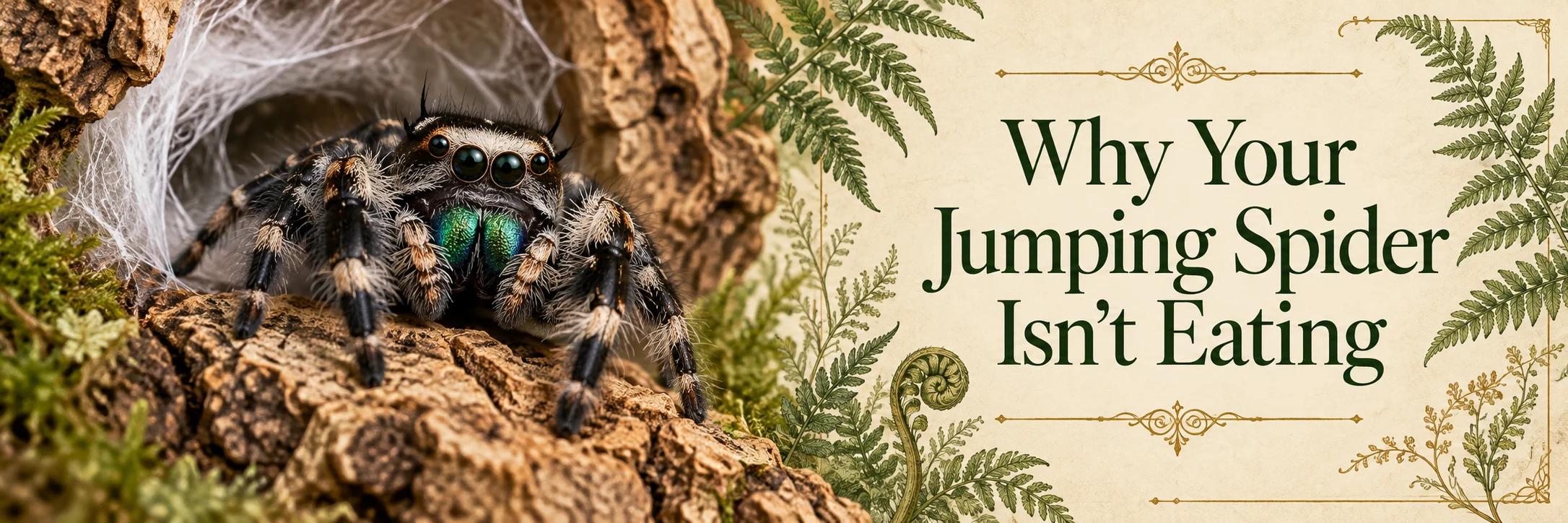
If your jumping spider has stopped eating, the most common reason by far is that it is getting ready to molt, not that something is wrong. The other three real causes are almost as ordinary: the enclosure has gotten too cold for it to want to hunt, it is still settling into a new home, or the prey you offered was too big or simply did not interest it. A healthy spider that refuses food for a few days while its abdomen still looks round and plump is behaving completely normally. Work through the four reasons below, and see our molting or dead guide the moment you spot a sealed silk retreat.
Darkens, seals into a silk retreat, stops eating for days
Normal room temp is 70-80°F; no heat lamp needed, just a warmer spot
Only worrying if paired with a shriveled, shrinking abdomen
The four real reasons, at a glance
Nine times out of ten, a jumping spider that suddenly stops eating is not sick. It is either about to molt, sitting somewhere too cold to feel like hunting, still settling into a new enclosure, or simply unimpressed by the prey you offered. Jumping spiders are voracious, visual hunters by nature, so a real, prolonged fast is the exception, not the rule.
The fastest way to sort out which one you are dealing with is to check the basics: has it sealed itself into a silk retreat, has the room gotten cold, is the enclosure brand new, and is the prey noticeably bigger than the spider's own body? Answer those four questions first, then work through the fixes below.
Reason 1: it's getting ready to molt
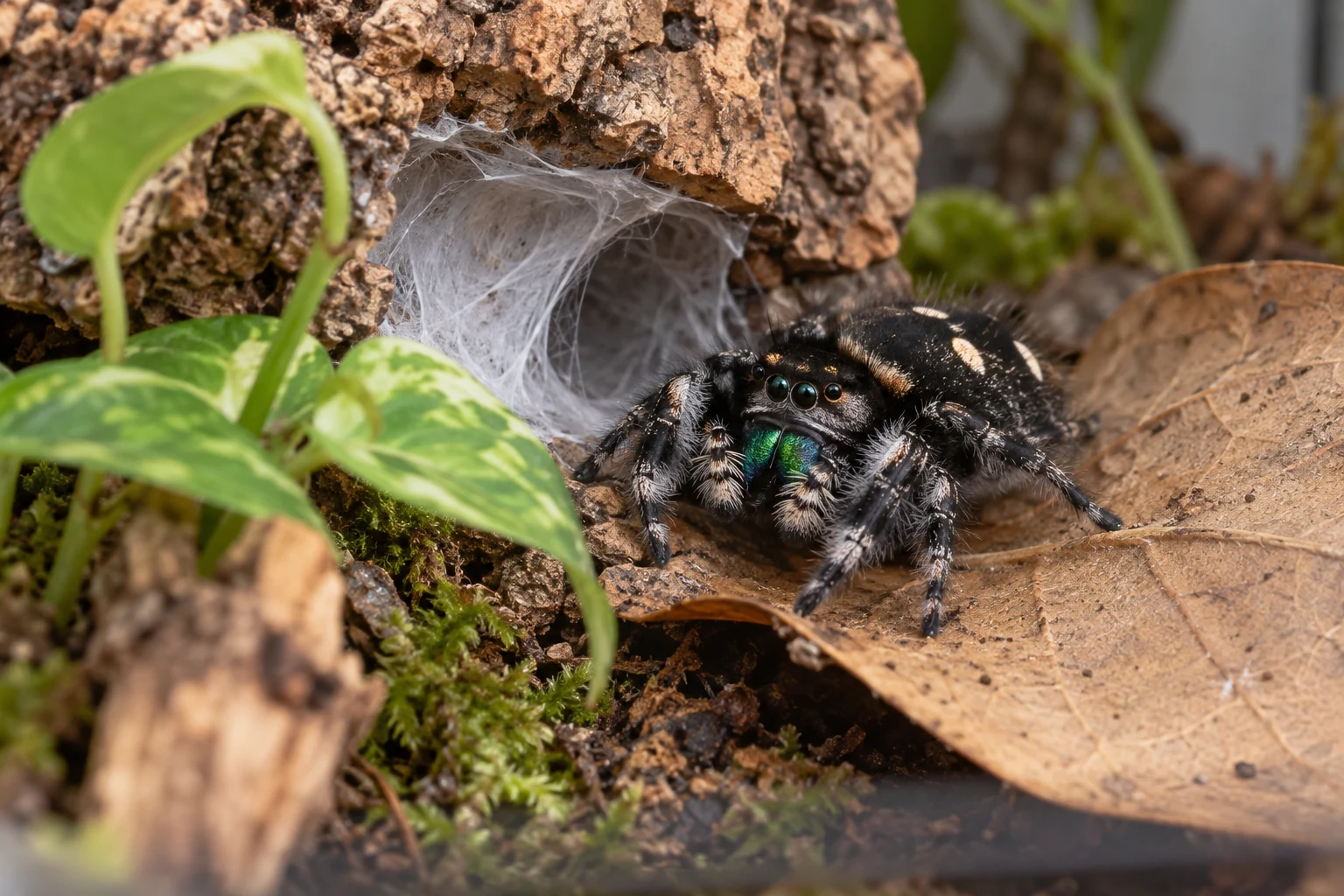
By far the most common reason a jumping spider stops eating is that it is heading into a molt. In the days beforehand it slows down, its abdomen may darken slightly, and it seals itself into a thick silk retreat where it can stay hidden for several days, sometimes close to a week. This is completely normal and is not a feeding problem to solve.
If your spider is tucked into fresh silk and stopped eating right before it disappeared, leave it alone entirely. Do not offer food, do not open the retreat to check on it, and remove any loose feeder still wandering the enclosure. Give it up to a week, sometimes longer, and let our jumping spider care guide talk you through the day or two of hardening time it needs once it emerges.
Reason 2: the enclosure is too cold to hunt in
Jumping spiders do not need a heat lamp or heat mat, but they do slow down noticeably in a cold room. Normal room temperature, roughly 70 to 80 degrees F, is genuinely all they need, and below that range their metabolism and hunting drive both drop. A spider that is technically healthy but sitting at 65 degrees F on a drafty windowsill may simply not feel like chasing a fruit fly.
The fix here is not added heat equipment, it is a better location. Move the enclosure away from cold windows, exterior walls, and air conditioning vents, and toward a stable spot at normal indoor temperature. Give it a day to warm back up to its usual range before you decide the temperature was ever the problem.
Reason 3: new-home stress
A jumping spider that just shipped to your door or was recently moved into a new enclosure will often refuse food for the first several days, sometimes a week or more, purely from the change. New smells, new vibrations, a new retreat to build, and the general disruption of a move are enough to put off even a healthy, hungry spider.
Give a new arrival room to settle. Keep handling to a minimum, keep the enclosure calm and out of a high-traffic area, mist lightly on schedule, and offer a single appropriately sized prey item every couple of days without leaving a pile of feeders in there. Most new spiders start eating on their own within the first week or two, once they have finished building a retreat and feel secure.
Reason 4: the prey is too big or just not appealing
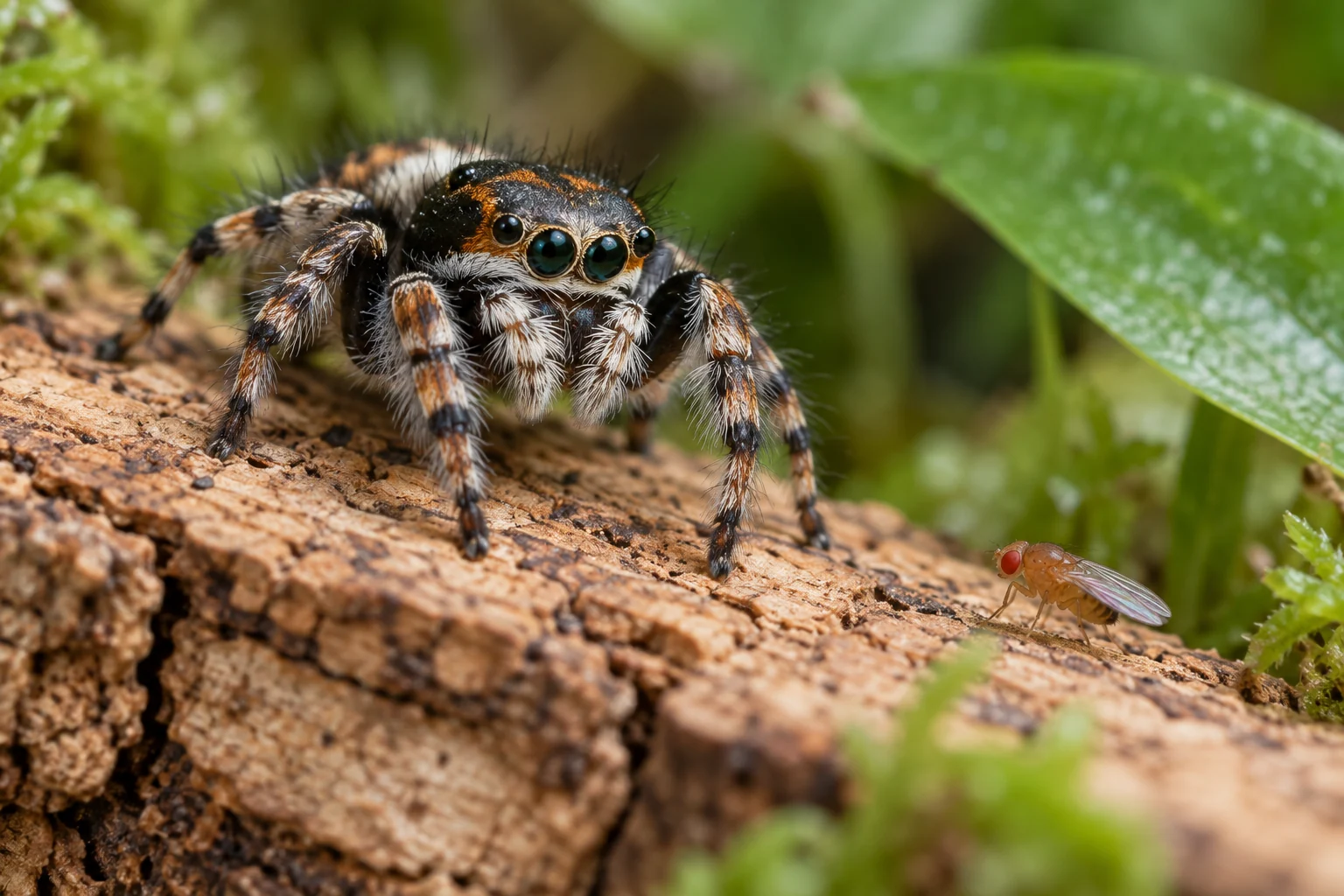
Jumping spiders hunt by sight, tracking motion with those oversized front eyes, and a feeder that looks like a threat instead of a meal will simply get ignored. The general rule is to keep prey no larger than the spider's own body. A juvenile offered a feeder built for an adult will often back away from it rather than attack, no matter how hungry it actually is.
Species matters too, not just size. Slow or barely moving prey does not trigger the same striking response as something fast and erratic, which is part of why flightless fruit flies work so well for smaller spiders, and quick-moving small red runner roaches tend to get a strong response from bigger adults. If your spider keeps ignoring the same feeder, size down before you worry that something else is wrong.
The real red flags, and what to do about a true fast
The honest red flag is not a few days of refusing food, it is weeks of fasting combined with a visibly shrinking, shriveled abdomen rather than a plump, rounded one. A molting spider stays plump right up until it molts; a spider that is genuinely struggling loses that fullness over time.
If you have ruled out an upcoming molt, checked the temperature, given a new arrival real settling time, and sized the prey down, and your spider is still refusing food for more than two to three weeks while visibly thinning, that combination is worth a call to an experienced exotics vet. That is beyond what any husbandry fix at home can address, but it is also the rare exception rather than the typical case.
Feed Your Jumping Spider Again
Right-sized prey for every stage above. Tap to add and check out in one click.
Frequently Asked Questions
Written by the TC INSECTS breeding team · Porter, Texas · Live Arrival Guarantee on every order
Have a care question? Ask our community.
Join Reptile Keepers USA, our free Facebook group for reptile, amphibian and invert keepers. Share your setups, get care help and swap feeder tips.
Join the free group