Giant Canyon Isopod Care
TC lists about 15mm typical; hobby reports to 20mm
Drier than most Porcellio; one small, always-moist corner, not a broad wet side
Longer than most hobby isopods once established
Giant Canyon Isopod Care
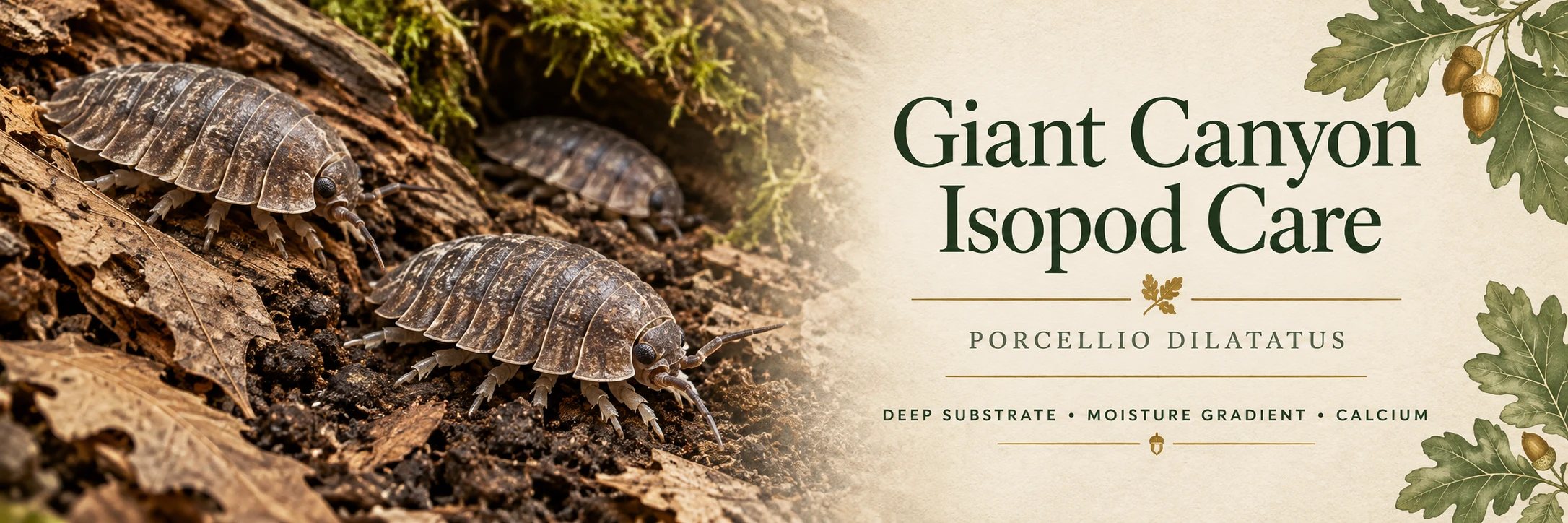
Giant Canyon isopods (Porcellio dilatatus) want a deep burrowing substrate, a drier bin than most Porcellio, and steady room temperature around 68 to 80 F, doing best on roughly 40 to 60 percent humidity with just one always-moist corner rather than a broad wet side. Giant Canyon is simply the standard trade name for wild-type Porcellio dilatatus, a large, deep-burrowing Porcellio that typically lives 2 to 3 years, longer than many hobby isopods. It leans more intermediate than beginner, since it wants a drier setup than general Porcellio care describes, but it rewards a keeper who already understands how to build a moisture gradient.

A deep substrate with a small moist retreat
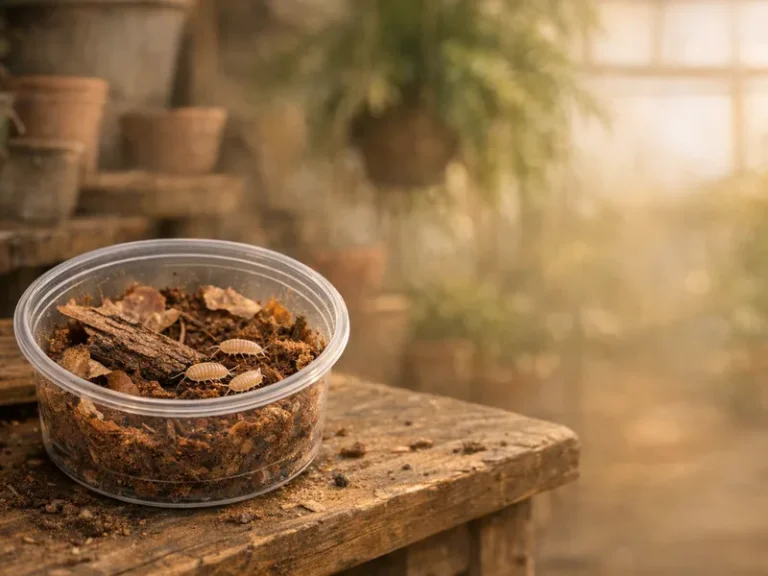
Build around the species’ burrowing habits: deep substrate, abundant leaf litter, cross-ventilation and a steady calcium source.
What Makes a Giant Canyon Isopod Different From Other Porcellio?
"Giant Canyon" is the hobby trade name for wild-type Porcellio dilatatus, sometimes called the common striped woodlouse in the wild. It is not a separate species from the Rust color form TC also carries, both are the same Porcellio dilatatus wearing different coloring, the same logic covered in our guide to isopod trade names versus scientific names. What sets this species apart from a Dairy Cow or a Porcellio scaber morph is less about looks and more about lifestyle: Giant Canyon is a dedicated burrower that vanishes into deep substrate, tolerates a noticeably drier bin, and grows into one of the larger common Porcellio.
That burrowing habit is the single most useful fact for a new keeper to know going in. Where a surface-active species spends its day wandering in the open, Giant Canyon spends most of its time underground, only turning up when you dig through the substrate or lift a piece of bark. Expect a quieter-looking bin than a scaber or Dairy Cow colony, even once the population is healthy and growing well.
How Big Do Giant Canyon Isopods Get?
TC's own culture keeps adult Giant Canyon isopods at about 15 mm, with hobby reports of individuals closer to 20 mm, among the larger common Porcellio kept in the hobby. That size, paired with a genuinely big appetite, is what makes them effective at breaking down heavier waste: leaf litter, rotting wood, and leftover food in a busy enclosure disappear noticeably faster once a colony reaches full size. Juveniles look like small, paler versions of the adults and need several months of steady feeding to reach that full length.
Size is also why this species is not a great fit for a nano vivarium or any tank with fragile plants and tiny tankmates. A large, hungry, burrowing isopod does a lot of digging, which is fine in a dedicated bioactive bin but can uproot shallow-rooted plants or disturb a small enclosure's layout faster than a Dwarf White or Powder colony ever would.
The Right Humidity for a Naturally Drier Porcellio
TC keeps its own Giant Canyon culture at a low to medium 40 to 60 percent humidity, and that is the number to build a bin around. Published third-party care sheets do not fully agree on an exact figure, some run as low as 30 percent and others closer to 65, but they agree on the direction: Giant Canyon wants a drier bin than most Porcellio, not the broad humid side a typical bioactive setup uses. Treat this the same way TC's own isopod humidity by species chart treats Cubaris on the opposite end, as a named exception to the standard moisture-gradient method, not a reason to skip the gradient altogether.
In practice that means a smaller damp corner and a much larger dry area, rather than dampening a full third or half of the bin the way the house method describes for most isopods. Mist the damp corner as it dries out, keep the rest of the substrate on the dry side of slightly moist, and give the whole bin real cross-ventilation so it never turns stagnant. A bin that stays too uniformly wet is a more common mistake with this species than one that runs a little dry.
Substrate, Diet and Calcium for a Heavy Digger
Give Giant Canyon at least 3 to 4 inches of substrate it can actually burrow into, deeper than the 2 to 3 inches that suits most isopods, since digging down is exactly how this species spends its day. A coco fiber and topsoil blend works well as a base, topped with a generous layer of leaf litter and a few pieces of decaying hardwood for grazing and cover.
Leaf litter and rotting wood remain the everyday staple, with occasional vegetables, like squash, carrot or leafy greens, added in small amounts. Because this is a large-bodied Porcellio, a light protein source once a week, a pinch of fish flake or a specialty isopod feed, supports steady growth and breeding, but feed it sparingly and clear away anything that molds. Keep a steady calcium source such as cuttlebone or crushed eggshell in the bin at all times, since a big-bodied isopod needs plenty of it to finish a clean molt.
How Fast Do Giant Canyon Isopods Breed, and How Long Do They Live?
Giant Canyon breeds more slowly than fast genera like Dwarf White or Powder, and even a bit slower than some other Porcellio, so give a new culture several months of steady, undisturbed conditions before judging its progress. A small starter group will eventually build into a visible colony, it just takes patience rather than the weeks-long boom some smaller species show.
The payoff for that patience is an unusually long life for a hobby isopod. Most keeper reports put a Giant Canyon's lifespan at around 2 years, with some individuals living closer to 3 years under good, dry-leaning conditions, longer than the roughly year or two typical of many smaller genera covered in our isopod lifespan by genus guide. That longevity is one more reason a slow start is worth waiting out.
Is a Giant Canyon Isopod a Good First Isopod?
Giant Canyon is a genuinely easy isopod to keep once it is established, but it is not usually the first species we would put in a brand-new keeper's hands, mostly because the drier humidity target and slower initial growth ask for more reading of the bin than a first-ever culture usually gets. It makes a strong second or third species instead.
If a large, hardy, visible Porcellio sounds like the right next colony for your setup, check which isopods are actually safe with a reptile or amphibian before you buy, then shop Porcellio isopods to add Giant Canyon to your next build.
Good Fit If...
You already keep at least one isopod colony and are comfortable reading a bin by eye rather than chasing an exact humidity number.
You want a big, visible cleanup crew for a heavier-bioload display or an animal-free feeder bin, not a hidden micro species.
Consider a Different Species If...
This is your very first isopod culture. A faster, more forgiving genus like Dwarf White or Powder Orange will teach you the basics with less guesswork.
You keep a live reptile, amphibian, or other small animal in the same enclosure, since Giant Canyon is a large, protein-driven Porcellio and should never share a bin with a live animal; keep it in an animal-free display or feeder colony instead.
The Giant Canyon Isopod Starter Kit
Deep substrate, leaf litter, calcium and feed built around this drier-loving, deep-burrowing Porcellio.
Frequently asked questions
How big do Giant Canyon isopods get?
Giant Canyon isopods (Porcellio dilatatus) reach about 15 mm as adults on TC's own culture, with some hobby reports of individuals closer to 20 mm, which puts them among the larger common Porcellio kept in the hobby. That size takes several months of steady feeding to reach from a juvenile, and it is part of why this species works so well as a cleanup crew for a heavier bioload of waste.
What humidity do Giant Canyon isopods need?
Giant Canyon isopods want a drier bin than most Porcellio. TC keeps its own culture at 40 to 60 percent humidity, though published care sheets range a bit wider, roughly 30 to 65 percent. Keep one smaller, always-moist corner for them to retreat to, let the rest of the substrate run drier, and make sure the bin has real cross-ventilation so that corner never turns stagnant or moldy.
How long do Giant Canyon isopods live?
Most keeper reports put a Giant Canyon isopod's lifespan at around 2 years, with some individuals living closer to 3 years under good, dry-leaning conditions. That is noticeably longer than many smaller hobby isopods manage, which is one more reason a slow-breeding new culture is worth the patience while it establishes.
Are Giant Canyon isopods good for beginners?
They lean more intermediate than beginner. Giant Canyon isopods are hardy and easy once established, but the drier humidity target and slower initial growth ask more of a keeper than a first-ever isopod culture usually gets. A faster, more forgiving genus like Dwarf White or Powder Orange is a gentler starting point, with Giant Canyon a strong second species.
Can Giant Canyon isopods live with a pet reptile or amphibian?
No. Giant Canyon is a large, protein-driven Porcellio, and like other big Porcellio such as the Dairy Cow, it should never share an enclosure with a live reptile, amphibian, or other small animal, since a hungry colony has been known to bother a resting or soft-bodied tankmate. Keep it in an animal-free display bin or feeder colony instead.
Is Giant Canyon the same species as the Rust isopod TC sells?
Yes. Both Giant Canyon and Rust are the same species, Porcellio dilatatus, just different color forms sold under different trade names. Care is identical between them, the same drier humidity target, deep burrowing substrate, and slower breeding pace, so the choice between the two really comes down to which coloring you like better.
Keep learning
Have a care question? Ask our community.
Join Reptile Keepers USA, our free Facebook group for reptile, amphibian and invert keepers. Share your setups, get care help and swap feeder tips.
Join the free group