Land Shrimp Care
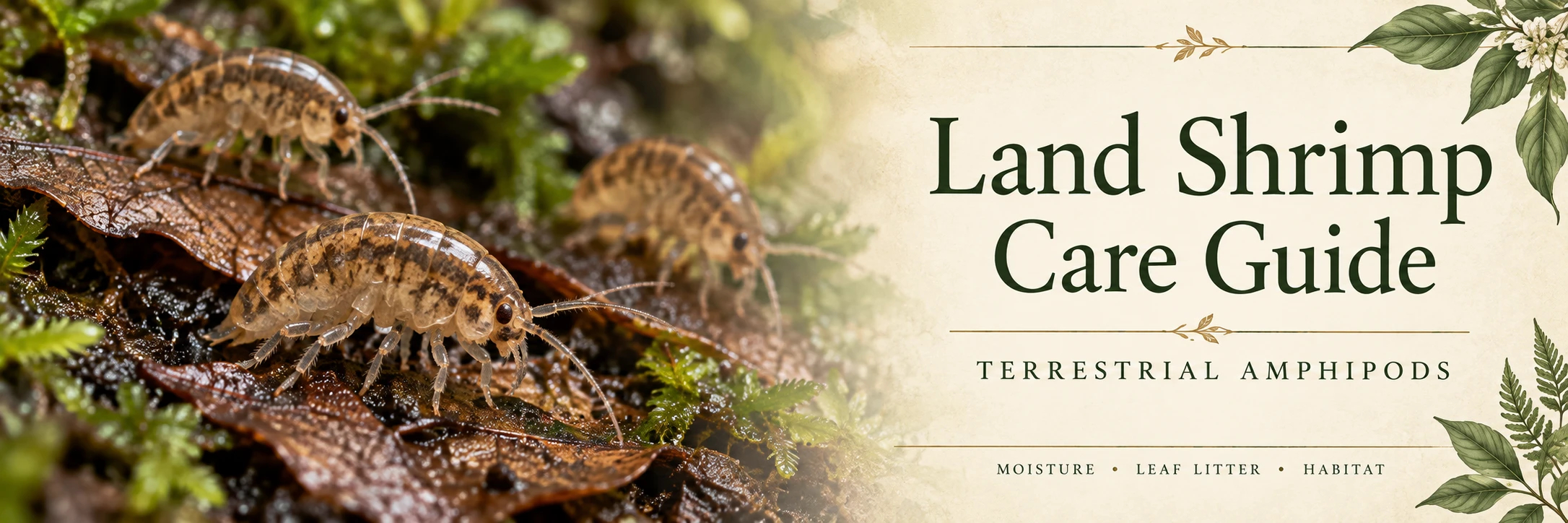
A crustacean cousin of isopods, not a true isopod, despite the trade name
Talitrid landhoppers typically run 5 to 20 mm as adults, family wide
No waxy shell layer, so it loses or gains water straight through its skin
Land shrimp care: moisture comes first
Land shrimp, sold in the hobby as jumping isopods, are not isopods at all. They are terrestrial amphipods, a side-flattened crustacean cousin that springs away with a flick of its tail instead of crawling or rolling like an isopod does. Care runs close to isopod care on paper, an organic substrate held around 65 to 78 F, but amphipods carry no waxy layer on their shell, so they lose or gain moisture straight through it and can crash within a day in a bin that dries out even briefly. Set that moisture right and land shrimp make an active cleanup crew for a humid bioactive build, plus a protein-rich feeder besides.
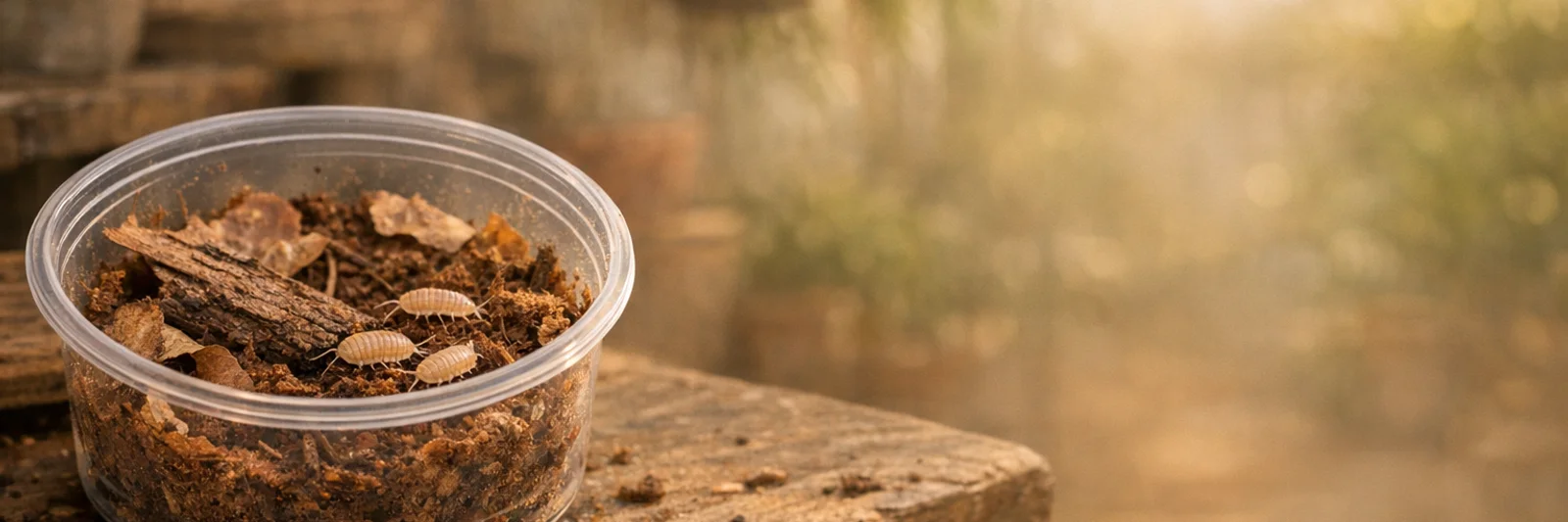
A humid habitat without standing water
Keep organic substrate damp, add leaf litter and bark cover, and balance steady moisture with ventilation.
Why Land Shrimp Are Amphipods, Not Isopods
The name is where the confusion starts. Isopods and terrestrial amphipods are both land crustaceans that graze leaf litter, and a culture is often labeled a jumping isopod, but the animal inside is not an isopod at all. It belongs to a different crustacean order, Amphipoda, family Talitridae, the same broad group as beach hoppers. Both groups run seven pairs of walking legs on the thorax, which is exactly why the mix-up sticks. The real tell is not the leg count, it is the shape of the body and what it does when you lift the lid.
Body Shape
Isopods are flattened top to bottom, broad and low like a tiny armored plate you view straight from above. Amphipods are flattened side to side instead, curved into a shrimp-like comma shape you see best from the side, which is exactly where the land shrimp name comes from.
How They Move
Isopods walk, and a pillbug can roll into a tight ball. Amphipods cannot roll up at all. They flick a set of tail-like abdominal appendages under the body and spring away in a single jump, the same trick beach fleas use on wet sand, which is why a land shrimp you try to scoop out of leaf litter usually just disappears.
What Species Are You Actually Buying?
Sellers rarely put a scientific name on a land shrimp listing, and that is honestly the accurate way to sell it: hobby land shrimp are landhoppers, family Talitridae, and which exact species ends up in a given culture is not always confirmed. If terrestrial crustacean names already feel tangled, our guide to isopod, pillbug, and sowbug names untangles the isopod side of that confusion.
On the amphipod side, general hobby discussion most often reaches for Arcitalitrus sylvaticus, an Australian species also established in California, Florida, and a few other states, though TC's own listing for this culture points to a close relative, Arcitalitrus dorrieni, as the more likely identity of the animals actually shipped. Treat either label as a reasonable best guess rather than a confirmed ID. The uncertainty does not change care: every Talitridae species sold in the hobby shares the same build and the same moisture-first routine, and what mostly varies between species is adult size, with hobby land shrimp running small, well under an inch.
Setting Up a Land Shrimp Enclosure
Land shrimp have no waxy layer on their exoskeleton, so they lose and gain moisture straight through their skin, which makes them less forgiving of a dry patch than most isopods. Run the same organic substrate isopods use, coco fiber or a bioactive soil mix with leaf litter on top, but keep it uniformly damp, roughly 70 to 90 percent humidity, rather than the usual dry-to-wet gradient, and never let the whole bin dry out even for a day. A loose layer of bark or cork gives them somewhere dark and moist to burrow during the day, since they are most active after dark.
Temperature runs the same 65 to 78 F range as TC's isopods and springtails, so ordinary room temperature works without a heat mat. Ventilation still matters: vent the lid so stale, stagnant air does not turn a permanently damp bin into a moldy one, the same balance isopods need to avoid a wet, sour crash. A standing water dish is not necessary and can be a drowning risk, since these are not aquatic animals despite the name.
What Land Shrimp Eat, and How Fast They Breed
Land shrimp are detritivores, grazing decaying leaves, soft rotting wood, and the microbes growing on both, the same staple diet as isopods. A light offering of soft vegetable scraps or a pinch of fish flake now and then rounds it out, but skip anything that can sit and mold in a bin that never fully dries out on its own.
Set expectations honestly on breeding: keepers who culture land shrimp consistently describe them as slower to multiply than a fast isopod like Powder Orange or Dwarf White, so a starter culture is a patient project, not a quick population boom. Give it months, not weeks, feed it lightly and steadily, and resist digging through the damp substrate to check on it, since that disturbance costs more than it tells you.
Using Land Shrimp as Cleanup Crew and Feeder
Outside a paludarium's shoreline, which our isopods for a paludarium guide already covers in detail, land shrimp fit any permanently humid tropical bioactive build where isopods keep drying out even on the damp side, grazing leaf litter and soft decaying wood the same way isopods work a drier substrate. Think of them as the wet-zone specialist that rounds out a crew already built around isopods and springtails.
The other real use is as a feeder. Land shrimp are a soft-bodied, protein-rich food item, and larger insectivorous amphibians and reptiles that already accept other soft feeders will generally take these too. Culture a dedicated feeder bin separate from your display enclosure so you are never pulling animals out of a bioactive setup, and only offer captive-bred stock, never anything collected outdoors.
When Land Shrimp Are Not the Right Pick
Skip land shrimp for a first bioactive bin, or for any enclosure you cannot check on every couple of days. Their all-or-nothing moisture sensitivity punishes exactly the kind of missed misting or vacation gap that a drier-tolerant isopod shrugs off, and a culture that dries out cannot be reversed once it happens. If your setup runs on the drier side, or you want a more forgiving starter animal, a standard isopod like Dwarf White or Powder Orange, covered in our best beginner isopods guide, is the safer first purchase.
One more practical check before you order: this culture does not ship to Florida or US territories, on top of TC's standard lower-48-only live shipping. Confirm your address qualifies first.
Keep reading: Live Bugs for a Halloween Party or Classroom: 4 Species Kids Can Hold
The Land Shrimp Starter Kit
A land shrimp culture plus the substrate, moss, and leaf litter that keep its moisture-sensitive skin from ever drying out.
Frequently asked questions
Are land shrimp actually isopods?
No. Land shrimp, sold in the hobby as jumping isopods, are terrestrial amphipods in the family Talitridae, a different crustacean order from true isopods. Both groups have seven pairs of walking legs, which is where the confusion comes from, but amphipods are flattened side to side and spring away with a tail flick, while isopods are flattened top to bottom and simply crawl or roll.
What is the scientific name for land shrimp?
TC's own listing for this culture names Arcitalitrus dorrieni as the most likely identity, while general hobby discussion more often reaches for the closely related Arcitalitrus sylvaticus. Several similar landhoppers get sold under the same trade name, so treat either label as a reasonable best guess rather than a locked-in ID.
How humid does a land shrimp enclosure need to be?
Keep the substrate uniformly damp at all times, roughly 70 to 90 percent humidity, not on a dry-to-wet gradient like isopods get. Land shrimp have no waxy layer on their shell, so they lose moisture straight through it and can crash within a day if the bin dries out, which makes constant, even dampness the single most important setup detail.
Do land shrimp bite or sting?
No. Land shrimp are detritivores that graze decaying leaves and soft rotting wood, the same diet as isopods, and have no venom, stinger, or biting mouthparts built for attacking anything larger than plant debris. They are harmless to handle, though their jumping escape makes them hard to actually catch.
Can land shrimp live with isopods and springtails?
Yes. Land shrimp fill the constantly wet zone that isopods avoid, while isopods work the drier leaf litter and springtails graze mold across both areas, so the three make a natural, non-competing team in a humid bioactive build. Shop springtails and land shrimp cultures together to build that team, and keep the whole substrate damp enough for the land shrimp to thrive.
Are land shrimp good feeders?
They can be. Land shrimp are soft-bodied and protein-rich, and larger insectivorous amphibians and reptiles that already accept similar soft feeders will generally take them too. Culture a separate feeder bin rather than pulling animals from a display bioactive enclosure, and only offer captive-bred stock.
Keep learning
Have a care question? Ask our community.
Join Reptile Keepers USA, our free Facebook group for reptile, amphibian and invert keepers. Share your setups, get care help and swap feeder tips.
Join the free group