Lilac Springtail Care: The Ceratophysella isabellae Culture Guide
Lilac springtails (Ceratophysella isabellae) are a color-novelty springtail that needs the same always-damp setup as a white culture, on a clay or plaster-style medium that never fully dries, at a 68 to 78 F sweet spot, with the lavender sheen showing best under bright, direct light. TC also sells a Yellow Albino Ceratophysella sp. at nearly identical care, and whether the two colors are simply morphs of one species is not settled; TC's own listings keep them as separate, hedged identifications rather than asserting either way. This guide covers what the color actually looks like in a tank, the culture setup, and how honest that hedge really is.
TC's listing runs 65 to 78 F; the species reference agrees on this sweet spot
TC's species reference narrows this to 0.5 to 1.5 mm, about 1 mm individually
Small and pale purple; judge the culture by the lavender sheen, not a headcount
Does the Lilac Color Actually Show Up in a Tank?
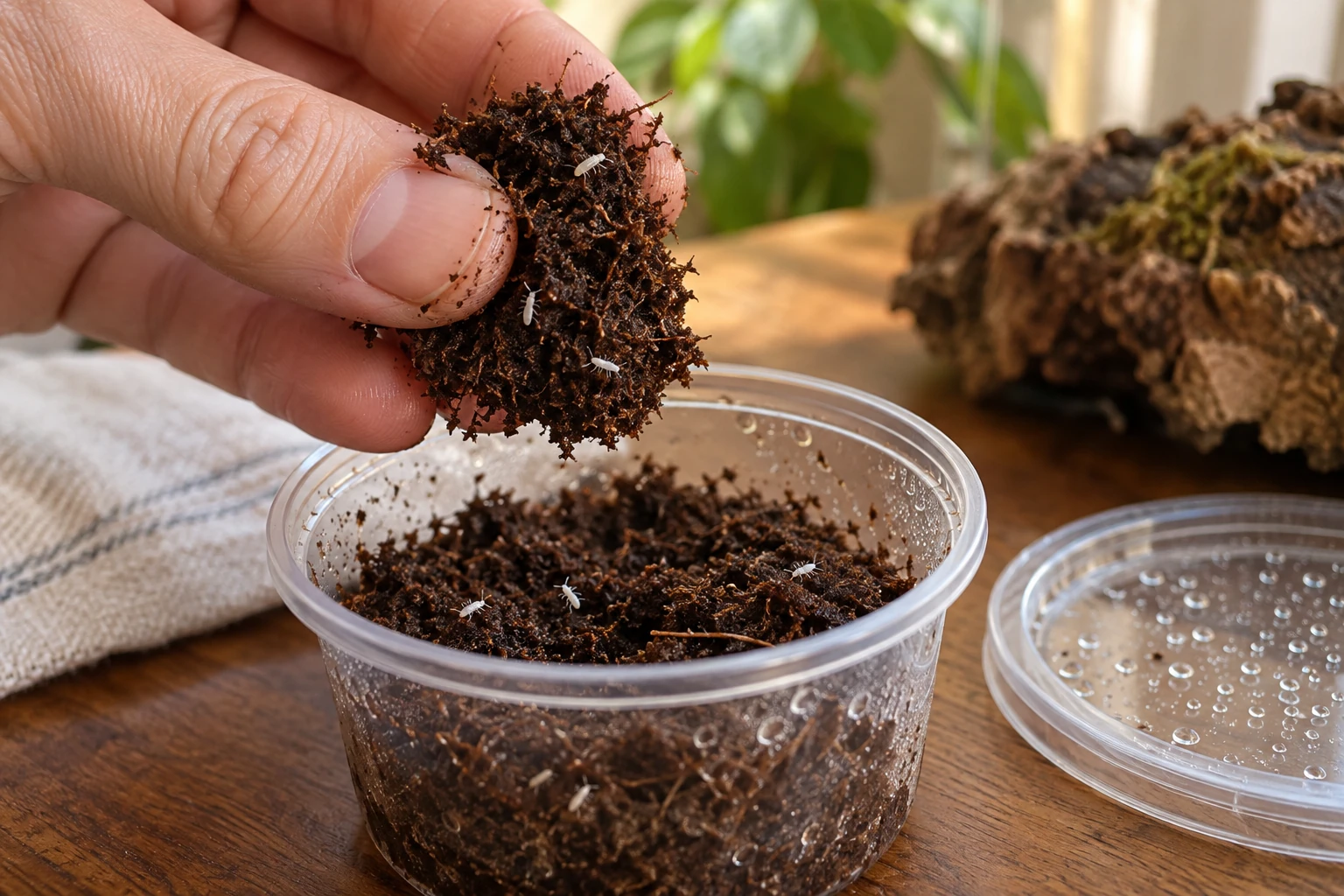
Honestly, not the way product photos suggest. TC's own species reference lists Lilac springtails at roughly 0.5 to 1.5 mm and marks them low visibility, small enough that a single animal is easy to miss entirely on a quick glance. The lavender-to-violet sheen is real, confirmed across multiple independent sellers, not just TC's own listing, but it reads as a color washing over a cluster of animals moving together on damp clay rather than a single visibly purple bug. Bright, fairly direct light brings the color out best; under dim or diffuse lighting, a Lilac culture can look closer to pale gray.
Temperature and Humidity: Always Damp, Never a Dry Surface
TC's listing runs 65 to 78 F, and the site's own species reference agrees on a 68 to 78 F sweet spot, so a stable room in the low to mid 70s suits this species well. Humidity is the part that does not flex: the reference calls for 80 to 95 percent or higher at substrate level over uniformly damp calcium clay or soil, closer to a soil-dwelling white culture than to a dry-surface runner like TC's Wood Runner springtails. Shield the culture from heat spikes into the mid-80s F, and never let the medium dry out completely, which is the single fastest way to crash this species.
Is the Lilac Springtail the Same Animal as TC's Yellow Albino?
This is a genuinely open question, not a settled one, and the honest answer is that nobody selling either color has proven it either way. TC's own two listings hedge differently, which is itself informative. Here is what each one actually says, rather than what would be convenient to claim about a species most sellers only ever describe by color.
What TC's Own Listings Say
TC labels the Lilac form Ceratophysella cf. isabellae on its species reference, the "cf." meaning the identification is treated as compare-to rather than fully confirmed, while the product listing itself drops that qualifier and simply reads Ceratophysella isabellae. The Yellow Albino product, by contrast, carries no species epithet at all, listed only as Ceratophysella sp., and its own copy calls it a captive-bred color morph rather than a confirmed wild-collected species. Two different hedges on two products from the same seller is a real signal that the identifications are independent guesses, not a confirmed relationship.
What Independent Sources Say
Ceratophysella isabellae is a genuinely described species, first named by the taxonomist Arne Fjellberg, and its lilac coloration shows up consistently across several unrelated sellers, not just TC. But more than one of those same sellers lists a similarly colored culture simply as Ceratophysella sp. without committing to isabellae either, the same hedge TC's own Yellow Albino carries. TC settled a similar naming question for its Florida Orange and Asian Orange springtails, confirming those really are one species sold under two trade names; no comparable confirmation exists yet for Lilac and Yellow Albino, so the honest answer stays unresolved rather than asserted either way.
Culture Medium: Calcium Clay, Charcoal, or Soil
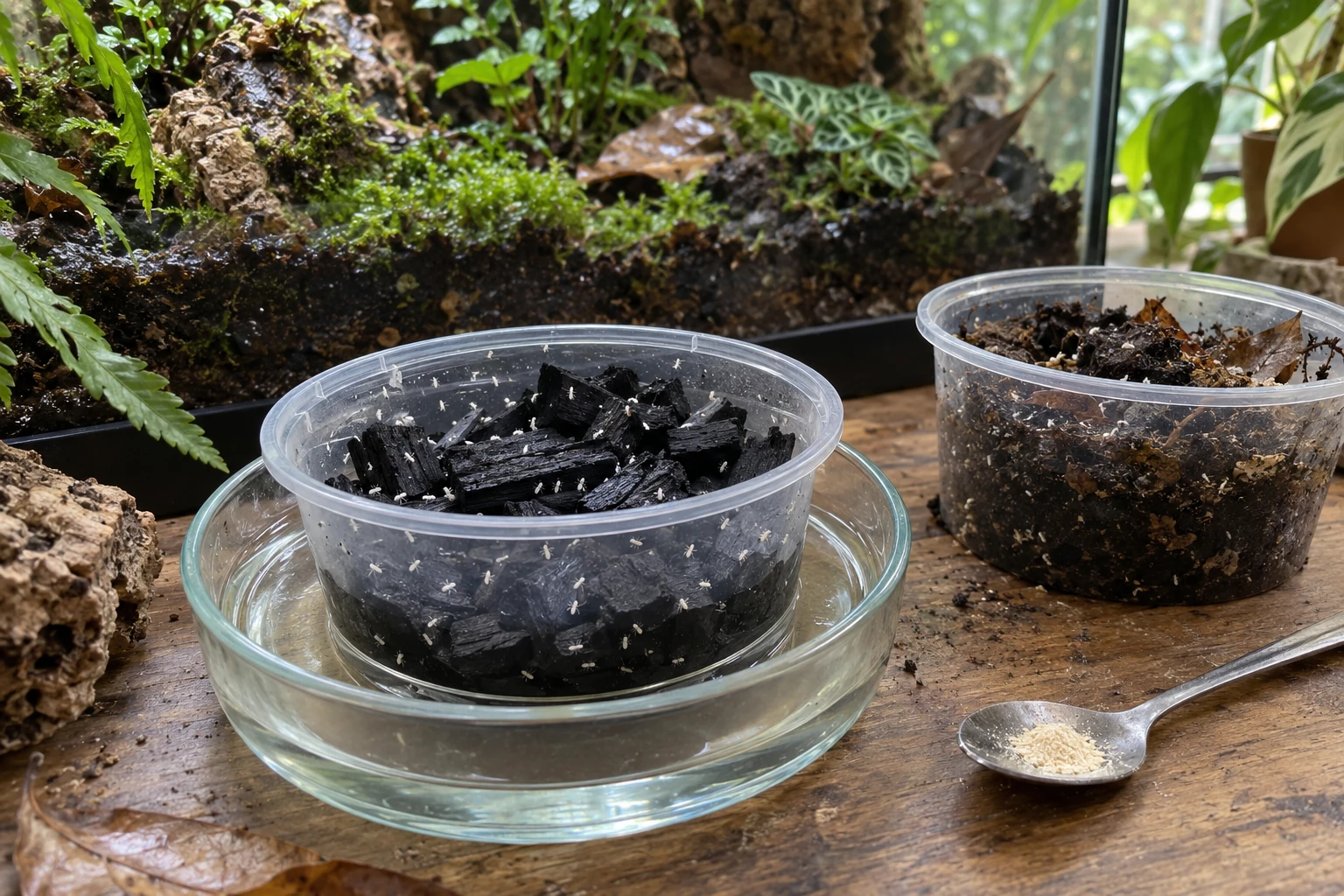
Calcium-bearing clay is one of the media TC's own listing names for this species, and it fits an animal that wants uniform, reliable dampness rather than a dry-to-moist gradient. Mix the dry clay with clean water to a pudding-like consistency, and it holds moisture evenly across the whole cup rather than drying unevenly the way loose substrate can. Culture Charcoal works as an alternate medium if you would rather run a second culture on something different, and our comparison of clay, charcoal, and soil walks through the tradeoffs. Either way, harvest by flooding the cup with a little water and pouring the springtails off the surface.
Feeding a Lilac Culture Without Losing the Color
The house rule holds here without exception: a very light sprinkle of yeast or prepared springtail food every 2 to 4 days, skipping the next feeding if the last one is still visible on the clay. Overfeeding is still the number one cause of a crashed culture, mold and a sour, slick medium, regardless of color. There is no evidence that diet changes the lavender shade one way or the other; density, lighting, age, and moisture drive the color you see far more than what the culture eats, so do not overfeed a Lilac culture chasing a brighter purple.
Does a Lilac Culture Clean Up as Well as a White One?
Yes, functionally there is no difference. Lilac springtails graze the same mold, fungus, biofilm, and fine decaying matter that any other springtail culture works through; the color is cosmetic, not a different job description. The real tradeoff is visual confirmation: at roughly 1 mm and low visibility, a struggling Lilac culture is harder to eyeball than a bigger, more visible species, so lean on the feeding rule, skip the next feeding if the last is still there, rather than trying to judge colony health by looking. Pair it with a fast, forgiving white or pink culture if you want an easier visual check alongside the color.
The Lilac Springtail Kit
Starts an always-damp Lilac culture with calcium clay, a backup medium, and a light feed that will not sour it.
Frequently Asked Questions
Written by the TC INSECTS breeding team · Porter, Texas · Live Arrival Guarantee on every order
Have a care question? Ask our community.
Join Reptile Keepers USA, our free Facebook group for reptile, amphibian and invert keepers. Share your setups, get care help and swap feeder tips.
Join the free group