How to Acclimate Isopods After Shipping
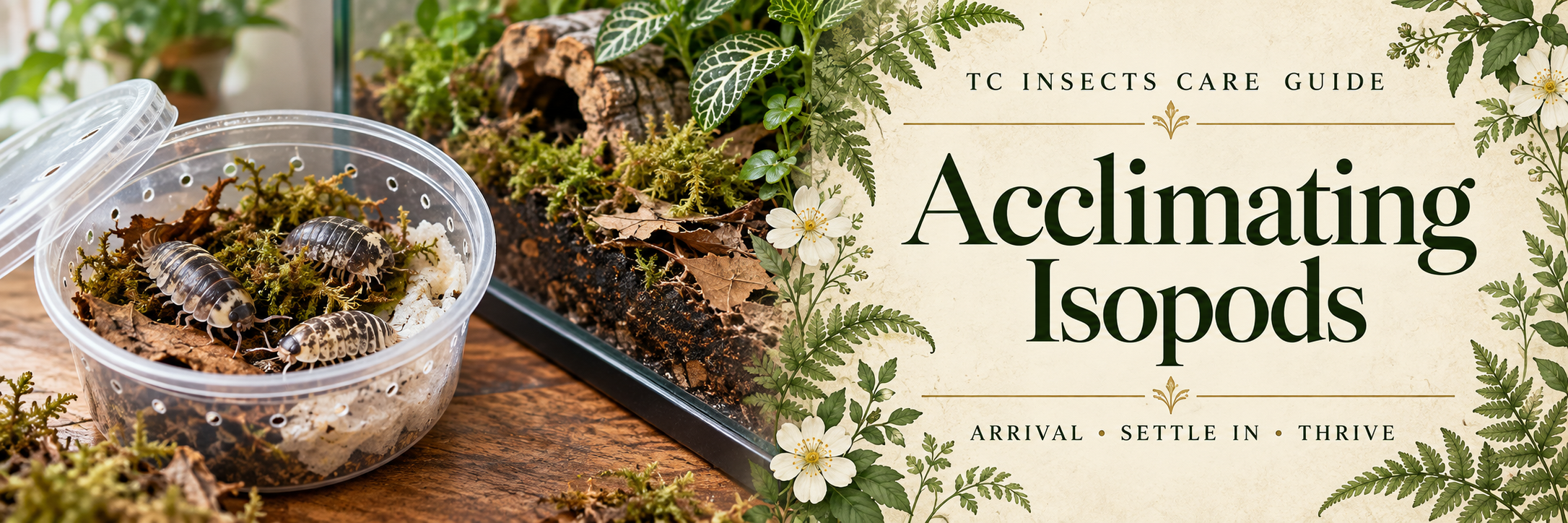
If your isopods arrived balled up, clumped together, or not moving at all, take a breath: that is almost always cold and darkness talking, not a dead shipment. Isopods travel in a small cup with a damp paper towel and a little cover, and a cool trip can leave even a hardy Porcellionides pruinosus still and quiet for hours after you open the box. The real acclimation playbook is simple: let the cup settle at room temperature, keep it damp rather than soaking wet, and give the colony a genuine 3 to 6 week window in its new home before you judge whether it is thriving or add it to an enclosure that already has an animal in it. If you are also deciding how many to order in the first place, our starter colony size guide pairs well with everything below.
Cold and dark in transit trigger stillness
Keep the paper towel damp, do not rush the move
Extra humidity, minimal disturbance, then judge health
Motionless or balled up on arrival? That's normal
The single most common panic message we get is a photo of isopods rolled into tight balls or lying still in the shipping cup, and in almost every case the shipment is fine. Cooler temperatures in transit slow an isopod's metabolism way down, and darkness inside a shipping box reinforces that stillness, so an animal that is completely healthy can look lifeless for the first several minutes after you open the lid. Give it time under normal room light and warmth before drawing any conclusions.
If your order included a pillbug species like Armadillidium, do not be surprised to see them rolled into a perfect little armored ball. That is conglobation, a defense reflex only certain genera use, and it means the animal felt disturbed, not that it is dying. Species like Porcellio, Porcellionides, and Trichorhina will not ball up at all, but they can still clump together and sit still in a cool cup, which is the same cold response wearing a different look.
The first few minutes: let the cup adjust before you touch anything
Resist the urge to immediately dump a cold cup into a freshly misted enclosure. Set the closed or lightly opened container in a normal room, out of direct sun and away from an air conditioning vent or a drafty window, and give it 15 to 30 minutes to come up to room temperature on its own. Opening a cold cup too fast, or misting it heavily right away, is more likely to shock the animals than help them.
Once it has warmed up, check the paper towel or substrate for dampness. If it feels dry, add a few drops of water along one edge rather than soaking the whole cup, since a puddle in a small container is a real drowning risk for something this size. A slightly damp cup with clumped, quiet isopods inside is a normal, healthy shipment waiting for you to finish the move.
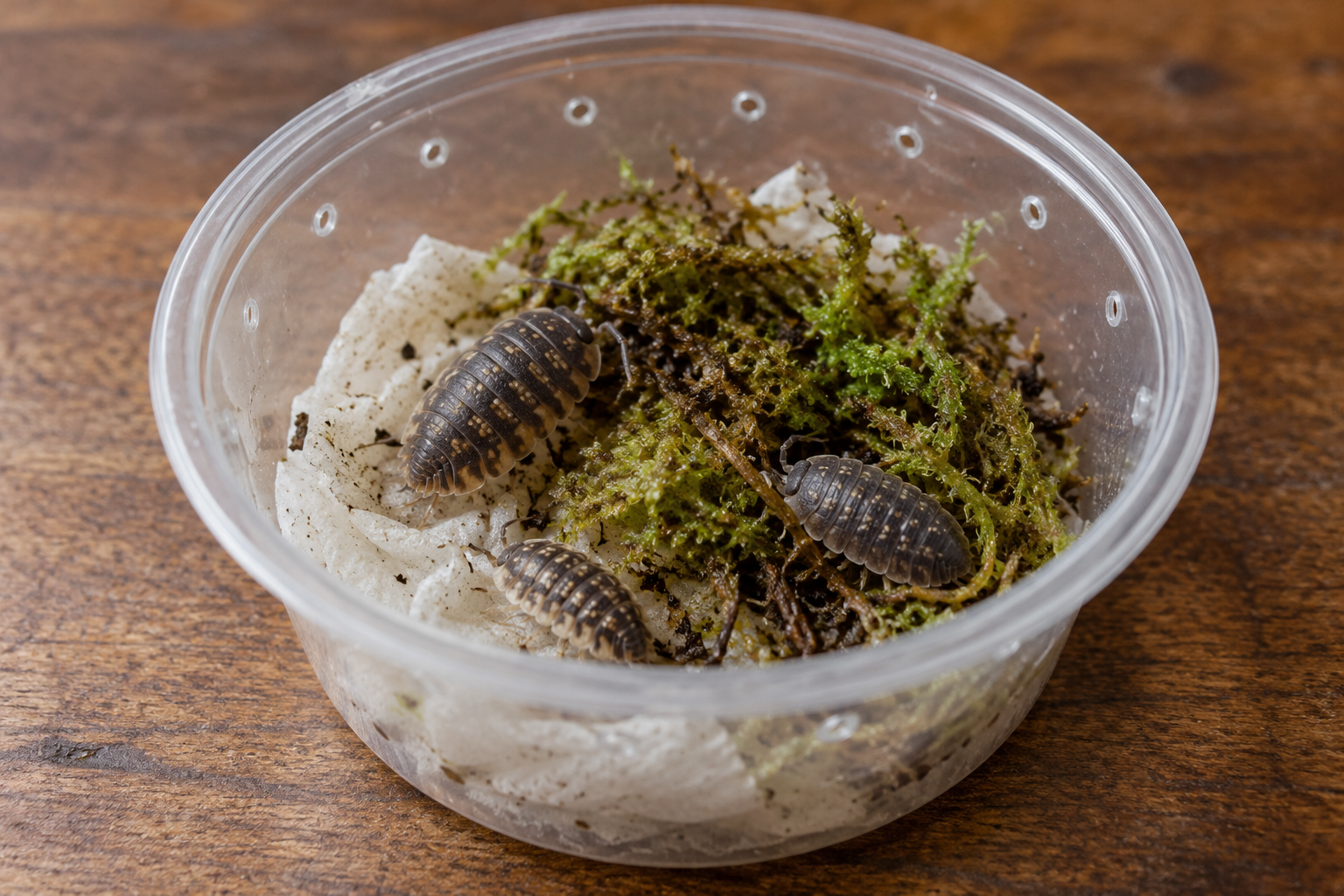
You can hold them in the shipping cup for about a week
You do not have to rush the new enclosure if it is not ready yet. Most isopods tolerate staying in their travel cup for up to about a week, as long as you keep the paper towel or substrate lightly damp and crack the lid or poke a little extra ventilation so it does not turn stagnant. Add a small pinch of leaf litter if you have it on hand, though a well packed shipment usually arrives with enough food to sit tight for several days.
Keep the cup somewhere at normal room temperature, out of direct sunlight, and resist opening it constantly to check on it. If you are still assembling a permanent setup, this is also a good time to read through our guide to fixing a too-wet bin so the enclosure you eventually move them into does not repeat the same mistake in reverse.
Moving them into their new enclosure the gentle way
When the enclosure is ready, skip the dump-and-run approach. Open the shipping cup and either tip it gently onto the substrate near a damp, sheltered spot, or set the open cup down inside the enclosure for a few hours and let the isopods walk out on their own schedule. Both methods cause far less stress than pouring or shaking them out, and a slow exit also lets you see roughly how many actually made the trip in good shape.
Avoid handling individual isopods with your fingers during the move, since a firm pinch can injure a soft-bodied animal, and skip misting them directly, since a heavy spray on a cold, stressed isopod is not a kindness. Let the enclosure's own humidity do the work once they are inside, and place the empty cup nearby for a day in case a few stragglers are still finishing the walk out.
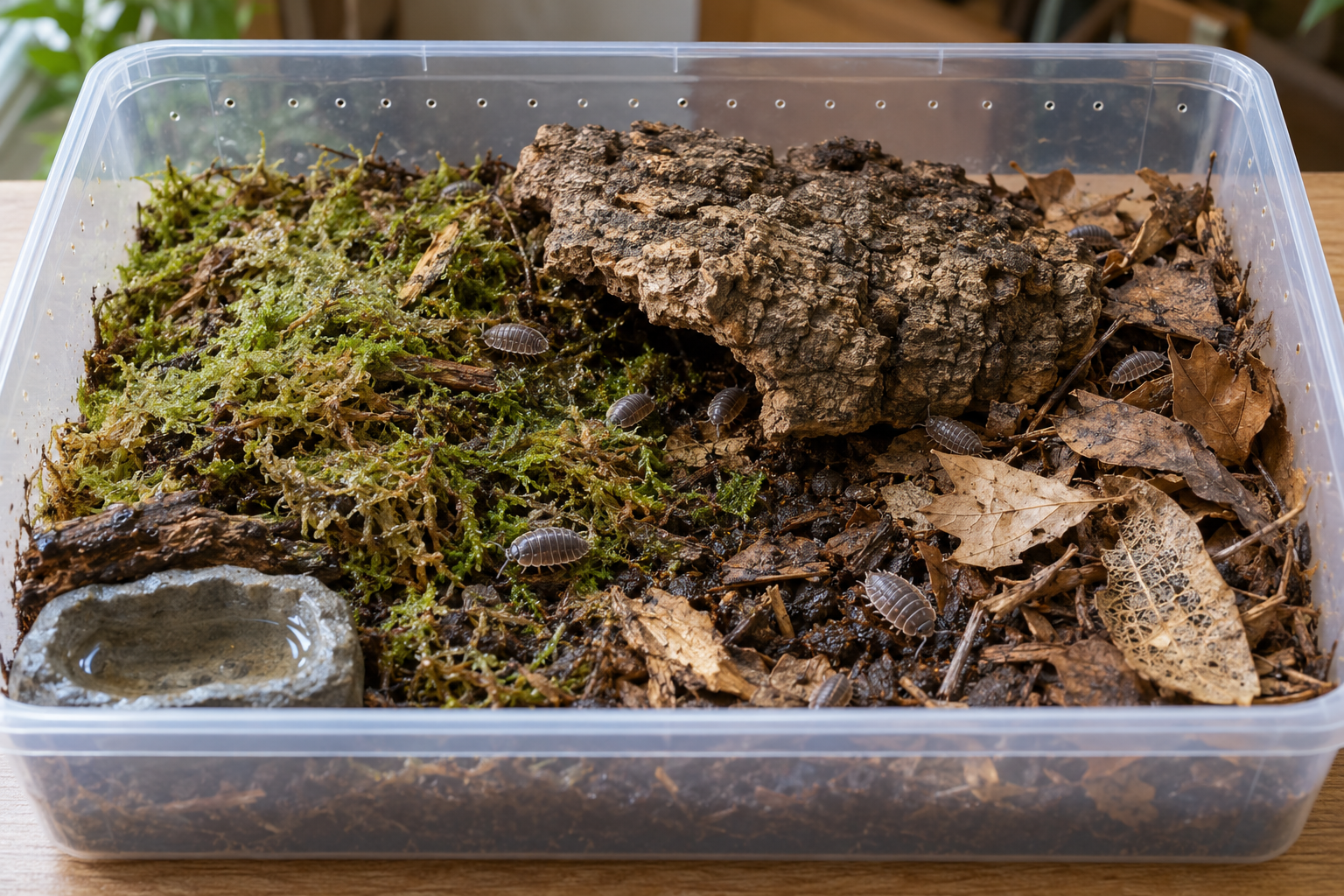
The real acclimation window: 3 to 6 weeks
Give a freshly moved colony a genuine 3 to 6 weeks before you form any opinion about how it is doing. During that stretch, keep the humidity a little higher than your long term target, disturb the substrate as little as possible, and resist digging around looking for activity. Isopods are naturally secretive, and a stressed, freshly shipped colony will hide even more than usual while it settles into new smells, new substrate, and a new light cycle.
This window matters even more if the new home is a display or bioactive enclosure that already has an animal living in it. Introducing a brand new, still-settling colony straight into a busy tank gives it far less room to acclimate quietly, so where possible, let new isopods settle in a simple holding bin first and move the established culture over later. Our isopod care guide covers what a healthy young culture should look like during this stretch.
When something is actually wrong
A truly dead isopod looks different from a cold, quiet one: the body is shriveled, pale, or falling apart rather than simply still, and it will not respond at all even after warming up overnight. A small number of losses in a shipment, especially of the tiniest juveniles, is unfortunately normal and does not mean the whole culture failed. What matters is whether the majority of the group is moving, feeding, or at least intact after 24 to 48 hours at room temperature.
If the count looks genuinely bad rather than just quiet, reach out about our live arrival guarantee rather than guessing. And if isopods settle in fine at first but start dying off in the weeks that follow, that points to a husbandry issue rather than a shipping issue, which our guide to isopod die offs walks through cause by cause.
Everything to Settle In a Fresh Shipment
Hardy starter cultures and the setup basics behind the acclimation steps above, ready to add in one tap.
Frequently Asked Questions
Written by the TC INSECTS breeding team · Porter, Texas · Live Arrival Guarantee on every order
Have a care question? Ask our community.
Join Reptile Keepers USA, our free Facebook group for reptile, amphibian and invert keepers. Share your setups, get care help and swap feeder tips.
Join the free group