Isopod Bin Too Wet?
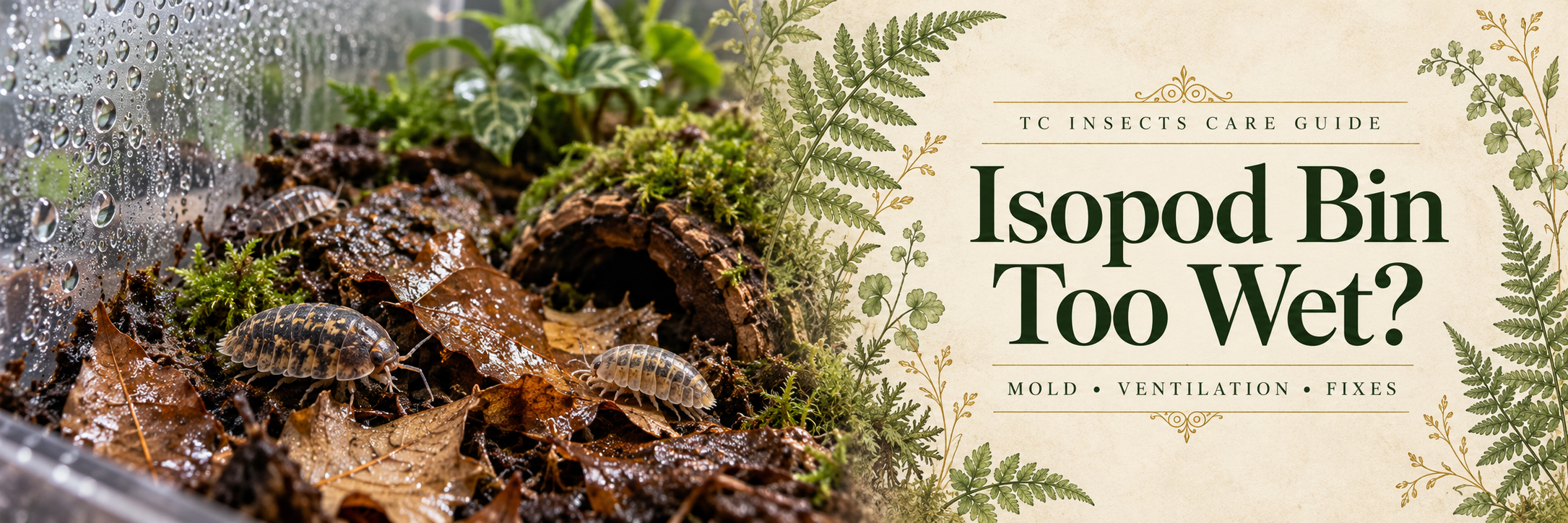
A too-wet isopod bin usually announces itself with beaded condensation on the walls, a sour or ammonia-like smell, a fuzzy white or black mold bloom, or standing water your isopods are actually at risk of drowning in. The fix is not to panic-dry the whole bin, since isopods still need real humidity to breathe through their gill-like structures. It is to work through a specific order: improve ventilation first, physically remove the actual wet and spoiled spots, rebuild one clear damp refuge instead of soaking everything evenly, and let a springtail culture take over the ongoing mold patrol instead of fighting it by hand every week. Our springtail cultures, especially Folsomia candida, are built for exactly that job.
Crack the lid or add mesh before anything else
A living crew that grazes mold instead of chemicals
Not a uniformly soaked bin
The signs your bin is too wet, not too dry
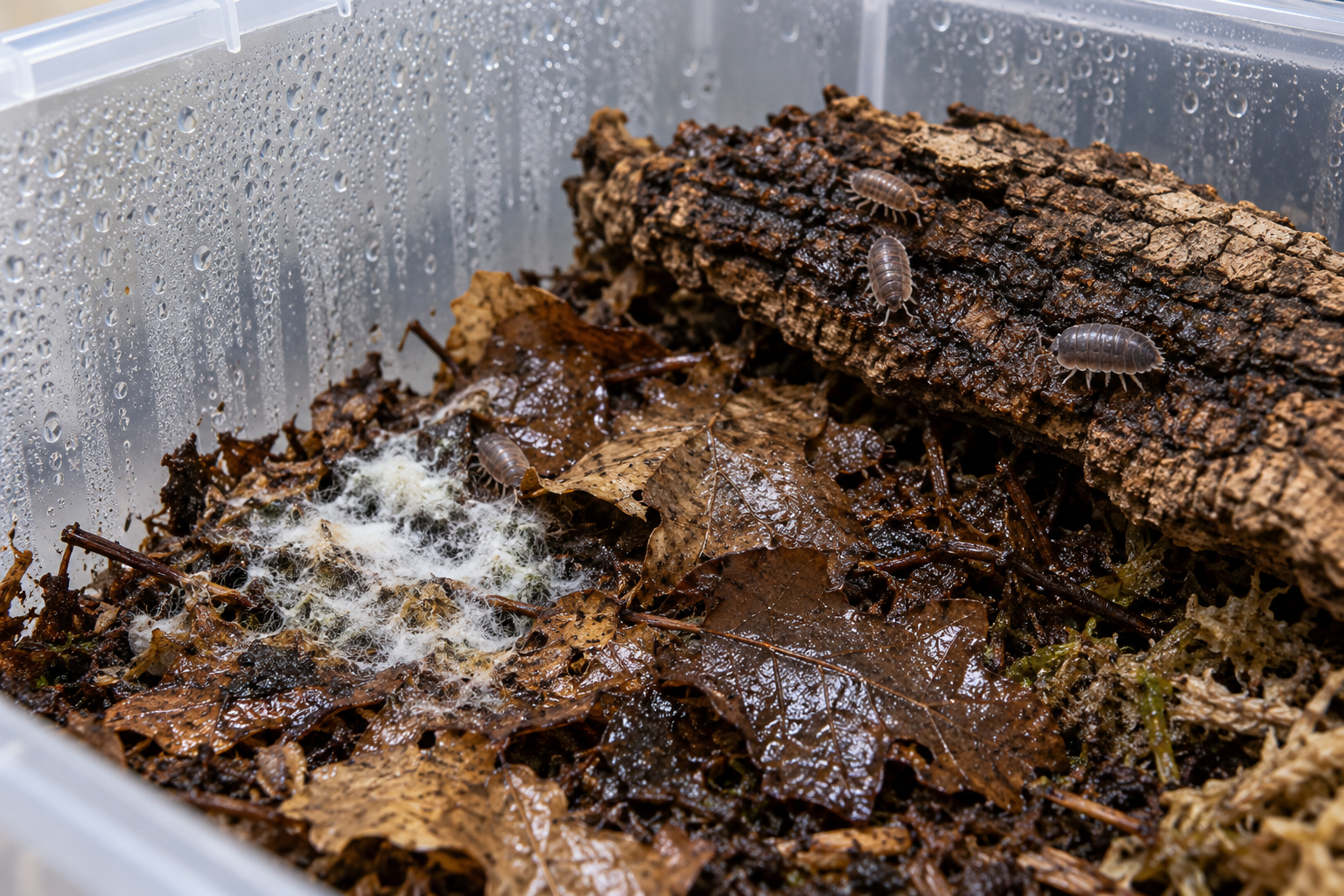
A healthy bin feels damp to the touch with no dripping, and it should never have actual pooled water anywhere in it. Too wet looks different: condensation beading and running down the walls or the underside of the lid, a sour or ammonia-like smell when you crack it open, and visible mold, either a white fuzzy bloom or darker spore patches, spreading across substrate or leftover food.
The most urgent version of this problem is standing water deep enough for an isopod to actually drown in, which is a real risk covered in more depth in our can isopods drown guide. If you are seeing any combination of these signs, work through the fixes below in order rather than jumping straight to the most drastic one.
Fix 1: Ventilation before anything else
A sealed, airless container is the single most common cause of a swampy bin, since decomposing leaf litter and food naturally give off moisture and heat that has nowhere to go in a tightly closed enclosure. Crack the lid, swap in a mesh or fabric-vented top, or add a few extra air holes, and you will often see condensation clear up within a day or two without changing anything else about the substrate.
The trade-off is real for humidity-loving species: more airflow does mean you will need to mist a little more often to hold your target humidity. That is a far better problem to manage than a sealed bin that is quietly cooking mold and stressing the whole colony, so do not skip this step just because a tropical species technically wants it humid.
Fix 2: Remove the actual wet and spoiled spots
Ventilation fixes the air, but it will not undo standing water or rotting food that is already sitting in the bin. Pull out any visibly spoiled fruit, protein, or produce, and scoop out substrate that is fully saturated or sitting in a puddle rather than just damp. Trying to air-dry a genuinely soaked bin in place takes far longer and lets mold keep spreading the whole time.
This is also the moment to check for overfeeding, since a pile of uneaten protein or fruit sitting in a humid bin is one of the most common causes of both mold and the sour smell in the first place. Cut back the next feeding, and only offer what a colony can realistically finish within a day or two.
Fix 3: Rebuild one clear damp refuge, not a swamp
Once the worst of the wet material is out, resist the instinct to keep the whole bin uniformly damp again. Add a layer of fresh, drier substrate across most of the footprint, and concentrate the moisture into one clearly defined damp corner instead, using a patch of sphagnum moss or a denser pocket of leaf litter as the refuge. A moisture gradient like this gives isopods a choice, and it dries out far more evenly than a bin that is soaked edge to edge.
This same damp-corner approach is exactly what a healthy, well-run bin should look like on an ongoing basis, not just as a one-time fix. Our isopod substrate recipe lays out the layered mix we build on our own farm, which is designed from the start to avoid this problem rather than just recover from it.
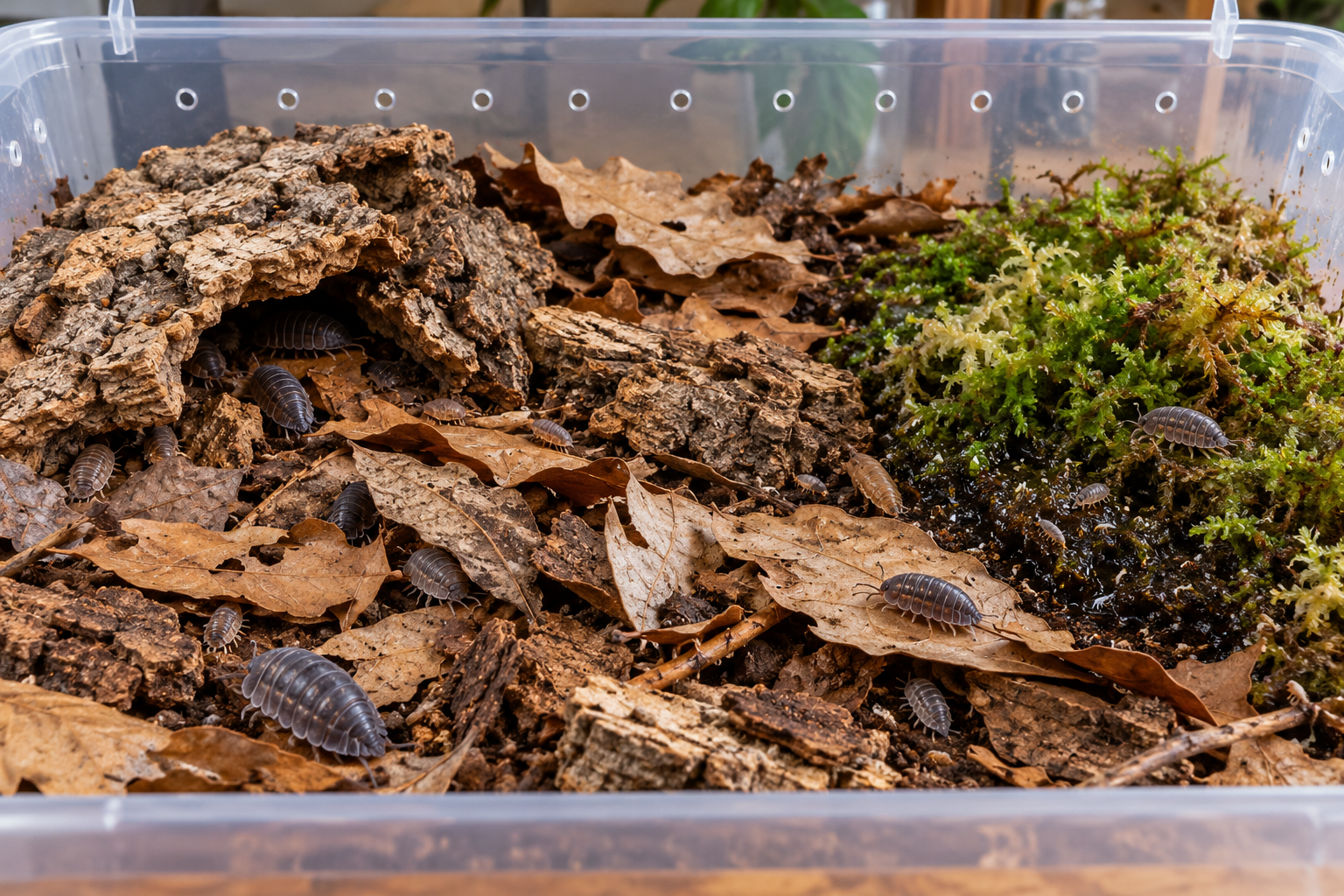
Fix 4: Let springtails handle the ongoing mold patrol
Springtails are the actual long-term answer to mold, not a chemical spray or a constant manual scrape, since they graze fungus and mold as a normal part of their diet and reproduce fast enough to keep pace with a typical bioactive bin. Seeding a culture of Folsomia candida, the common temperate white springtail, into the substrate gives you a living crew that keeps working even when you are not checking the bin every day.
Chemical mold treatments are not a safe option around isopods in the first place, so springtails are not just the lower-effort choice, they are the actually appropriate one. Once established, they will keep grazing new mold down as fast as it appears, which is a large part of why we build most of our own combo packs with a springtail culture included alongside the isopods.
Not mold? Check for mites or a drowning risk instead
Pale, shiny, fast-moving specks swarming over food rather than the substrate itself are grain mites, not mold, and they call for a different fix built around cutting protein and moisture rather than adding ventilation. Our grain mite guide covers that specific problem in detail if what you are seeing does not match the mold and condensation signs above.
And if the issue is genuinely standing water rather than humidity or mold, treat it as the more urgent drowning risk it actually is: remove the water immediately and improve drainage in that spot so it cannot pool again. A too-wet bin is almost always fixable without losing the colony, as long as you catch it before it turns into either of those more serious versions of the same underlying moisture problem.
Fix a Too-Wet Bin
The living mold patrol and rebuild basics behind the fixes above, ready to add in one tap.
Frequently Asked Questions
Written by the TC INSECTS breeding team · Porter, Texas · Live Arrival Guarantee on every order
Have a care question? Ask our community.
Join Reptile Keepers USA, our free Facebook group for reptile, amphibian and invert keepers. Share your setups, get care help and swap feeder tips.
Join the free group