Isopod Molting & Color

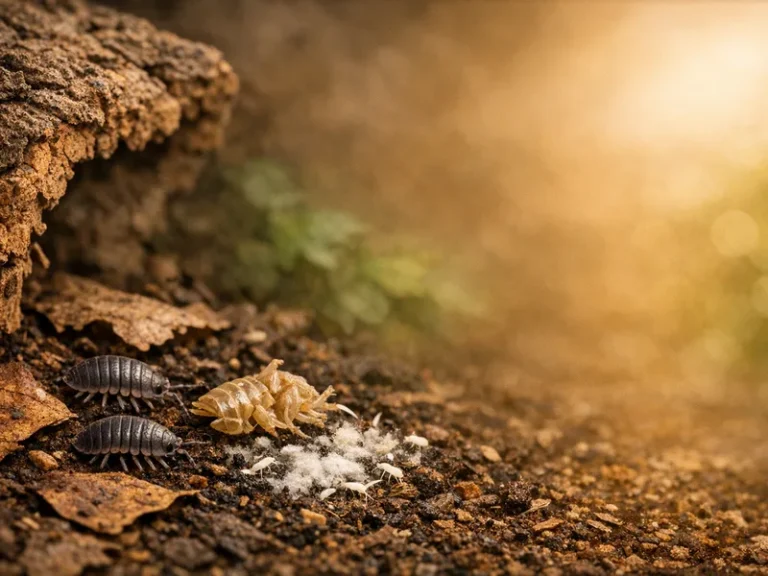
An isopod turning pale, white, or matte right after a molt is completely normal, not a sign of illness: the fresh exoskeleton underneath needs a day or two to harden and rebuild the waxy coating that gives a healthy isopod its normal color and shine. Isopods are unusual among crustaceans in molting in two separate halves, the rear half first and the front half several days later, so a two-toned or oddly pale look is simply part of the process. Some species also shift color gradually across several molts as they mature, which can look surprising the first time you see it happen. The one real warning sign is a molt that gets stuck: an isopod that stays fully pale, stiff, and unmoving well past the normal day-or-two window is usually in real trouble, almost always traced back to low calcium, humidity that let the new shell dry out before it hardened, or a poor diet. If you are looking at an isopod that is half white and half normal-colored right now, our half-white isopod guide walks through that exact stage.
Isopods molt in stages, unlike many other crustaceans
New shell hardens and rewaxes, color returns on its own
Usually traces to low calcium, humidity, or poor diet
The short answer: pale after a molt is normal
On our farm we see pale, freshly molted isopods in every colony, every week, and it is one of the most normal things a keeper will ever spot. A soft, washed-out, or slightly translucent look right after a molt does not mean an isopod is sick or dying. It means it just grew, and the new shell underneath has not finished hardening or picking up its normal color yet.
The color comes back on its own, generally within a day or two, with no intervention needed. The only thing worth doing during that window is leaving the isopod alone and keeping its normal moisture gradient and calcium source in place, exactly as covered in our isopod care guide for beginners.
Why isopods molt in two halves
Most arthropods shed their exoskeleton all at once. Isopods are the exception: they molt in two separate stages, the rear half of the body first and the front half several days later. During each stage, only that section looks pale while the rest of the body keeps its normal color and hardness.
This staggered process is a survival trick, not a flaw. By keeping half the body armored at all times, an isopod is never fully soft and defenseless the way some other molting animals are for a stretch. It is also exactly why a half-pale, half-normal look is not a warning sign by itself, and why front-white and back-white simply mark two different stages of the same ordinary event.
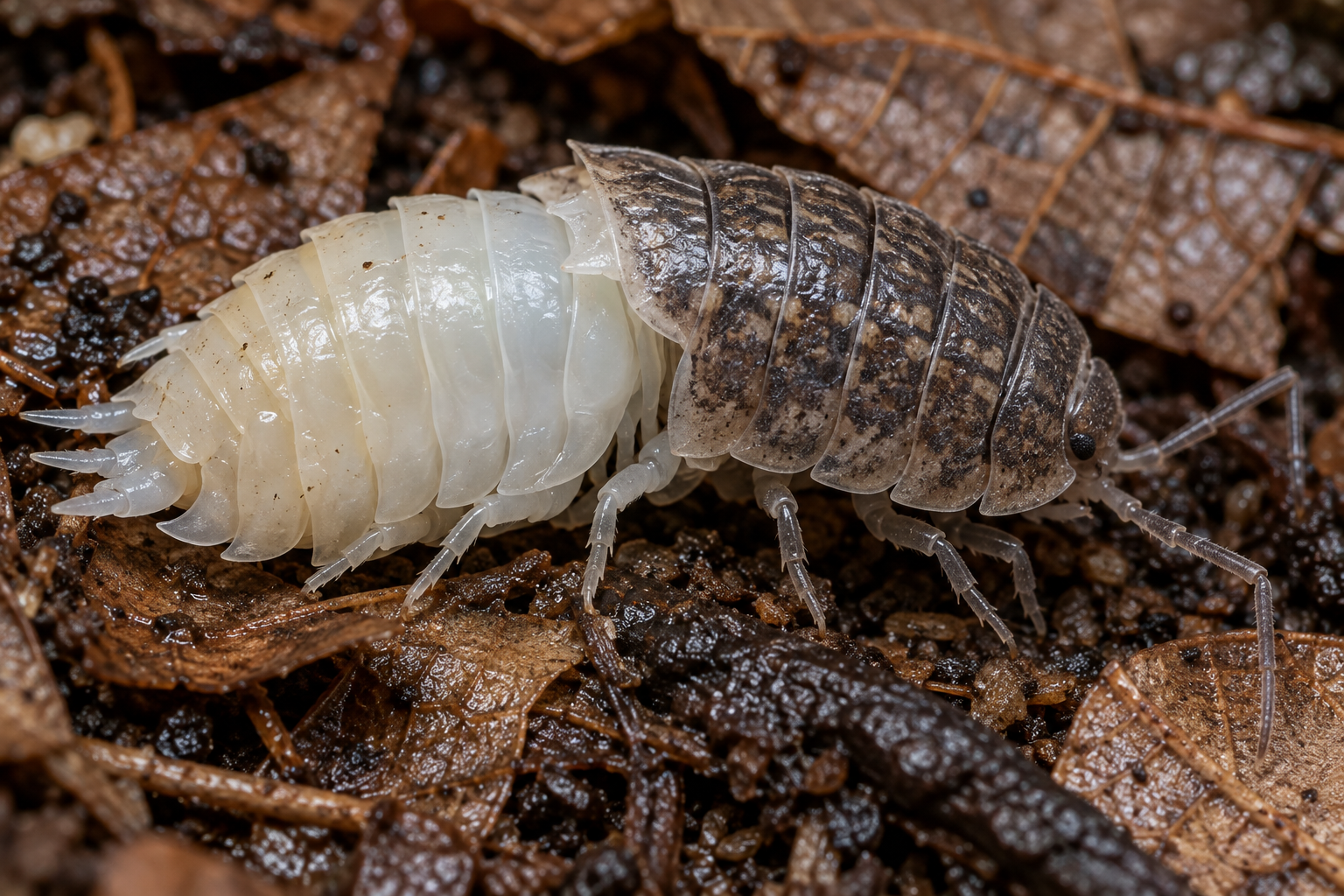
The wax coating: why a fresh molt looks dull, not just pale
There is more going on than color alone. An isopod's shell carries a thin waxy outer layer on top of the hard calcium carbonate underneath, and that wax layer is part of what gives a healthy isopod its normal sheen and helps it hold moisture. A brand new shell has not rebuilt that coating yet, which is why a freshly molted isopod often looks matte, dusty, or washed out rather than simply lighter in shade.
As the new shell finishes hardening and the wax layer redevelops over the following day or two, the sheen and color both return together. If an isopod still looks dull and pale well past that window, that is a more useful sign to watch than color alone, since a hardened shell without its wax layer restored can point to the same humidity and calcium issues behind a slower recovery.
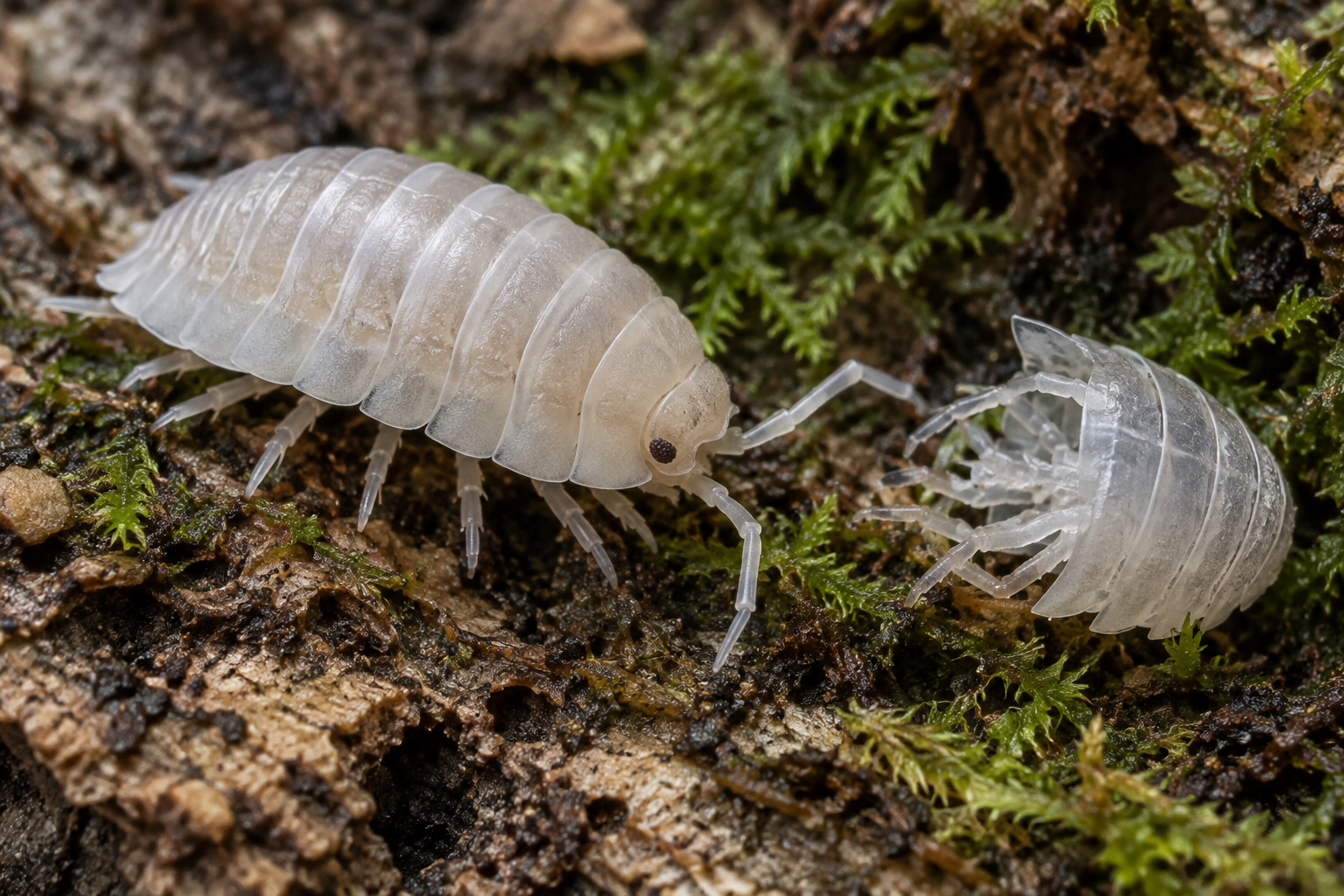
Do isopods change color permanently as they grow?
Beyond the temporary paleness of a single molt, some isopods genuinely look different across their lifetime, not just right after shedding. Young isopods, called mancae, are tiny and often duller or less patterned than adults, and some species and color morphs fill in, deepen, or sharpen their pattern more fully across several molts as they mature toward adult size.
This is a gradual, cumulative change rather than a single dramatic event, and it is a different thing from the transient pale phase covered above. If a young isopod of a patterned morph looks washed out or incompletely marked compared to the adults in the same culture, that is often simply a matter of growing up, not a problem to fix.
When it is not normal: the stuck molt
The real warning sign is an isopod that stays fully pale, rather than half pale, and is not moving well past the normal day-or-two window. Other red flags include an isopod that looks visibly stuck in its old shell, unable to pull free, or one that stays stiff and unresponsive rather than sluggish but active.
Most stuck or failed molts trace back to one of three things: not enough calcium available to harden the new shell, humidity too low so the shell dried out before it finished hardening, or a poor diet that left the isopod without the reserves to complete the process. Sometimes, despite good care, an old or weak isopod simply does not survive a molt, which is a normal part of running any colony.
The fix: calcium, humidity, and leaving it alone
Keep a calcium source like cuttlebone available in the bin at all times, not just when you notice a problem, since isopods graze it on their own schedule around every molt. Maintain a genuine damp zone rather than letting the whole bin run dry, and tuck in a patch of damp sphagnum moss near a molting isopod if you want to raise humidity right where it is sitting. Our calcium and substrate supplies cover both of those bases.
Otherwise, resist the urge to dig up or handle a pale isopod to check on it. A molting isopod is temporarily soft and vulnerable, and disturbing it does not speed anything up. For the diet side of the equation, our guide on what to feed isopods covers the protein and calcium routine that keeps molts going smoothly in the first place.
Support a Healthy Molt
The calcium, moisture, and diet supplies behind the fixes above, ready to add in one tap.
Frequently Asked Questions
Written by the TC INSECTS breeding team · Porter, Texas · Live Arrival Guarantee on every order
Have a care question? Ask our community.
Join Reptile Keepers USA, our free Facebook group for reptile, amphibian and invert keepers. Share your setups, get care help and swap feeder tips.
Join the free group