Why Is My Isopod Half White?
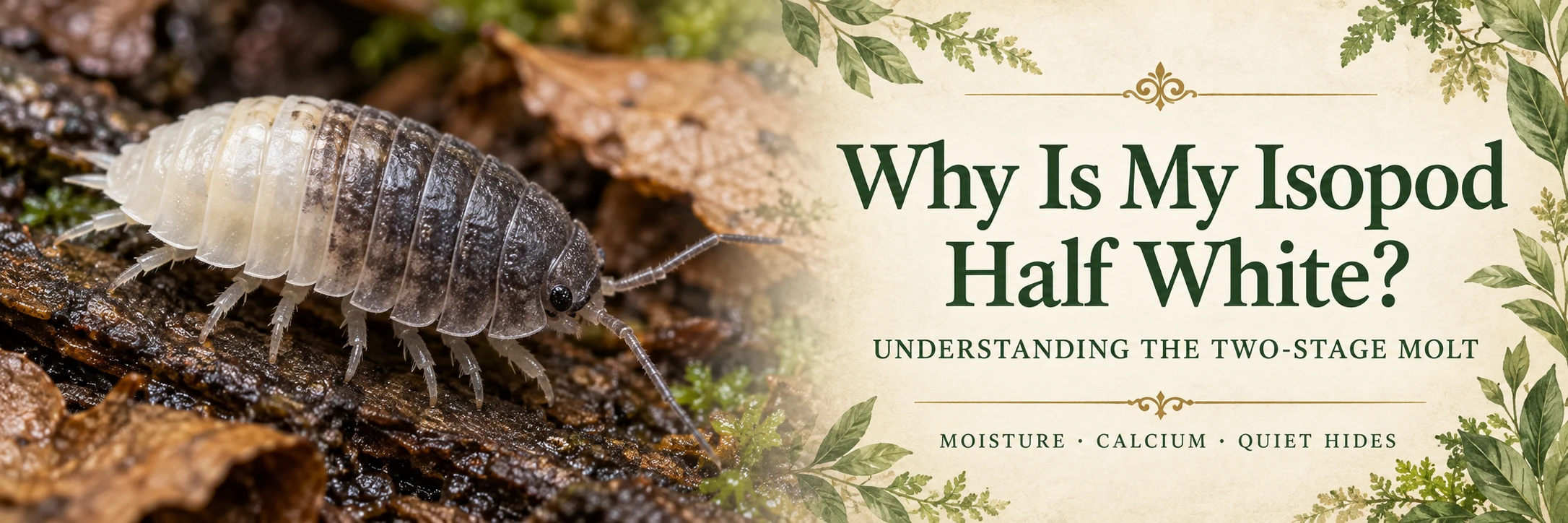
The back half sheds first, then the front half follows several days later
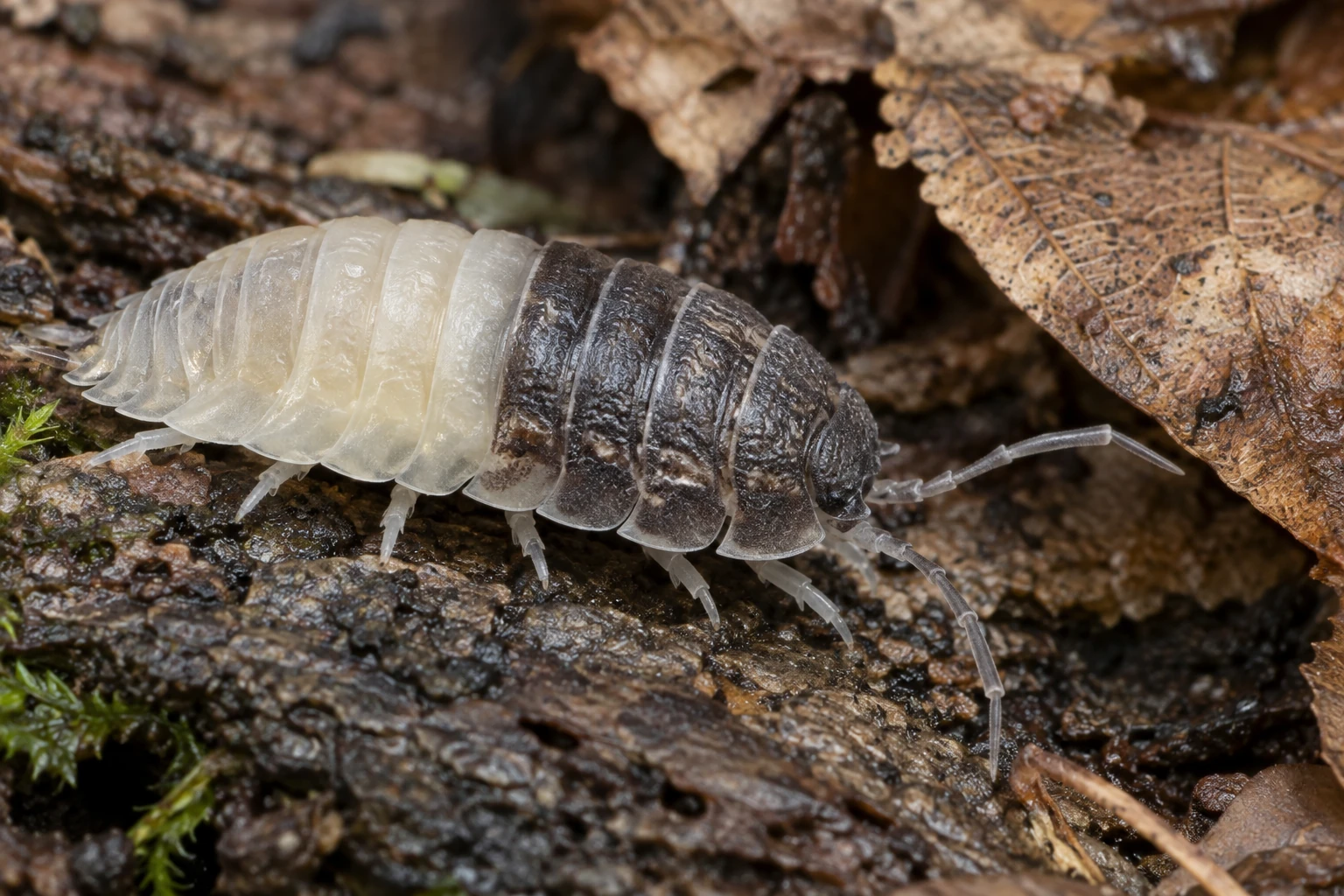
White in the rear or the front just marks a different stage of the same molt
Staying fully white and still for days points to a failed molt, not a stage
A normal part of growing
A half-white isopod is almost always mid-molt, not dying. Isopods shed their exoskeleton in two halves instead of all at once, losing the back half first and then the front half a few days later, so looking pale and two-toned for a day or two is a normal part of growing, not a sign of trouble. The only real red flag is an isopod that stays fully pale and motionless well past that window.
Give a molting isopod a quiet hide
Keep the usual moisture gradient, leave calcium available, and avoid disturbing a soft-shelled isopod.
The two-half molt, explained
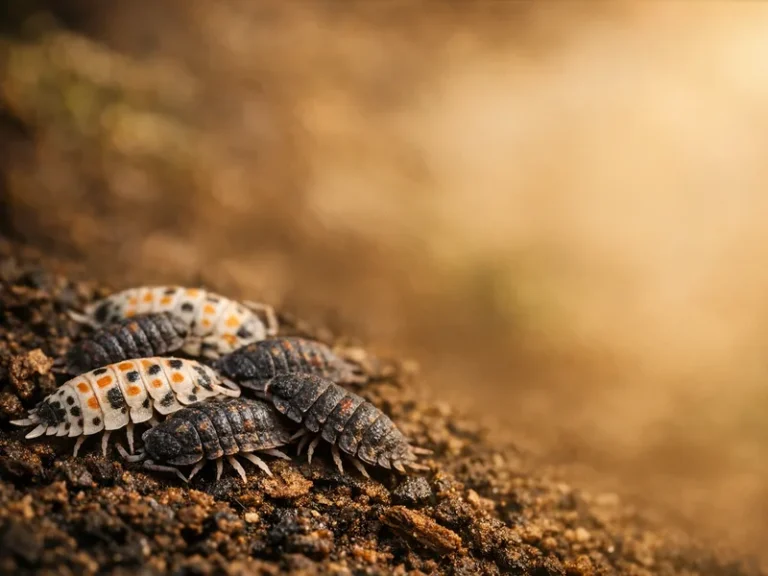
Isopods do not shed their whole shell in one go like a snake sheds its skin. They molt in two separate stages: the rear half of the body first, then the front half a few days later. During each stage, the section that just molted looks pale white or slightly translucent while the fresh exoskeleton underneath finishes hardening.
This staggered process is a survival trick, not a malfunction. By keeping half the body armored at all times, an isopod is never fully soft and defenseless the way some other molting animals are. On our farm we see half-white isopods in every colony, every week, and it is one of the most normal things a keeper will ever spot. For the full rundown on care basics, see our isopod care guide for beginners.
Front-white vs back-white: what each stage means
If the back half of the isopod, the end nearer the tail, is the pale section, that usually marks the first stage of the molt. If instead the front half, near the head and legs, is the pale section, that usually marks the second stage a few days after the first. Either pattern on its own, for a day or two, is completely normal.
New keepers sometimes think a half-white isopod looks like it is melting or falling apart. It is not. That pale half is brand new shell that just has not finished hardening and picking up color yet. Give it a little time and it will match the rest of the body again.
When it is not normal: signs of a failed molt
A few signs separate a normal molt from a real problem. Watch for an isopod that is fully pale rather than half pale, one that is not moving at all, or one that stays in that state for an extended stretch, well beyond the day or two a normal stage takes. An isopod visibly stuck in its old shell, unable to pull free, is also a warning sign.
Most failed molts trace back to low humidity or a missing calcium source, since both are needed to build and harden new shell. Sometimes, despite doing everything right, an old or weak isopod simply does not survive a molt, which is a natural part of running a colony. If you are seeing repeated deaths rather than one occasional loss, our post on why isopods are dying walks through the other common causes.
What to do while it molts
The best move is almost always to leave it alone. Do not dig up a half-white isopod to check on it and do not handle it. Keep the enclosure running as usual, with your normal moisture gradient, a calcium source like cuttlebone available at all times, and plenty of hides so a soft-shelled isopod has somewhere safe to sit it out. You can stock up on calcium and other supplies through our insect nutrition and care products page.
Do not remove the shed exoskeleton either. Isopods commonly eat their own molted shell, and their colony mates' sheds too, because it is a ready source of calcium. That is why a shed often disappears from the bin within a day, and it is a good thing, not something to clean up.
Rescue steps if you suspect a failed molt
If an isopod looks fully pale, stiff, and unmoving well past a normal molt window, a few steps can help. Raise the local humidity right where it is sitting with a small patch of damp sphagnum moss, since low humidity is one of the most common reasons a molt stalls out partway through.
If it is housed with fast-moving or more aggressive tankmates, gently isolate it in a small deli cup with damp substrate so nothing bothers it while it is defenseless. Confirm a calcium source is actually present and not buried or dried out. If you want to check the isopod's sex or condition once it is fully hardened again, our guide on how to sex isopods covers what to look for.
Keep reading: Isopod Growth Timeline: How Long It Takes to Mature
The Healthy Molt Kit
Calcium, mineral feed, and moisture-holding substrate for trouble-free molts.
Frequently asked questions
Why is my isopod half white?
A half-white isopod is almost always mid-molt, not sick or dying. Isopods shed their exoskeleton in two halves, the back half first and then the front half a few days later, so a pale, two-toned look for a day or two is a normal part of the process.
Is a white isopod dying?
Not usually. A half-white isopod is normal mid-molt behavior. It only becomes a concern if the whole body stays fully pale and the isopod is not moving well past the normal day-or-two window, which can point to a failed molt rather than routine shedding.
How long does an isopod stay half white?
Each half of the molt typically clears up within a day or two as the new shell hardens and darkens. The full two-stage process, back half then front half, plays out over roughly a week from start to finish.
Should I remove a molting isopod from the colony?
No, leave it in place unless it shares a bin with fast or aggressive tankmates. A molting isopod is temporarily soft and defenseless, so isolating it only makes sense if you have reason to think it is at risk from cage mates, not as a routine step.
Why do isopods eat their own molted shell?
The shed exoskeleton is a ready source of calcium, which isopods need to build and harden their next shell. Eating a fresh molt, their own or a colony mate's, recycles that calcium instead of wasting it, which is why sheds often vanish from the bin quickly.
What if my isopod stays white for several days?
An isopod that stays fully pale and motionless for an extended stretch beyond a normal molt cycle likely had a failed molt. Raise humidity around it with damp moss, confirm a calcium source is present, and isolate it from aggressive tankmates if needed.
Keep learning
Have a care question? Ask our community.
Join Reptile Keepers USA, our free Facebook group for reptile, amphibian and invert keepers. Share your setups, get care help and swap feeder tips.
Join the free group