Porcellio scaber Morphs
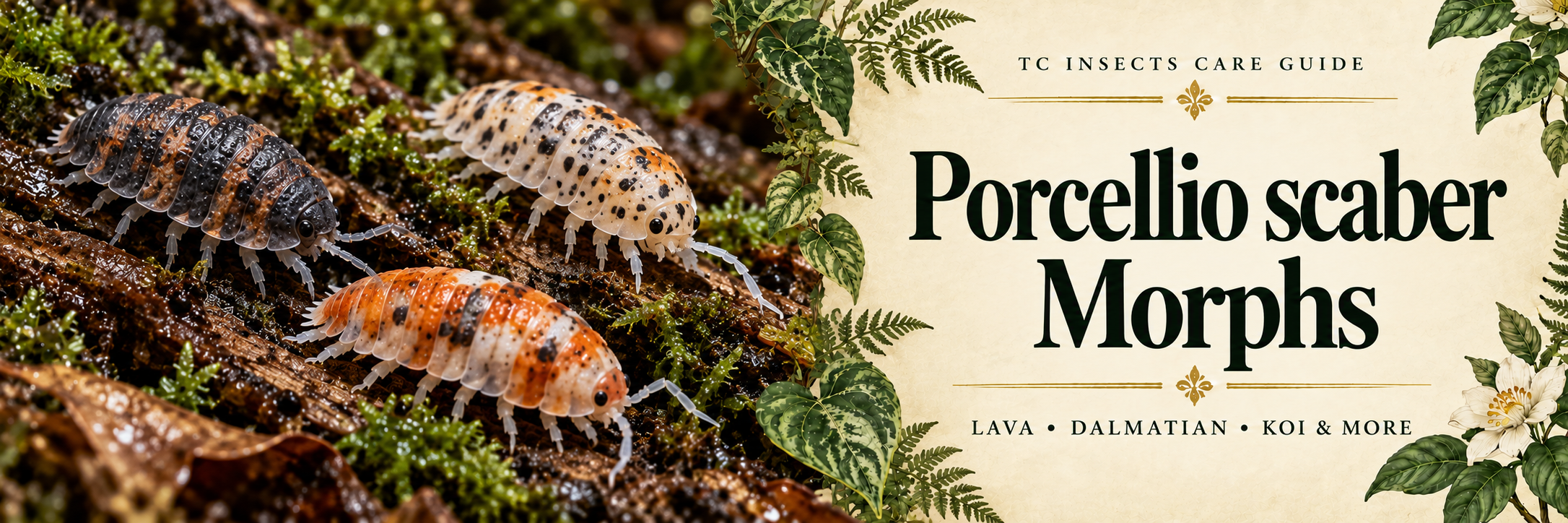
Porcellio scaber, sometimes called the common rough woodlouse, is the base species behind most of the hobby's flashiest color morphs, Lava, Orange Dalmatian, Red Calico, Koi, and Lemonade among them. Every one of those names describes the exact same easy-care animal wearing a different color pattern, not a different species with different needs, the same logic behind our Zebra isopod morph guide. That means the entire decision here is aesthetic: pick the pattern you like, and the care is identical no matter which name is on the label. This guide covers what Porcellio scaber actually needs, then runs through the named morphs so you can shop by looks with confidence.
The rough woodlouse behind Lava, Dalmatian, Koi, Calico, Lemonade
A wide tolerance that makes this a genuinely easy species
Pick your favorite pattern, husbandry never changes
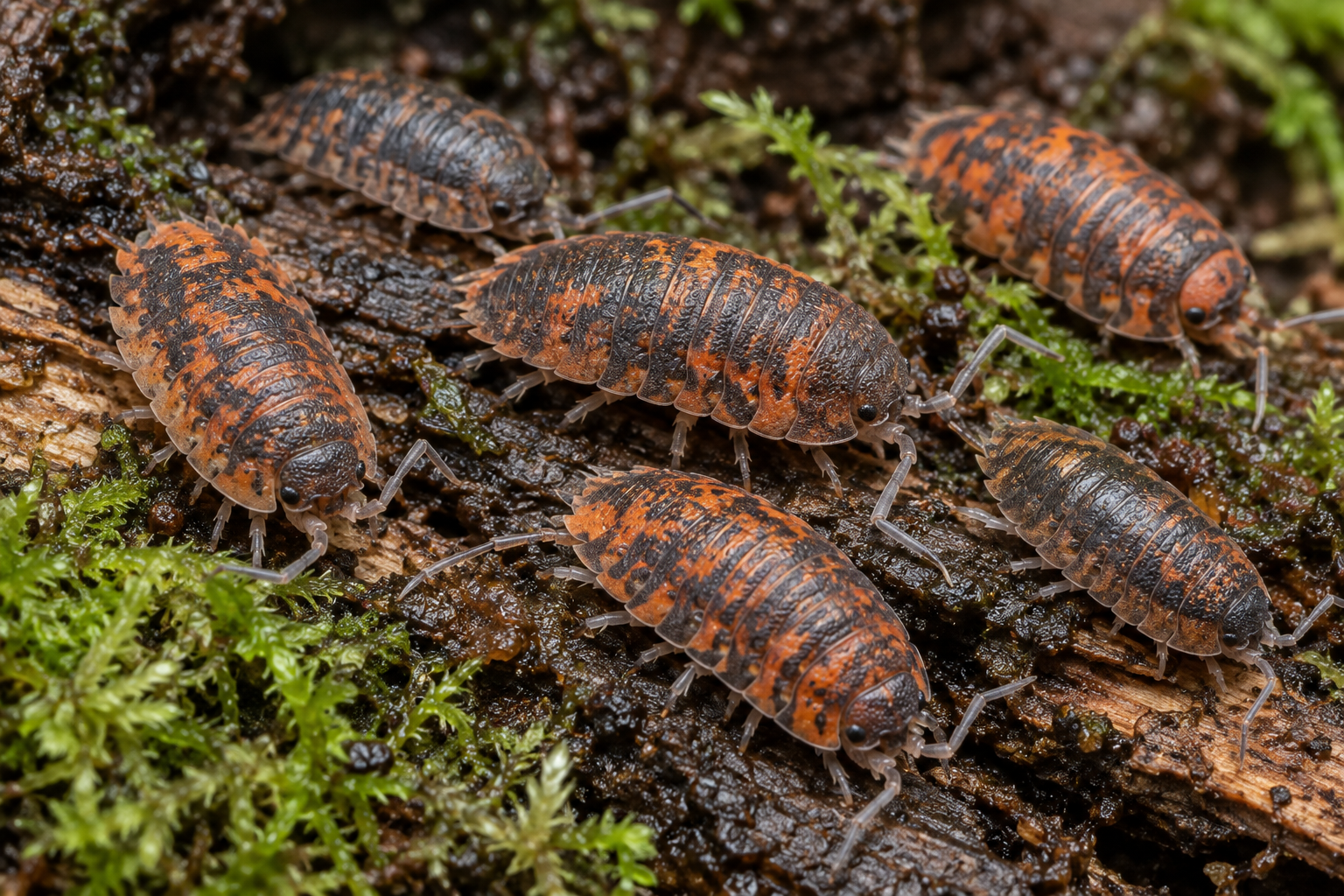
One species, five looks
Porcellio scaber is one of the most common isopod species in the world, found in gardens and under logs across much of the temperate world long before it ever became a named hobby morph. Selective breeding for color over the years has produced the named lines TC carries: Lava's dark, mottled pattern, Orange Dalmatian's spotted orange-and-white coat, Red Calico's patchy red mottling, Koi's koi-fish-inspired orange and white, and Lemonade's pale, bright yellow wash.
None of these are separate species or even separate subspecies, they are color lines within Porcellio scaber, the same way Zebra isopods come in wild-type and Chocolate color forms within a single species. If you like more than one pattern, you can keep several scaber morphs side by side with zero adjustment to husbandry.
Meet the morphs: Lava, Dalmatian, Calico, Koi, Lemonade
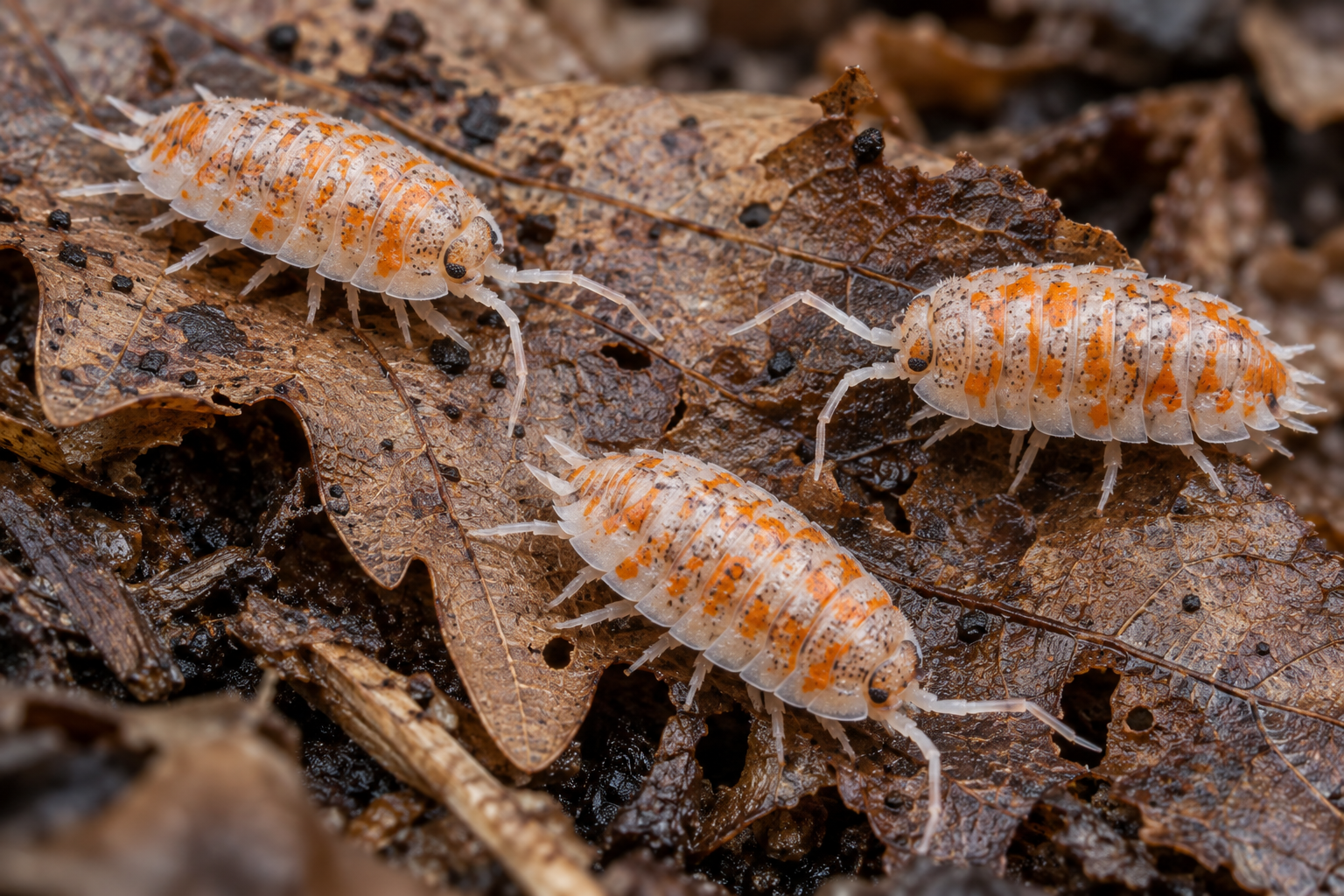
Orange Dalmatian is the classic entry point, an off-white body scattered with orange spotting reminiscent of the dog breed's coat. Lava runs darker and more mottled, a smoky, volcanic pattern that reads almost black in low light. Red Calico brings warmer, patchy reddish mottling into the mix, closer to a tortoiseshell cat's coat than Dalmatian's cleaner spotting.
Koi leans into bright orange-and-white patches inspired by ornamental koi fish, a genuinely showy pattern for a display bin, while Lemonade is the palest and brightest of the group, a soft overall yellow wash rather than a spotted or mottled pattern. All five ship and breed the same.
Care that never changes between morphs
Porcellio scaber tolerates a genuinely wide temperature range, roughly 60 to 90 F, part of why it has become such a popular beginner species regardless of which color line you pick. Keep the substrate moist but well ventilated, coco fiber and leaf litter work well, since scaber wants humidity without a stagnant, airless bin.
This is a surface-active species more than a deep burrower, so a few inches of substrate with plenty of leaf litter and a piece of cork bark for cover is enough. It is a forgiving genus member across the board, which our isopod genus comparison covers alongside Armadillidium, Cubaris, and Porcellionides.
Feeding: protein once or twice a week, on top of leaf litter
Leaf litter and decaying wood form the everyday diet for any scaber morph, but a little added protein once or twice a week, fish flake, a pinch of high-protein isopod feed, or produce scraps, noticeably speeds growth and breeding. Keep a reptile-safe calcium source available at all times as well, since it is what allows a clean molt, the same standing advice in our isopod calcium guide.
Do not overdo the protein: too much invites mold and mites rather than faster growth, so a small, regular amount beats an occasional large feeding.
Breeding and colony growth
Every Porcellio scaber morph breeds at the same genuinely easy pace, one of the reasons the species became a hobby staple in the first place. Give a new culture a few months of steady conditions and minimal disturbance before judging its progress, and expect a visible, harvestable population well within a beginner's first year.
If growth stalls despite steady care, the causes are the same ones that affect any isopod culture, our guide on why an isopod colony won't breed works through them.
Building a scaber collection
Because care never changes between morphs, building a scaber collection is entirely a matter of taste and budget. Start with Orange Dalmatian or Lava as the most widely available entry points, then add Red Calico, Koi, or Lemonade as your collection grows, all in the same enclosure or split across bins if you want to keep the color lines distinct for resale.
If you are comparing scaber against other easy genera before deciding where to put your next culture, our best beginner isopods guide and isopod genus comparison both cover how it stacks up.
Pick Your Pattern, Same Easy Care
Five Porcellio scaber morphs behind the questions above, all one species, ready to add in one tap.
Frequently Asked Questions
Written by the TC INSECTS breeding team · Porter, Texas · Live Arrival Guarantee on every order
Have a care question? Ask our community.
Join Reptile Keepers USA, our free Facebook group for reptile, amphibian and invert keepers. Share your setups, get care help and swap feeder tips.
Join the free group