Zebra Isopod Morphs
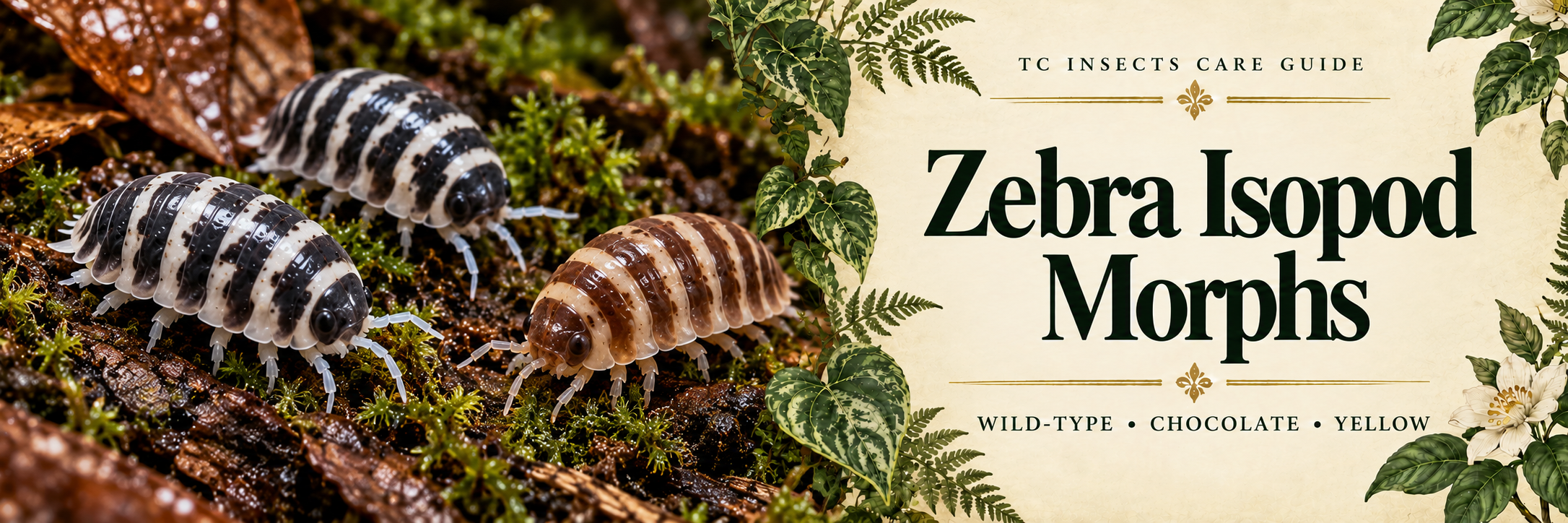
Wild-type Zebra and Chocolate Zebra are not two different isopods, they are two color lines of the exact same species, Armadillidium maculatum, so their care, humidity needs, and breeding speed are identical. The only real difference is the color you see: sharp black-and-white banding on the wild type versus a warmer, brown-based wash on Chocolate Zebra. Standard Zebra husbandry is already well covered in our isopod care guide, moderate humidity, a damp-not-wet moss zone, bold daytime activity, so this guide focuses on the part most competitor pages skip: choosing between TC's morphs. If you like both looks, pick on appearance alone, since the husbandry side of the decision is already settled.
Wild-type and Chocolate Zebra are color forms, not different species
A genuinely restricted native range
Pick on looks, not husbandry
The short answer: same species, different color lines
Wild-type Zebra and Chocolate Zebra are both Armadillidium maculatum, and the differences stop at color. Care, temperature range, humidity needs, and breeding speed are all identical between them, putting this comparison in the same category as our Powder Blue versus Powder Orange guide, a genuine same-species, different-color decision rather than a husbandry tradeoff.
TC also carries a rarer third line, Yellow Zebra, under the same species umbrella, for collectors who want a less common look without changing anything about how they keep it.
Wild-type Zebra: banding with a real evolutionary story
The wild-type Zebra's sharp black-and-white banding is not just decoration, it is widely discussed among keepers as a case of Batesian mimicry, a harmless species evolving a warning pattern that echoes a genuinely dangerous or unpalatable animal, which may help deter predators in its native range. That range is a genuinely restricted pocket of southeastern France, part of why wild-type Zebra built such a following once it entered the hobby, a striking look tied to a real, narrow point of origin rather than a manufactured color line.
In the enclosure, wild-type Zebra is also known for bold daytime activity, unlike many isopods that stay hidden until dark, making it one of the more genuinely watchable species for a display setup.
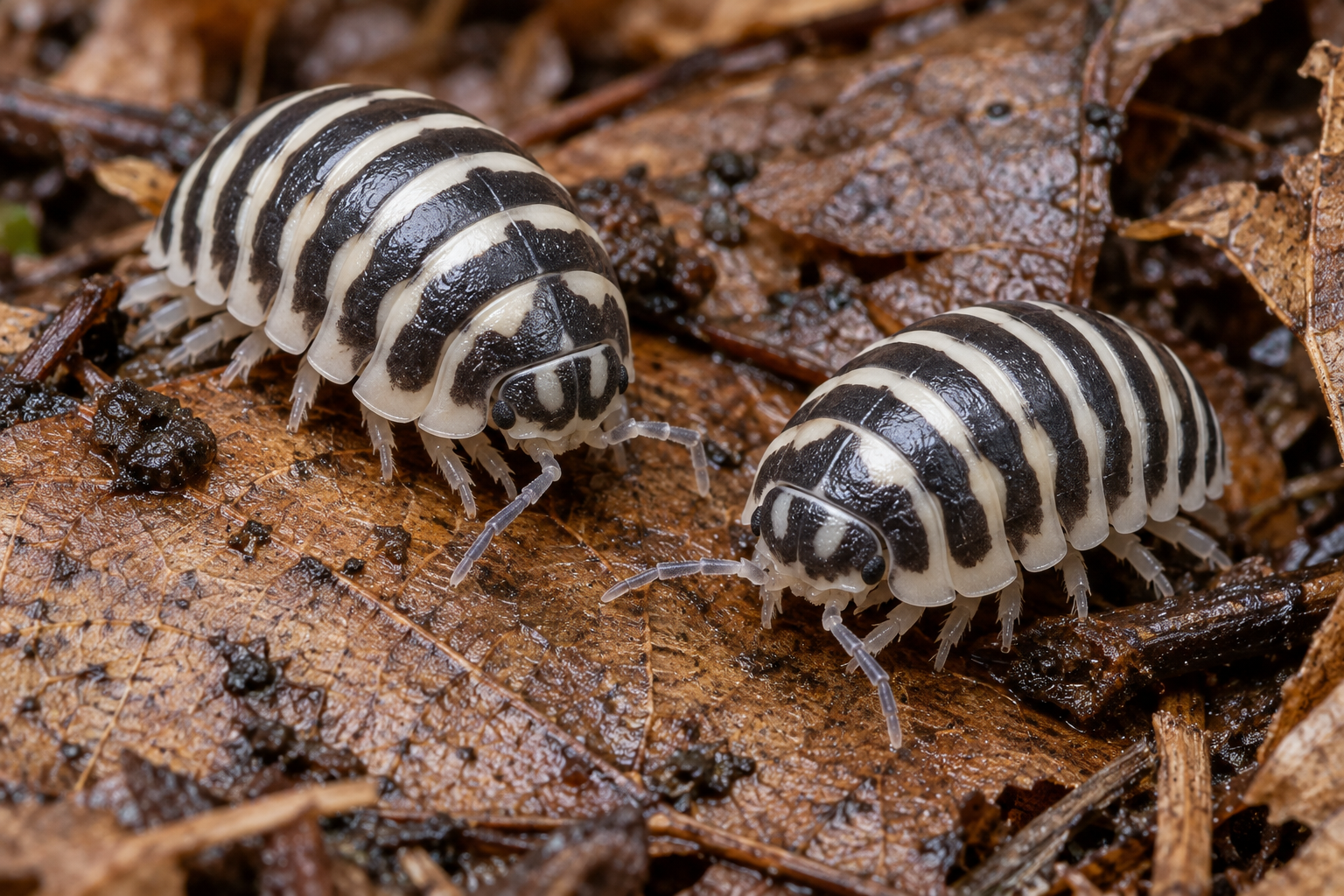
Chocolate Zebra: a color line bred for the US market
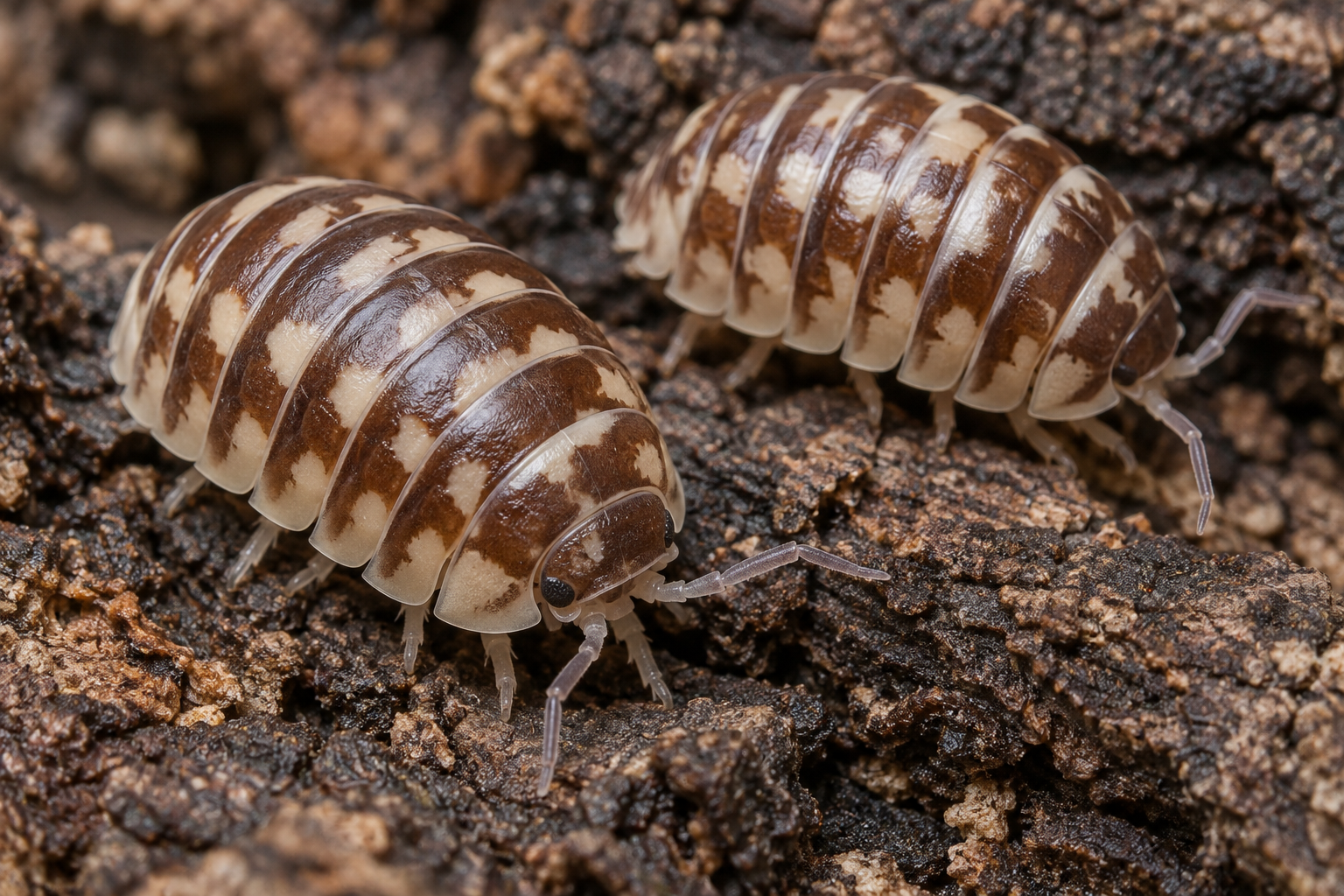
Chocolate Zebra swaps the sharp black-and-white contrast for a warmer, brown-based wash over the same banding pattern, a color line developed and bred within the US hobby rather than a separate wild population. If you want the Zebra look but prefer a warmer palette against your substrate, or you simply want a less commonly seen color in your collection, Chocolate Zebra is the direct answer.
Because it is a bred color line rather than a distinct species, Chocolate Zebra carries none of the wild-type's specific native-range story, but it carries every bit of the same easy care and bold activity level.
Care is identical across every Zebra morph
Whichever morph you choose, Zebra husbandry does not change. Keep moderate humidity with a damp-not-wet moss zone rather than a soaked substrate, provide leaf litter to graze, and expect an easy, forgiving beginner-level culture across the board. Our isopod care guide covers the full beginner setup if you have not kept isopods before.
Calcium still matters for a clean molt the same way it does for any isopod, our isopod calcium guide covers keeping a source available at all times, and there is nothing morph-specific to adjust here either.
A third option: Yellow Zebra
Beyond the two main lines, TC also carries a rarer Yellow Zebra morph, a yellow-toned take on the same maculatum banding pattern. It costs more than the two common morphs simply because fewer breeders work with it, but the care conversation is identical to wild-type and Chocolate Zebra: same species, same requirements, just a third color option for a collector who wants something less commonly seen.
If you are building a genus collection rather than just one culture, our guide to klugii and gestroi covers two more easy, overlooked Armadillidium species worth adding alongside your Zebra line.
So which one should you actually buy?
Since husbandry is not the deciding factor, buy on looks. Picture the sharp black-and-white contrast of wild-type against your actual substrate color, then picture Chocolate Zebra's warmer brown wash in the same spot, and pick whichever reads better to your eye. There is no wrong answer on the care side, which is the entire point of this comparison.
One caveat carries over from our Powder isopod comparison: since all three are the same species, housing them together long-term risks interbreeding and blurring the distinct color lines. Keep separate bins if you want to maintain clean wild-type, Chocolate, and Yellow lines, or mix them if you are only after cleanup activity and do not mind the colors drifting over time.
Pick Your Zebra, Same Easy Care
Wild-type, Chocolate, and the rarer Yellow Zebra, all one species, ready to add in one tap.
Frequently Asked Questions
Written by the TC INSECTS breeding team · Porter, Texas · Live Arrival Guarantee on every order
Have a care question? Ask our community.
Join Reptile Keepers USA, our free Facebook group for reptile, amphibian and invert keepers. Share your setups, get care help and swap feeder tips.
Join the free group