Armadillidium vulgare Morphs

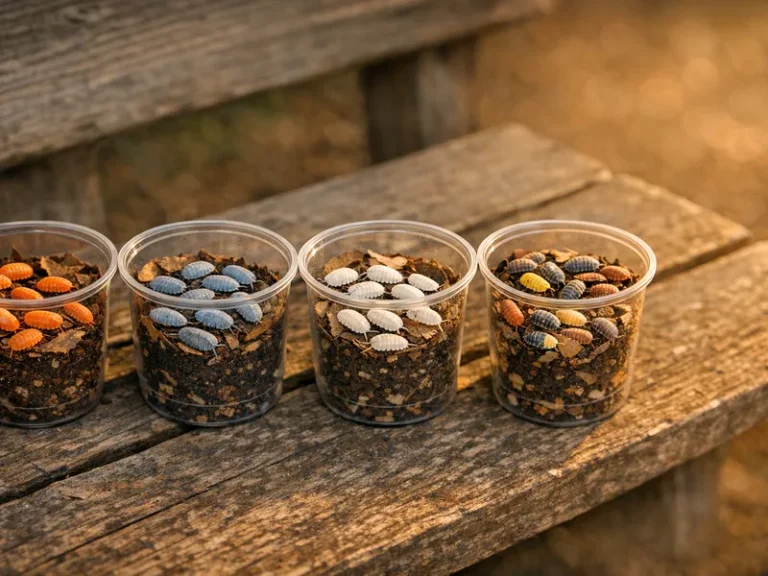
Magic Potion, Badium, Marbelized, and Red Head are four of the most searched color lines in the Armadillidium world, and the good news is that they share one easy, tolerant care standard, so choosing between them comes down to looks, not difficulty. Armadillidium vulgare is the common backyard pillbug, the roly poly most people grew up flipping over rocks to find, and decades of selective breeding have turned that same hardy animal into mottled, banded, and marbled color lines that barely resemble the wild original. A quick honest note before we go further: not every name on this list is technically a vulgare color form. Badium and Red Head are their own closely related species rather than true vulgare morphs, though you would never guess it from the care sheet, since all of them want the same setup. Our Armadillidium isopods page carries the whole group.
Same easy care whether true vulgare or a cousin species
Drier and more tolerant than tropical Cubaris
Typical for this genus in a well run colony
Meet the group: the common pillbug's fancy cousins
Every isopod on this list traces back to the same rugged, ball-rolling body plan as the pillbug in your backyard. Armadillidium vulgare is established across much of the world at this point, tolerant of a wide range of conditions, and forgiving of the kind of mistakes that would stress out a more delicate species. That toughness is exactly why breeders have spent years selecting it, and its close relatives, for color and pattern instead of just letting the wild gray form do its thing.
The result is a small lineup of named color lines and closely related species that all get marketed and shopped for the same way: as a fancier, better looking version of an animal that is already easy to keep. If you are brand new to the genus, our isopod genus comparison shows exactly how Armadillidium stacks up against Porcellio, Cubaris, and the rest before you commit to a morph.
Magic Potion: the breakout star, and a fun taxonomy debate
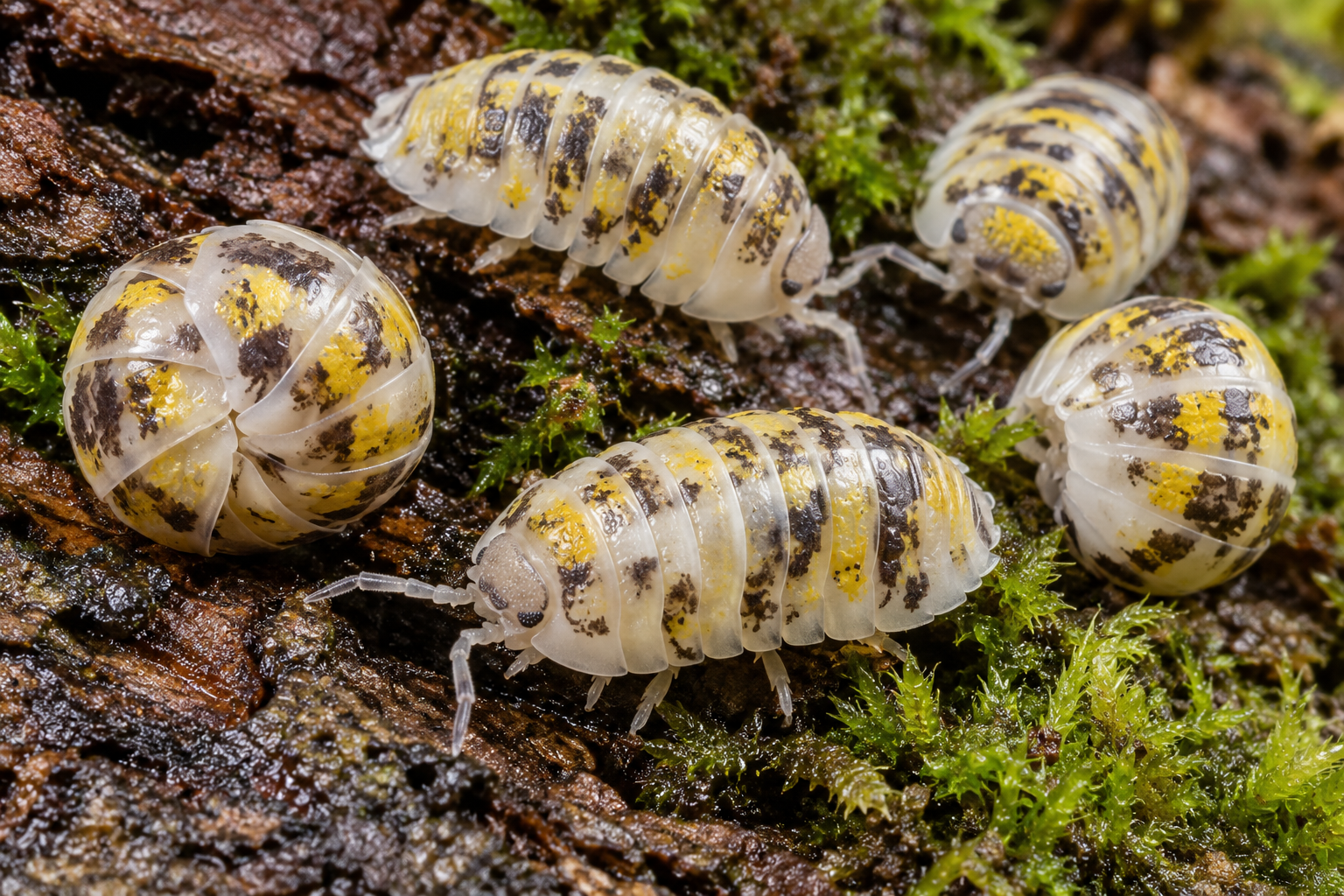
Magic Potion is the name that drives most of the search traffic in this group, and it earns it: a mottled wash of yellow, cream, and white over a pale body that looks genuinely unlike a normal pillbug. The line traces back to Japanese breeding programs, which is why our own listing carries it as 'Japanese Magic Potion,' and it breeds true enough that a colony keeps that pattern generation after generation without much fuss.
Here is the honest wrinkle. Most sellers, including ours, list Magic Potion as an Armadillidium vulgare color line, but you will occasionally see it attributed instead to the closely related Armadillidium depressum, since the two species are easy to confuse and the trade has never fully settled the question. It does not change how you care for it either way, which is the whole point of grouping these morphs together in the first place.
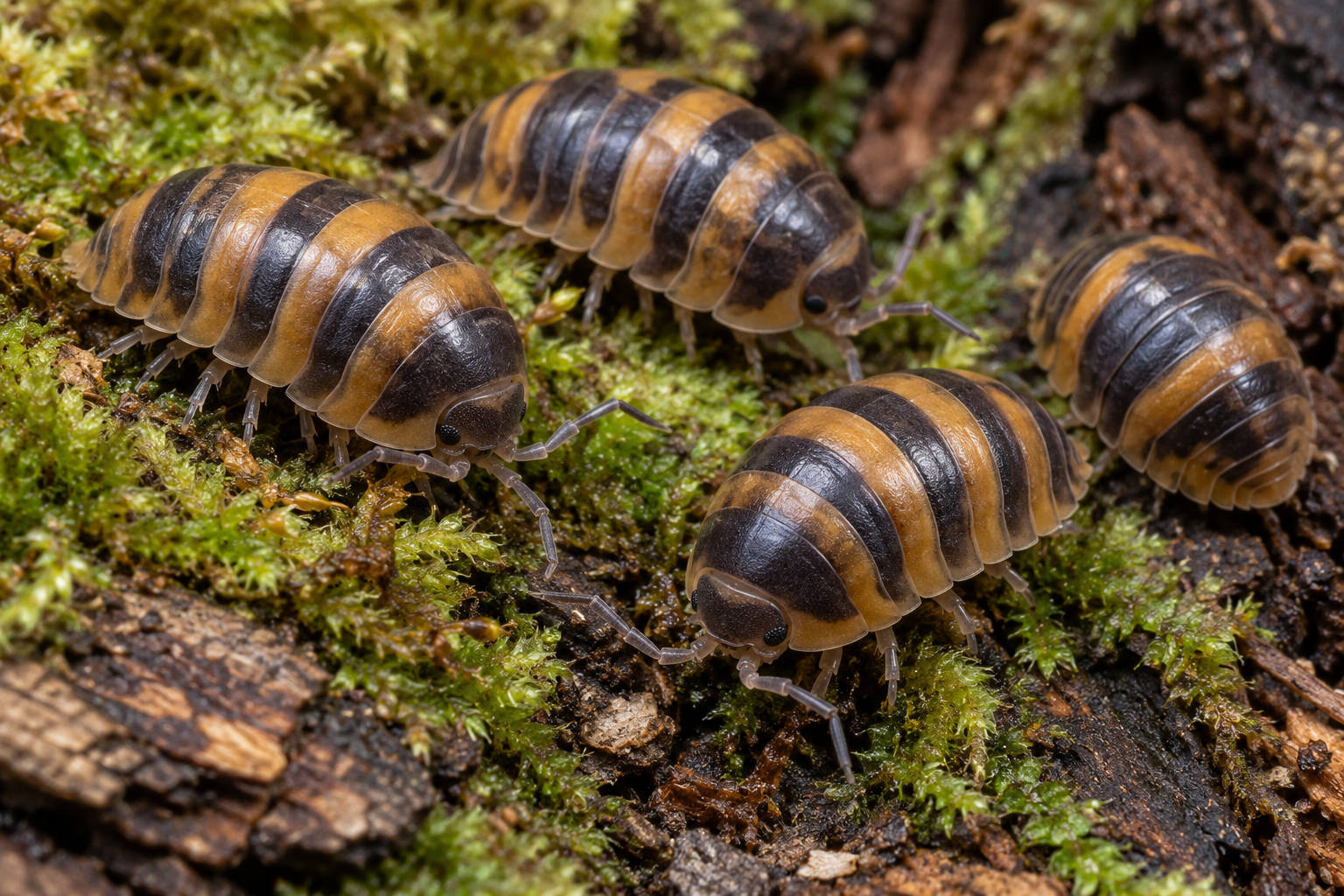
Badium, sold as 'Bumblebee': bold banding, a related species, same care
Badium is almost always sold under its common name, Bumblebee, for the bold black and gold banding that genuinely does look like the insect. It is a punchier, higher contrast look than any vulgare color line offers, and it is a favorite for keepers who want something that reads as obviously different from a plain gray pillbug at a glance.
Worth getting right: Badium is its own species within the genus Armadillidium, not a true color form of vulgare, even though roundups like this one often lump it in with the vulgare morphs for convenience. The distinction matters for accuracy, not for husbandry, since Bumblebee wants the same drier, room temperature setup as every other isopod in this piece.
Marbelized and Red Head: rarer picks for the collector shelf
Marbelized is a softer look than Magic Potion, a blended marble of cream and brown rather than a bold mottle, and it tends to move in and out of our stock as a specialty color line rather than a permanent fixture. If you see a similarly named 'marbled' isopod from a different Armadillidium species while you are shopping around, check the species listed on that specific product, since more than one Armadillidium carries a comparable pattern under a similar nickname.
Red Head is another one that is not a vulgare morph at all: it is Armadillidium flavoscutatum, named for the warm reddish orange shield across its head, and like Badium it is a distinct species we group into this roundup because the care and the shopping experience are identical. Both of these cycle through our availability more than Magic Potion does, so if you want one, it is worth checking current stock rather than waiting.
One easy care standard for the whole group
Every isopod in this piece wants the same setup: a 2 to 3 inch layer of a coco fiber and topsoil mix, a light scatter of leaf litter as the staple food, and a moisture gradient rather than a uniformly soaked bin, since this genus tolerates dry spells better than a tropical Cubaris and does not want to sit permanently wet. Room temperature, roughly 65 to 75 F, is plenty; none of these need supplemental heat in a normal home.
Keep a steady calcium source on hand, since molting is calcium hungry work for any isopod, and offer a small pinch of protein every week or two to support breeding. Our isopod substrate recipe and calcium guide both apply directly here with no adjustments needed for any morph on this list.
Picking your first, or your fifth, Armadillidium
If you are brand new to the genus, start with a true wild type or an inexpensive line like Orange Vigor to learn the ropes before spending more on a named color morph. If you already keep vulgare and want to expand the collection, Magic Potion is the obvious next step given how much demand it has, and Badium is the pick if you want a pattern that reads as bold from across the room rather than subtle up close.
One thing to plan around: if you keep more than one named color line in the same bin, they will interbreed, and a pure Magic Potion culture can start looking muddier within a few generations of mixing with a Wild Type or Gem Mix. Our guide on mixing isopod species in one bin covers that trade-off in more detail, and our isopod pricing guide explains why a named morph like this costs more than the plain gray original.
Start or Grow Your Armadillidium Collection
The named color lines behind the morphs above, all sharing one easy care standard, ready to add in one tap.
Frequently Asked Questions
Written by the TC INSECTS breeding team · Porter, Texas · Live Arrival Guarantee on every order
Have a care question? Ask our community.
Join Reptile Keepers USA, our free Facebook group for reptile, amphibian and invert keepers. Share your setups, get care help and swap feeder tips.
Join the free group