Millipede or Roach Arrived Inactive?
If your millipede or pet roach arrived curled up, stiff, or barely twitching, take a breath, that is almost always cold or travel stress, not a dead shipment. Millipedes coil into a tight defensive spiral when jostled or chilled, and roaches slip into a cold, motionless stupor called chill coma, and both usually start showing real signs of life within a few hours of warming gently at room temperature, sometimes longer after an especially cold trip. Before you try to revive anything, though, photograph the sealed container. If it truly looks dead, email customer.service@tcinsects.com within 1 hour of the delivery scan, or the same day if you chose Hold for Pickup, to protect your Live Arrival Guarantee.
Photograph the sealed container and email customer.service@tcinsects.com
Exotic invertebrates ship Hold for Pickup for the safest trip
Gradual warming at room temperature works better than heat
Protect Your Guarantee Before You Try to Revive Anything
Do this first, even before you touch the shipping container: if a millipede or roach looks dead rather than simply still, photograph it inside its unopened cup or bag exactly as it arrived. Email those photos to customer.service@tcinsects.com within 1 hour of the delivery scan on a home delivery, or the same day you collect it for a Hold for Pickup order, since exotic invertebrates like these typically ship that way. That single step protects your Live Arrival Guarantee no matter what you find once you start checking further.
Sending that photo does not mean giving up on the animal. Once it is documented, you are free to work through the warming steps below and see if it comes around, and plenty of shipments that look completely still in a claim photo are moving normally within the hour. Skip this step only if the animal is clearly active and just a little slow, the kind of ordinary travel grogginess that does not need any documentation at all.
Curled, Frozen in Place, or Twitching? What Each One Means
Both animals go still for the same underlying reason, cold and travel stress, but what it looks like depends on the body plan. A millipede has a hard, segmented armor to hide behind, while a roach only has stillness. Here is what each one is actually doing when it stops moving.
Millipedes: The Defensive Coil
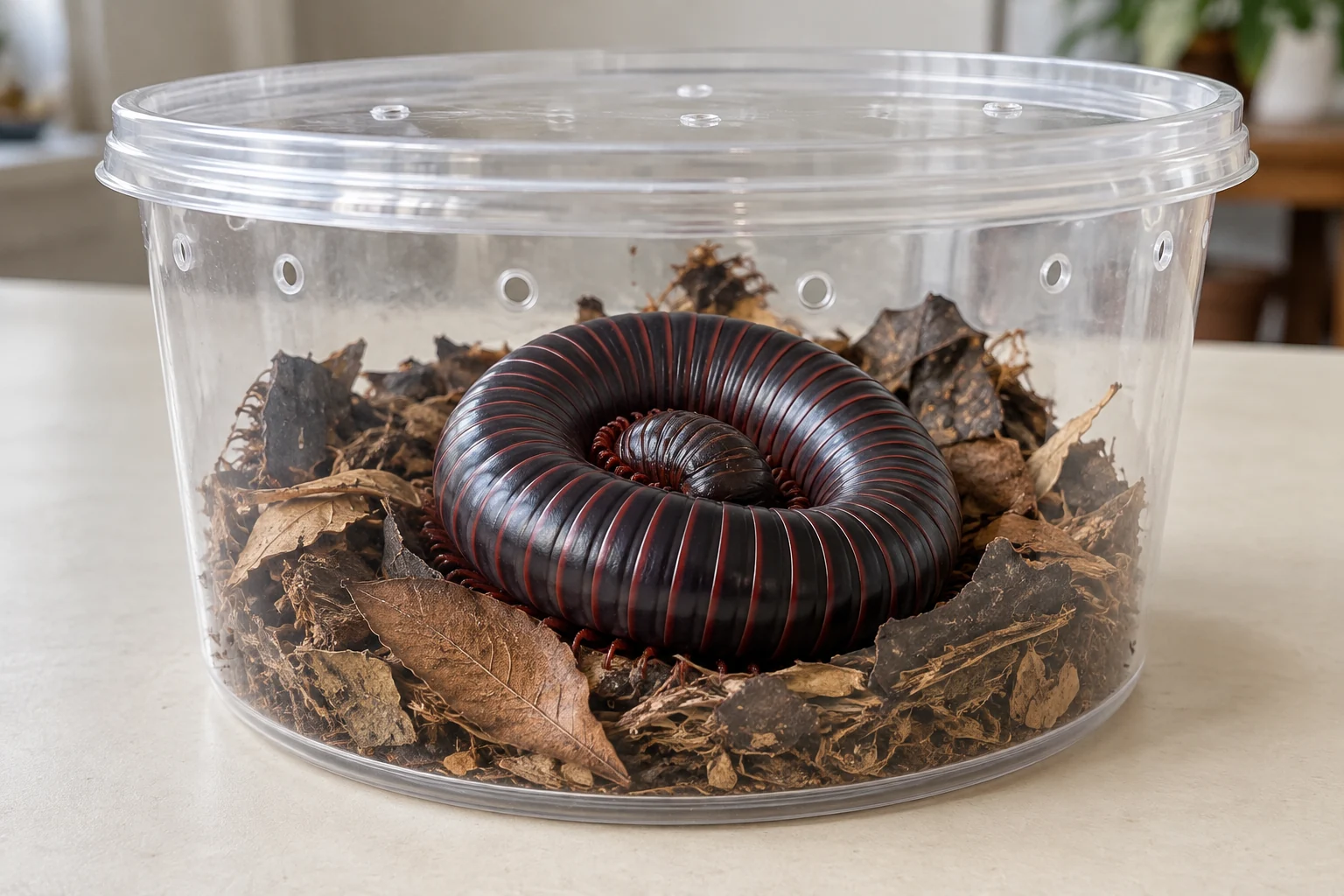
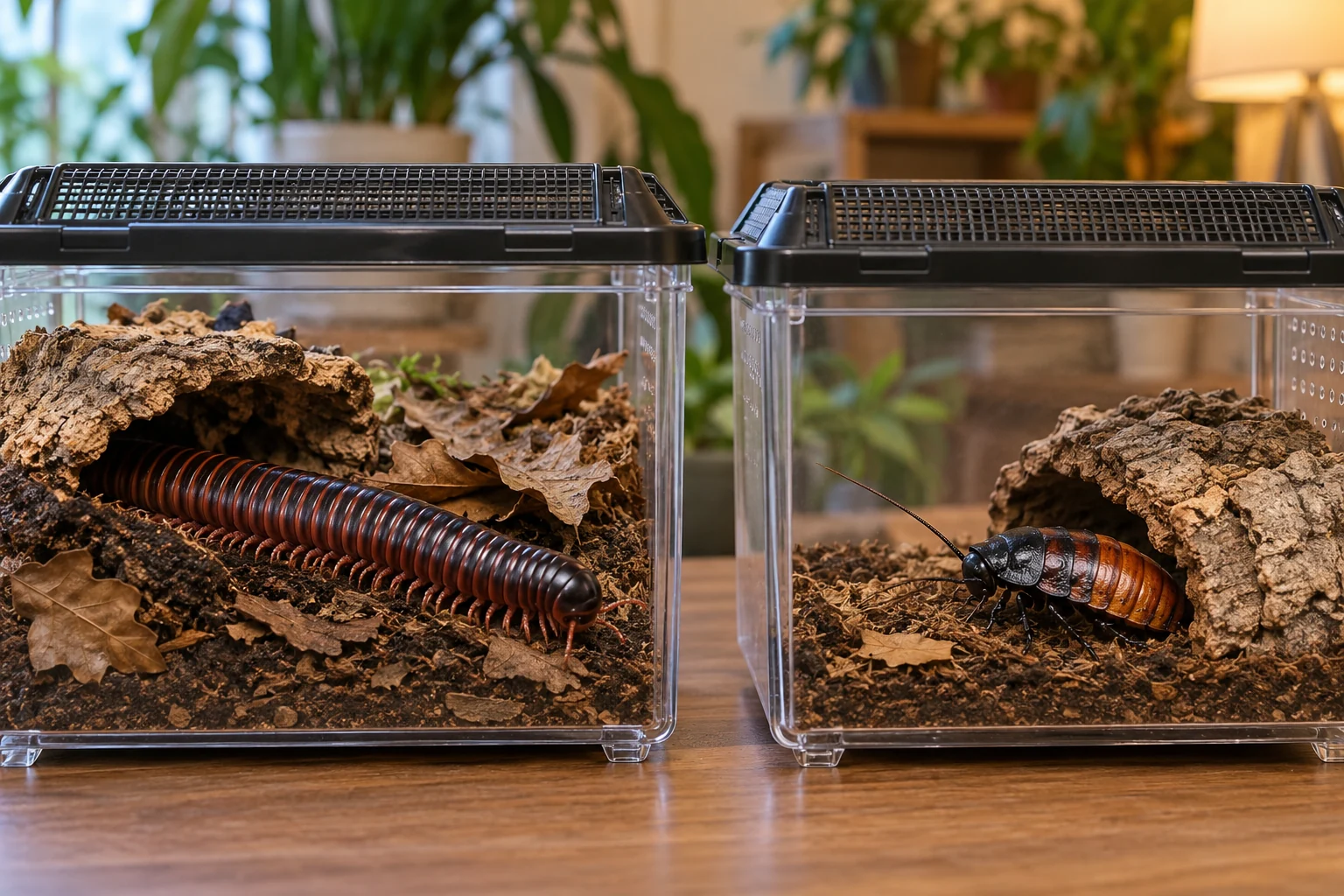
A millipede (class Diplopoda) that arrives rolled into a tight spiral is showing conglobation, a defense reflex it also uses against a predator, not a symptom of dying. Cold, vibration, and the general jostle of a shipping box are enough to trigger the same coil, tucking the legs and softer underside inward behind the hard armored plates. Give a coiled millipede quiet, undisturbed time in a dim, warm spot, since handling or poking it tends to reset the timer on how long it stays balled up rather than speeding up recovery.
Roaches: Chill Coma, Not Death
A pet roach (order Blattodea), whether it is a Madagascar hissing cockroach or one of our smaller display species, lying stiff on its back or side with its legs tucked is very likely in chill coma, a temporary, fully reversible shutdown that cold triggers in most insects. The nervous system essentially pauses below a certain temperature, which is why a roach in this state will not right itself or respond to a gentle nudge. Warming it gradually is what restarts the system, and legs or antennae that begin twitching are an early, encouraging sign that recovery is already underway rather than a bad one.
Warm It Up the Slow, Safe Way
Set the closed or lightly opened container at normal room temperature, away from a heater, a sunny window, or an air conditioning vent, and let it sit undisturbed for 30 minutes before you check again. A dim, quiet spot works better than a bright one, since both millipedes and roaches read light and disturbance as reasons to stay hidden and still. If nothing has changed after that first check, give it several more hours, longer still if the trip was especially cold. Most cold shocked or coiled animals show real movement well within that stretch once their body temperature actually catches up.
Resist the urge to speed things along with a heat lamp, a hot water bottle, or warm running water. A fast temperature jump stresses a cold, weakened animal far more than the cold itself did, and it will not make a chill coma resolve any faster, since recovery depends on the whole body warming evenly, not just the surface. The same patience applies to a millipede still coiled tight, since squeezing or unrolling it by hand only resets its defensive clock.
The Fluid You Might See Is Not Always a Bad Sign
Millipedes have a second defense beyond curling up: many species ooze a fluid from small pores along their sides when they feel seriously threatened or get squeezed. It can stain your fingers and mildly irritate your eyes, so wash your hands after handling one and try not to touch your face in the meantime, but the fluid itself is a stress response, not blood or a sign the animal is falling apart. A little dampness around a stressed millipede is normal.
What is not normal is that same fluid paired with a limp, flattened body or a genuinely foul smell, which points to real decomposition rather than a defense reflex. The fluid alone, on an animal that is otherwise coiled or slowly moving, is nothing to worry about.
When It Is Actually Not Going to Make It
A millipede or roach that has genuinely died looks different from one that is simply cold or coiled. The body goes limp, flattens out, or feels hollow rather than staying firm, sometimes with dark fluid leaking or a sour smell that a stressed but living animal never has. If you have warmed it gently for the better part of a day and still see zero response, no leg twitch, no antenna movement, nothing, treat it as a loss rather than continuing to wait, especially once the smell or leaking has already shown up.
If your order included more than one animal, a single loss among several survivors is a different situation from an entire shipment that never revived, though both are handled the same way. Either way, once you have already sent the claim photo from the first step above, there is nothing more to prove. Reply to that email with what you found after warming, and we take it from there under the Live Arrival Guarantee.
Setting Up Once You Know It Is Alive
Once your millipede or roach is moving normally, resist unpacking it straight into a finished bioactive enclosure on day one. A simple holding container with a few inches of substrate and a handful of leaf litter to hide under gives a travel stressed animal a quieter landing than a big, busy tank, and it lets you confirm it is eating before committing it to a permanent home. Isopods and springtails follow this same order of operations after a rough trip: prove it is alive and settling in first, then build out the rest of the setup around it.
If you are ordering again soon, especially outside of mild spring or fall weather, check our shipping weather guide before you place it, and add a heat or cold pack if the forecast calls for it. A little substrate and leaf litter on hand now saves you from scrambling once the next box lands, whether it holds another millipede or a pet roach.
Curled, Still, or Gone: The First Check
The Safe Arrival Setup Kit
Substrate and leaf litter for the new enclosure, plus the seasonal packs that prevent this next time.
Frequently Asked Questions
Written by the TC INSECTS breeding team · Porter, Texas · Live Arrival Guarantee on every order
Have a care question? Ask our community.
Join Reptile Keepers USA, our free Facebook group for reptile, amphibian and invert keepers. Share your setups, get care help and swap feeder tips.
Join the free group