Ackie Monitor Digging Zone Guide
Why it matters
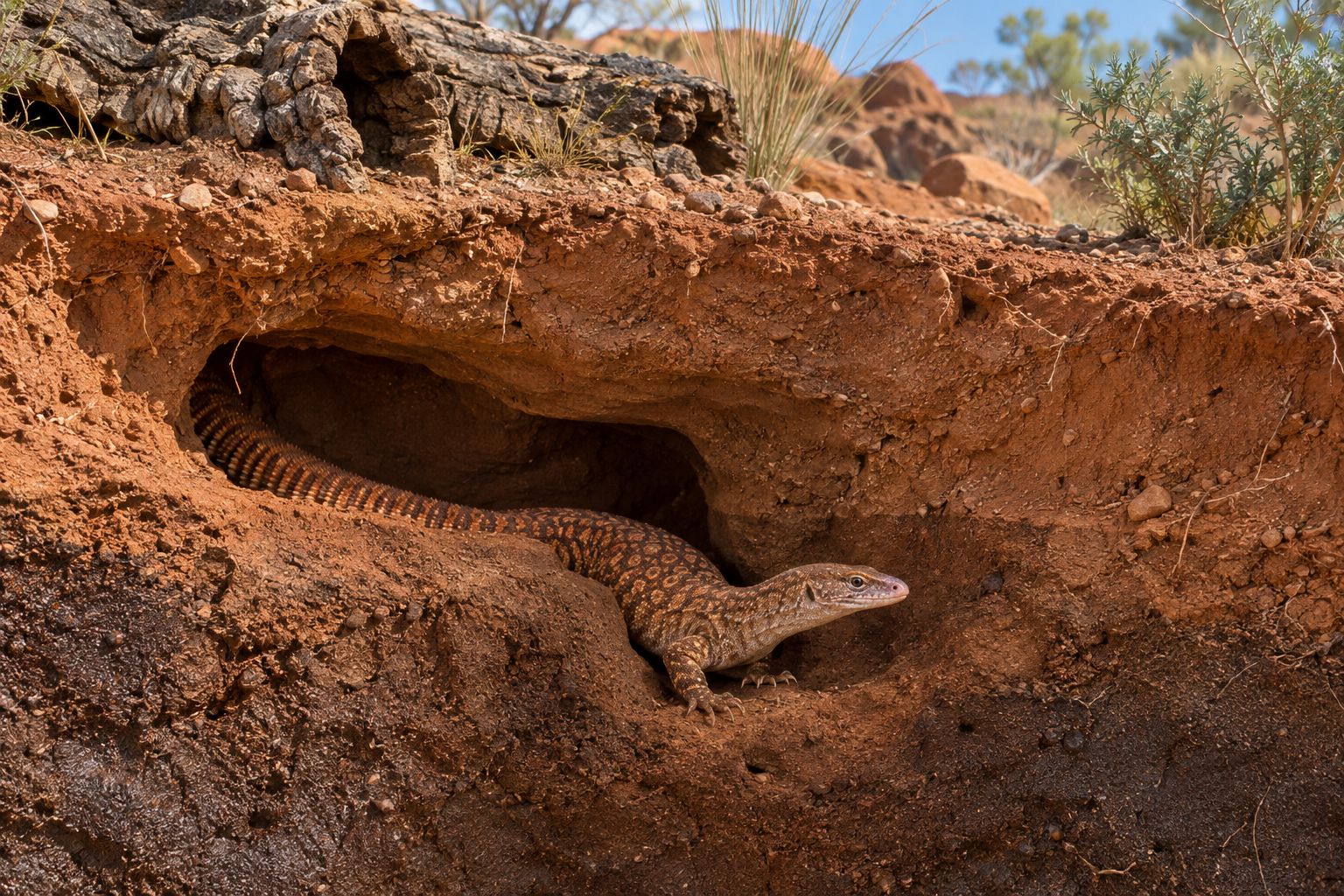
Ackie monitors use substrate as part of the habitat, not just flooring. A deep, stable area allows digging and retreating from surface heat. A thin layer over glass or plastic cannot offer the same behavior, and heavy basking rocks placed on top of loose soil can become a collapse risk.
Setup
Provide a deep, packable substrate area that holds tunnels, with heavy rocks and basking furniture supported securely from below. Keep a clear dry-to-damp gradient.
Build the enclosure with heavy furniture resting on a solid base, then pack suitable substrate around it. Test a small tunnel to see whether it holds shape. Provide a dry-to-damp gradient below the surface and several routes out of the burrow area. Keep the basking and UVB arrangement from the full care sheet intact.
Everyday routine
Check that burrows stay stable and that no heavy decor can collapse into them. Refresh soiled surface areas without destroying every tunnel.
What to check and common mistakes
A shallow decorative layer is not a digging zone. Use the full ackie care sheet for basking, UVB, and enclosure-size requirements.
Do not destroy every tunnel during spot cleaning. Instead, remove visible waste and monitor whether burrows remain stable. If the entire substrate turns wet or dusty-dry, correct the gradient gradually; do not flood a deep enclosure to make the surface look moist.
Give the burrow real structure
An ackie monitor needs more than a decorative dusting of soil. Provide a deep, compactable substrate that can support tunnels, and make sure rocks, branches, and heavy hides cannot collapse when the lizard digs underneath. Support heavy objects from the enclosure floor, not loose soil. Keep a moisture gradient within the substrate while maintaining ventilation; wet, stagnant soil is not the goal.
Test a small section by making a shallow tunnel and seeing whether it holds its shape. Recheck after major watering, cleaning, or rearranging. A lizard that constantly scratches at glass or cannot make a secure retreat may need a layout review, not a new toy. The digging zone is only one part of the system: basking heat, UVB, enclosure space, and safe feeding also need to be correct.
Keep learning
Use the related guide for full species or product details. Check current store availability before ordering.
Have a care question? Ask our community.
Join Reptile Keepers USA, our free Facebook group for reptile, amphibian and invert keepers. Share your setups, get care help and swap feeder tips.
Join the free group