Do Millipedes Bite?
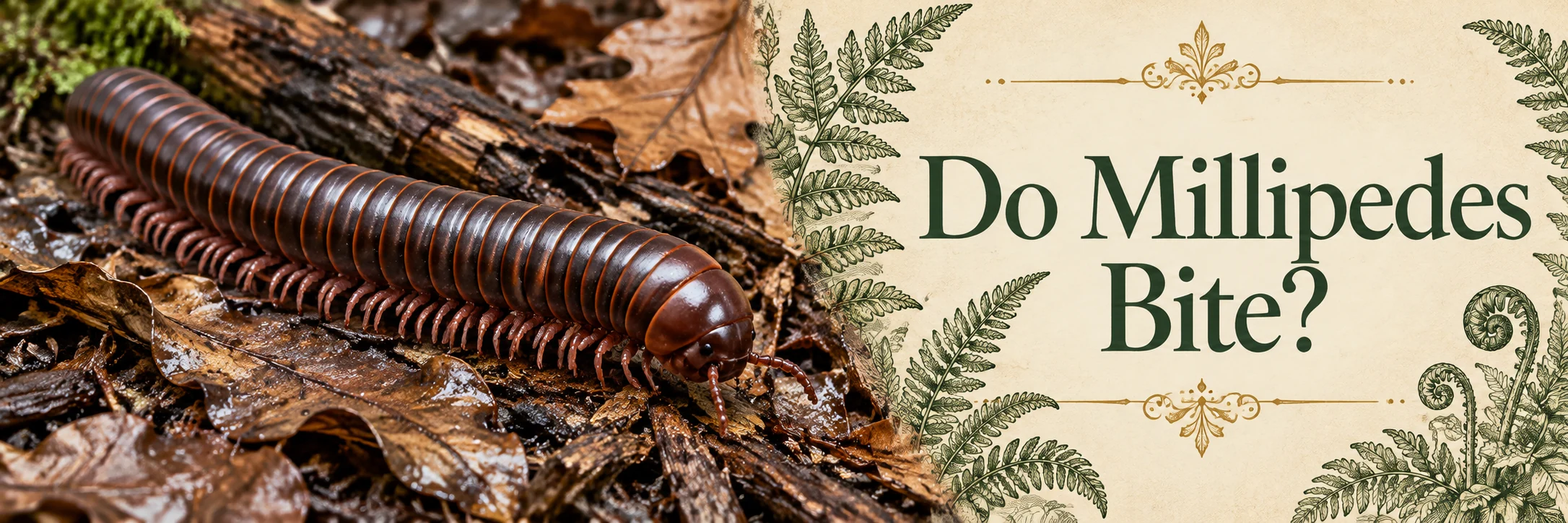
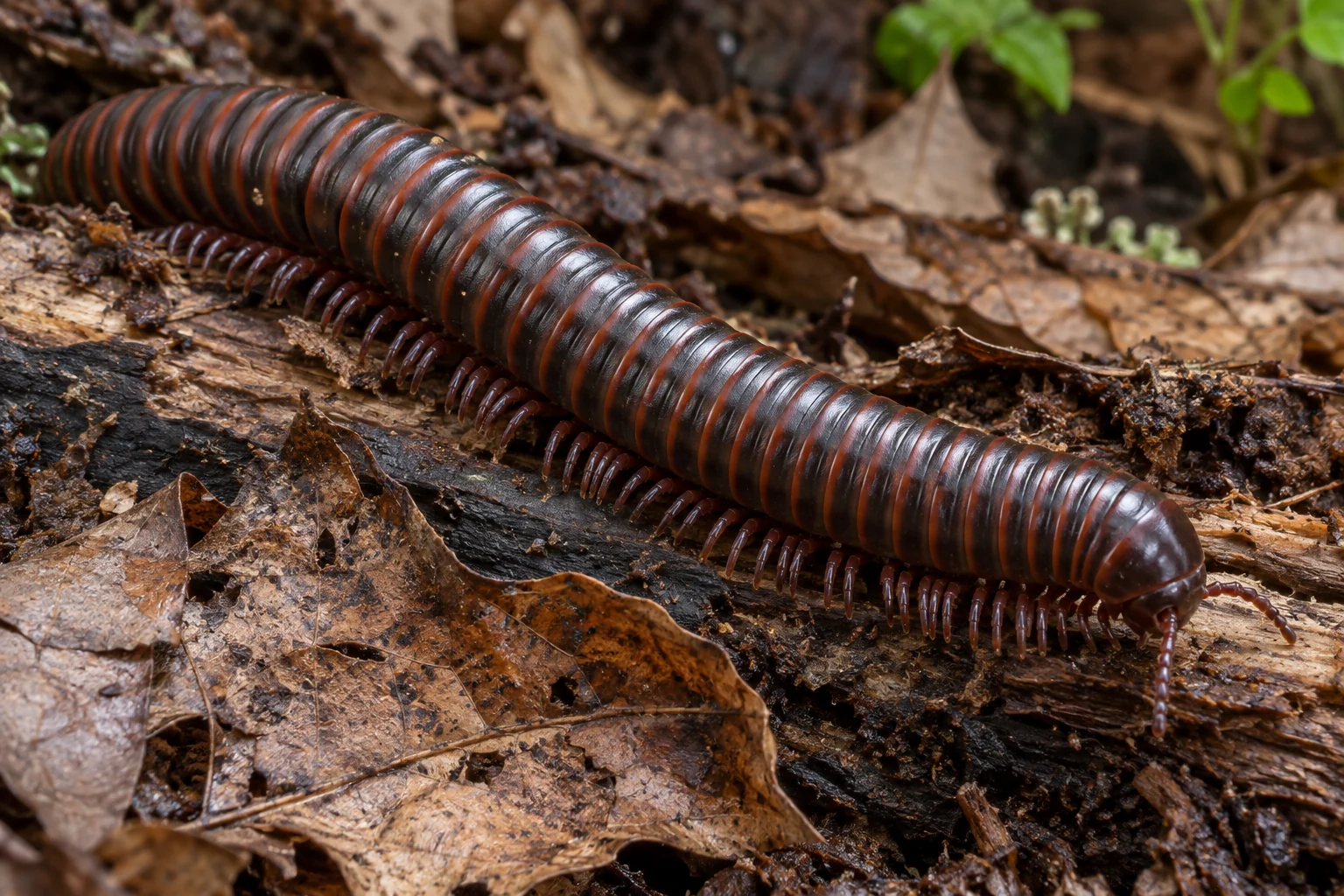
No, millipedes do not bite. Species like the American Giant Millipede (Narceus americanus) have small mandibles built to graze decaying leaves and wood, not to pierce skin, so there is no jaw strong enough or sharp enough to break yours. The one real thing to know before you pick one up is that some millipedes, when startled, weep a defensive fluid that can stain your hands and irritate your eyes if it gets near them, which is a hygiene issue rather than a bite risk. Wash your hands afterward, keep the millipede away from your face, and it is one of the calmest, most beginner-friendly pet invertebrates you can hold.
Mouthparts graze detritus, they cannot pierce skin
Can stain skin; keep it away from eyes and mouth
Support the whole body; wash hands afterward
The short answer: no, they cannot bite you
Millipedes have no biting apparatus capable of hurting a person. Every millipede sold in the pet trade, including the American Giant Millipede we raise here, is a detritivore, an animal built to eat dead and decaying plant matter, not to hunt or defend itself by biting. You can let one walk across your bare hand and the only thing you will feel is the faint tickle of dozens of tiny legs.
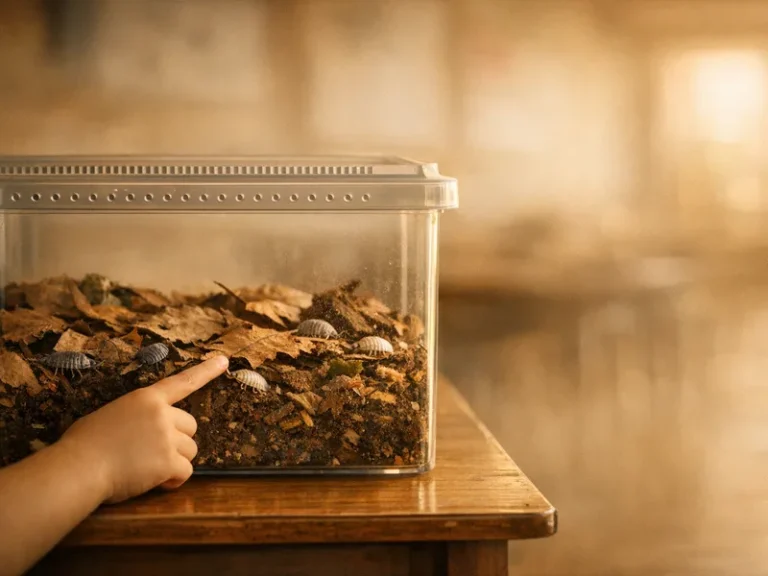
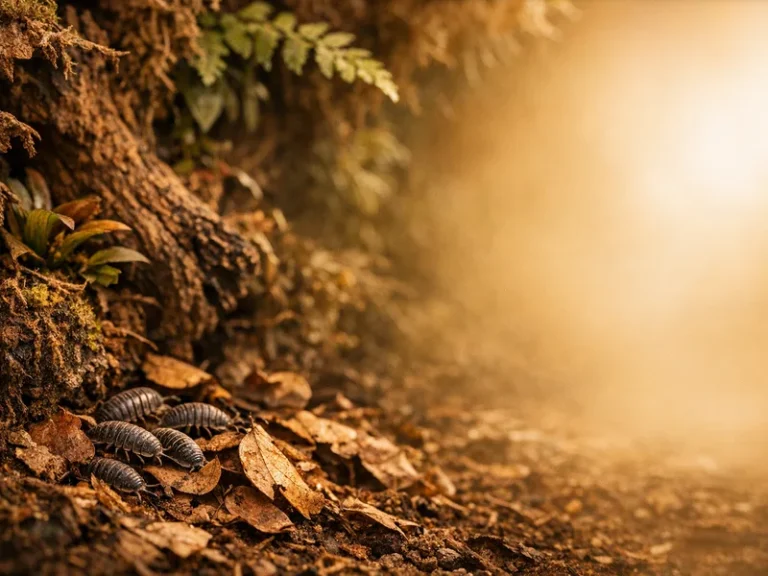
That makes them one of the calmest animals you can own. There is no species in the hobby with jaws strong enough to break human skin, no venom, and no interest whatsoever in something as large as a hand. Many keepers even add one to a bioactive enclosure alongside isopods and springtails as an easygoing, visible cleanup crew member. If bite risk is the only thing holding you back from keeping one, you can safely cross that worry off the list.
Why the mouthparts simply are not built for it
A millipede's mouthparts are small mandibles designed to scrape and chew soft, already-decaying material, rotting wood, fallen leaves, and fungus, which is the opposite job description from a mouth built to pierce living tissue. Our American Giant Millipede care guide covers this in more detail: the substrate a millipede lives in is largely the same thing it eats, which tells you everything about what its mouth is designed to handle.
Behaviorally, millipedes back this up. When threatened, a millipede's first instinct is to curl into a tight defensive coil or simply freeze, never to lunge or strike the way a predator would. They are prey animals in the wild, built around defense and avoidance rather than offense, and biting a hand many times their size has no role in that strategy at all.
The one lookalike that actually can bite: centipedes
If you have heard a scary story about a leggy invertebrate biting someone, there is a good chance the animal in question was a centipede, not a millipede, and the two get confused constantly. Centipedes have a single pair of legs per body segment and a modified front pair called forcipules that deliver venom, and a bite from a larger centipede species can genuinely hurt.
Millipedes have two pairs of legs per body segment, no forcipules, and no venom delivery system whatsoever. A quick way to tell them apart at a glance: more legs packed closer together and a slower, rounder, more armored look usually means millipede, while a flatter body and fewer, longer, faster-moving legs usually means centipede. Only one of the two belongs on a beginner's shopping list.
The real caution: a defensive secretion, not a bite
The single thing worth knowing before handling a millipede has nothing to do with its mouth. When stressed or handled roughly, some millipedes, the American Giant Millipede included, can weep a defensive fluid from small pores along the sides of the body. That fluid can leave a temporary stain on skin and can genuinely sting if it gets into your eyes, so it is worth respecting even though it cannot bite or sting you in the traditional sense.
The fix is simple hygiene, not danger management. Wash your hands after handling, keep the millipede well away from your eyes and mouth while you hold it, and avoid squeezing or startling it, since a calm millipede is far less likely to release the fluid in the first place. Treated gently, most millipedes never bother a keeper with it at all.
How to handle an American Giant Millipede safely
Good handling technique protects the millipede as much as it protects you. Hold your hands low, over a table or your lap, so a startled or dropped millipede has nowhere far to fall, and support its whole body across your palm rather than pinching it or letting a long section dangle unsupported. Let it walk from hand to hand at its own slow pace instead of grabbing or restraining it.
If it curls into a defensive coil, simply set it down and give it a minute; never try to force it open. Millipedes are slow, gentle, and genuinely easy to enjoy once you know there is no bite to worry about, which is exactly why they have become a favorite first invertebrate for kids and classrooms. Our post on whether millipedes are poisonous goes deeper into that one defensive secretion if you want the full picture before you bring one home.

Everything for a Calm Millipede Setup
The real answers above, ready to add in one tap. Farm-raised, Live Arrival Guaranteed.
Frequently Asked Questions
Written by the TC INSECTS breeding team · Porter, Texas · Live Arrival Guarantee on every order
Have a care question? Ask our community.
Join Reptile Keepers USA, our free Facebook group for reptile, amphibian and invert keepers. Share your setups, get care help and swap feeder tips.
Join the free group