Isopods for the Classroom
Leaf litter and a small piece of vegetable, plus a calcium source left in the bin
Normal room temperature, no heat lamp or heat mat needed
Organic mix in a ventilated bin, deep enough to burrow and hide
A living classroom colony
Isopods are one of the best classroom pets because a bin of Dwarf White or Powder Orange isopods costs very little, needs feeding only about once a week, survives a weekend or a school break untouched, and gives students a live decomposer to watch and study up close. They do not bite, do not smell when kept right, and stay quiet and low-maintenance in a way almost no other classroom animal can match. Here is how to set one up and get real value out of it all year.
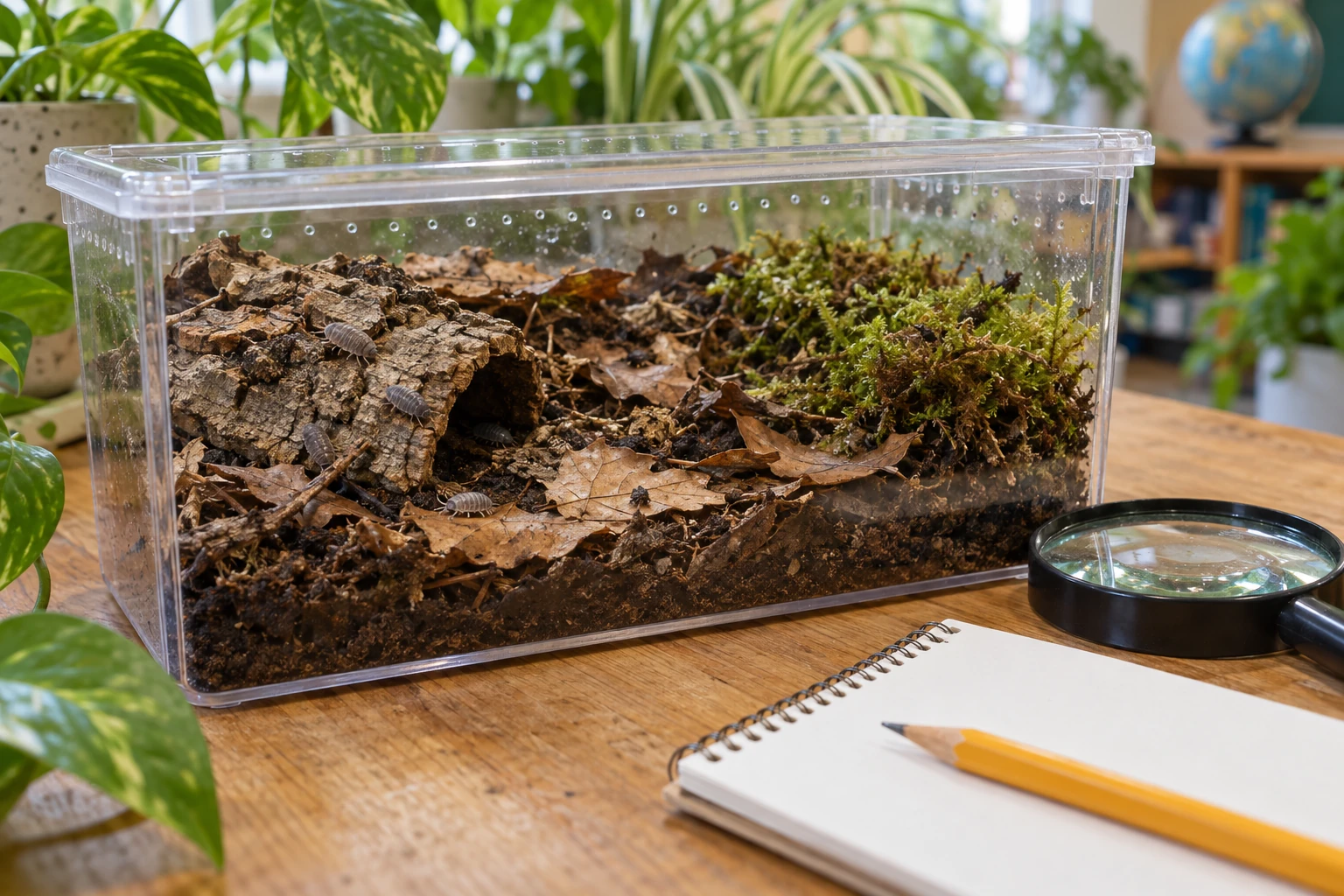
Build a simple observation habitat
Use a ventilated bin with organic substrate, leaf litter and a designated moist side. Keep it out of direct sun.
Why isopods fit a classroom so well
Isopods check almost every box a teacher needs from a classroom animal. They are quiet, produce no noise or odor when the bin is set up properly, do not bite or sting, and cost very little to buy and keep, so a lost or escaped individual is not a crisis. They are also genuinely hardy, tolerating the swings in attention and consistency that come with 25 different students taking turns on care duty.
On top of being low-risk, they are visually interesting. Students can watch isopods forage, burrow, and interact in a way that is easy to observe through the side of a clear bin, without needing to handle the animals constantly to get value out of them. That combination of low-maintenance and high-visibility is hard to find in any other classroom pet, and most students already have a mental model for them from the backyard, see our isopods vs pillbugs, roly polies, and sowbugs guide for the naming breakdown if a student asks.
The simple classroom build
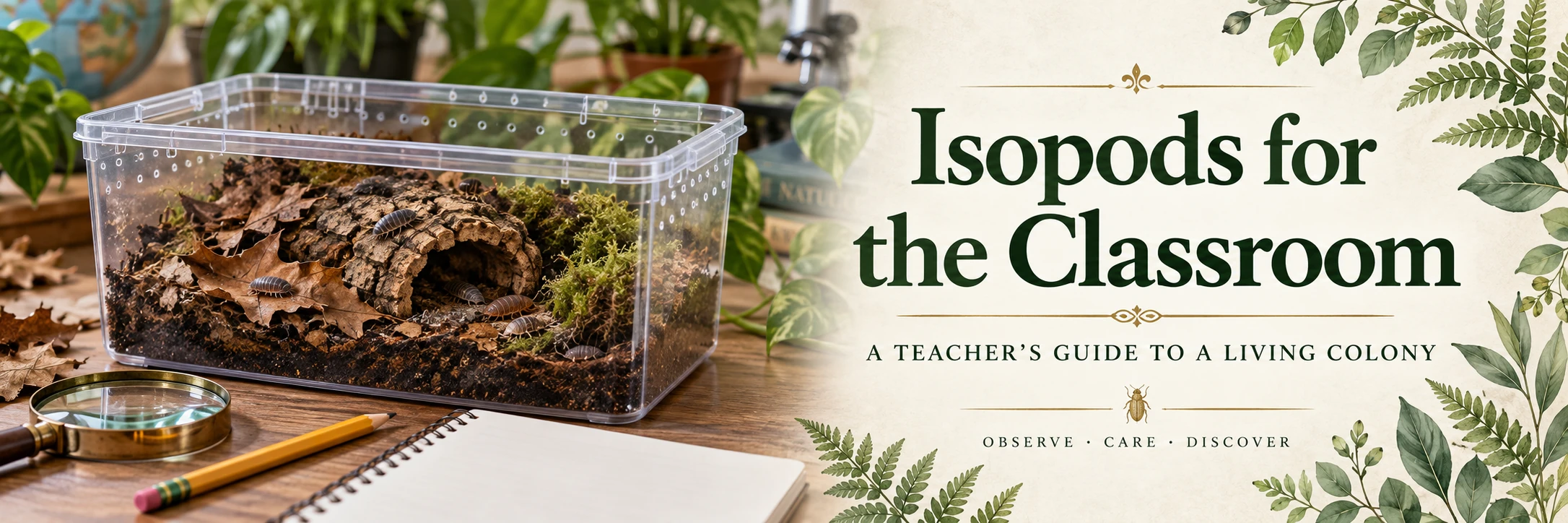
Start with a ventilated plastic bin, a basic 6-quart shoebox-style container works well for a starter colony of around 50 isopods. Add 2 to 3 inches of an organic substrate mix such as topsoil, coconut fiber, and decayed hardwood, then top it with a generous layer of leaf litter, which doubles as both cover and food. Cross-ventilation holes on the sides and lid keep air moving and help prevent mold. If you would rather not source every ingredient yourself, we carry ready-made substrate and supplies you can shop directly.
Set up a moisture gradient by dampening about one third of the bin and leaving the rest dry, never let the whole bin get waterlogged. Keep it at normal room temperature, 65 to 78 F is the comfortable range, so no heat lamp or heat mat is needed in a typical classroom. Our isopod care guide for beginners walks through the full setup in more detail if this is your first bin.
Care over weekends and school breaks
This is where isopods really separate themselves from other classroom animals. Because they graze the substrate and leaf litter continuously rather than needing a scheduled meal, a well-established bin can go through a weekend completely untouched with no ill effects. For a longer break, pre-moisten one side of the bin well before you leave and top off the leaf litter, and the colony will generally be fine for a couple of weeks without anyone checking in.
This makes isopods realistic for winter break, spring break, and summer, situations that would be a real problem for almost any other live classroom animal. Just avoid leaving the bin somewhere it could dry out completely or overheat while no one is around to catch it. For a closer look at exactly how long a colony can go between feedings, see our how long can isopods go without food guide.
What students can actually observe
A classroom isopod bin is a real, ongoing science lesson. Students can watch molting, which isopods do in two halves rather than all at once, so an individual may show a two-toned color for a day or two mid-molt. Armadillidium species also show conglobation, rolling into a tight ball when disturbed, which is an easy and memorable behavior to point out.
Beyond individual behavior, the bin demonstrates decomposition in real time as leaf litter and wood break down, and population growth over a semester as a starter colony reproduces. Simple counting or size-tracking exercises turn the bin into an ongoing data set students can revisit across the school year.
Best species for a classroom
Dwarf Whites, Trichorhina tomentosa, are an excellent classroom pick. They are small, all-female and parthenogenetic so no pairing is required, reproduce quickly, and are very forgiving of an inconsistent care schedule. Powder Orange, Porcellionides pruinosus, is another strong, low-cost option that tolerates a slightly drier bin, which can be useful in a classroom where humidity is hard to control precisely.
Both are inexpensive to start a colony with and durable enough to handle the realities of shared classroom care. See our beginner isopods for sale to compare current options and pricing.
What can actually go wrong
The most common classroom mistake is overwatering, either from a well-meaning student adding water every day or from someone trying to compensate for a dry-looking bin. Stick to dampening only the designated moist side and let it be. The other real risk is heat exposure, a bin left on a sunny windowsill or, worse, in a hot car over a weekend can overheat quickly and kill the colony.
Keep the bin out of direct sun and away from heating vents, and build a simple written care card for substitute teachers or student helpers so the moisture and feeding routine stays consistent even when you are not the one checking it.
Keep reading: Silkworms in the Classroom: A Teacher's Guide to a 6-Week Unit and Mealworm Life Cycle Classroom Project: Larva to Beetle in 2 Months
The Classroom Colony Kit
The complete habitat kit plus a hardy starter colony, everything a classroom needs in one order.
Frequently asked questions
Are isopods good classroom pets?
Yes. Isopods are quiet, do not bite, cost very little, need feeding only about once a week, and can survive a weekend or school break untouched, which makes them one of the lowest-maintenance live animals a classroom can keep.
How often do classroom isopods need to be fed?
About once a week is plenty. Leaf litter left in the bin is their staple food between feedings, so they graze continuously rather than needing a strict daily schedule.
Can isopods survive a school break with no one checking on them?
A well-established bin can generally go a couple of weeks unattended if it is pre-moistened and stocked with leaf litter before the break. Avoid leaving it somewhere it could dry out or overheat.
What is the best isopod species for a classroom?
Dwarf Whites, Trichorhina tomentosa, are a top pick since they are small, reproduce without pairing, and tolerate an inconsistent care schedule well. Powder Orange, Porcellionides pruinosus, is a strong second option that handles a slightly drier bin.
What can students actually observe with classroom isopods?
Students can watch molting, which happens in two halves, conglobation in Armadillidium species rolling into a ball, ongoing decomposition of leaf litter, and population growth as a starter colony reproduces over a semester.
What is the most common mistake with a classroom isopod bin?
Overwatering is the most common issue, usually from well-meaning students adding water too often. Keep moisture to one designated damp side of the bin, and keep the bin away from direct sun or hot cars to avoid overheating.
Keep learning
Have a care question? Ask our community.
Join Reptile Keepers USA, our free Facebook group for reptile, amphibian and invert keepers. Share your setups, get care help and swap feeder tips.
Join the free group