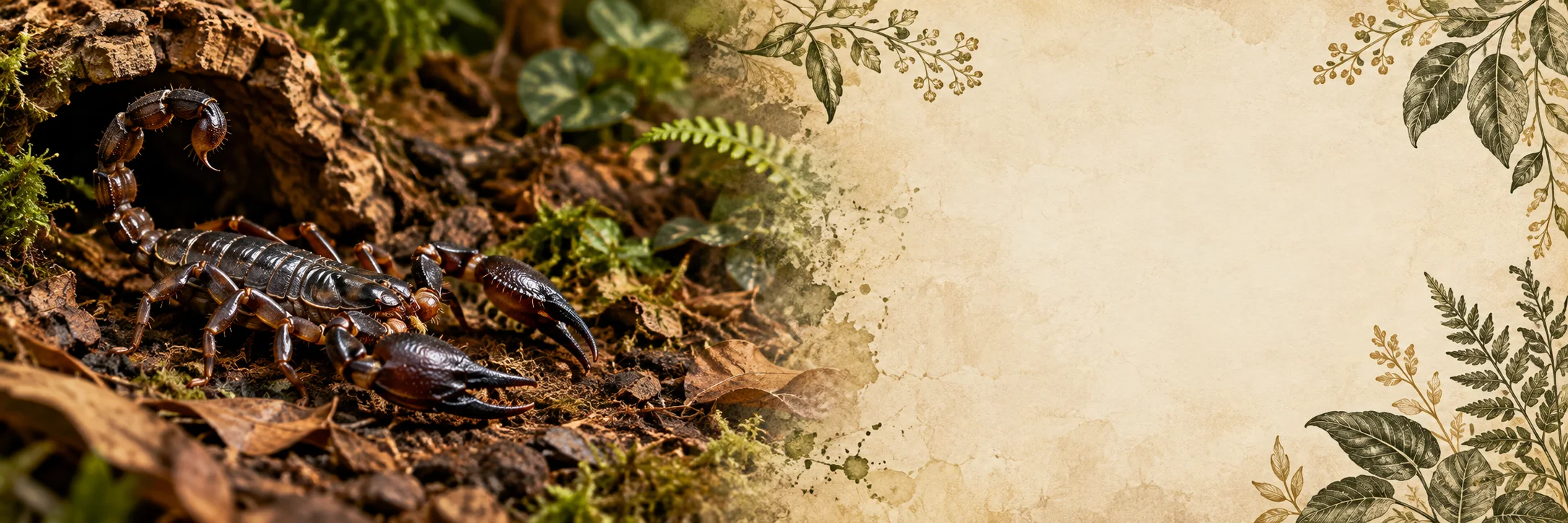
Most scorpions do not need a cleanup crew; routine spot cleaning is often enough. If you want a bioactive display, springtails can handle mold while isopods remain optional. The important caution is molting: a newly molted scorpion is vulnerable, so no isopod should be treated as guaranteed safe. Below, we explain when a sturdier Armadillidium culture may be the more cautious choice and when a springtail-only setup is simpler.
Clean eaters, low waste, spot cleaning is often enough
Sturdy and slow, tends to get left alone
Small and protein-hungry, riskier around a molting scorpion
Does a scorpion even need a cleanup crew?
Does a scorpion even need a cleanup crew?
Not really, and it is worth saying that plainly before picking species. Scorpions eat prey cleanly, produce comparatively little waste for their size, and a lot of experienced keepers maintain a healthy scorpion enclosure with nothing more than periodic spot cleaning and a substrate swap. A cleanup crew here is a bioactive display choice, not a requirement the way it can be for a heavier-waste animal like a large snake.
That makes this a genuinely different question from most of our other cleanup crew guides. If your real goal is a living, naturalistic-looking enclosure rather than solving an actual waste problem, isopods and springtails are a nice-to-have, and it is fine to skip them entirely if you would rather keep things simple.

Why the usual isopod-safety advice flips for scorpions
Why the usual isopod-safety advice flips for scorpions
With most pets, geckos, frogs, even tarantulas, the smallest, fastest, most timid isopods are the ones we call safest, because they are too small and quick to register as anything but background movement to an active, healthy animal. Dwarf Whites (Trichorhina tomentosa) usually top that list, and for good reason in those setups.
A scorpion changes the math. During and right after a molt, a scorpion is soft, pale, and unable to move or defend itself for an extended stretch, the same vulnerability that makes freshly molted tarantulas a caution in our tarantula cleanup crew guide. A small, protein-driven opportunist that would never bother a healthy, active animal has far more reason to investigate one that cannot move at all, which is exactly what flips Dwarf White from the usual safe default into the bigger risk in this one specific setup.
Why Armadillidium tends to be the safer pick
Why Armadillidium tends to be the safer pick
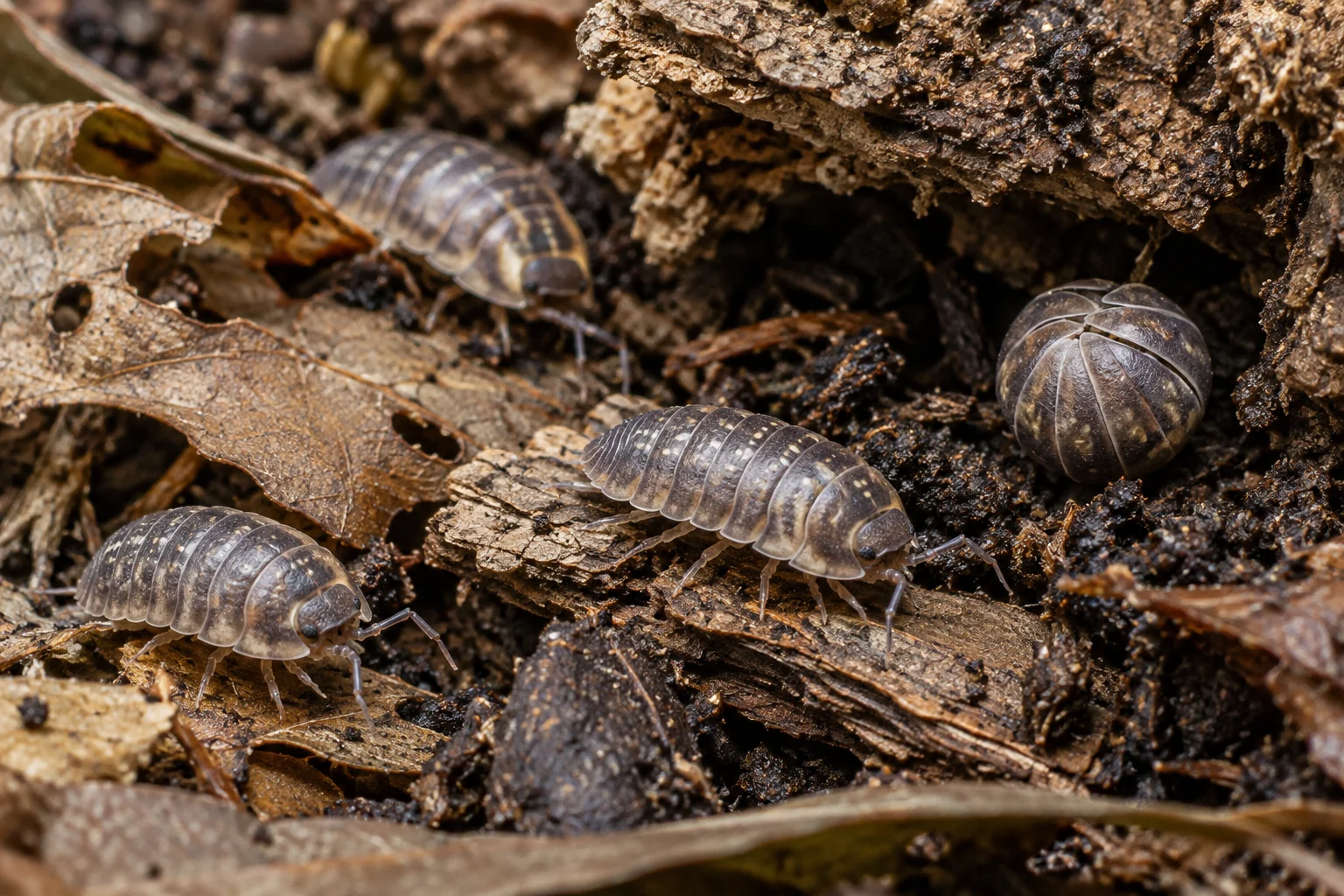
Armadillidium species, the classic rolling pill bugs, are sturdier-bodied and generally slower and less aggressively food-driven than a tiny, fast-breeding species like Dwarf White. Some keepers who run scorpion bioactive setups report that Armadillidium tends to get ignored by the scorpion rather than investigated, and its instinct to roll into a tight, armored ball when disturbed gives it a built-in defense a soft-bodied Dwarf White simply does not have.
That does not make Armadillidium risk-free around a molting scorpion, and no isopod should be treated as guaranteed-safe around any freshly molted animal. It is a comparative call, not an absolute one: sturdier and slower beats small and hungry when the question is which isopod a helpless scorpion is least likely to attract attention from.
The molt-timing rule: when to add isopods, if at all
The molt-timing rule: when to add isopods, if at all
Timing matters more than species choice here. The safest approach is to wait until your scorpion has finished most of its growing and molting, since adult scorpions molt far less often than juveniles and spend far less of their life in that vulnerable window. For a growing juvenile that will molt repeatedly over the coming months, isopods are a harder case to fully de-risk no matter which species you pick.
A reasonable middle ground many keepers use is to keep isopods purely aesthetic, confined to an area of the enclosure the scorpion rarely uses, rather than seeded throughout, and to keep a closer eye on the bin around any molt you can anticipate. This is a husbandry judgment call, not a guarantee, and if you are ever unsure about your specific animal's condition, that is a fair question for an experienced exotics vet rather than a forum guess.
Springtails do the real cleanup work here
Springtails do the real cleanup work here
Because isopods are more of an aesthetic option than a functional necessity for a scorpion, do not skip springtails on the assumption they carry the same molt-timing risk. Springtails are far too small and fast to interest a scorpion in any condition, healthy or molting, and they are the ones actually handling the mold and fungus that build up on a humid bioactive substrate.
If you want the bioactive benefits without the isopod timing question at all, a springtail-only setup is a completely reasonable choice for a scorpion enclosure. Our springtail cultures cover the sizes and species suited to whatever humidity range your scorpion setup runs.
Building a scorpion-safe bioactive setup
Building a scorpion-safe bioactive setup
If you decide to go ahead with isopods, start with a moisture-holding substrate and seed springtails throughout as the primary biocontrol layer, then add a modest Armadillidium culture once the enclosure is established and, ideally, once your scorpion is closer to full adult size. Give any new culture time to settle in before judging how it is doing, the same patience any isopod colony needs.
This is the same layered logic we use for other predatory invertebrates: our tarantula cleanup crew guide walks through a closely related case where a normally safe small isopod becomes a caution around one specific vulnerable window, and the fix there, feeding the crew well and watching molt timing, applies just as directly here.
Build a Scorpion-Safe Bioactive Crew
The sturdier Armadillidium pick, springtails, and substrate behind the answers above, ready to add in one tap.
Frequently Asked Questions
Written by the TC INSECTS breeding team · Porter, Texas · Live Arrival Guarantee on every order
Have a care question? Ask our community.
Join Reptile Keepers USA, our free Facebook group for reptile, amphibian and invert keepers. Share your setups, get care help and swap feeder tips.
Join the free group