Jumping Spider Enclosure Size Guide
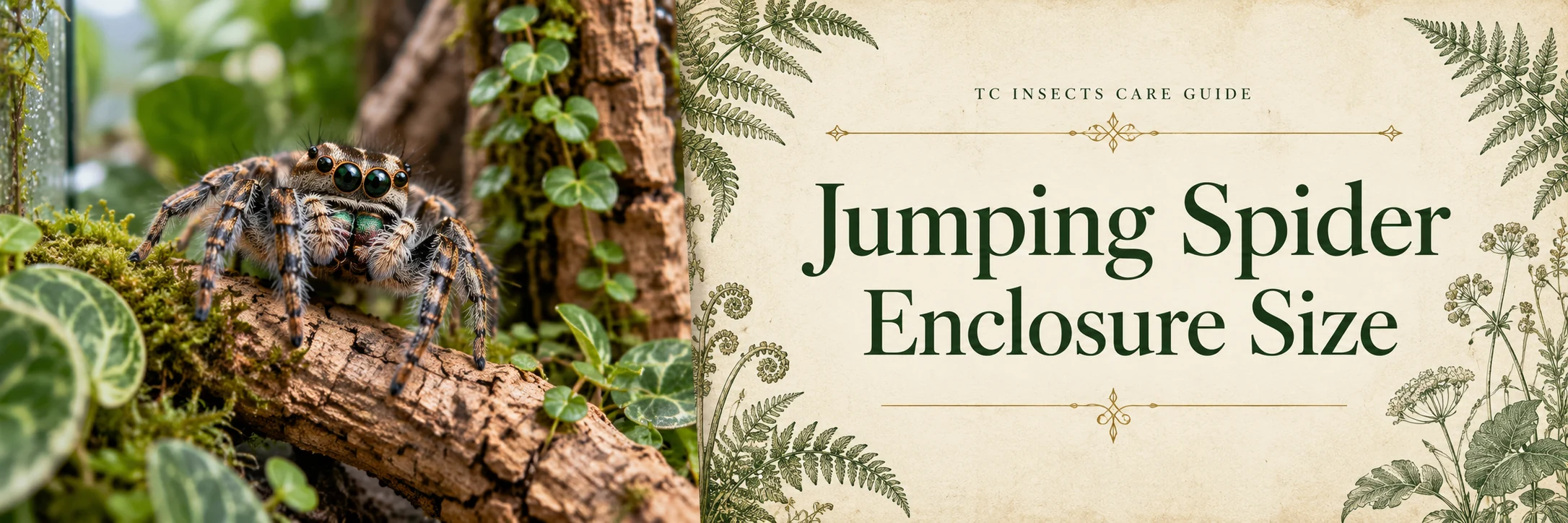
A jumping spider's enclosure should scale with its diagonal leg span, called DLS for short, roughly 3 to 5 times its DLS in floor space and 4 to 6 times its DLS in height, since these are ambush hunters that lean on vertical space more than floor space. In practice that works out to a 16 to 32oz deli cup for a spiderling, something in the neighborhood of 3x3x5 to 4x4x6 inches for a juvenile, and up to roughly 4x4x8 inches, or a taller nano style enclosure, for most adult Phidippus. Go too big too soon and a tiny spiderling can genuinely struggle to find its next meal in all that empty space. Here is the size breakdown by life stage for a jumping spider, and why height matters more than floor space.
Small enough that it can actually find its food
4 to 6x DLS tall matters even more
Height over floor space for a jumping hunter
The formula keepers actually use: DLS
Diagonal leg span, or DLS, is the measurement from the tip of a front leg to the tip of the opposite back leg when the spider is standing naturally, and it is the number most experienced keepers size an enclosure against rather than guessing by eye. The rough multiples that work across most Phidippus species are 3 to 5 times DLS for floor space and 4 to 6 times DLS for height, with height getting the bigger multiple on purpose.
That formula scales automatically as your spider grows, which is the whole point. A spiderling with a DLS of a few millimeters needs a tiny fraction of the space an adult with an inch long DLS needs, so sizing by the ratio rather than a single fixed enclosure keeps the space appropriate at every stage instead of just at one.
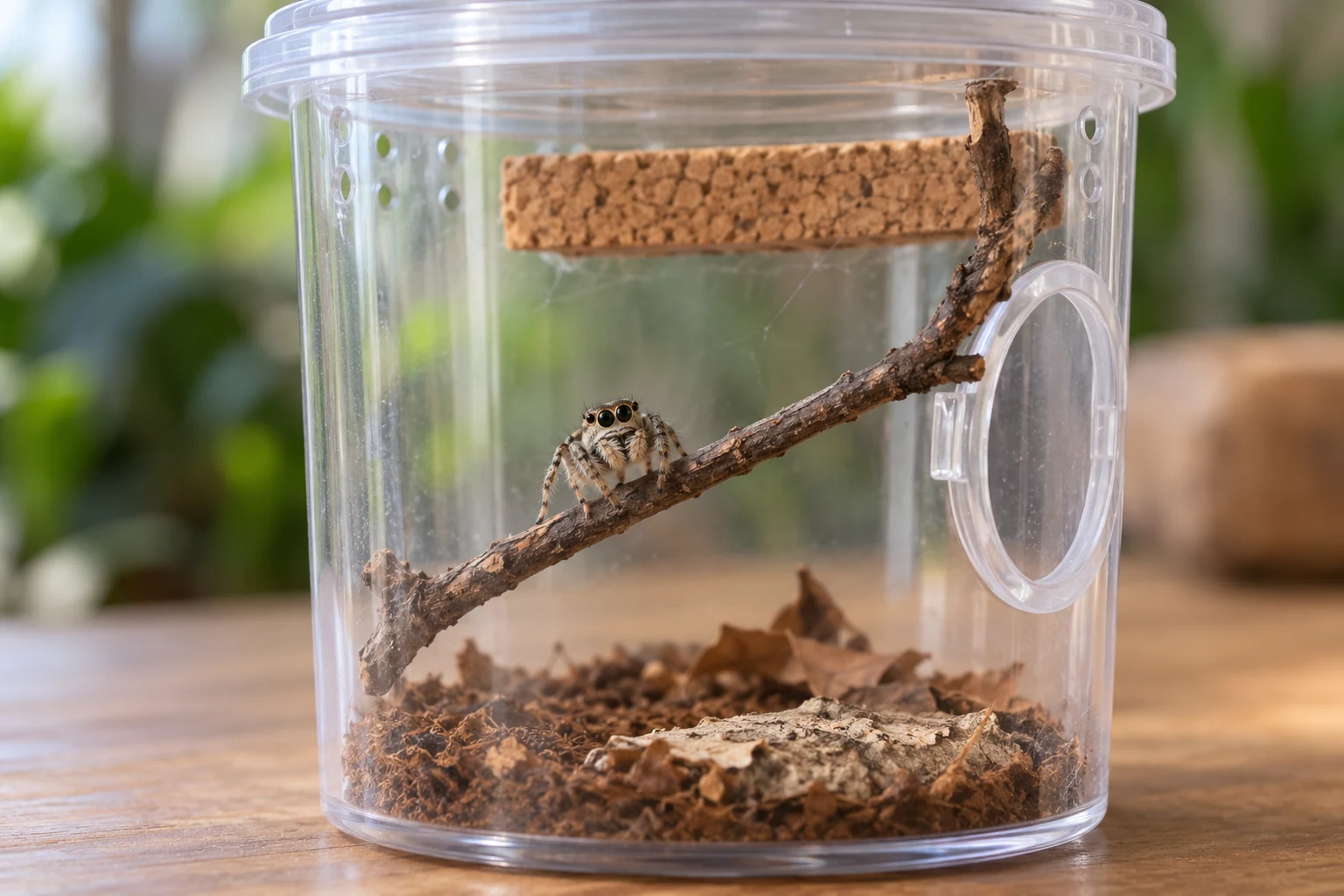
Spiderlings: start small, in a deli cup
A 16 to 32oz clear deli cup is the standard spiderling home, and it looks small for a reason: at this size, floor space that feels roomy to us is disorienting for an animal that hunts by sight over a few inches at most. A vented lid keeps humidity in without sealing the cup airtight, and a little substrate plus a small perch is all it needs.
Resist the urge to upgrade early just because the cup looks bare. A spiderling in the right sized cup finds a fruit fly quickly and eats consistently, while the same spiderling dropped into a large tank can spend real energy just locating its next meal.
Juveniles: sizing up as they grow
As your spider molts and grows, step the enclosure up rather than jumping straight to an adult sized tank. Something in the 3x3x5 to 4x4x6 inch range suits most juveniles, giving noticeably more room to move and web up a retreat without overshooting the DLS ratio for an animal that is still small.
A good rule of thumb for timing the upgrade: once your spider looks cramped when it stretches out, or its retreat fills a large share of the current enclosure, it is ready for the next size. There is no fixed schedule, since growth rate varies spider to spider.
Adults: height matters more than floor space
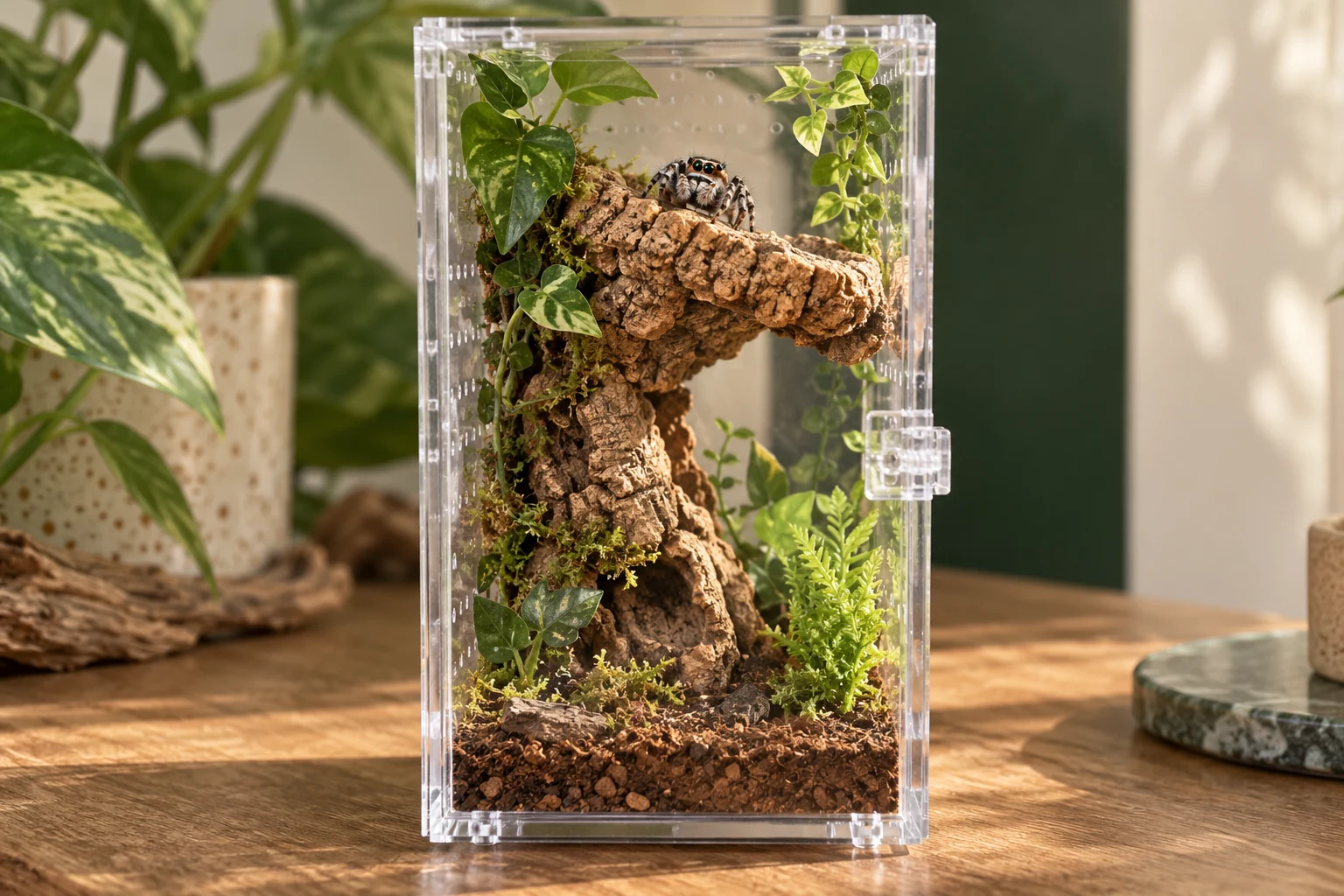
A full grown adult Phidippus does well in roughly 4x4x6 up to about 4x4x8 inches, and taller, narrower enclosures in that nano style footprint suit them better than a wide, shallow one of the same volume. That is because jumping spiders are arboreal ambush hunters that perch, watch, and leap down or across at prey, so vertical climbing and lookout space earns its keep in a way extra floor space does not.
A secure lid with fine ventilation, a few inches of substrate, and at least one solid perch, a piece of cork bark or a sturdy plant stem, rounds out an adult setup. Keep decor climbable but not so dense that it blocks your view, since watching your spider is half the appeal of keeping one.
The real risk of going too big too soon
The most common sizing mistake is not too small, it is too big, too early. A spiderling or young juvenile lost in an adult sized enclosure can struggle to locate prey, spend most of its time hiding rather than hunting, and stay measurably more stressed than one housed at an appropriate size for its stage.
Sizing up in steps, rather than buying one large enclosure and expecting a spiderling to grow into it, is the safer and honestly the cheaper path too, since a deli cup and a mid sized juvenile enclosure together cost far less than most adult sized setups.
What goes inside, at any size
Regardless of stage, every jumping spider enclosure needs the same basics: fine ventilation so humidity does not build up and mold the substrate, a light misting a couple of times a week for a droplet to drink, and one spider per enclosure, always, since jumpers treat a tankmate as prey rather than company. Our jumping spider care guide covers the day to day routine once the enclosure itself is sized right.
One easy add as the enclosure grows is a little sphagnum moss tucked into a corner, which holds a bit of extra humidity right where a young or molting spider needs it most without dampening the whole setup.
Housing for Every Jumping Spider Life Stage
The right size container and food for a spiderling, a juvenile, and a full grown adult. Tap to add and check out in one click.
Frequently Asked Questions
Written by the TC INSECTS breeding team · Porter, Texas · Live Arrival Guarantee on every order
Have a care question? Ask our community.
Join Reptile Keepers USA, our free Facebook group for reptile, amphibian and invert keepers. Share your setups, get care help and swap feeder tips.
Join the free group