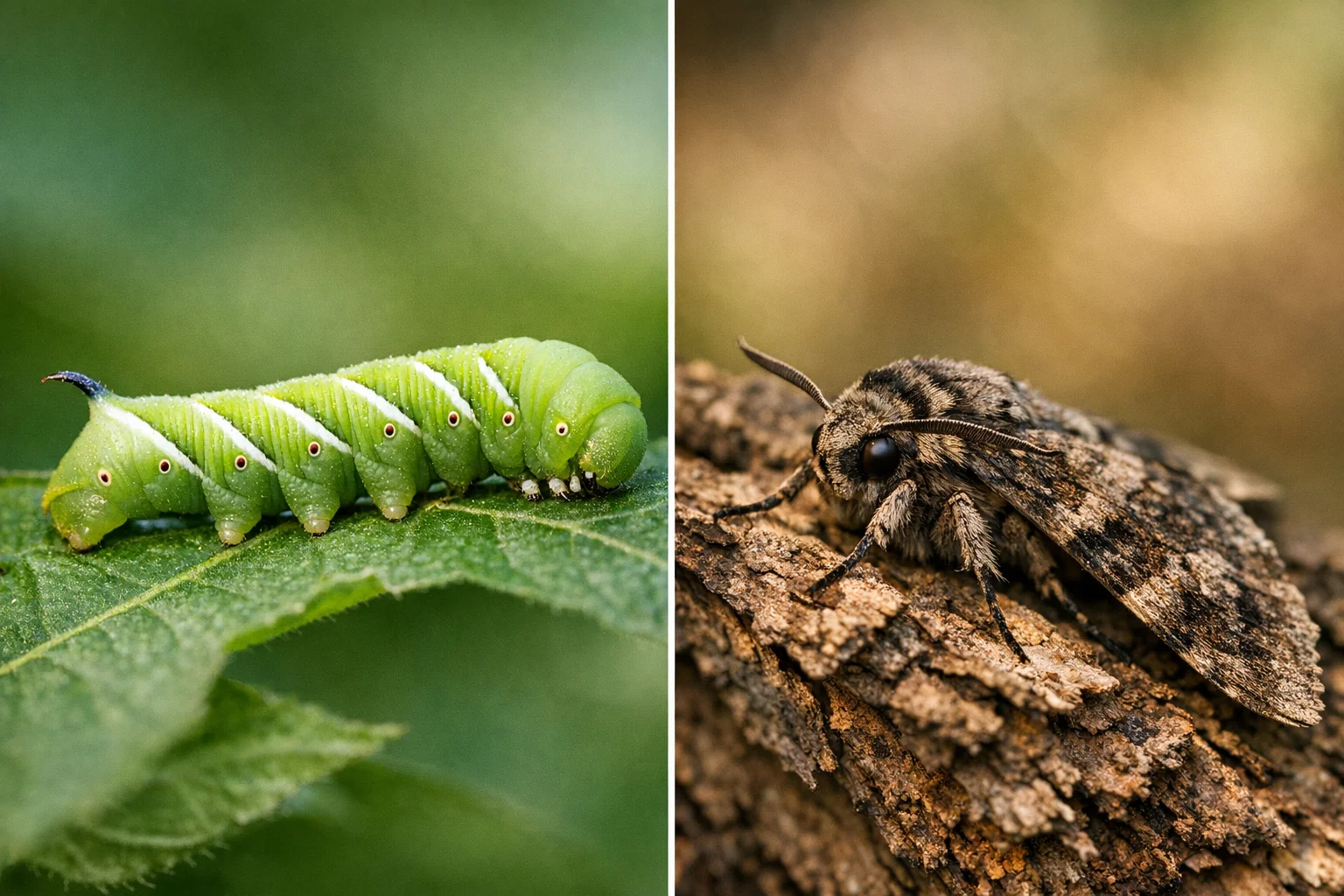
Hornworm Turned Into a Moth? Here Is What to Do

Nothing went wrong—your hornworm grew up
Hornworms (Manduca sexta) grow remarkably fast. Once the larva finishes feeding, it pupates and emerges as a Carolina sphinx moth. You still have safe, practical options at every stage.
Feed it now
A darkening pre-pupa is still usable as a feeder before it fully pupates.
Let it pupate
Offer loose, barely-damp substrate and leave the pupa undisturbed.
Keep or feed the moth
Let its wings dry first, then keep briefly or offer it as an occasional treat.
Hornworms grow faster than most feeders
Kept warm, hornworms can add 1 to 2 inches in a week and multiply their body weight several times in only a few days. A cup intended to last can quickly reach the pupation stage.
Warmth is the accelerator. To hold their size, keep the cup around 55 to 65°F in a dark place. Never use a normal household refrigerator; it is cold enough to kill them. Buy close to the size you need and feed them within a few days of arrival.
Slow growth safely
Do: use a cool, dark, stable location.
Do not: refrigerate, freeze or keep the cup wet.
Plan: order a size your animal can use immediately.
From restless larva to adult moth

The pupa stage
A hornworm darkens, stops eating and wanders while searching for soft soil. This is normal end-of-larva behavior—not illness. If you want it to develop, provide several inches of loose, barely-damp substrate.
Pupation takes roughly a week to set. The complete egg-to-adult cycle is often about 30 to 50 days depending on temperature.
Moth emergence
The adult must hang from cork bark, rough paper or another textured vertical surface while it pumps up and dries its wings. Leave it undisturbed for several hours.
The resulting Carolina sphinx is a harmless hawk moth that hovers at flowers and drinks nectar.
Feed the moth or keep it briefly
As a feeder: larger geckos, jumping spiders and other visual hunters often respond eagerly to the fluttering movement. Offer one at a time as a treat alongside a reliable staple.
As a short-term guest: provide a rough surface for resting and a shallow dish of sugar water or hummingbird nectar. Adults feed on nectar rather than prey and live only a few weeks.
Breeding: possible, but it requires host plants, controlled warmth and enough space for eggs and larvae. It is a genuine project rather than a simple extension of keeping one moth.
Hornworm-to-moth FAQ
Why did my hornworm turn into a moth so quickly?
Warm hornworms grow explosively, often adding 1 to 2 inches in a week. Once larval growth is complete, they pupate and emerge as moths. Keeping them at 55 to 65°F slows the process.
What kind of moth does a hornworm become?
The Carolina sphinx moth, a harmless native hawk moth with a wingspan around 4 to 5 inches. Adults hover at flowers and drink nectar.
Can I still feed a hornworm that started to pupate?
Yes. A dark, fat pre-pupa is still a suitable meal. If you would rather let it develop, provide loose substrate and leave it undisturbed.
Can I feed the moth to my reptile or spider?
Yes. Many larger geckos, jumping spiders and other insectivores respond strongly to a fluttering moth. Offer it as an occasional treat.
How do I keep a hornworm moth alive?
Give it a rough surface to cling to while its wings dry, then offer a shallow dish of sugar water or hummingbird nectar. Adults live only a few weeks.
Can I breed hornworms from the moths?
It is possible, but breeding requires suitable host plants for eggs and larvae plus controlled warmth and space. Most keepers feed the moth or order fresh hornworms.
Ready to stock up?
Order the size your animal can use now, then follow the full care sheet to control growth.
Have a care question? Ask our community.
Join Reptile Keepers USA, our free Facebook group for reptile, amphibian and invert keepers. Share your setups, get care help and swap feeder tips.
Join the free group