
Hornworm Care Sheet
Hornworms (Manduca sexta) arrive with food gel already inside their cup. Keep the cup clean and upside down, never add water, and use temperature to control how quickly they grow.
Check the cup and set it correctly
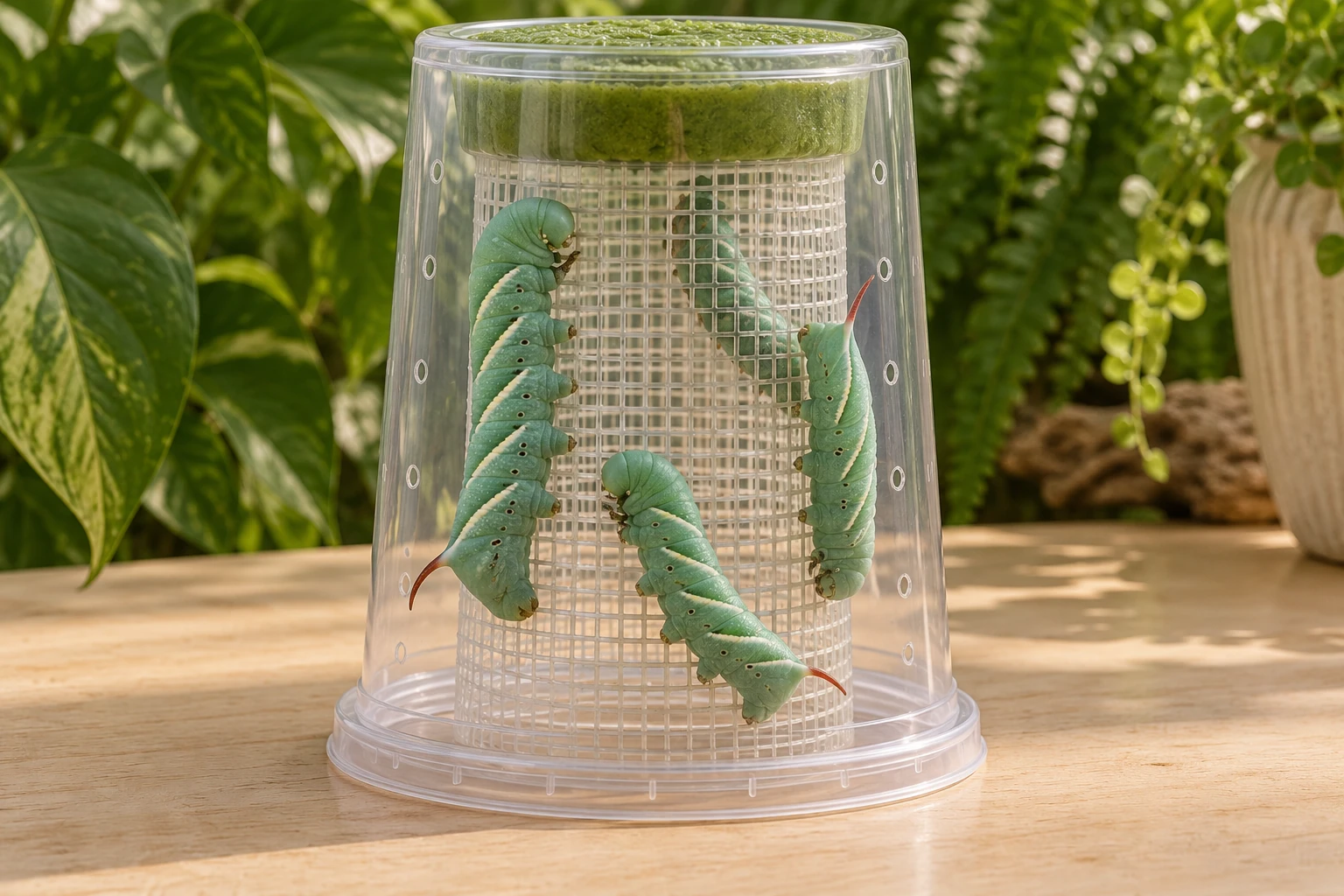
Your hornworms ship in a ventilated cup with green or blue prepared food gel attached at one end. That gel is their complete food and water source, so do not add anything.
- Open the cup and confirm the worms are moving.
- Store the cup upside down, lid side down.
- Place it in a cool, dark location at the temperature that matches your growth goal.
- When set up correctly, a healthy cup needs only about a minute of care each day.
Temperature is your main tool
Slow them down
Keep the cup around 55–65°F to stretch the batch and hold worms near the size you need.
Grow them fast
Keep them at room temperature or warmer when you need larger feeders quickly.
Avoid cold shock
Do not freeze or place them in a cold refrigerator. Temperatures below their safe range can blacken or kill them.
Upside down—and never add water
Keeping the lid down lets frass fall away from the food gel. Every day or two, empty the dark pellets from the lid and inspect the gel.
- Never mist, soak, or add a water dish.
- The prepared gel already supplies all needed hydration.
- Remove dead worms immediately.
- Avoid overcrowding, which raises moisture and fouls the food.
- If gel runs low, use proper hornworm food gel—not garden leaves.
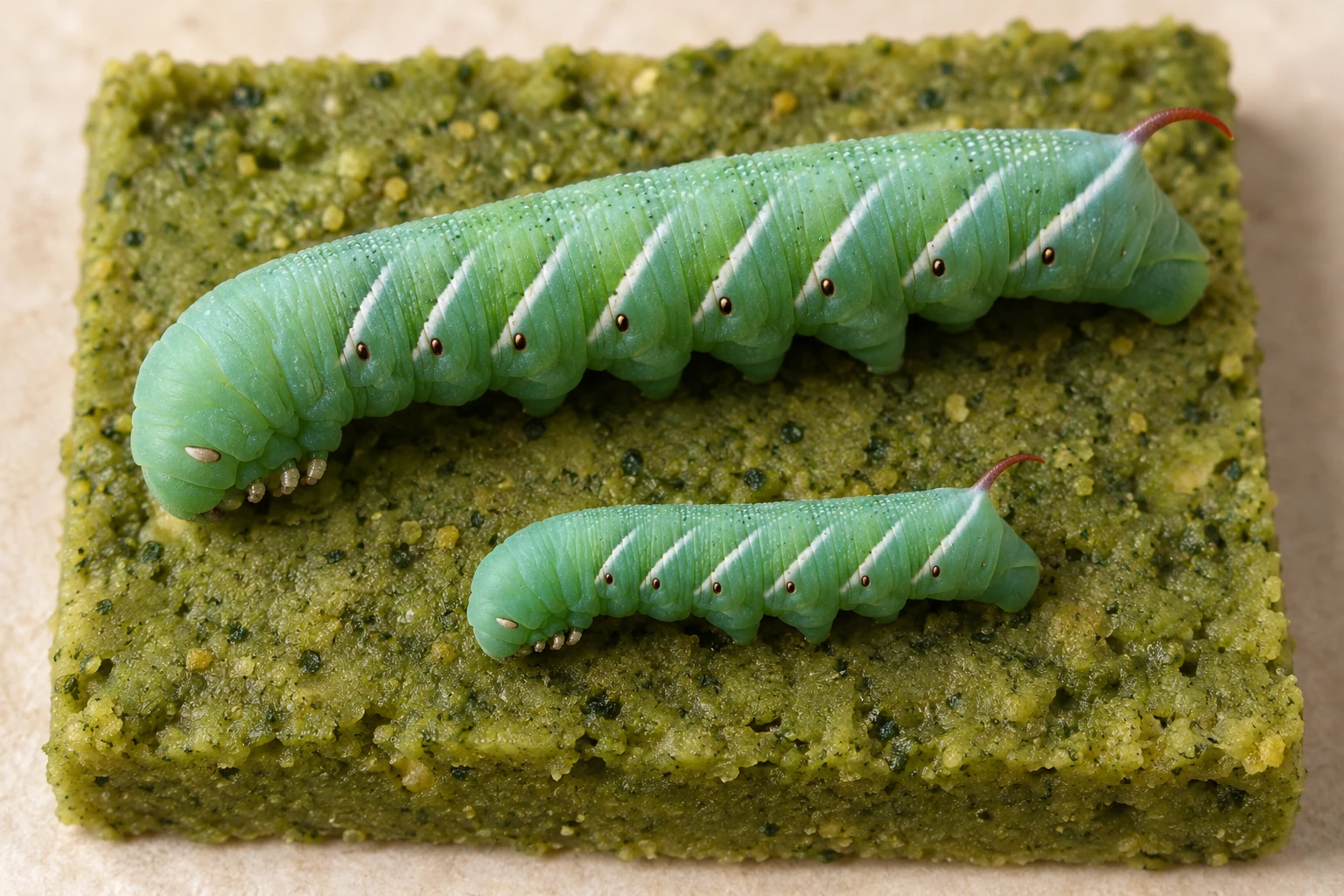
Never feed wild garden hornworms
The hornworms found on tomato or tobacco plants may look like feeders, but they can accumulate compounds from nightshade plants that make them toxic to reptiles and amphibians.
Only feed captive-bred hornworms raised on a controlled, non-toxic gel diet. When in doubt, never feed a hornworm found outdoors.
A hydrating treat—not a complete diet
Feeding your reptile
Hornworms are soft, high in moisture, and low in fat. They can encourage picky eaters and provide hydration, but should be rotated with balanced staple feeders. Offer with soft tongs or clean fingers, and keep each worm no wider than the space between your animal’s eyes. For a bearded dragon, a few hornworms as a treat is more appropriate than a full meal.
Why they turn black or die
Darkening can come from cold shock, bruising, overcrowding, or old age. Slight darkening in an active worm may be harmless; a limp, blackened, non-moving worm should be removed. Prevent losses with gentle handling, safe temperatures, an upside-down clean cup, and enough space.
Hornworm Care FAQ
How do you keep hornworms from growing too fast?
Keep them around 55–65°F. Cooler temperatures slow their rapid growth so the cup lasts longer. Keep it clean and upside down, and never add water.
How long do hornworms last?
It depends mainly on temperature. At 55–65°F, a cup may last a couple of weeks or more. At room temperature they can reach full size in only days.
How many hornworms should I feed my bearded dragon?
Use them as an occasional treat rather than a staple. A few at a time is sensible, and each feeder should be no wider than the space between the dragon’s eyes.
Why are my hornworms turning black or dying?
Common causes include cold shock, rough handling, overcrowding, and old age. Remove limp, blackened, non-moving worms and correct the cup conditions.
Can hornworms be refrigerated?
Do not use a cold kitchen refrigerator. To slow growth, hold them around 55–65°F—a cool location that stays above refrigerator temperatures.
Do I need to feed or water my hornworms?
The supplied gel is their complete food and water source. Never add water or mist. If gel runs out, use proper hornworm food gel rather than garden leaves.
Shop live captive-bred hornworms
Choose the size that fits your animal, then use this guide to control growth and keep the cup healthy.
Written and maintained by the TC INSECTS keepers and breeders · Reviewed July 8, 2026
