
Superworm Care Sheet
- Never refrigerate superworms; unlike mealworms, cold will kill them or leave them slow and dying.
- Keep superworms at normal room temperature, roughly 70 to 80 F, in a ventilated container.
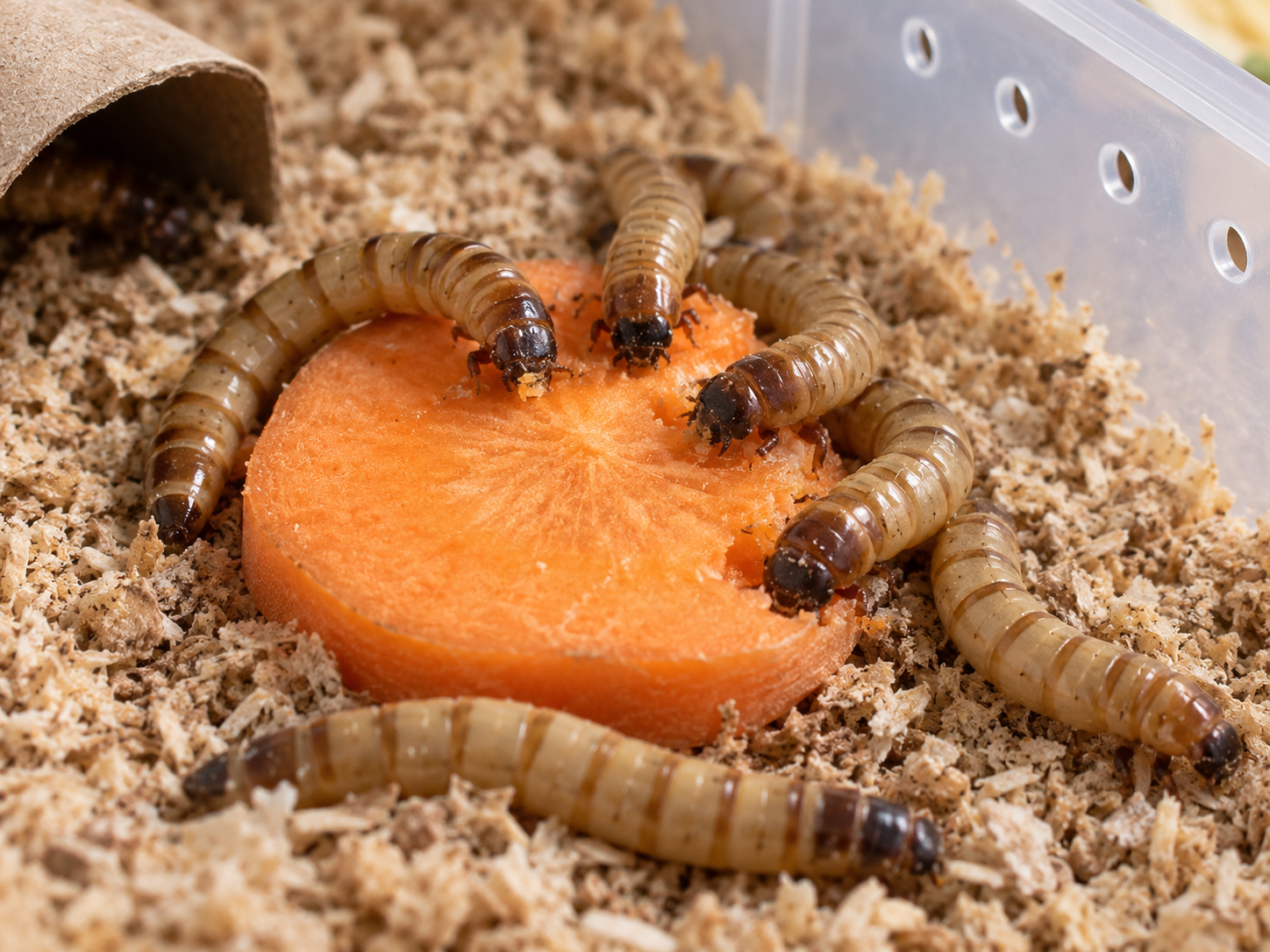
- Feed a slice of carrot, potato, or vegetable for moisture instead of a water dish, which they can drown in.
- Keep superworms together in a group, because isolating a single worm is what triggers it to pupate into a beetle.
- With dry bedding, room temperature, and a bit of fresh veg, superworms stay alive and healthy for several weeks.
The One Rule That Matters Most: No Fridge
If you remember nothing else, remember this: superworms cannot be refrigerated. This is the biggest difference between superworms and mealworms, and it is where most new keepers accidentally kill their worms. Mealworms can be stored in the fridge to slow them down and make them last, so people assume superworms work the same way. They do not.
Superworms are a tropical species, and cold does real harm to them. A stint in the fridge will chill them into a sluggish state and often kill them outright, and survivors frequently turn dark and die over the next day or two. Keep them at room temperature and only at room temperature. There is no cold-storage trick with superworms; the trade-off is simply that they will not last as long as fridge-stored mealworms, and that is normal.
Container and Bedding
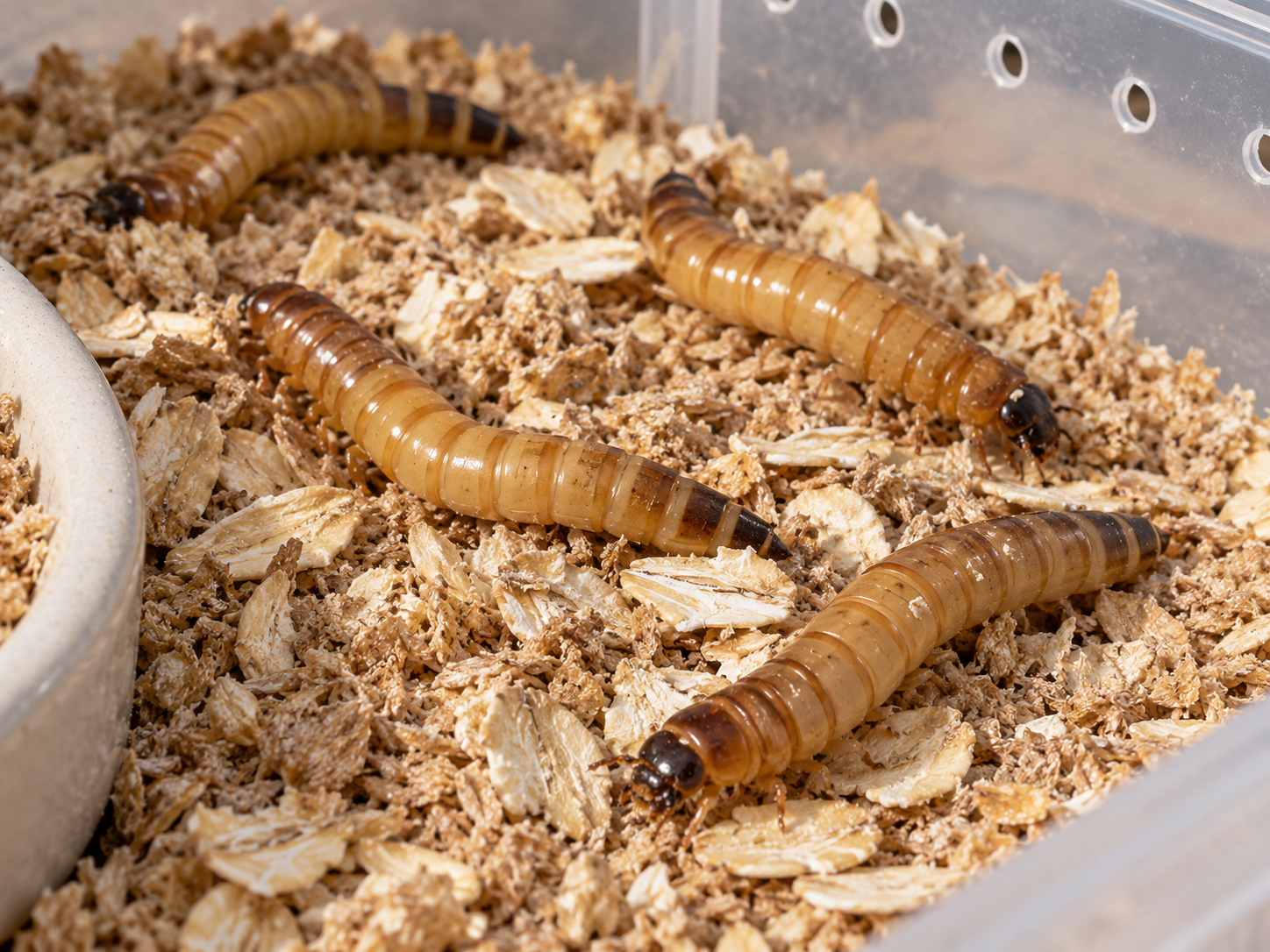
Superworms are simple to house. Use a smooth-sided plastic container with a ventilated lid or holes poked for airflow. They cannot climb smooth plastic and they do not jump, so escapes are rare as long as the walls are clean. Airflow matters, because a sealed, damp container is what turns a healthy batch bad.
For bedding, add a couple inches of dry wheat bran or rolled oats. This does double duty: it is both their bedding and their food, so they can burrow, hide, and nibble at it. Keep the bedding dry. Damp bran molds fast and moldy, humid conditions are a common reason superworms die off, so all of the moisture should come from the fresh veg you add, not from a wet substrate.
- Smooth-sided plastic tub with a ventilated lid or air holes
- A couple inches of dry wheat bran or oats for bedding and food
- Room temperature, roughly 70 to 80 F, and never the fridge
- Keep the bedding dry: all moisture comes from fresh vegetables, not a wet substrate
Food and Hydration
Superworms get most of their nutrition from the dry bran or oats they live in, so the bedding covers their base diet. What they also need is a source of moisture, and the safe way to give it is with fresh vegetables rather than water.
Drop in a slice of carrot, potato, sweet potato, or a similar firm vegetable every few days. The worms get all the water they need by feeding on it, and firm veg holds up without turning to mush. Do not use an open water dish: superworms drown easily and standing water quickly fouls the container and breeds mold. Pull out any leftover vegetable before it gets slimy, usually within a day or two, and add a fresh piece. That single habit keeps the container clean and the worms hydrated.
Keeping Them From Turning Into Beetles
Superworms are the larvae of a darkling beetle, and under the right conditions each one will pupate and eventually become a beetle. The trigger is the part that surprises people: a superworm pupates when it is kept alone. As long as they are crowded together in a group, the worms stay worms.
So the simplest way to stop them from turning into beetles is to keep them together in one container and not isolate individuals. Breeders actually use this on purpose, separating single worms into little cups to force them to pupate, but for feeding you want the opposite. Keep the group packed together, keep them fed and at room temperature, and they will hold as usable feeders. If you do see a few curl into stiff, C-shaped pupae, just remove those; the rest of the colony is unaffected.
Lifespan and Why Superworms Turn Black or Die
Kept well, a batch of superworms will stay alive and healthy for several weeks, which is plenty of time to feed them off. They will not last for months the way fridge-stored mealworms can, because you cannot slow superworms down with cold, but weeks of shelf life is easy to get with basic care.
When superworms turn black, go limp, or start dying off, it almost always comes down to one of three causes: cold, moisture problems, or old age. Cold, especially from the fridge, is the fastest killer. Moisture problems come from a damp, moldy, or poorly ventilated container, or from standing water, so keep the bedding dry and remove old veg. And some die-off is simply natural: worms near the end of their life cycle, or ones getting ready to pupate, will darken and pass on their own. A few black worms here and there is normal; a container going dark all at once points to cold or damp that needs fixing.
Frequently Asked Questions
Can you refrigerate superworms?
No, never refrigerate superworms. Unlike mealworms, superworms are a tropical species and cold will chill them into a dying, sluggish state or kill them outright. Keep them at normal room temperature, roughly 70 to 80 F, at all times. There is no cold-storage trick for superworms.
How long do superworms live?
With good care at room temperature, a batch of superworms stays alive and usable for several weeks. They will not last for months like fridge-stored mealworms, because cold storage kills them, but weeks of shelf life is easy to reach with dry bedding, room-temperature housing, and a slice of fresh vegetable for moisture.
What do you feed superworms?
Feed superworms dry wheat bran or rolled oats as their bedding and base food, then add a slice of carrot, potato, or another firm vegetable every few days for moisture. Avoid an open water dish, since superworms drown in standing water and it fouls the container. Remove leftover veg before it turns slimy.
Why are my superworms dying or turning black?
Superworms usually turn black or die from one of three causes: cold, moisture problems, or old age. Cold, especially the refrigerator, is the fastest killer. A damp, moldy, or poorly ventilated container is the next, so keep the bedding dry and remove old vegetables. Some die-off is just natural aging. A few dark worms is normal; a whole container darkening at once points to cold or damp.
How do you keep superworms from turning into beetles?
Keep superworms together in a group in one container. A superworm only pupates into a beetle when it is isolated on its own, so as long as they stay crowded together they remain worms. Keep them fed and at room temperature, and simply remove any that do curl into stiff, C-shaped pupae.
Do superworms need water?
Superworms need moisture, but not a water dish. Give it to them through fresh vegetables like carrot, potato, or sweet potato, which they feed on to get all the water they need. An open dish of standing water is dangerous because superworms drown in it easily and it quickly fouls and molds the container.
Keep comparing: Superworms vs Mealworms· Dubia vs Superworms· Hornworm Care Sheet· Feeder Nutrition Chart
