
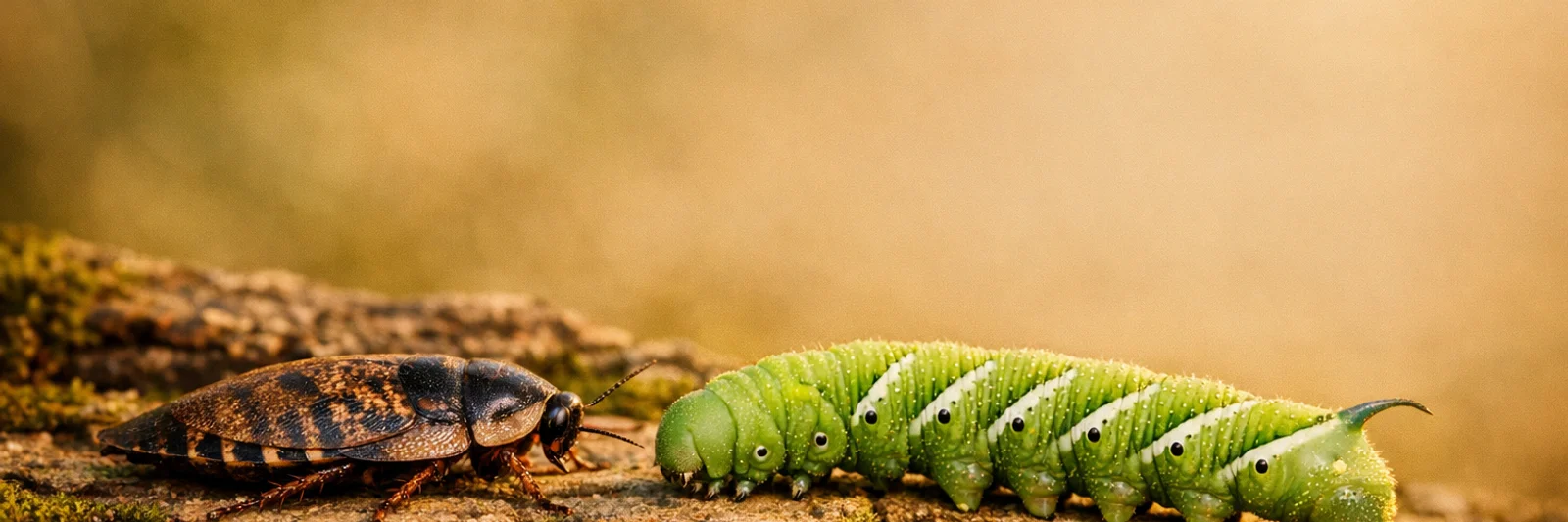
- These two are not really rivals, they are teammates.
- Dubia Roaches carry more protein on an as-fed basis (20 to 23%).
- Nearly every feeder insect is calcium-deficient with an inverted calcium-to-phosphorus ratio, so dust with a calcium supplement and gut-load before feeding.
- These figures are on an as-fed (live) basis compiled from published feeder-insect composition research, so they are guidance, not guarantees.
Dubia Roaches
- High protein, low fat for daily feeding
- Best calcium ratio among feeder roaches, though still dust
- Live for months, so you can buy in bulk
- Silent, odorless, and cannot climb smooth walls
Hornworms
- Very high moisture, a genuine hydration boost
- Soft-bodied and easy for many animals to eat
- Low in calcium, so dust them like other feeders
- Low protein and fat, so not a sole staple
| Dubia Roaches | Hornworms | |
|---|---|---|
| Protein | 20 to 23% | about 9% |
| Fat | 6 to 7% | 1 to 3% |
| Moisture | 65 to 72% | about 85% |
| Calcium : Phosphorus | about 0.29:1 | about 0.24:1 |
| Calcium | Low (roughly 700 to 800 mg/kg); still dust | Low (roughly 470 mg/kg); still dust |
| Dust with calcium? | Yes | Yes |
| Gut-load? | Yes | No |
| Best known for | High-protein everyday staple; best calcium ratio among feeder roaches | Hydration and a soft-bodied treat; very high moisture, low fat |
Nutrition: Staple vs Water Balloon
The gap here is real and it defines how you use each one. Dubia roaches carry a solid load of protein with modest fat, which is exactly the profile you want in a feeder you offer every day. Hornworms sit at the opposite end: they are made up largely of water, with only a little protein and very little fat. That makes a hornworm closer to a juicy snack than a meal.
Neither one is a calcium source. Despite some claims, hornworms carry more phosphorus than calcium, and the total amount of calcium is low. Dubia, like nearly every feeder, have an inverted ratio too, so you dust with calcium before feeding either one, and gut-load the dubia.
Why Hornworms Are a Great Treat
Their biggest strength is moisture. Because they are so high in water, hornworms are one of the best ways to get fluids into an animal that needs them, whether it is going through a shed, running a little dry, or simply not drinking enough. They are also soft-bodied and easy to chew, which makes them gentle on young animals or a picky eater that has lost interest in the usual lineup.
The bright green color and slow, plump movement also tend to catch a reptile's eye, so a hornworm can coax a sluggish or bored animal into eating. All of that is why keepers love them as an occasional treat. It is also why they should stay a treat: an animal fed only hornworms would be getting mostly water and not nearly enough protein or calcium.
Why Dubia Should Be the Base
Dubia earn the staple role on both nutrition and convenience. They deliver steady protein without the high fat of worms like supers or waxworms, so they suit daily feeding without piling on weight. They are also the easiest feeder to live with: silent, odorless, unable to climb smooth plastic or glass, and able to survive for months in a warm bin, so you can buy in bulk and feed from stock.
The simplest healthy plan for most keepers is dubia as the everyday base with hornworms mixed in as a treat for hydration and variety. You get reliable protein most days and a soft, juicy change of pace when you want one.
Cost, Care, and Shipping
Dubia are inexpensive per insect and, because they last for months, the real cost per feeding stays low. Hornworms cost more and are usually sold in a self-contained Habitat-Cup with their own food, which keeps them clean and simple to store but means they are priced as the treat they are. Both ship well as live feeders, and every TC Insects order is checked against real, current weather before it leaves, backed by our Live Arrival Guarantee.
Which One Should You Choose?
Choose Dubia Roaches if
- You need a high-protein staple for everyday feeding
- You want a feeder you can store for weeks or months
- Noise, smell, or escaping feeders drive you up the wall
- You are feeding bearded dragons, most geckos, or monitors
Choose Hornworms if
- You want to add hydration for a shedding or off animal
- You are tempting a picky or recovering eater to feed
- You want a soft-bodied treat for variety
- You are pairing them with a protein staple, not replacing it
Frequently Asked Questions
Are hornworms a good staple feeder?
No. Hornworms are mostly water, with low protein and low total calcium, so they cannot carry an animal on their own. They are a fantastic hydration boost and soft treat, but the base of the diet should be a high-protein staple like dubia roaches.
Can bearded dragons eat hornworms every day?
It is better not to. Hornworms are so high in moisture and low in protein that a daily-only diet would leave a dragon underfed. Offer them as a treat a few times a week alongside a staple feeder such as dubia roaches.
Are hornworms nutritious?
They are more of a hydration food than a nutrient-dense one. Hornworms are very high in moisture and low in fat, and they carry more phosphorus than calcium, so dust them. That makes them great for fluids and variety, not for building the bulk of a diet.
Do hornworms help hydrate reptiles?
Yes. Because they are made up largely of water, hornworms are one of the easiest ways to get fluids into an animal that is shedding, running dry, or not drinking enough. That hydration boost is their standout strength.
How often can I feed hornworms?
As an occasional treat, a few times a week is a reasonable rhythm for most animals, offered alongside a protein staple. Keep the everyday base built on dubia or another staple feeder, and let hornworms fill the treat and hydration role.
Keep comparing: Hornworms vs Silkworms· Dubia vs Crickets· Best Feeders for Bearded Dragons· Feeder Nutrition Chart
