
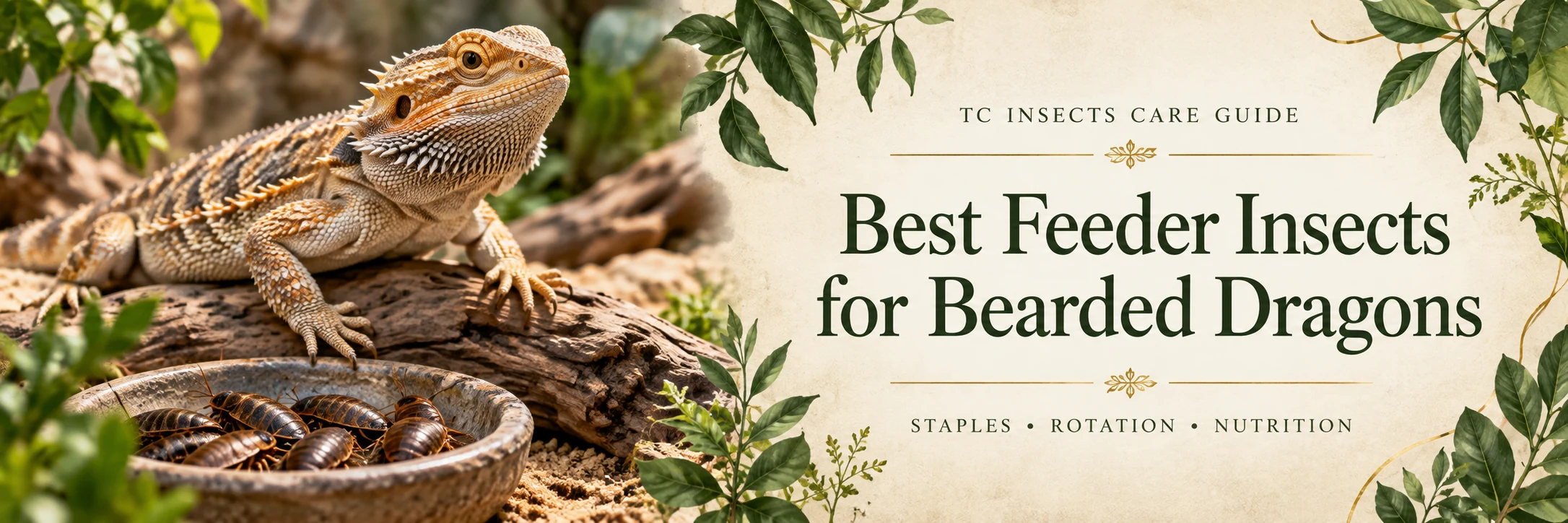
- For most bearded dragons, dubia roaches are the best all-round staple: high in protein, low in fat, easy to keep, and carrying the best calcium ratio of any feeder roach.
- For Bearded Dragons, the ranking starts with Dubia Roaches as the top staple.
- Nearly every feeder insect is calcium-deficient with an inverted calcium-to-phosphorus ratio, so dust with a calcium supplement and gut-load before feeding.
- These figures are on an as-fed (live) basis compiled from published feeder-insect composition research, so they are guidance, not guarantees.
| Dubia Roaches | Crickets | Black Soldier Fly Larvae | Hornworms | Superworms | |
|---|---|---|---|---|---|
| Protein | 20 to 23% | 15 to 21% | about 17% | about 9% | 19 to 20% |
| Fat | 6 to 7% | 3 to 7% | 9 to 14% | 1 to 3% | 17 to 18% |
| Calcium : Phosphorus | about 0.29:1 | about 0.12:1 | roughly 1.5:1 to 7:1 (varies with diet) | about 0.24:1 | about 0.1:1 |
| Dust with calcium? | Yes | Yes | Usually not | Yes | Yes |
| Best known for | High-protein everyday staple; best calcium ratio among feeder roaches | Balanced, widely available staple that triggers a strong feeding response | Naturally high calcium with no dusting needed; sold here as Calcium Worms | Hydration and a soft-bodied treat; very high moisture, low fat | Larger, high-fat feeder for bigger appetites; room-temperature storage |
The Best Feeders for Bearded Dragons, Ranked
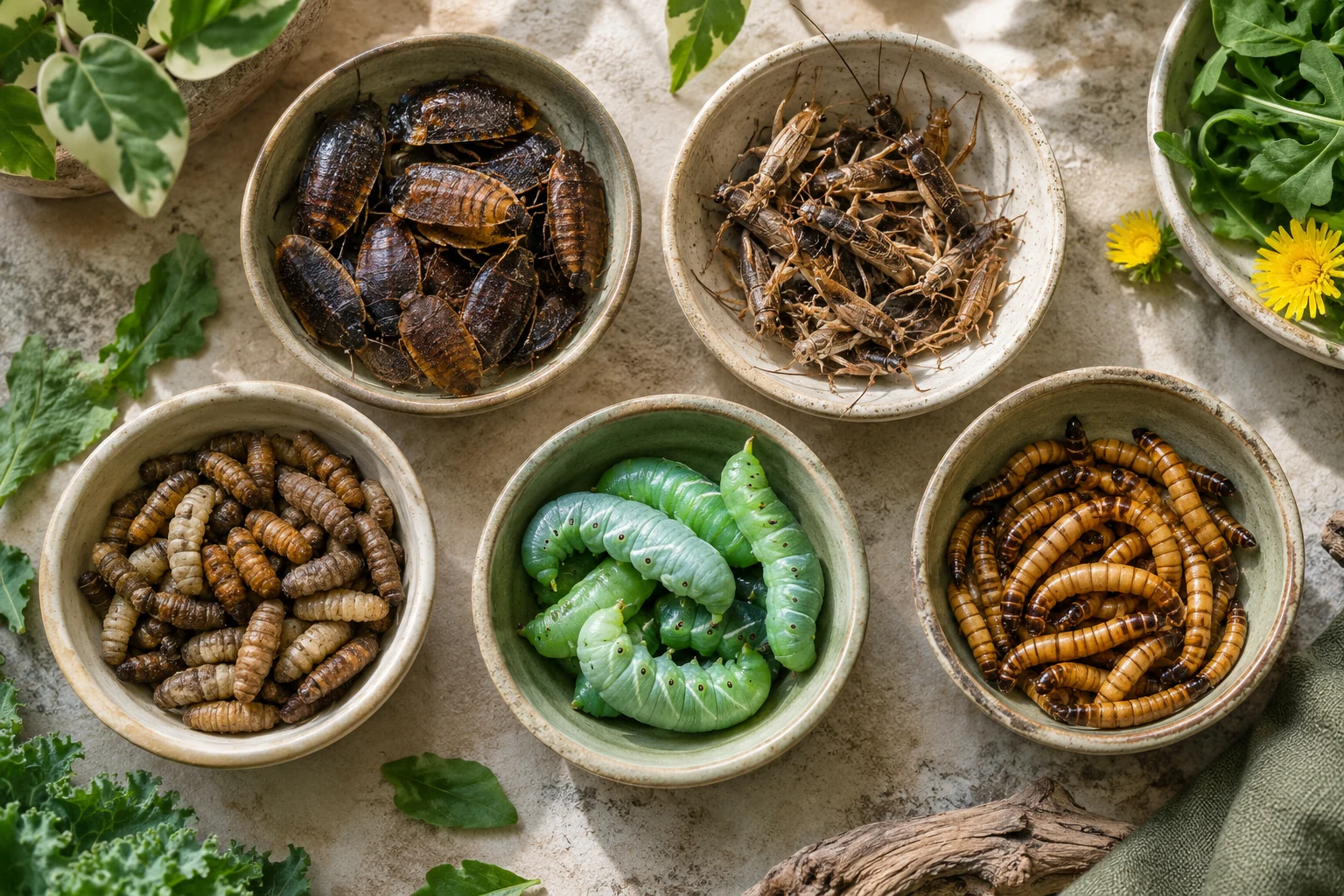
Here is our honest ranking. The top three are staples you can build a diet around; the last two are treats you offer in rotation, not every day. Every one of these still needs a calcium supplement and gut-loading, with the one exception noted below.
- Dubia Roaches - The best all-round staple: high protein, low fat, and the best calcium-to-phosphorus ratio of any feeder roach, plus they are silent, odorless, and cannot climb glass. Shop dubia roaches.
- Crickets - The classic staple, prized for a feeding response that gets even picky dragons hunting; balanced nutrition, though noisier and shorter-lived than dubia. Shop crickets.
- Black Soldier Fly Larvae (Calcium Worms) - The one naturally calcium-rich feeder, so they need little to no dusting; a smart way to add calcium to the rotation. Shop Calcium Worms.
- Hornworms - A soft-bodied hydration treat that is very high in moisture and very low in fat, great for a dragon that needs a water boost. Shop hornworms.
- Superworms - An occasional hearty feeder that bigger, adult dragons love, but higher in fat, so keep them as a treat rather than a staple. Shop superworms.
How the Numbers Compare
The table above pulls from the same sourced dataset we use across the site. A few patterns stand out for bearded dragon keepers. Dubia and crickets are the leanest, highest-protein staples, which is exactly what you want day to day. Superworms carry far more fat, which is why they sit at the bottom as a treat. Hornworms are mostly water, so they are a hydration tool, not a protein source.
One number matters more than any other for bearded dragons: calcium. Nearly every feeder insect is calcium-deficient with an inverted calcium-to-phosphorus ratio, which is why you dust with a calcium supplement and gut-load before feeding. Black soldier fly larvae are the honest exception, since they are naturally calcium-rich, though the exact amount varies with how they are raised.
Which to Feed by Age: Baby vs Adult
Bearded dragons flip their diet as they grow. Babies and juveniles are insect-heavy because they are building a body fast and need the protein; they can eat feeders several times a day and take only a small amount of greens. Adults are plant-heavy, leaning on leafy greens and vegetables with insects offered a few times a week.
A common way to picture this is the 80/20 rule: roughly 80 percent insects to 20 percent plants for babies, then flipping to about 80 percent plants and 20 percent insects for adults. Treat that as a general guideline, not a strict law. The exact ratio shifts with your dragon's age, size, appetite, and activity, so watch your animal and adjust rather than counting to an exact percentage.
Feeders to Avoid or Limit
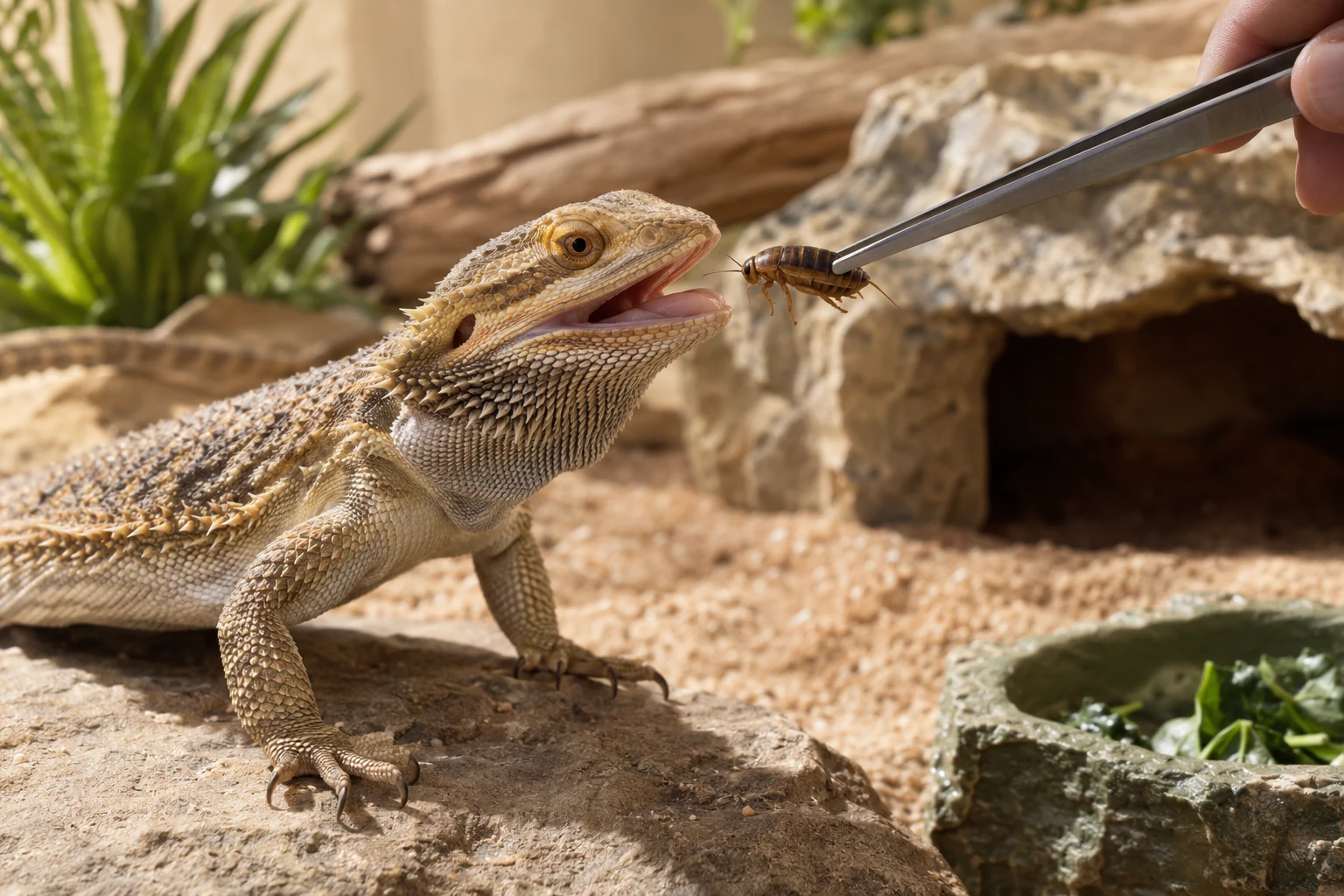
A short list keeps your dragon safe. Never feed fireflies or lightning bugs: they are toxic to reptiles and can be fatal. Avoid wild-caught insects entirely, since they can carry pesticides, parasites, or unknown toxins, and you have no way to know what they ate. And limit high-fat feeders like superworms and waxworms to occasional treats, because a steady diet of them leads to an overweight, less healthy dragon.
When in doubt, keep the everyday menu built on lean staples like dubia and crickets, add calcium through dusting or Calcium Worms, and save the rich, fatty feeders for a once-in-a-while reward.
Frequently Asked Questions
What is the best staple feeder for a bearded dragon?
Dubia roaches are the best all-round staple. They are high in protein, low in fat, easy to keep, and carry the best calcium-to-phosphorus ratio of any feeder roach. Crickets are a strong second choice, mainly for their feeding response. Whichever you pick, dust with calcium and gut-load first.
What insects can bearded dragons eat daily?
Lean staples like dubia roaches and crickets are the ones suited to frequent feeding, especially for growing babies and juveniles that eat insects several times a day. Adults need insects far less often. Always gut-load and dust with a calcium supplement before feeding.
What insects should bearded dragons avoid?
Never feed fireflies or lightning bugs, which are toxic and can be fatal. Avoid all wild-caught insects, since they may carry pesticides or parasites. And limit high-fat feeders like superworms and waxworms to occasional treats rather than staples.
How often should I feed my bearded dragon insects?
It depends on age. Babies and juveniles are insect-heavy and eat feeders several times a day, while adults are plant-heavy and take insects only a few times a week. Watch your dragon's size, appetite, and body condition and adjust as it grows.
What is the 80/20 rule for bearded dragons?
It is a general guideline for the insect-to-plant balance. Babies eat roughly 80 percent insects and 20 percent plants, then the ratio flips to about 80 percent plants and 20 percent insects as they become adults. Treat it as a rule of thumb, not an exact measurement.
Keep comparing: Dubia vs Crickets· Dubia vs Black Soldier Fly Larvae· Best Feeders for Leopard Geckos· Feeder Nutrition Chart
