

- Leopard geckos are insectivores, which means live insects are their entire diet.
- For Leopard Geckos, the ranking starts with Dubia Roaches as the top staple.
- Nearly every feeder insect is calcium-deficient with an inverted calcium-to-phosphorus ratio, so dust with a calcium supplement and gut-load before feeding.
- These figures are on an as-fed (live) basis compiled from published feeder-insect composition research, so they are guidance, not guarantees.
| Dubia Roaches | Crickets | Mealworms | Black Soldier Fly Larvae | Hornworms | |
|---|---|---|---|---|---|
| Protein | 20 to 23% | 15 to 21% | 18 to 20% | about 17% | about 9% |
| Fat | 6 to 7% | 3 to 7% | about 13% | 9 to 14% | 1 to 3% |
| Calcium : Phosphorus | about 0.29:1 | about 0.12:1 | about 0.05:1 | roughly 1.5:1 to 7:1 (varies with diet) | about 0.24:1 |
| Dust with calcium? | Yes | Yes | Yes | Usually not | Yes |
| Best known for | High-protein everyday staple; best calcium ratio among feeder roaches | Balanced, widely available staple that triggers a strong feeding response | Cheap, easy, fridge-storable staple; higher fat and a hard shell | Naturally high calcium with no dusting needed; sold here as Calcium Worms | Hydration and a soft-bodied treat; very high moisture, low fat |
The Best Feeders for Leopard Geckos, Ranked
Here is how the common feeders stack up for a leopard gecko, from everyday staple to occasional treat. Build the diet from the top of the list and use the lower entries to add variety and hydration.
- Dubia Roaches - best staple. High in protein, low in fat, and the best calcium-to-phosphorus ratio among feeder roaches, dubia are the cleanest everyday choice. They are silent, odorless, and cannot climb smooth walls, so they are easy to keep on hand. Shop dubia roaches.
- Crickets - great feeding response. Balanced nutrition and constant movement make crickets irresistible to geckos that like to hunt. They are a proven staple, though they are noisier and shorter-lived than dubia. Shop crickets.
- Mealworms - convenient, but rotate. Cheap, easy, and fridge-storable, mealworms are a handy part of the rotation. Because they are higher in fat and have a hard shell, do not overuse them or make them the only feeder. Shop mealworms.
- Black Soldier Fly Larvae (Calcium Worms) - built-in calcium. These are the one feeder that is naturally calcium-rich, so they need little to no dusting. They are a smart way to boost calcium in the rotation. Shop Calcium Worms.
- Hornworms - hydration treat. Very high in moisture and low in fat, soft-bodied hornworms are a gentle treat, especially for a gecko that needs extra water. Feed them occasionally, not as a staple. Shop hornworms.
Dusting and Gut-Loading Come First
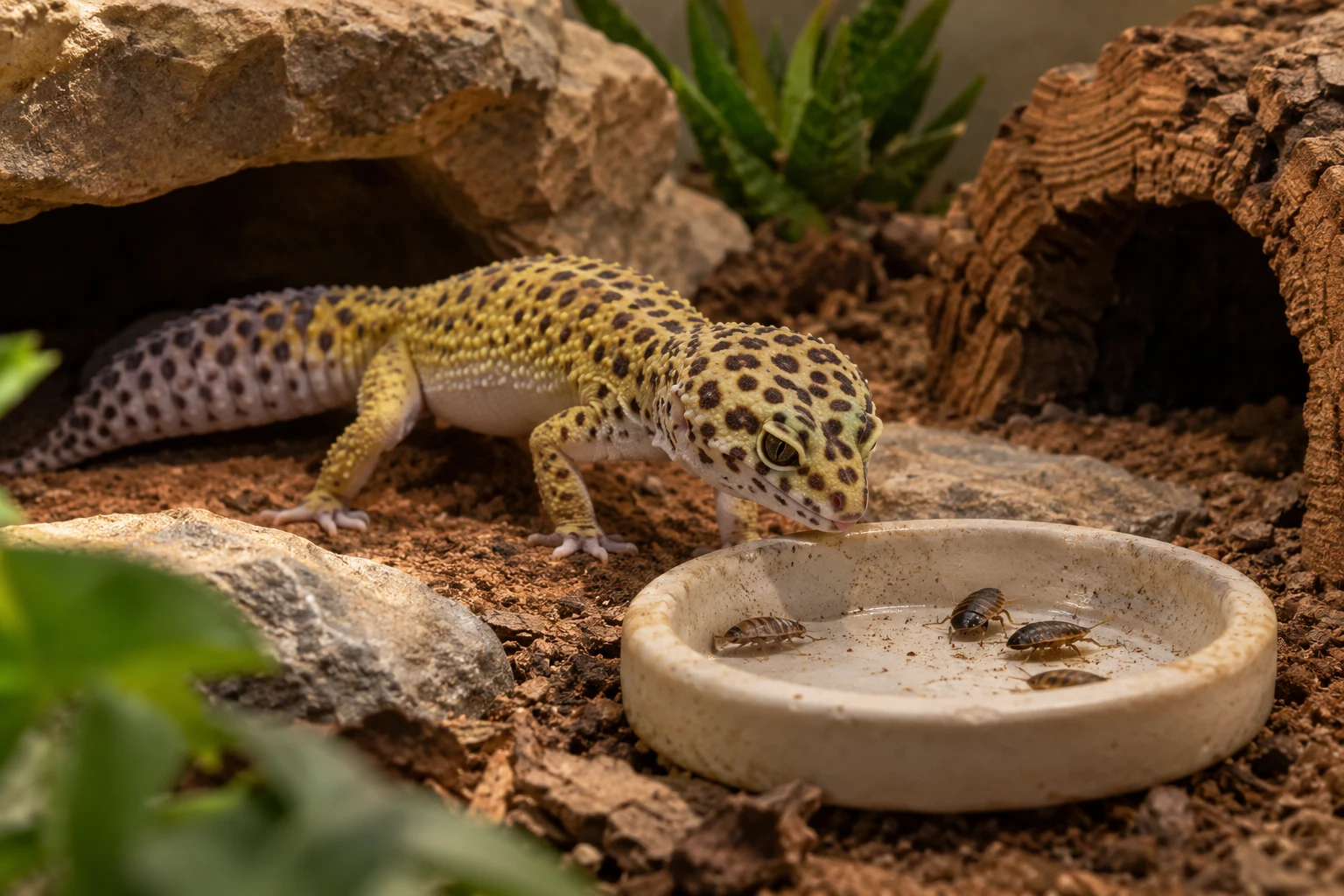
Whichever feeders you pick, the single most important habit is preparation. Nearly every feeder insect is calcium-deficient with an inverted calcium-to-phosphorus ratio, meaning it carries far more phosphorus than calcium. That is why you dust insects with a calcium supplement and gut-load them before feeding. The one feeder that mostly skips dusting is black soldier fly larvae, which are naturally calcium-rich.
Gut-loading just means feeding the insects a nutritious diet for a day or two before they go to your gecko, so the good nutrition passes through. Between calcium dusting, gut-loading, and any vitamin schedule your setup calls for, a simple staple like dubia or crickets becomes a genuinely complete meal.
How Often and How Many to Feed
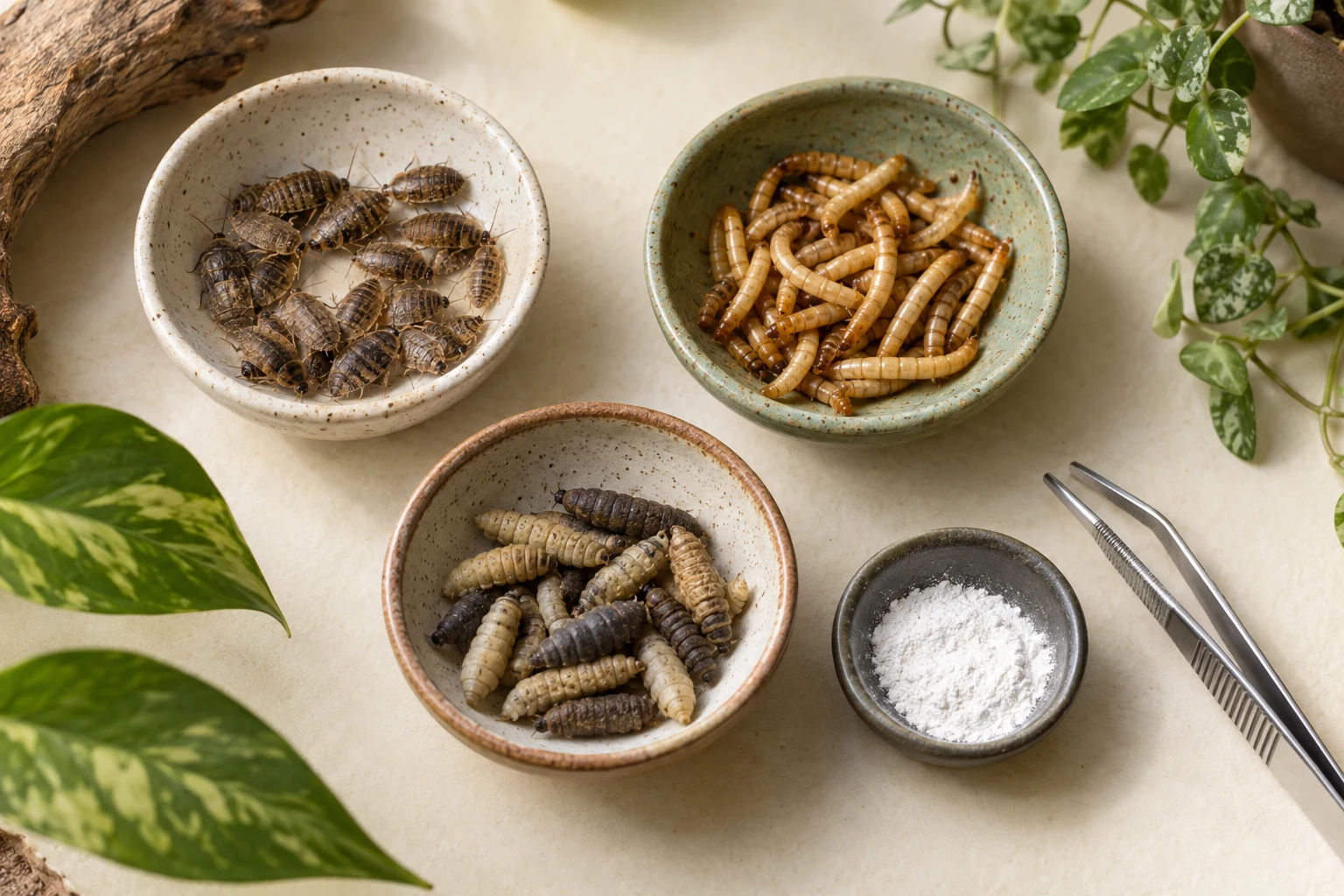
Portion size is easy to get right with one rule: feed insects no wider than the space between your gecko's eyes. Anything larger is harder to swallow and best avoided. Offer a few appropriately sized insects per feeding and let your gecko's appetite guide the exact count.
Age sets the schedule. Juveniles are growing fast and eat more often, usually something close to daily, while adults eat less frequently, often every other day or a few times a week. Watch body condition over time and adjust: a healthy leopard gecko is well-rounded but not soft or overweight. Keeping a shallow dish of calcium available and fresh water in the enclosure rounds out the routine.
Feeders to Limit or Avoid
Mealworms are popular and perfectly fine in rotation, but they are higher in fat and hard-shelled, so they should not be the only feeder you offer. High-fat treats like waxworms fall in the same bucket: fun once in a while, not a staple. Variety keeps the diet balanced and keeps your gecko interested.
Two things are worth avoiding outright. Never feed wild-caught insects, which can carry pesticides or parasites, and never feed fireflies, which are toxic to reptiles. Sticking to captive-bred feeders from a reliable source removes the guesswork. Every TC Insects order is checked against real, current weather before it ships, backed by our Live Arrival Guarantee.
Frequently Asked Questions
What is the best feeder insect for a leopard gecko?
For most keepers, dubia roaches are the best everyday staple: high in protein, low in fat, and easy to keep. Crickets are a close second thanks to the strong feeding response their movement triggers. The healthiest approach is to rotate a couple of staples, dust with calcium, and gut-load before feeding.
Can leopard geckos eat mealworms every day?
It is better not to. Mealworms are convenient and fine as part of the diet, but they are higher in fat and hard-shelled, so they should not be the only feeder. Use them in a rotation with staples like dubia roaches or crickets rather than feeding them alone every day.
What insects can leopard geckos eat?
Good options include dubia roaches, crickets, mealworms, black soldier fly larvae (Calcium Worms), and hornworms as a hydrating treat. Build the diet on one or two staples and use the others for variety. Always dust with calcium and gut-load first, and feed insects no wider than the space between the gecko's eyes.
How many insects should a leopard gecko eat?
Offer a few appropriately sized insects per feeding and let appetite guide the exact count. A safe portion rule is to feed insects no wider than the space between your gecko's eyes. Juveniles eat more often, usually close to daily, while adults eat less frequently, often every other day or a few times a week.
What can leopard geckos not eat?
Avoid wild-caught insects, which can carry pesticides or parasites, and never feed fireflies, which are toxic to reptiles. Also limit high-fat feeders like mealworms and waxworms so they do not become the whole diet. Stick to captive-bred feeders from a reliable source.
Keep comparing: Dubia vs Mealworms· Dubia vs Crickets· Best Feeders for Bearded Dragons· Feeder Nutrition Chart
