Tiger Salamander Feeder Insects
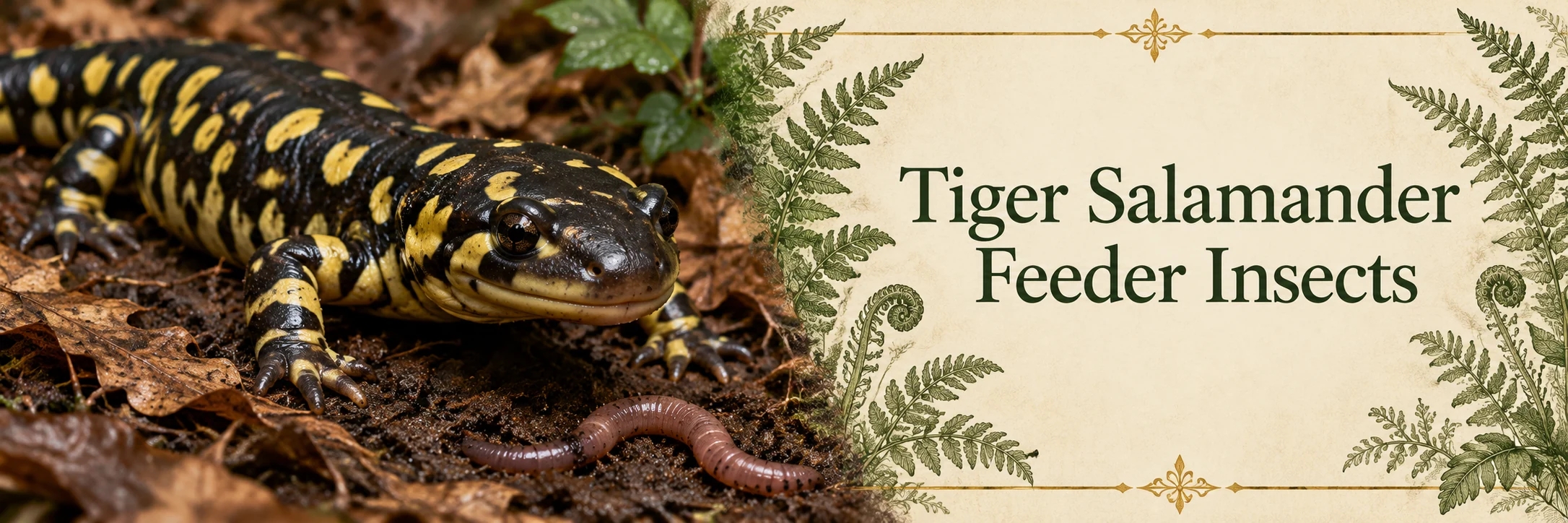
A tiger salamander (Ambystoma tigrinum) is a stout 6 to 8 inch amphibian with a huge appetite and a slow metabolism, which is why the two feeding mistakes are the same for nearly every keeper: too much, too often. Adults eat 2 or 3 times a week, 2 to 4 prey items a feeding; juveniles eat every day or two. Earthworms are the classic staple, and the feeder insects that round out the diet are medium and large dubia roaches, black soldier fly larvae, hornworms, and silkworms, with mealworms and superworms kept to an occasional treat because of the fat and the hard shell. Tigers hunt at night and take food from tongs within days. This guide covers the feeders, the counts by age, the fat problem, and the routine.
2 to 4 prey items a feeding; more makes a fat salamander
Small dubia, small BSFL, cut earthworm
Tigers swallow whole and will try anything
The tiger salamander appetite problem
Tiger salamanders will eat until they cannot move, and a well-meaning keeper who feeds every day ends up with an obese animal within a year. Their metabolism is slow, they spend most of their time buried, and in the wild they gorge when food is available and fast when it is not. In a terrarium the food is always available, so the keeper has to be the limit. Adults do well on 2 or 3 feedings a week, juveniles on a feeding every day or two, and a tiger that looks round rather than stout is being overfed.
The second half of the problem is what they eat. Mealworms and superworms are fatty and hard-shelled, and a tiger fed mostly on them gets both fat and constipated. Earthworms, roaches, black soldier fly larvae, and soft-bodied caterpillars are the better body of the diet. Our post on feeder insects and obesity applies just as well to a salamander as to a lizard.
The feeders that fit a tiger
Nightcrawlers and red wigglers are the staple for most keepers, cut to size, and everything below is what goes around them. Dubia roaches are the best insect staple: medium nymphs for a juvenile, large nymphs for an adult, offered on tongs since a roach that runs off burrows and is never seen again. Black soldier fly larvae carry calcium and are soft, so they suit a growing juvenile and a gravid female. Both are in the dubia shop and the BSFL shop.
Hornworms and silkworms are the soft, wet feeders. A large hornworm is a full meal for an adult tiger and the best food for one that is dehydrated or has not eaten in a while; silkworms are leaner and suit juveniles. Both are treats or rotation items rather than everyday food. Mealworms and superworms drop to once a week or less, and never as the only feeder; the feeder size chart by reptile keeps the prey width honest for a salamander that lunges at anything.

Counts and schedule by age
Juveniles from the size they leave the water, about 3 to 4 inches, eat every day or two: 2 or 3 small dubia, small BSFL, or a piece of earthworm the width of the head. They grow quickly in the first year on that schedule, and it is the one stage where a keeper can be generous. Dust most feedings lightly with calcium.
Adults from about 6 inches move to 2 or 3 feedings a week, 2 to 4 items a feeding: a couple of large dubia, a hornworm, or a nightcrawler, with a BSFL feeding in the mix each week. A fat tiger can go to twice a week and smaller portions with no harm. Older adults eat less again. The right amount is the one that keeps the salamander stout with a visible waist from above, not a sausage.
Tong feeding at night
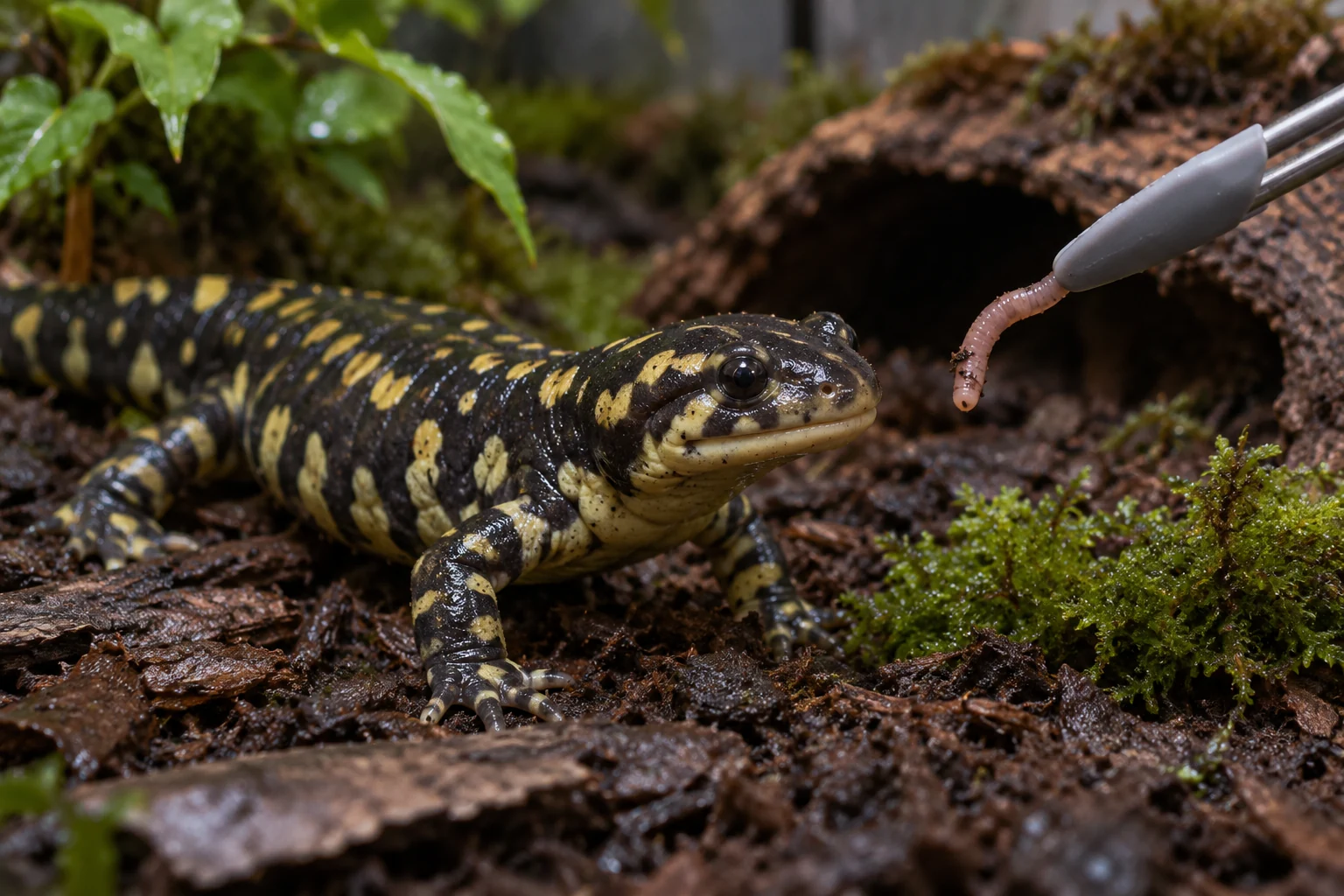
Tigers are nocturnal and fossorial, spending the day buried in damp substrate, so feed in the evening when the lights go down. Hold the prey in a pair of soft-tipped tongs and wiggle it near the salamander's snout; most tigers strike within seconds and learn to come to the front of the enclosure at feeding time within a week. Tong feeding is also the only way to know how much a buried animal actually ate.
Loose feeding works for roaches and larvae in a bare feeding tub for 15 minutes, which keeps the salamander from swallowing a mouthful of coco fiber with the prey. Never leave mealworms or superworms loose overnight in the enclosure; they burrow, and a superworm can bite a resting salamander. Uneaten roaches in a damp substrate enclosure die and rot within a day or two.
Dusting, water, and the amphibian skin rule
Dust prey lightly with plain calcium once or twice a week for adults and at most feedings for juveniles, and a multivitamin about once a week; BSFL days can skip the dust. Salamanders drink and breathe through their skin, so the enclosure needs a shallow dish of dechlorinated water and a substrate that stays damp, never wet, and anything on your hands ends up in the animal. Wash and rinse well before handling, and keep handling short.
Because of that skin, keep feeders clean too. Gut load them for a day on plain food, not on anything medicated or treated, and never feed wild insects from a treated yard. The shake-cup method in how to dust feeders with calcium keeps the powder light enough that a moist-skinned amphibian is not wearing it afterward.
A month of feeders for one adult tiger
An adult at 3 feedings a week and 2 to 3 items a feeding eats roughly 30 to 40 items a month. A workable box is 25 large dubia, 25 large BSFL, and a cup of large hornworms, with earthworms from a bait shop or your own bin filling the gaps. Dubia keep for months at room temperature with egg flats and a vegetable slice, BSFL a few weeks in the refrigerator, and hornworms a week or two in their cup as they grow.
If your tiger is a rescued wild adult rather than a captive-bred juvenile, expect it to refuse tongs for a week or two and to prefer earthworms at first; roaches and larvae win it over. Keep the enclosure cool, in the 60s to low 70s F, since a warm tiger eats more and burns nothing, and the appetite problem gets worse. A cool, dark, damp enclosure and a strict schedule is the whole secret.
The Tiger Salamander Feeder Kit
Large and medium dubia for tong feeding, calcium-rich BSFL, a hornworm cup for hydration, and calcium powder.
Frequently Asked Questions
Written by the TC INSECTS breeding team · Porter, Texas · Live Arrival Guarantee on every order
Have a care question? Ask our community.
Join Reptile Keepers USA, our free Facebook group for reptile, amphibian and invert keepers. Share your setups, get care help and swap feeder tips.
Join the free group