
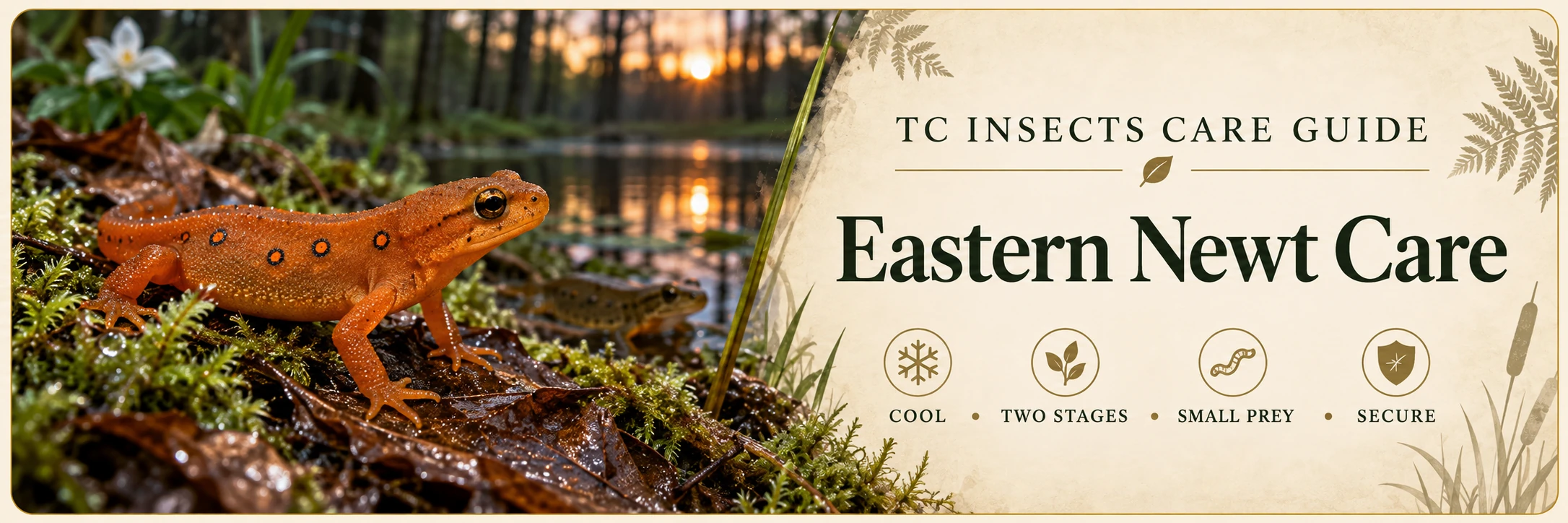
One species, two completely different homes
The eastern newt hatches in water, transforms into a bright orange land-dwelling juvenile called a red eft for two to seven years, then returns to water as an olive-green adult. Most care failures come from housing the right animal in the wrong stage-specific enclosure.
Red eft · terrestrial
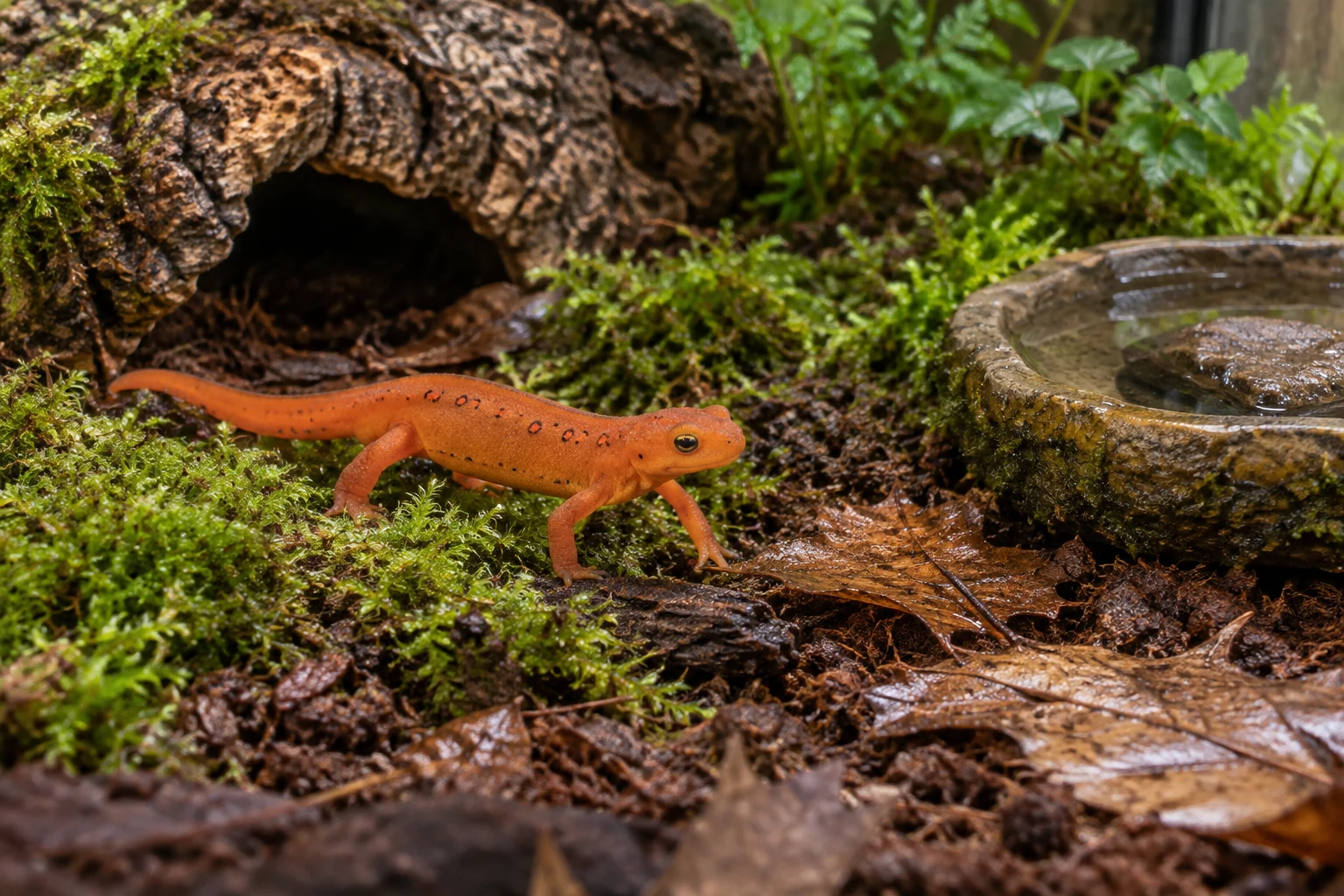
Bright orange to brick red, rough dry-looking skin and a rounded walking tail. It needs a damp forest-floor setup with only a very shallow water dish. Deep water can drown an eft.
Adult · aquatic
Olive to yellow-brown with a keeled paddle-like tail and a yellow, black-spotted belly. It needs clean, cool water with gentle flow and an easy land exit.
What you will need
Identify the stage first, then build the correct half of this list.
Conditions at a glance
| Parameter | Target | Important note |
|---|---|---|
| Red eft housing | Land tank; damp moss and leaf litter | A land animal—deep water is dangerous |
| Adult housing | Cool aquatic setup with land exit | Keep flow gentle and water clean |
| Temperature | 60–70°F | No heater; stress rises above 75°F |
| Water | Always dechlorinated | Weekly partial changes with filtration; more often without |
| Eft humidity | High; damp, never waterlogged | Mist as needed without pooling |
| Lighting | Low light, 12-hour cycle | UVB is generally unnecessary |
| Handling | None | Skin carries tetrodotoxin; wash after tank work |
Housing the red eft
Use two to three inches of coco fiber topped with damp sheet moss and leaf litter, cork bark hides, and a very shallow dish the eft can walk into and out of. Keep the substrate damp but never wet enough to pool. Constant glass climbing often means the habitat is too warm, too dry or too exposed.

Housing the adult
Provide cool, dechlorinated water, live or silk plants, shaded structure and a cork raft, sloped bank or driftwood exit. Use a gentle filter plus weekly partial changes, or change a portion two to three times weekly without filtration. Strong current exhausts a pond-adapted newt.
Temperature and light
Keep both stages at 60–70°F. The ceiling matters more than the floor: sustained temperatures above the mid-70s cause serious stress. A basement, interior room or north-facing wall is safer than adding equipment. Keep lighting low and indirect on a 12-hour cycle; bright light drives this shade-dwelling species under cover.
Diet and feeding
Eastern newts hunt by deliberate approach rather than a fast strike. Offer prey that remains available long enough to catch, and use tongs for adults so you can verify that food was eaten. Chopped nightcrawler is an excellent staple even though we do not stock it.
| Stage | What to feed | Amount | Schedule | Supplements |
|---|---|---|---|---|
| Red eft | Springtails, flightless fruit flies, tiny soft prey | 5–10 tiny items | Every other day | Fine calcium + D3 twice weekly |
| Transitioning | Land and water prey offered in both zones | What it takes readily | Every other day | Calcium + D3 twice weekly |
| Aquatic adult | Chopped nightcrawler, small soft prey, aquatic invertebrates | 2–4 small items | Every other day | Calcium + D3 weekly; multivitamin every other week |
Hands off—and never release after captivity
Eastern newt skin carries tetrodotoxin. It is not a danger to an adult who washes thoroughly after maintenance, but it must stay away from eyes, mouths, cuts, children and pets. Move a newt with a container rather than bare fingers, and never house it with other species.
State wildlife agencies decide whether native amphibians may be collected or kept. Check the actual rule before bringing one home. Once an amphibian has lived in captivity, it must never be released: captivity can expose it to chytrid fungus, ranavirus and other pathogens that threaten wild populations.
Health and troubleshooting
| What you see | Likely cause | What to do |
|---|---|---|
| Eft struggling or waterlogged | Housed as an aquatic adult | Move to a land setup with a shallow dish today |
| Adult dried out or always on land | Dry housing or poor water | Restore clean water and review change schedule |
| Constant glass climbing | Too warm, too dry or no cover | Cool the room, dampen moss and add hides |
| Fuzzy patches or skin sores | Bacterial or fungal infection | Immediate partial change; contact an exotics vet |
| Food refusal with weight loss | Parasites or stage mismatch | Recheck setup; vet with a fecal sample |
| Floating listlessly | Bloat or overheating | Check temperature first; vet if persistent |
| Pale skin shedding in pieces | Normal shed | Observe; newts often eat shed skin |
Eastern Newt FAQ
What is a red eft?
It is the juvenile land stage of the eastern newt. After hatching in water as a gilled larva, the animal transforms into a bright orange eft that lives on damp forest floors for two to seven years, then transforms again into an olive aquatic adult. An eft is not a different species and it is not an adult that needs a pond; it is a land animal, and housing it in deep water is the single most common way keepers lose one.
Do I need water or land for my newt?
It depends on the stage. A bright orange eft needs a land tank with damp moss and only a very shallow dish. A transformed olive adult needs a cool aquatic setup with a land exit it can always climb onto. If your eft starts spending real time in the water and its tail broadens, convert gradually.
Are eastern newts poisonous?
Their skin carries tetrodotoxin, so yes, mildly. It is not a danger to an adult who washes after tank maintenance, but it is a real reason to keep them away from eyes, mouths, cuts, young children and pets, and never house them with other species.
Do eastern newts need a heater?
No. They want 60–70°F and suffer above the mid-70s, so the equipment you need is a cool room rather than a heater. Summer heat is the most common seasonal danger.
What do eastern newts eat?
Small, slow-moving prey suited to a deliberate hunter. Efts take springtails, flightless fruit flies and tiny invertebrates; aquatic adults take chopped nightcrawler, small soft prey and aquatic invertebrates offered by tongs. Feed every other day and dust on the schedule above.
How long do eastern newts live?
Twelve to fifteen years is normal with cool temperatures and clean water, and longer is documented. This is a long commitment despite the animal being smaller than your finger.
Can I keep an eft I found on a trail?
Check your state rules first because native amphibian possession varies widely, and understand that the animal can never be released once it has lived in captivity. Leaving a wild eft to finish its journey is a legitimate choice.
Can eastern newts live with fish?
No. Their toxins enter shared water, fish may nip slow-moving newts, and each side carries disease risk to the other. Keep eastern newts in a single-species enclosure.
Setting up for an eft or an adult?
Tell us which stage you have and we’ll help confirm the enclosure and prey size.
Prepared by the TC INSECTS keeper team for practical, responsible Eastern newt care.
