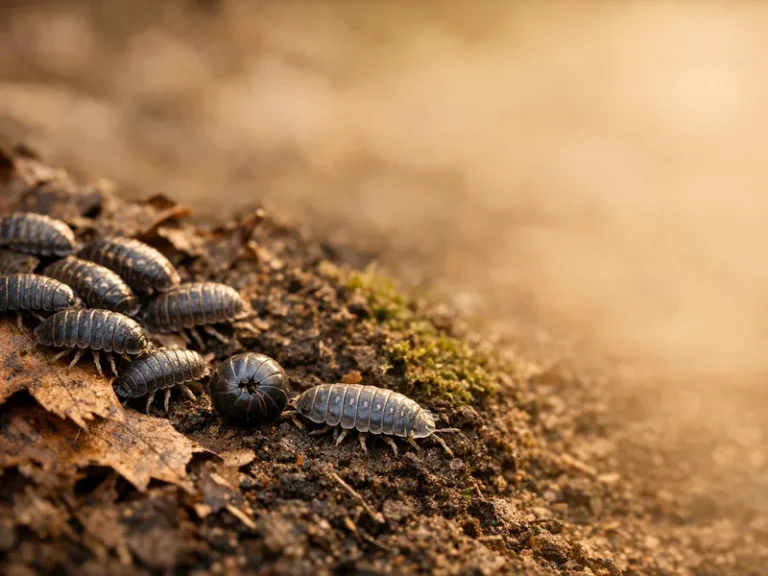
An isopod that has gone soft and mushy is already dead and is decomposing, and most of the time it means the bin got too wet. A waterlogged, oxygen-poor substrate does two things at once: it kills isopods, and it speeds up how fast a dead body breaks down into a shapeless smear. So mush is not really the problem, it is the evidence. The good news is that this is one of the easiest colony problems to fix, and you almost never need to tear the whole bin down to do it.
Soft and formless means the isopod already died and the body is breaking down
Soaked, packed substrate runs low on oxygen and speeds up decay
Dampen one side or one third of the bin and leave the rest dry
What mush actually is
Mush is decomposition, not a symptom you can treat. An isopod that has gone soft, dark, and formless is not sick, it is already dead, and the body is breaking down. Bacteria and fungi that live in every healthy bin do that work, and they do it fast in warm, wet, still air. That is why a mushy isopod usually turns up in the soggiest corner of the bin, right under a soaked piece of food or a saturated patch of moss, rather than out in the dry leaf litter.
New keepers often worry that mush is a contagious illness that will melt the rest of the colony. Most keepers find it does not work that way, and there is no well documented melting disease in hobby isopods. The best documented infection of that kind in land isopods, an iridescent virus, shows up as a blue or purple sheen in the body rather than as mush. What actually spreads here is the condition, because the same soaked, airless bin that killed the first isopod is still sitting there working on the next one. Fix the bin and the losses stop.
The usual causes, in order
Here is the order we work through on our farm when a keeper sends us a photo of a mushy isopod. First, a waterlogged bin with no dry side. Isopods breathe through gill-like structures on their underside that need damp air, not standing water, so a bin soaked wall to wall leaves them nowhere to retreat to. Second, poor ventilation. Without real cross-flow, moisture never leaves, the substrate packs down, and the surface goes sour. Our post on how much ventilation isopods need covers where to put the holes and how many.
Third, food left in too long, especially protein like fish flake or dried shrimp, and wet vegetable scraps. Those rot quickly, invite mites, and turn a small damp patch into a slimy one. Fourth, overcrowding, which loads a bin with waste and moisture faster than it can dry back out. Smell is a useful check on all four: a healthy bin smells like a forest floor and not much else, so if yours smells sour or swampy, something is off. Our guide on whether isopods smell bad walks through what each smell is telling you.
What to do right now
Start small and specific. Scoop out the mush with a spoon or tweezers, and take the wet substrate immediately around it with you, since that little pocket is usually the sourest part of the bin. Pull every scrap of leftover food, especially anything soft, slimy, or fuzzy. Do not tear the whole colony down. Mancae, the tiny babies, hide deep in the substrate and in leaf litter, and a full teardown costs you far more animals than the wet spot ever would.
Next, dry the bin back to a proper gradient instead of drying it out. Hold off on misting, open more cross-ventilation holes, and add a good handful of fresh dry leaf litter and a piece of bark on the drier side so the colony has somewhere to sit while things even out. Check it once a day rather than setting a timer, because a small bin with fresh holes in it can swing from soaked to bone dry quickly, and a bin that dries out all the way kills isopods just as surely as a swamp does. You are aiming for roughly one third of the bin damp enough to hold together when squeezed, with the rest dry to the touch, and once the damp side looks like that, go back to light misting on that side only. Humidity-hungry species like Cubaris need that damp third kept up more carefully than a Powder Orange bin does. If the substrate itself has turned into packed, airless sludge, our isopod substrate recipe shows the mix that drains and breathes properly.
Mush versus a normal molt
This is the single most common mix-up we hear about, and the difference is easy to see once you know it. A molting isopod is pale but completely intact. It still has a clear isopod shape, legs, and segments, and it is very often white on just one half of the body, because isopods shed in two stages, usually a day to a few days apart depending on the species. The shed itself is dry, thin, and papery, almost like a tiny piece of tissue paper, and it often disappears within a day or so because isopods eat their own sheds for the calcium. Our post on why isopods go half white has the full timeline.
Mush is the opposite in every way. It is wet, formless, and dark or grayish, with no clean segments left, and it smears rather than lifts when you touch it. If you are unsure, nudge it very gently with a toothpick: a molting isopod is firm, holds its shape, and often twitches, while mush collapses. When in doubt, leave a pale isopod alone. Digging up a healthy molter to check on it does far more harm than waiting a day.
Normal losses versus a real crash
Losing a few isopods is not a crisis. Isopods die of old age constantly, and in a healthy colony the survivors clean up the bodies before you ever see them, which is exactly what detritivores are built to do. We should be honest here: nobody has published a real baseline death rate for hobby bins, so any exact percentage you see quoted online is a guess. What matters is the trend, not a single body. One or two losses in a bin of hundreds is background noise. The same one or two every single day is not.
Signs of a genuine crash are hard to miss once you look for them: several deaths a day, nobody surfacing at feeding time, babies disappearing, a sour smell, and a population that visibly shrinks over two or three weeks. If that is what you are seeing, our post on why isopods are dying works through the rest of the causes. If the substrate has gone black and sour all the way through, moving the survivors to a fresh bin beats trying to rescue a ruined one. And if you are rebuilding from scratch, forgiving species like Powder Orange (Porcellionides pruinosus) handle a new keeper's moisture swings better than most.
Keep reading: What Does Isopod Poop Look Like?
The Bin Reset Kit
Fresh substrate, dry leaf litter and calcium to pull a soaked bin back to a proper gradient.
Frequently Asked Questions
Written by the TC INSECTS breeding team · Porter, Texas · Live Arrival Guarantee on every order
Have a care question? Ask our community.
Join Reptile Keepers USA, our free Facebook group for reptile, amphibian and invert keepers. Share your setups, get care help and swap feeder tips.
Join the free group