What Does Isopod Poop Look Like?
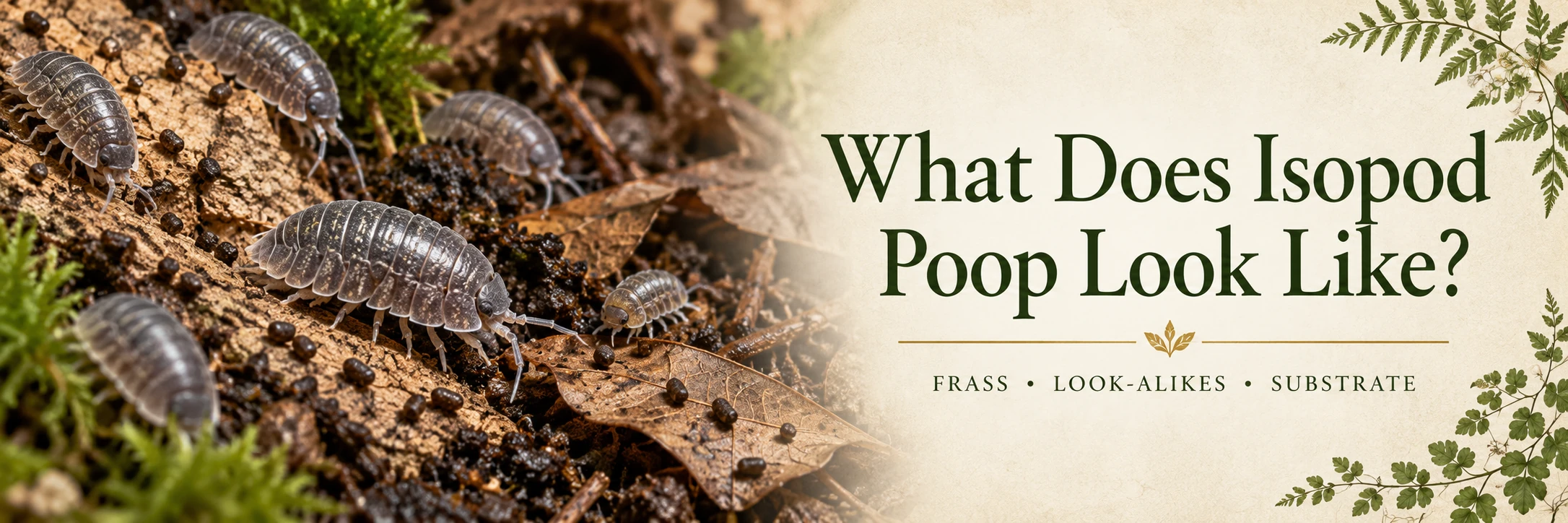
Frass looks like tiny brown to black pellets, roughly the size of sand grains
Fresh frass often tints toward whatever the isopods last ate
A caked layer that repels water is the real signal to refresh substrate
Read the pellets—not just the color.
Isopod poop, called frass, shows up as tiny pellets, usually brown, black, or whatever color the last meal was, scattered across the substrate surface or piled under a favorite piece of bark. It is a completely normal part of a working bioactive bin, not a sign of pests or a dirty enclosure, and a light dusting of it is actually part of how nutrients cycle back into the substrate. Where new keepers get tripped up is telling frass apart from the other small things that show up in the same bin: mold, grain mites, shed exoskeletons, and even baby isopods. Here is what real frass looks like, how much is normal, and how to tell it apart from everything else.

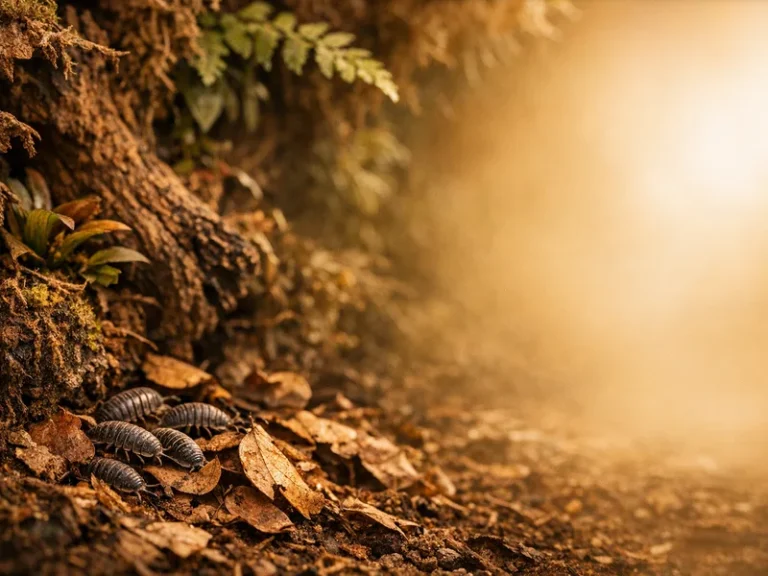
Illustrative keeper-care image; refer to the descriptions and chart below for identification.
A light scattering is normal. A packed layer needs attention.
Frass is part of a working bioactive colony. Watch texture, movement and substrate condition to tell normal pellets from their look-alikes.
What frass actually looks like
Frass is the technical word for isopod droppings, and it looks far more like tiny bits of debris than what most people picture as animal waste. Expect small, roughly square or slightly elongated pellets, usually brown to black, not much bigger than a grain of sand. It collects wherever isopods spend the most time: scattered across the top of the substrate, piled under a favorite piece of bark, or built up in a corner that gets heavy foot traffic. A light scattering of these pellets across the surface, especially in an established bin, is exactly what a healthy, actively feeding colony leaves behind.
Why frass is normal, and even useful
Frass is not waste in the way a mess in a cage would be. It is a normal part of the same decomposition cycle isopods are in the bin to run in the first place, breaking leaf litter and wood down into smaller, more usable material. Researchers studying isopod behavior have documented coprophagy, isopods and their young reingesting some of this material as a secondary food source and a way to pick up beneficial gut bacteria. Seeing a reasonable amount of frass is not a cleanliness problem, it is a sign the nutrient cycle your bioactive bin depends on is actually working.
How much frass is too much
A thin, loose scattering of pellets is nothing to manage. The point where frass becomes worth addressing is when it packs down into a thick, caked layer rather than staying loose, since a dense mat like that can start to repel water instead of letting it soak through to the substrate below, leaving that section drier than the rest of your gradient no matter how much you water it. A heavily packed layer also offers less real nutrition than fresh substrate, since the useful material in it has already been through the system once. Prolific, fast-breeding species build up a visible layer faster than slower breeders like Cubaris.
There is no single correct interval for refreshing substrate, since colony size, species, and bin size all change how fast frass accumulates. Treat a caked, water-resistant patch as the actual signal rather than a date on a calendar, and top up or replace substrate in that specific section with fresh isopod substrate rather than redoing the whole bin. Our substrate recipe guide covers building the layered mix back up the same way we do on our farm.
Frass vs mold: the easiest way to tell them apart
The fastest test is whether it moves or changes over a day or two. Frass sits as small, distinct, solid pellets that do not spread or connect to each other. Mold looks completely different, a soft, cottony, white to gray fuzz that thickens and spreads across whatever it is growing on, most often a piece of fresh wood or cork. A little white mold in a newer bin is normal too, and our guide on white mold in a new terrarium covers why it shows up and fades on its own.
Frass vs mites, molts, and mancae
A few other small things get mistaken for frass, and each has its own clear tell. Grain mites are pale, shiny specks that move in a fast, restless cloud over food, nothing like a motionless pellet, and our grain mite guide covers clearing an actual bloom. A shed exoskeleton looks papery, hollow, and isopod-shaped rather than pellet-shaped, and it is completely normal, covered in our piece on isopod molting. Tiny, pale isopods that look like miniature copies of the adults, called mancae, are newborns, not debris at all, and are one of the best signs a colony is actually breeding, which our guide on isopod mancae explains in full.
When to actually worry
Plain frass, on its own, is never something to worry about. What is actually worth a closer look is a strong ammonia or sour smell alongside it, standing water, or a packed layer that has stayed wet and slimy rather than dry and crumbly, since that combination points to a moisture problem rather than normal droppings. Our guide on a bin that is too wet walks through that specific fix. Otherwise, a dusting of dark pellets on the surface is simply proof your colony is doing its job.
What's Actually in the Bin
The Fresh Substrate Kit
The springtail crew and fresh substrate that keep frass from turning into a packed, water-resistant layer.
Frequently asked questions
What does isopod poop look like?
Isopod poop, called frass, looks like tiny, roughly square or slightly elongated pellets, usually brown to black, not much bigger than a grain of sand. It often tints toward whatever the isopods last ate. You will find it scattered across the substrate surface or piled under a favorite hide, and a light dusting of it is a normal sign of a colony that is actively feeding.
Is a lot of frass in my isopod bin a bad sign?
Not by itself. A loose scattering, even a fairly heavy one, is normal in an established bin. It becomes worth addressing only when it packs into a thick, caked layer that starts repelling water instead of letting it soak into the substrate below. At that point, refresh or top up substrate in that specific section rather than the whole bin.
How is frass different from mold?
Frass is small, solid, distinct pellets that stay put and do not change from day to day. Mold looks nothing like that, a soft, cottony, white to gray fuzz that spreads and thickens across wood, cork, or substrate over a day or two. If it is moving or growing, it is not frass. If it sits as separate dark specks, it is.
Why is my isopod frass a strange color?
Frass color usually just follows the last meal. A batch of orange squash or a piece of cuttlebone can tint the pellets that follow it, and the color shifts again with the next feeding. This is completely normal and not a sign of illness or a problem with the substrate.
How often should I clean frass out of an isopod bin?
There is no fixed schedule, since colony size, species, and bin size all change how fast it builds up. Watch the substrate instead of the calendar: a caked, water-resistant patch of old frass is the real signal to refresh substrate in that spot, not a set number of weeks or months.
Can isopods eat their own frass?
Yes, to some degree. Isopods and their young have been documented reingesting some frass as a secondary food source and a way to pick up beneficial gut bacteria, part of the same decomposition cycle they run in the rest of the bin. It is a normal behavior, not a sign anything is wrong with their diet.
Keep learning
Have a care question? Ask our community.
Join Reptile Keepers USA, our free Facebook group for reptile, amphibian and invert keepers. Share your setups, get care help and swap feeder tips.
Join the free group