Venezillo parvus Care
TC lists 5mm; other hobby sources report up to 8 to 12mm
TC keeps 72 to 80F with consistently damp substrate, never dry
Expect months, not weeks, before you see clear population growth
Venezillo parvus Care
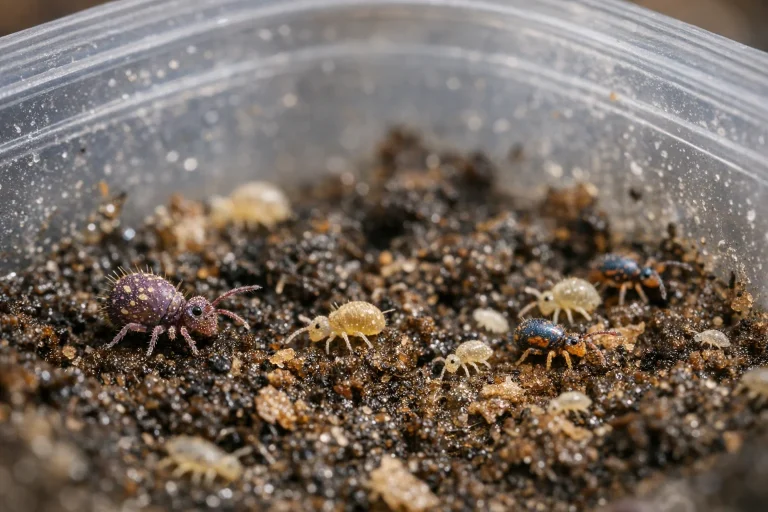
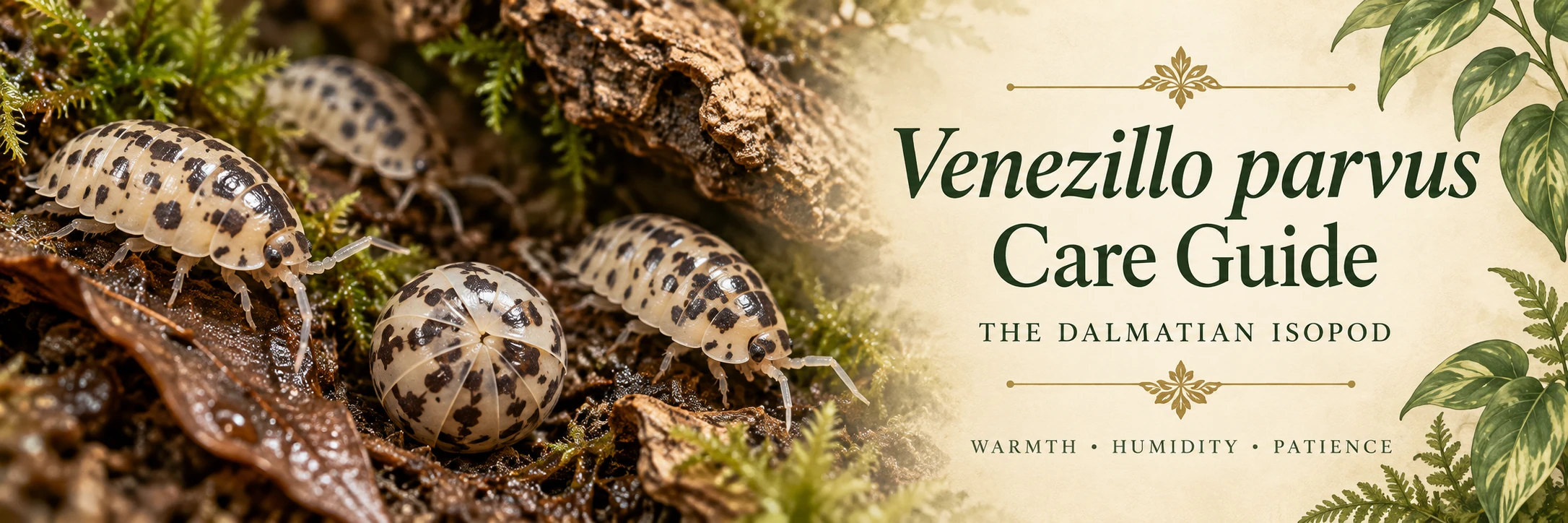
The Dalmatian isopod TC sells is Venezillo parvus, and it wants a warm, consistently humid setup, roughly 72 to 80 F with high humidity that never fully dries out, plus a deep layer of leaf litter to hide in. The name causes real confusion: Porcellio scaber and Armadillidium vulgare both have their own Dalmatian-patterned morphs, so the scientific name is the only way to know which animal you are actually buying. Once you have the right species, the single fact that matters most is patience: Venezillo parvus breeds noticeably slower than Dwarf White, so a new culture needs months, not weeks, before it looks established.
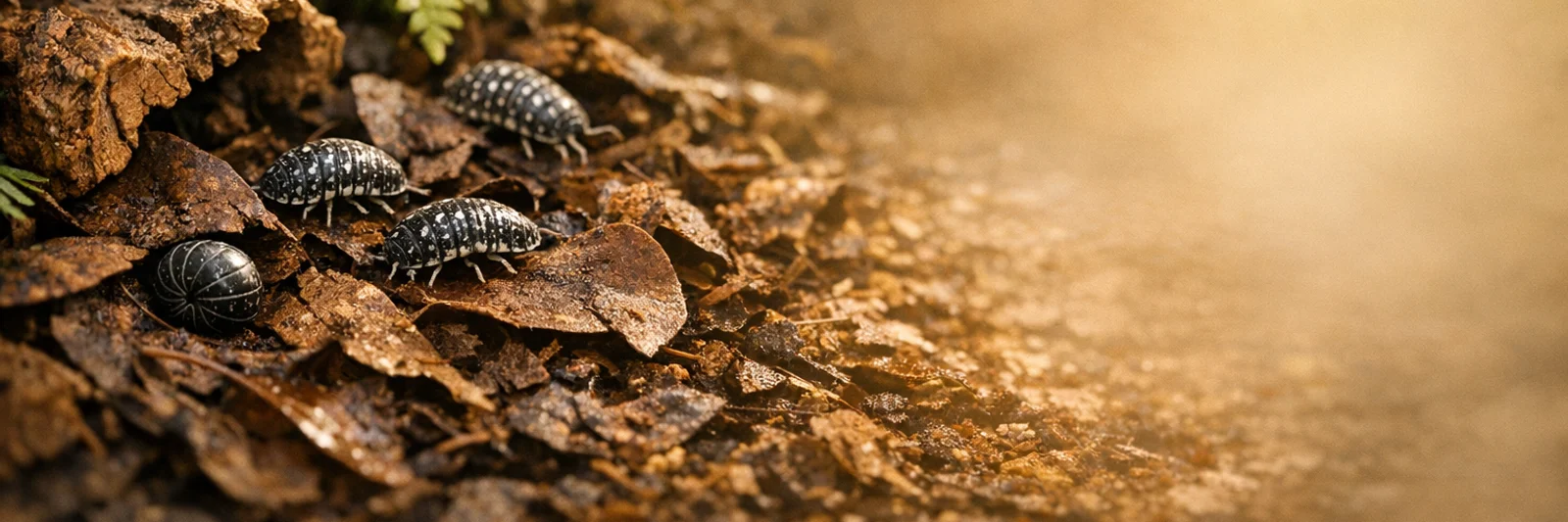
A warm, humid home with plenty of cover
Keep leaf litter, decaying wood and calcium available, maintain steady humidity, and give this slow-growing colony time to establish.
Wait, Which "Dalmatian" Isopod Do You Mean?
TC sells three different animals with "Dalmatian" somewhere in the name: a Porcellio scaber color morph, an Armadillidium vulgare color morph, and the species this guide covers, Venezillo parvus. All three earned the name the same way, a spotted, black-and-white or orange-and-white pattern that resembles the dog breed's coat, but they are not related to each other and do not share the same care. Our guide to isopod trade names versus scientific names covers why this happens across the hobby; here, the short version is that the scientific name is the only reliable way to know which animal a "Dalmatian" listing actually means.
Venezillo parvus, TC's True Dalmatian
This is the species covered in the rest of this guide: a small, tropical, conglobating isopod that TC lists simply as "Dalmatian," no color prefix needed since it is the only Venezillo carrying that name.
The Other Dalmatians You Might See
Porcellio scaber's Orange Dalmatian is a completely different, much larger, drier-tolerant species, and Armadillidium vulgare has its own Orange Dalmatian morph too. Both are easy, forgiving isopods, but neither needs the warm, steady humidity Venezillo parvus depends on, so swapping care routines between them is a real risk to the wrong animal.
What Kind of Isopod Is Venezillo parvus?
Venezillo parvus is a true roller: like Armadillidium and Cubaris, it can conglobate, tucking its legs and antennae inside a tight, sealed ball when it feels threatened, something the flatten-and-flee genera like Porcellio and Powder cannot do. TC's own culture lists adults at about 5 mm, though other hobby sources report a wider range up to around 8 to 12 mm, which keeps it in the same small size bracket as the dwarf isopods rather than a display-sized species.
Size and the rolling defense both point to the same lifestyle: Venezillo parvus is built to hide. It spends most of its time tucked into leaf litter and under cork bark rather than wandering in the open, so a bin with plenty of cover shows off more natural behavior than a bare one ever will.
Temperature and Humidity for a True Tropical Roller
TC's own culture racks keep Venezillo parvus around 72 to 80 F with consistently high humidity, and that lines up with most published care sheets, though external sources give a wider range, everywhere from the low 70s to the mid 80s for temperature and anywhere from about 60 percent up into the 90s for humidity. Treat the TC numbers as the reliable starting point and the wider range as how much wiggle room you likely have if a room runs a little warmer or cooler.
Unlike a Porcellio or Powder bin, this is not really a moisture-gradient species. Most of the enclosure should stay damp, with only a small area allowed to run slightly drier for the isopods to choose from. Never let the substrate fully dry out, that is the fastest way to stall or crash a Venezillo culture, and it is far less forgiving of a missed misting than a Dwarf White or Powder bin would be.
Feeding and Substrate
Base the diet on decaying leaf litter and rotting hardwood, the everyday staple for any isopod, and add a gentle protein source only occasionally, a pinch of fish flake or a specialty isopod feed, since this is a small, slow-growing species that does not need or benefit from heavy protein feeding the way a big Porcellio does. Keep a steady calcium source such as cuttlebone or crushed eggshell available at all times for clean molts.
Build the substrate with plenty of cover: a deep layer of leaf litter, a few pieces of cork bark or decaying wood, and soft botanicals if you keep a planted vivarium. Venezillo parvus is a shy species that does its best work, and breeds best, when it can retreat somewhere dark and undisturbed rather than sitting exposed on open substrate.
Why Venezillo parvus Breeds Slower Than Dwarf White
This is the single most useful fact for anyone buying their first Venezillo culture: it reproduces noticeably slower than Dwarf White or Powder isopods, so do not judge a new culture by the same few-week timeline that works for those faster genera. Expect several months of stable, undisturbed conditions before you see clear signs the population is actually growing, not a sudden explosion of visible babies.
Disturbance slows it down further. Digging through the substrate to check on the colony, letting it run dry even briefly, or rehousing it too often all set a Venezillo culture back more than they would a hardier genus. Set up the bin once, keep humidity and food steady, and resist the urge to go looking for progress every week.
Is Venezillo parvus a Good Cleanup Crew for an Occupied Enclosure?
Nothing about Venezillo parvus makes it a risk to a tankmate: it is small, slow, and not a protein-driven feeder, so it will not nip a resting or soft-bodied animal. But TC's own listing is upfront that its slow breeding keeps it from working as a primary, heavy-lifting cleanup crew the way Dwarf White or Powder isopods do, so treat it as a light, low-impact addition to an already-established bioactive setup rather than the colony doing the main waste cleanup. Compared with the genera on our isopod genus comparison, it behaves more like a gentle, hidden collector species than a working crew.
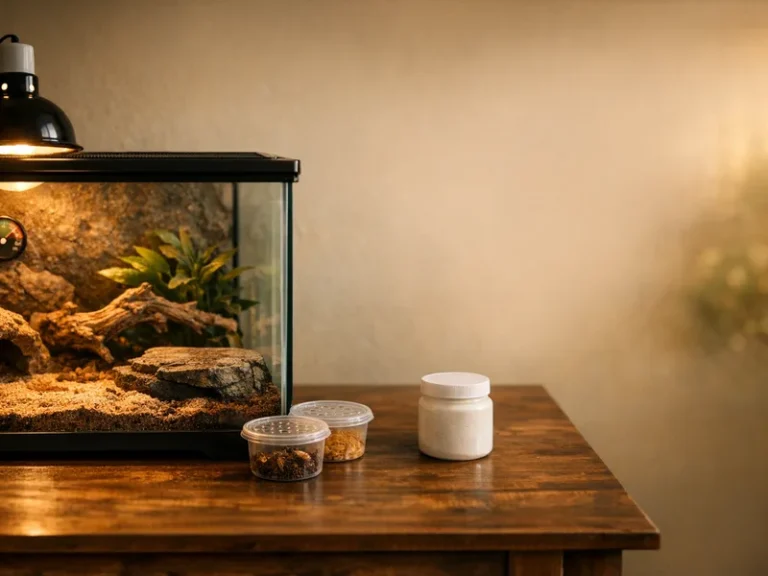
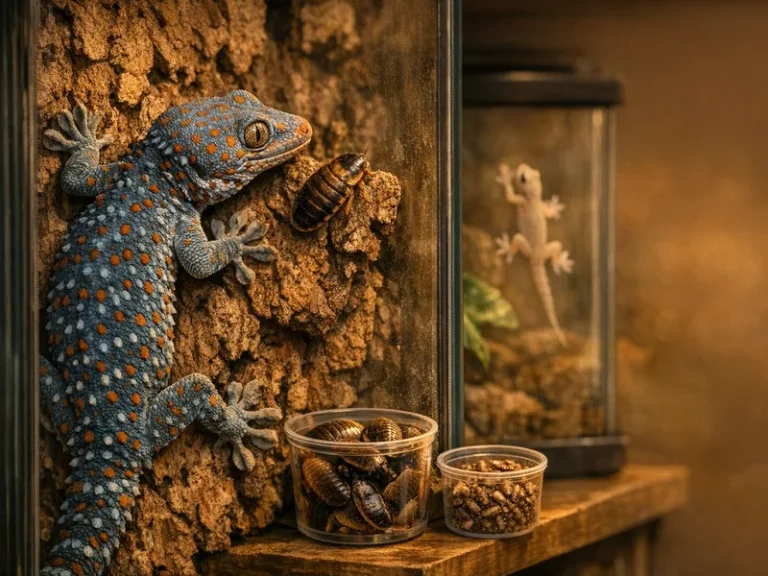
The real question is whether the enclosure suits Venezillo, not the other way around. It is a small, gentle dwarf species with no appetite for live animals, so it is safe to keep in an occupied enclosure alongside the crews we normally recommend. Because it breeds slowly and dislikes disturbance, it does best added to an already-stable, humid vivarium that already has its cleanup needs met, the kind of setup a dart frog or small tropical gecko already keeps, rather than a tank that gets rearranged often or houses a boisterous, digging animal that would tear through its cover. Shop Venezillo isopods once a humid vivarium has had a few weeks to settle in.
The Dalmatian Isopod Starter Kit
A warm, humid setup built around Venezillo parvus and the extra patience this slow breeder needs.
Frequently asked questions
What is a Dalmatian isopod?
"Dalmatian isopod" usually means Venezillo parvus, a small tropical roller isopod that TC sells under that name, but the same spotted trade name is also used for a Porcellio scaber morph and an Armadillidium vulgare morph. All three look similar in photos but are different species with different care needs, so check the scientific name on a listing before you buy to know which one you are actually getting.
What temperature and humidity does Venezillo parvus need?
TC keeps Venezillo parvus around 72 to 80 F with consistently high humidity that never fully dries out, and most published care sheets agree, though some give a wider range up into the mid 80s for temperature and the 90s for humidity. Treat most of the enclosure as the humid zone rather than splitting it into a sharp wet and dry side the way a Porcellio bin would be.
Does Venezillo parvus roll into a ball?
Yes. Venezillo parvus is a true conglobating isopod, meaning it can tuck its legs and antennae inside and roll into a tight, sealed ball when it feels threatened, the same defense Armadillidium and Cubaris use. Porcellio and Powder isopods cannot do this, they flatten out and run instead, so rolling is one of the easiest ways to recognize a Venezillo in the bin.
How fast does Venezillo parvus breed?
Slower than most beginner isopods. Venezillo parvus reproduces noticeably slower than Dwarf White or Powder, so a new culture typically needs several months of stable, undisturbed conditions before you see clear signs of population growth, not the few-week boom faster genera can show. Frequent digging through the bin or letting it dry out even briefly slows it down even further.
Is Venezillo parvus good for a planted vivarium?
Yes. Venezillo parvus is a dwarf species that is safe with live animals, and it works best as a light addition rather than the main cleanup crew. Its small size and quiet, hidden behavior suit a compact, heavily planted vivarium where a larger isopod would be too disruptive, but TC's own listing notes it breeds too slowly to keep up with cleanup demand alone, so add it to an already-stable, humid tropical setup, like a dart frog or small tropical gecko enclosure, rather than relying on it for the main cleanup job.
How big does Venezillo parvus get?
TC's own culture lists adults at about 5 mm, though other hobby sources report a wider range up to around 8 to 12 mm, which keeps it firmly in the small, dwarf-sized bracket of hobby isopods. Combined with its rolling defense and habit of staying hidden in leaf litter, its small size is part of why it works so well in a compact planted vivarium.
Keep learning
Have a care question? Ask our community.
Join Reptile Keepers USA, our free Facebook group for reptile, amphibian and invert keepers. Share your setups, get care help and swap feeder tips.
Join the free group