Insects You Should Never Feed Your Reptile
The short do-not-feed list starts with fireflies, which are documented as lethal to reptiles even in tiny amounts, and then widens to cover boxelder bugs and other brightly colored, warning-patterned insects, spiders, centipedes, and honestly anything you catch outdoors. The thread running through all of it is not one bad species, it is the unknown: an outdoor insect can carry pesticide residue or parasites, or simply be the wrong bug wearing the wrong warning colors, and none of that shows up by looking at it. We cover the pesticide and parasite side of wild-caught bugs in full in our wild-caught insects guide; this page is the quick, plain list of what to actually avoid, and the farm-raised feeders to reach for instead.
Cardiotoxic; documented as lethal even in small amounts
Pesticides, parasites, and lookalikes you cannot screen for
Dubia, BSFL, hornworms, and more, gut-loaded and known
The short answer: what never belongs in the enclosure
Five categories cover almost every real do-not-feed case: fireflies, which can be fatal; boxelder bugs and other brightly colored, warning-patterned insects; spiders and centipedes, which are predators rather than feeders; wild-caught insects in general, whatever the species; and, as a catch-all, anything you are not one hundred percent certain of. None of these need to be a complicated judgment call once you know the list.
The rest of this guide breaks down why each one is a problem, and what a safe, farm-raised feeder looks like once you know what to avoid.
Fireflies: the one that can actually kill
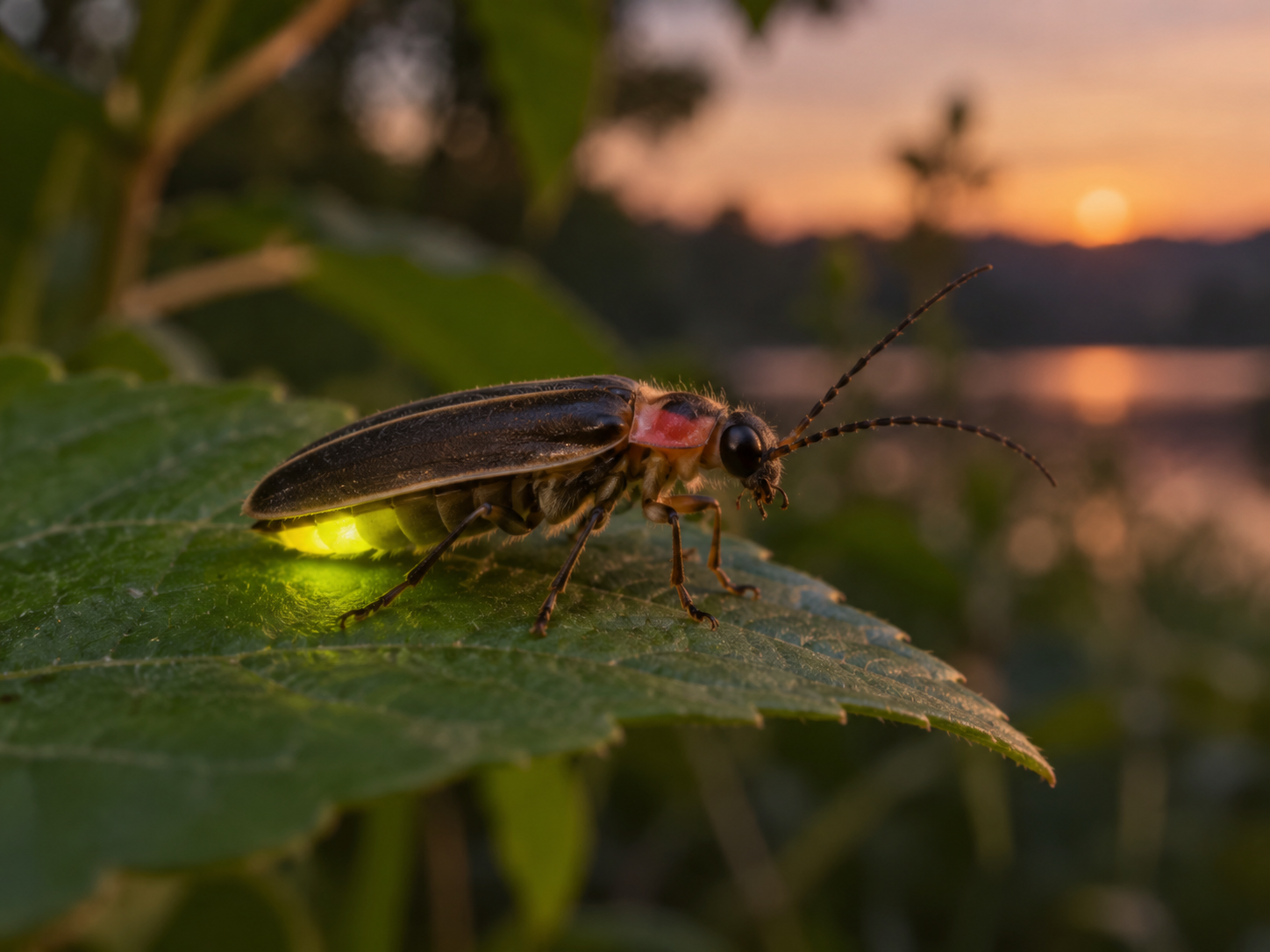
Fireflies, also called lightning bugs, contain defensive compounds called lucibufagins, cardiotoxins in the same broad family as toad toxins, and they are widely reported by veterinary and university sources as capable of killing a reptile from a single insect, with documented deaths in bearded dragons and chameleons. This is not a rare edge case worth risking: treat every firefly as off-limits, full stop.
The real danger usually comes from an animal catching one on its own rather than a keeper feeding one on purpose. If you let a reptile bask outdoors or free-roam a patio in the summer, firefly season is exactly the window to watch, and a screened enclosure beats an open one every time.
Boxelder bugs and other bugs wearing warning colors
Boxelder bugs are not going to kill a reptile the way a firefly can, but they are not a feeder either: they secrete a foul-tasting defensive fluid and simply are not part of any farmed feeder's diet or breeding line. The broader lesson is the useful one. In the insect world, bright or strongly contrasting colors, reds, oranges, and yellows against black, are frequently a warning label the insect is wearing on purpose, signaling that it tastes bad, is genuinely toxic, or both.
You do not need to memorize a field guide to use this rule. If a wild bug looks like it is trying to stand out rather than blend in, treat that as a sign to leave it alone rather than a reason to get curious. It is the same logic that makes fireflies dangerous, just less severe across most of the look at me insects you will run into outdoors.
Spiders, centipedes, and anything that can bite back
Spiders and centipedes are not standard feeder insects, and they should not go in an enclosure as one. Centipedes carry venom-injecting forcipules and will use them defensively, including on a curious reptile that corners one, and wild spiders can belong to species you cannot identify with confidence. Both are predators by nature, not passive prey, which means they can injure your animal simply by defending themselves.
The safer version of the give-my-reptile-more-of-a-challenge instinct is a live feeder that still moves and triggers a strike, without the bite risk. A soft-bodied roach or a wriggling worm gets the same predatory response with none of the danger.
The pattern behind the whole list: if it came from outside, skip it
Every entry above shares the same root problem: it came from an uncontrolled outdoor environment. Pesticide and herbicide residue, internal parasites picked up as an intermediate host, and misidentifying a look-alike species all trace back to the fact that a wild insect is an unknown quantity, and none of those risks can be rinsed off or fixed with a few days in a container.
Once you see the pattern, the fix is obvious: stop sourcing feeders from an environment you do not control. That is the entire reason farm-raised feeders exist, and it is the simplest change a keeper can make to close off this whole list of risks at once.
What to feed instead: the safe, farm-raised roster
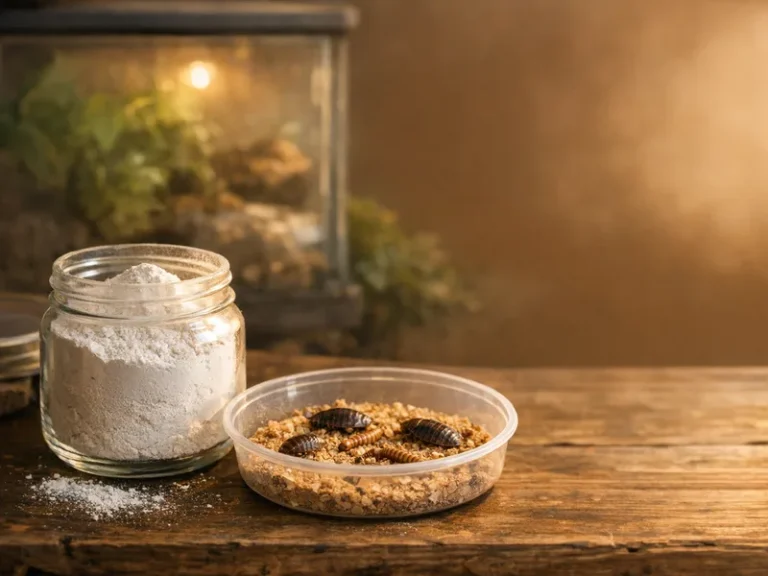
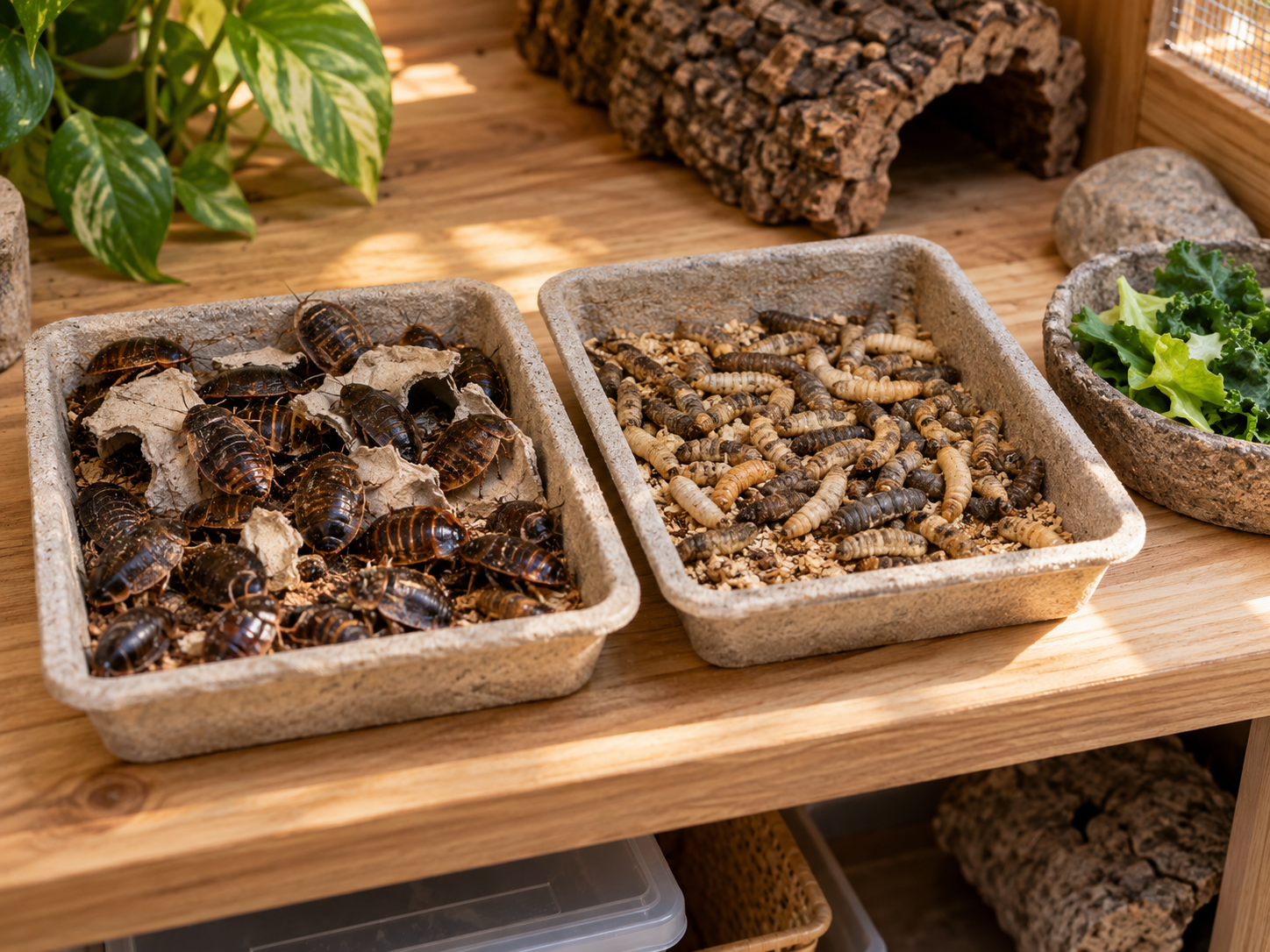
TC Insects does not stock live crickets, and for the do-not-feed list that works in your favor: every staple we recommend is a farm-raised species with a known diet and no wild-caught guesswork. Dubia roaches are the calm, soft-bodied staple, black soldier fly larvae carry natural calcium with no dusting required, and hornworms are a hydrating treat raised on safe chow instead of wild nightshade leaves. Round out the rotation with mealworms, superworms, silkworms, red runner roaches, and fruit flies for the smallest mouths.
If you want the safe version of variety without sourcing five products separately, our feeder insect mix packs put several farm-raised species in one box. Pair any of them with a proper gut-load and you get the enrichment keepers reach for wild bugs to find, with none of the risk.
Skip the Guesswork, Feed These Instead
Every staple below is farm-raised with a known diet. None of the wild-bug risk, all of the enrichment.
Frequently Asked Questions
Written by the TC INSECTS breeding team · Porter, Texas · Live Arrival Guarantee on every order
Have a care question? Ask our community.
Join Reptile Keepers USA, our free Facebook group for reptile, amphibian and invert keepers. Share your setups, get care help and swap feeder tips.
Join the free group