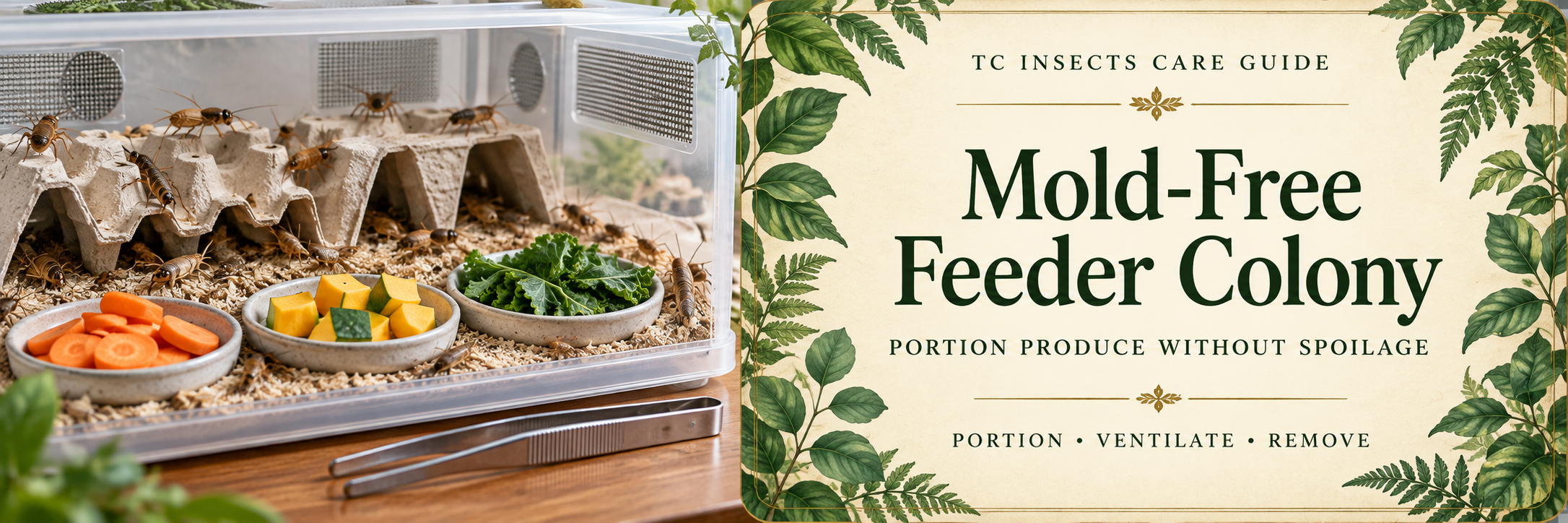
Feed a roach or mealworm colony only as much produce as it clears within 24 hours, and treat wet and dry produce differently: pull orange, apple, or melon within a day, but carrot, sweet potato, or squash can safely sit up to 48 hours. Mold, not the wrong food, is what actually limits how a feeder colony gets fed, and it is almost always a timing mistake rather than a bad ingredient. This guide breaks portioning down by moisture type, explains why a shallow dish beats produce dropped straight on the substrate, and maps every mold symptom you might find in a dubia or mealworm bin to its cause and fix.
Orange, apple, melon and grapes mold fastest once left overnight
Carrot, sweet potato and squash last longer before they turn
An open water dish is the single biggest mold trigger in a bin
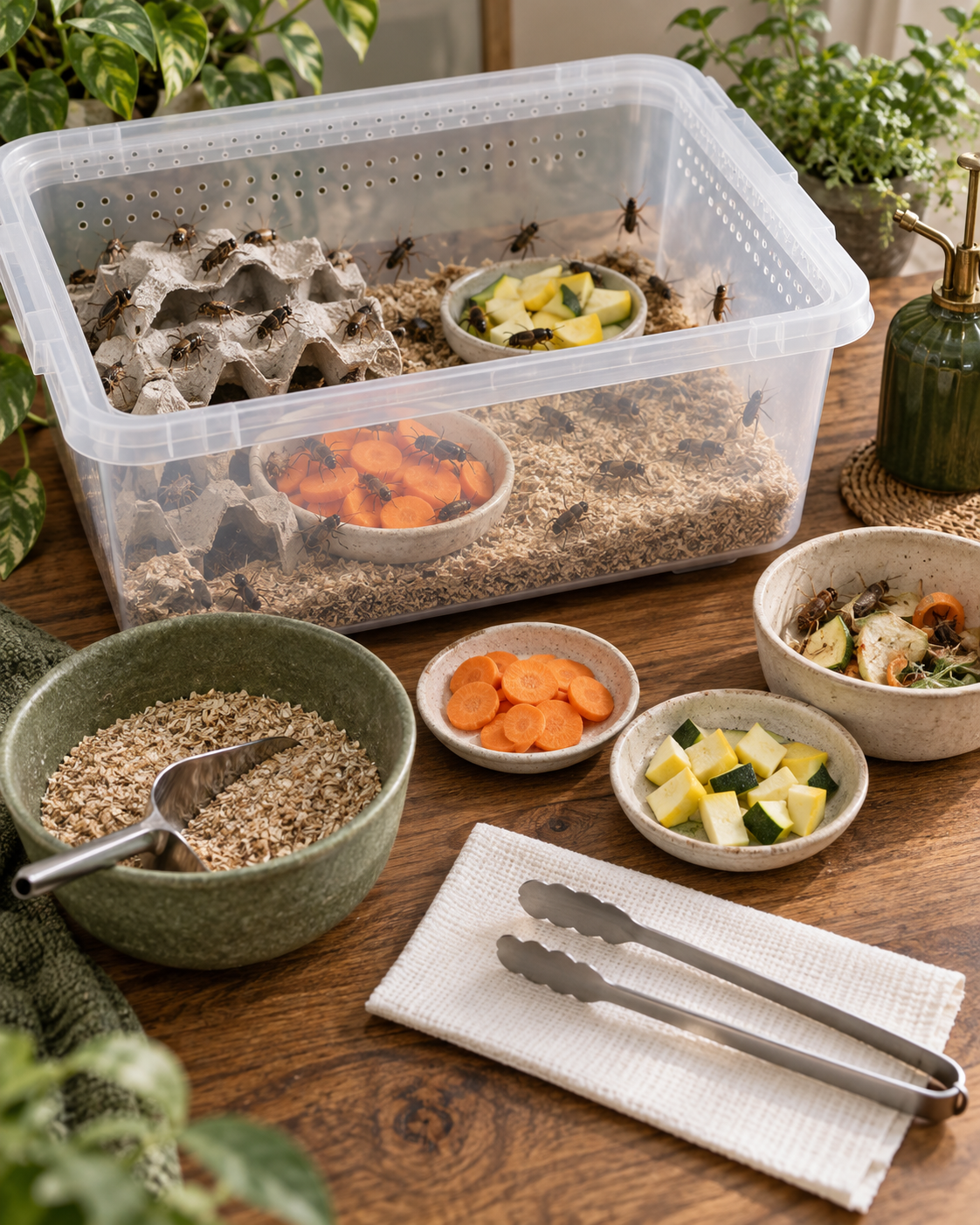
Portion, ventilate, remove
A clean colony gets only the produce it can finish before moisture spreads into the substrate.
Feed the colony without feeding mold
How Much Produce Does a Feeder Colony Actually Need?
Skip the fixed-weight number, because colony size, species and appetite swing too much for one figure to mean anything useful. Instead, run a simple test: offer a small piece, about the size of two thumbs for a shoebox colony under 100 roaches, and check it 24 hours later. Gone completely, dish licked clean? Offer a little more next time. Still sitting there? Cut the next portion in half. Mealworm and superworm bins work the same way, just scaled to a smaller piece, since those colonies eat far less produce per animal than roaches do. Within two or three rounds you land on the portion your specific colony actually clears, which is the only number that matters here.
Split Produce Into Wet and Dry, and Time Them Differently
Not all produce molds at the same speed, so treating it as one feeding rule wastes food and invites mold. High-moisture produce, orange, apple, melon and grapes, should come out within 24 hours no matter how little is left, since their sugar and water content feeds surface mold fast in a warm bin. Lower-moisture produce, carrot, sweet potato, squash and potato, can safely stay up to 48 hours because there is far less free moisture for mold to use. If you feed citrus, cut it in half and set it peel-down; the peel holds in juice that would otherwise soak the substrate and drag the wet-produce clock onto everything around it.
Why a Dish or Egg Flat Beats Produce Loose on the Substrate
Produce sitting directly on substrate or frass has more surface area feeding mold spores than the same piece sitting on a clean dish, and it is harder to spot once it turns. Use a shallow dish, a piece of egg flat, or a jar lid, and place it away from the damp side of a moisture-gradient bin. This also makes the 24-hour check fast: lift the dish, glance at it, done, instead of digging through substrate for last week's grape. Good ventilation matters just as much as the dish itself. A bin with no airflow traps the humidity produce releases as it breaks down, and that same trapped moisture is usually why a bin starts to smell before it ever shows visible mold.
The Weekly Reset Keeps Small Problems From Becoming Big Ones
Even with perfect portioning, a colony bin needs a weekly pass. Pull any produce dish and wash it, scan the corners and under any hides for a piece that rolled out of sight, and clear out built-up frass and shed skins, which hold moisture and feed mold on their own. This is also the moment to check your water source, since a soaked patch of substrate under a leaking dish will keep molding long after you stopped worrying about the produce itself. A five-minute weekly reset catches the one missed piece of fruit before it turns into a colony-wide mold or mite problem, the same overfeeding pattern that shows up when isopod keepers overdo protein and produce in a bin.
Roaches vs Mealworms and Superworms: Same Rule, Different Setup
The 24-hour clock and the wet-versus-dry split apply across every colony we sell, but the two setups differ enough in daily practice to call out on their own.
Roach Colonies (Dubia and Red Runner)
Roach colonies handle produce well because the colony is large and active, so a properly sized dish disappears fast. Gut-loading and mold prevention are different jobs: gut-loading is about what the last 24 to 48 hours of diet does for your reptile, while this guide is about keeping the colony itself healthy, but both run on the same produce and the same 24-hour clock.
Mealworm and Superworm Bins
Mealworm and superworm bins are different because their bran substrate is also their food, so produce is optional rather than a daily habit. A thin slice of carrot or potato once or twice a week covers hydration; skip produce entirely during a hot or humid stretch and the colony will not suffer for it. Because these bins run drier by design, any mold you do see almost always traces back to one forgotten piece of fruit rather than the bran itself.
When to Skip Produce Entirely
A colony that is brand new, already smells sour, or is fighting a mite bloom does better with no produce at all for a week. Extra moisture is the last thing a stressed colony needs, and a dry prepared feed alone will not stall it during that stretch. The honest trade-off: skipping produce means slightly less variety in the colony's diet for a week, but a colony that is not actively fighting mold or mites recovers, and starts breeding again, far faster than one you keep feeding straight through the problem.
Feeder Colony Bin: What You're Seeing and Why
The Mold-Free Colony Feeding Kit
Dry feed and water crystals that cut mold risk at the source, plus more stock to scale up your colony.
Frequently Asked Questions
Keep reading: why a feeder bin smells and whether to mix two roach species.
How much fruit should I feed a dubia roach colony?+
Offer only as much as the colony finishes within 24 hours, usually a piece about the size of two thumbs for a colony under 100 roaches. High-moisture fruit like orange, apple, or melon should come out at the 24-hour mark even if a little is left, since it molds fastest. Check daily for the first few feedings and adjust the portion up or down from there.
How often should I remove uneaten produce from a feeder colony?+
Pull high-moisture produce like orange, apple, and melon within 24 hours, and lower-moisture produce like carrot, sweet potato, and squash within 48 hours. Waiting longer than that, especially with wet fruit, is the single most common cause of a moldy bin. A shallow dish makes this check fast, since you can lift it out and glance at it instead of digging through substrate.
My dubia roach colony has mold, what do I do?+
Remove every trace of the moldy produce along with any substrate it touched, wipe down the dish, and skip produce entirely for about a week while the bin dries out. Restart with a smaller portion on the 24-hour rule once the smell clears and no new mold appears. Recurring mold usually means the colony is getting more produce, or more moisture generally, than it can process.
How much vegetable should I feed crickets or a mealworm colony?+
A thin slice of carrot, sweet potato, or squash once or twice a week is enough, since a mealworm or superworm colony's bran substrate is already its main food source. Produce there is for hydration and variety, not nutrition, so you can skip it during a humid week without any harm. Remove any piece that is not gone within 48 hours.
Why does my feeder colony bin smell sour or have fruit flies?+
Both usually trace back to produce or moisture sitting too long. A sour smell often means trapped humidity from an open water dish rather than the produce itself, so switching to water crystals and improving ventilation usually fixes it. Fruit flies mean old produce sat long enough to attract and breed in it; pull everything for 48 hours and restart on a stricter schedule.
Should I feed produce every day or a few times a week?+
A few times a week is plenty for most colonies; daily produce is rarely necessary and raises the odds you will leave a piece too long by accident. Roach colonies typically do well on produce two to three times a week, while mealworm and superworm bins need it even less often since bran covers most of their diet already.
Have a care question? Ask our community.
Join Reptile Keepers USA, our free Facebook group for reptile, amphibian and invert keepers. Share your setups, get care help and swap feeder tips.
Join the free group