Why Is Your Millipede Not Eating or Staying Buried?

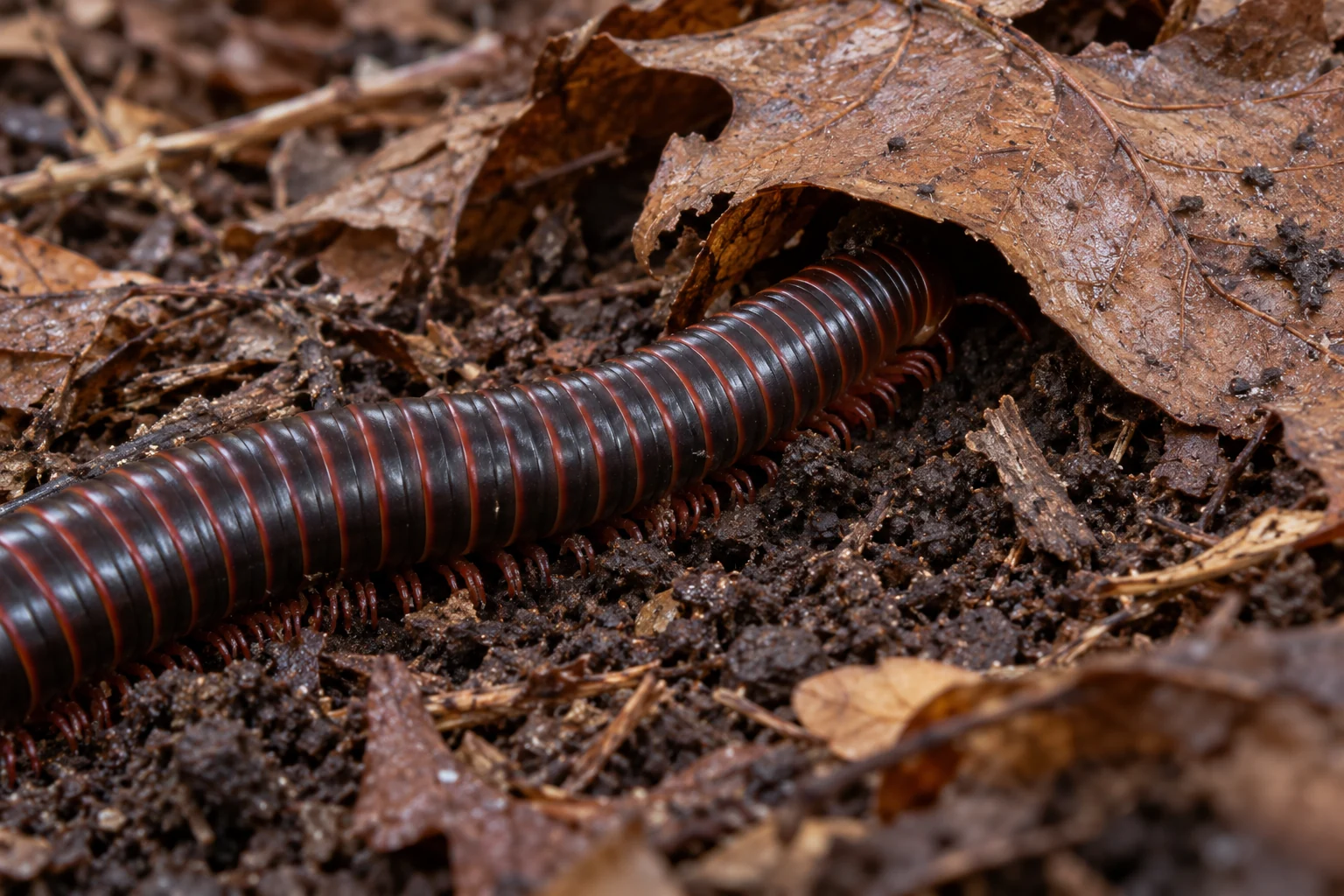
If your millipede has burrowed out of sight and stopped eating, the most common explanation is also the most reassuring one: it is almost certainly getting ready to molt, or recovering from one. Millipedes, including the American Giant Millipede (Narceus americanus) we raise here, routinely disappear underground and fast for days to weeks around a molt, sometimes looking a little darker or shinier once they resurface. New arrivals also commonly burrow and skip meals for the first week or two while they settle into an unfamiliar enclosure, and low humidity or a cool room can slow both eating and surface activity. The one habit to avoid the whole time is digging it up to check on it, since disturbing a molting millipede can genuinely injure or kill it.
Millipedes fast and burrow for days to weeks around it
Settling in looks a lot like not eating
Disturbing a molt can injure or kill it
The most common reason: it is molting
The single most common explanation for a millipede that has stopped eating and disappeared into the substrate is also the least worrying one: it is getting ready to molt, or recovering from one. Millipedes, including the American Giant Millipede we raise here, routinely burrow down and fast for anywhere from several days to a few weeks around a molt, and that is completely normal.
Once it resurfaces, you may notice it looks a little darker, larger, or glossier than before, all signs of a fresh exoskeleton that has not fully hardened and colored up yet. If your millipede was eating and active normally before it vanished, premolt fasting should be the first explanation you reach for, not the last.
Why digging it up is the worst thing you can do
It is tempting to check on a millipede that has been out of sight for a week or two, but resist it. A millipede mid-molt is soft and vulnerable, and disturbing it during this window can genuinely injure or kill an animal that would have been perfectly fine left alone. This is one of the clearest leave-it-alone rules in the whole hobby.
If you are not sure whether it is molting or something else, look for indirect clues instead of digging, like a slight mound or disturbed patch of substrate where it went down, or simply the date you last saw it out and about. Our millipede care guide covers what a healthy burrow-and-wait cycle looks like from the outside.
New to the enclosure? Give it time to settle
A millipede that just arrived from us and immediately burrowed and stopped eating is behaving exactly as expected, not showing a problem. New surroundings, an unfamiliar substrate smell, and the stress of shipping are all reasons a healthy animal goes quiet for its first one to two weeks in a new enclosure.
Resist the urge to handle it or rearrange the enclosure during this window, since more disturbance only extends the adjustment period. Keep the substrate at the right depth and moisture, offer fresh food on a normal schedule, and give it the quiet time it needs. If it does surface for a gentle check, remember the one real handling caution: a stressed millipede can weep a harmless but staining defensive fluid, so keep it away from your eyes and wash your hands afterward, and if the secretion reaches your eyes, flush with clean water for several minutes and see a doctor if irritation persists.
Check temperature and humidity next
If molting and adjustment do not explain it, husbandry basics are next on the list. Millipedes slow down across the board, eating, moving, and surfacing, when the substrate runs too dry or the room runs too cool. The American Giant Millipede wants substrate that stays damp throughout, roughly like a wrung-out sponge, never bone dry and never waterlogged, at normal room temperature with no supplemental heat required.
A substrate that has dried out on top can still feel damp underneath, so check a few inches down before assuming moisture is fine. Our enclosure setup guide covers the exact depth and moisture target, and misting the substrate rather than the animal is the more reliable fix if things have dried out.
What it eats, and why refusing food is not always hunger
Millipedes are grazers, not hunters, and their staple diet of decaying hardwood and leaf litter is meant to sit in the enclosure and be nibbled at on the millipede's own schedule, not devoured on cue like a feeder insect. A millipede that ignores fresh leaf litter for several days is not necessarily refusing food, it may simply not be hungry yet, especially if it is heading into or coming out of a molt.
Keep offering a fresh, varied graze, hardwood leaf litter as the base plus the occasional slice of cucumber, squash, or sweet potato, and remove anything that molds rather than assuming the millipede needs to be coaxed. Our nutrition and care products cover the leaf litter and supplement side.
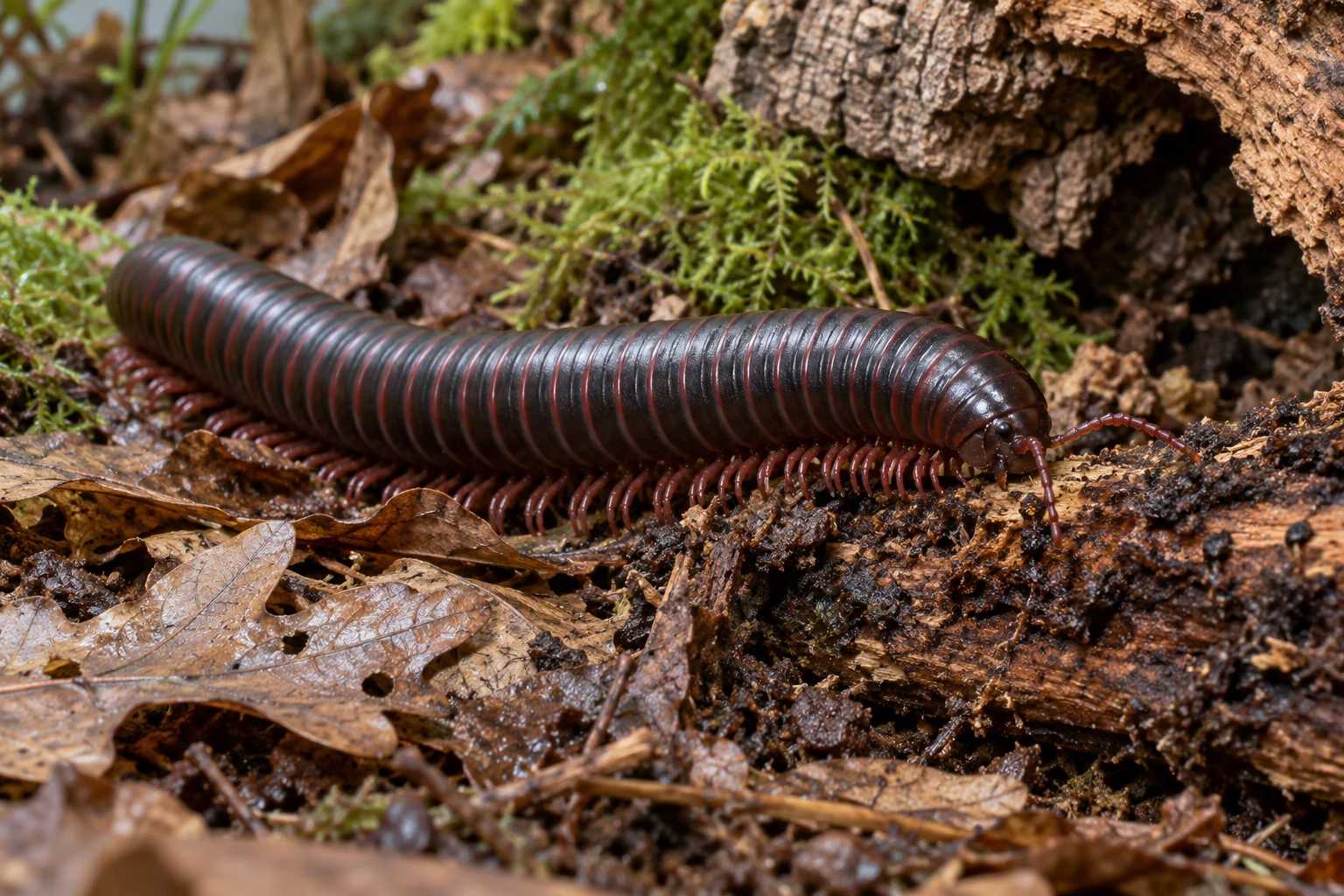
When it is worth a closer look
The honest majority of not-eating, not-moving millipedes are simply mid-cycle on a molt or settling into a new home, and the correct response is patience, not intervention. That said, a millipede showing visible injury, an unpleasant odor from the enclosure, or stillness that drags on for many weeks well beyond a normal molt window with no improvement is a situation worth a closer look.
This is husbandry territory, not a diagnosis. Recheck temperature, humidity, and substrate depth first, and if something still seems genuinely wrong rather than just slow, an experienced exotics vet is the right next call, not a guess at home. For most keepers, though, the ending is simple: the millipede was never gone, it was just doing exactly what a healthy millipede does.
Support a Millipede Through a Molt
The humidity, substrate, and food behind the patience above, ready to add in one tap.
Frequently Asked Questions
Written by the TC INSECTS breeding team · Porter, Texas · Live Arrival Guarantee on every order
Have a care question? Ask our community.
Join Reptile Keepers USA, our free Facebook group for reptile, amphibian and invert keepers. Share your setups, get care help and swap feeder tips.
Join the free group