Waxworms Spinning Cocoons?

Room heat pushes them to spin; a cool spot holds them as larvae for weeks
Pupal stage runs roughly 1 to 7 weeks depending on warmth
Wax moths have no working mouthparts and live just days to weeks
Warmth starts the silk—and cooling slows the change
Warmth is why your waxworms (Galleria mellonella) are spinning cocoons: heat speeds them toward pupation, and a cup left in a warm room can go from plump larvae to silk-wrapped cocoons within days. It is not a sign anything went wrong, and it is not contagious. Left warm, a cocoon becomes a moth in roughly 1 to 7 weeks depending on temperature, and that moth cannot eat or hurt anything since adult wax moths have no working mouthparts. Below is what the webbing means, whether a cocooned worm or a moth is still worth feeding off, and how to slow the rest of the cup down.
Silk, cocoons, and the path to a moth
Webbing and cocoons usually mean warm waxworms are moving into the next life stage, not that the cup has failed.
Why Warmth Makes Waxworms Spin Cocoons
Warmth is the trigger, plain and simple. Waxworms are sold to you as larvae, the stage before pupation, and every one of them is already wired to finish growing, spin a cocoon, and emerge as a moth once conditions say it is time. A warm room speeds that internal clock way up, so a cup sitting near a heater, a sunny windowsill, or a warm kitchen can start showing silk and cocoons within days of arriving. A cool room does the opposite: it slows the same clock down without stopping it.
This is exactly why our waxworm care sheet tells you to keep waxworms at a cool room temperature rather than a warm one if you want them to last as larvae. If you need a longer hold than a cool room gives you, our feeder refrigeration guide covers the specific fridge range that works for waxworms, since cold is the one lever that actually buys you real time.
What the Silk Webbing and Cocoons Actually Are
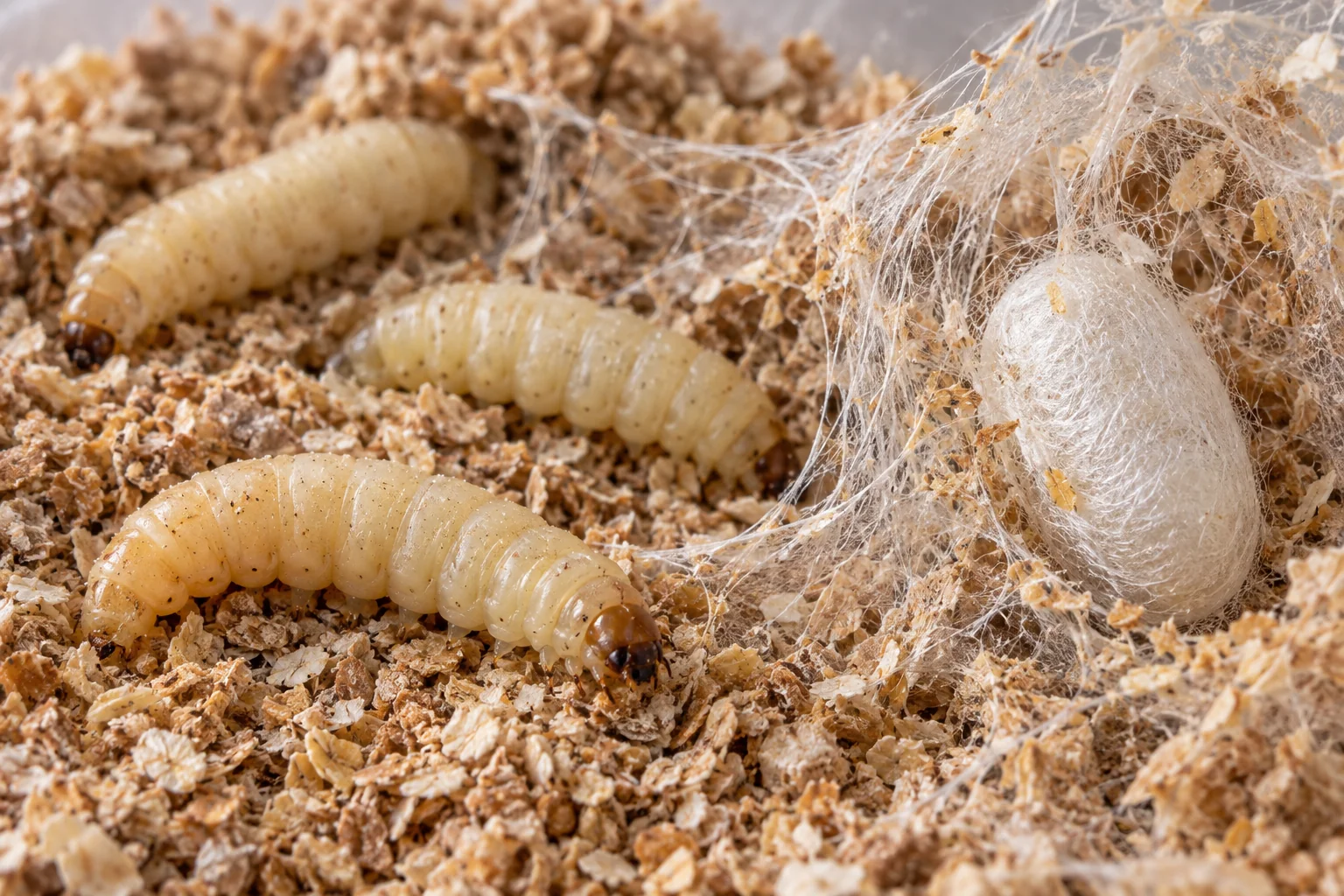
Galleria mellonella is the same species beekeepers know as the greater wax moth, a real pest of honeycomb in the wild, and the fine white threads you are seeing in the cup are the same silk it uses to tunnel through wax comb. A larva getting ready to pupate spins that silk into a rough, tough cocoon, often cementing it to the side or lid of the container, sometimes with several worms cocooning close together in a cluster. That webbing is not mold, mites, or anything you did wrong. It is simply the last thing a waxworm larva does before it changes shape.
A cocoon looks different from a dead worm: it is a firm, papery, tan to gray shell with a defined shape, not a soft or discolored body. Give it a gentle look rather than breaking it open out of curiosity, since the pupa resting inside is genuinely inactive and vulnerable while it finishes developing.
The Cocoon to Moth Timeline
Once a cocoon is fully formed, the pupa inside typically finishes in roughly 1 to 7 weeks, faster in a warm room and slower in a cool one. The adult that emerges is a small, mottled grayish tan moth, plain and unremarkable looking, nothing like the showy hawk moth you get from a hornworm that pupates. It rests with its wings folded flat over its back and does not fly much indoors. If you are picturing something dramatic, do not, a wax moth is built to blend in, not to put on a show.
Unlike some other feeder moths, an adult wax moth has no working mouthparts at all and cannot eat or drink anything for the rest of its short life, which usually runs from a few days to a few weeks. Its only jobs as an adult are mating and laying eggs, which is worth knowing before you decide whether to feed it off or let it go.
Can You Still Feed a Cocooned Worm or a Moth?
A larva that has just started spinning, still soft bodied inside a thin, half formed web, is still a perfectly fine feeder if you catch it early. Once the cocoon has fully hardened into a tough shell, most keepers skip feeding it whole and either cut it open for the pale pupa inside or simply let it finish, since the shell itself is chewy silk rather than food. There is no health risk in offering a pupa, it is just less convenient than a soft larva, and some animals show little interest in the tougher, motionless stage.
The adult moth is a different case, and it is where waxworms diverge from a feeder like a hornworm that turns into a nectar feeding moth you might keep alive for a few days. Since a wax moth cannot eat, there is no reason to try to keep one going. Feed it off promptly instead, most insectivorous reptiles and amphibians will still take a fluttering moth without hesitation, then restock fresh waxworms for the next round.
Keeping the Rest of the Cup From Following Suit
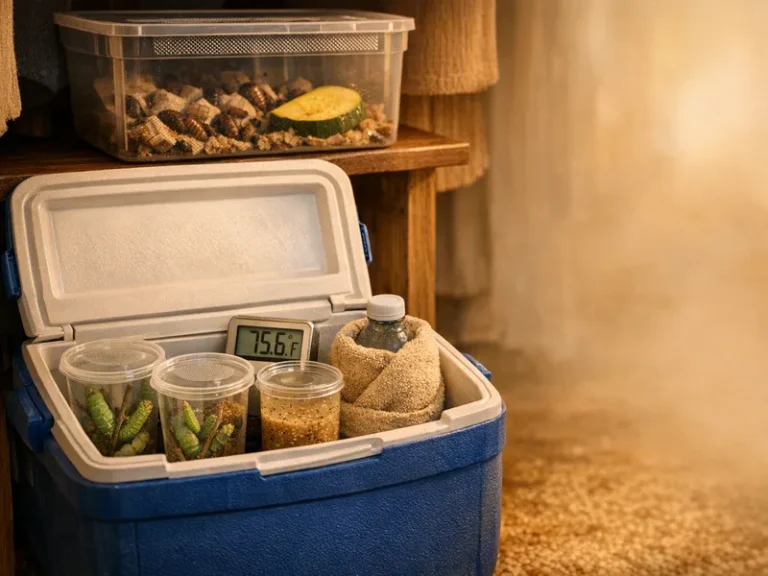
Once you see the first web or cocoon, move the remaining larvae to a cooler spot right away if you want to slow the rest down, since cold only holds back worms that have not started spinning yet. It will not reverse a cocoon that has already formed. A cool room in the 60s F is the safe, simple default from our care sheet, and if you are working through a large order, our fridge guide's 45 to 50 F range buys you real weeks rather than days for the portion you are not using yet.
The honest trade-off is that cold slows metabolism generally, so a chilled batch also eats and moves less, which is fine for storage but means you should not expect lively feeding behavior straight out of a cold cup. Order closer to what you will actually use in the next couple of weeks rather than a large batch meant to sit, and if you are also deciding between treats, our butterworms versus waxworms comparison is worth a look.
Webbing, Cocoons, or Trouble: What to Do
The Waxworm Cool-Down Kit
Extra room and airflow to slow spinners down, plus calcium for the soft larvae you feed off today.
Frequently asked questions
Why are my waxworms spinning cocoons?
Warmth is the trigger. Waxworms are wired to finish growing, spin a cocoon, and emerge as a moth once conditions say it is time, and a warm room speeds that clock up considerably. It is a normal part of their life cycle, not a sign of illness, and it is not contagious to the rest of the cup. A cooler room slows the same process without stopping it.
Can I still feed a waxworm that has already spun a cocoon?
Yes, though most keepers find it less convenient than a soft larva. A cocoon just starting to form is still soft enough to offer whole, while a fully hardened cocoon is tough silk, so some keepers cut it open for the pupa inside instead. There is no safety risk either way, the pupa just is not as appealing to some animals as an active larva.
Will a wax moth bite or hurt my pet?
No. Adult wax moths have no working mouthparts and cannot bite, sting, or eat anything at all for the rest of their short life. Their only purpose as adults is mating and laying eggs, and most reptiles, amphibians, and other insectivores will happily take a fluttering moth as a novel, harmless treat.
How long does it take a waxworm to become a moth?
Once a cocoon fully forms, the pupa inside typically finishes in roughly 1 to 7 weeks, faster in a warm room and slower in a cool one. The whole process, from the first strands of silk to an emerged moth, can happen within days in a warm room or stretch out much longer somewhere cooler.
Can I put waxworms in the fridge to stop them from spinning?
Yes, cold is the one thing that reliably slows waxworms down. Held in the mild 45 to 50 F range from our feeder refrigeration guide, they hold in the larval stage for weeks instead of days. Just remember that cold only holds back worms that have not started cocooning yet, it will not undo one already underway.
My waxworms are turning dark and soft instead of spinning. Is that normal?
No, that is different from cocooning and is not a good sign. A healthy waxworm about to pupate spins visible silk and forms a firm cocoon, it does not go soft, dark, or smelly. Remove any worm like that right away and check the rest of the container for the same signs before they spread.
Keep learning
Have a care question? Ask our community.
Join Reptile Keepers USA, our free Facebook group for reptile, amphibian and invert keepers. Share your setups, get care help and swap feeder tips.
Join the free group