Winter Feeding and Brumation: Sizing Feeder Orders

Often a third to a half of summer intake, or nothing
Tropical animals under lights eat year-round
Then let the dubia colony carry the gap
Size winter feeder orders to the animal, not the calendar
From November to February many reptiles eat a third to a half of what they eat in summer, and some stop entirely: bearded dragons (Pogona vitticeps) and leopard geckos often brumate or slow down, box turtles dig in, and even animals kept at steady temperatures under lights follow a shorter day. Chameleons, tree frogs, tarantulas, and most tropical geckos do not change. The practical problem is the feeder order: a summer-sized order in December means a tub of dubia nobody eats and a cup of hornworms that outgrow the animal. This guide gives the winter feeding pattern by animal, the rule for cutting a standing order, the feeders that keep for the months an animal is not eating, and the signs to size back up in late winter.

Slow the order when the animal slows down
Temperate reptiles may eat far less during brumation, while tropical reptiles and frogs under stable lights often continue feeding normally.
Which animals slow down, and which do not
Bearded dragons are the classic case. Many adults slow down in late fall regardless of the lights, sleep more, and eat a fraction of their summer intake for anywhere from a few weeks to three months; some stop eating entirely and lose little weight doing it. Leopard geckos often follow a milder version, eating every third or fourth day instead of every other. Box turtles and other temperate species dig in and stop. Our bearded dragon rotation schedule and leopard gecko feeding schedule give the summer baseline this post scales down from.
Tropical animals kept at steady temperatures and a steady photoperiod mostly do not change: chameleons, crested and gargoyle geckos, tree frogs, dart frogs, tarantulas, and scorpions eat in January what they eat in July. Juveniles of any species growing fast often keep eating through their first winter. The rule is to watch the animal, not the calendar, and to size the order to what actually disappears.
The brumation feeding pattern
A brumating or slowing adult should eat less, not be force-fed to summer levels. Feed the same insects on a longer interval and in smaller amounts: an adult dragon that took 10 large dubia three times a week in July might take 3 or 4 once a week in December, and a fully brumating dragon takes nothing. Offer food on a warm, bright day when the animal is up and basking, and skip it when the animal is asleep. Keep water available and keep the lights on their normal winter schedule.
Two cautions keepers agree on. First, an animal should have an empty gut before it settles into deep brumation, since food that sits undigested in a cool animal causes trouble, so the last real meal comes a week or two before it goes down. Second, weigh the animal every week or two; a slow, steady weight through brumation is normal, and a fast drop is the reason to warm it up, offer food, and call an exotics vet. Many keepers get a checkup before the first brumation for the same reason.
Cutting the standing order
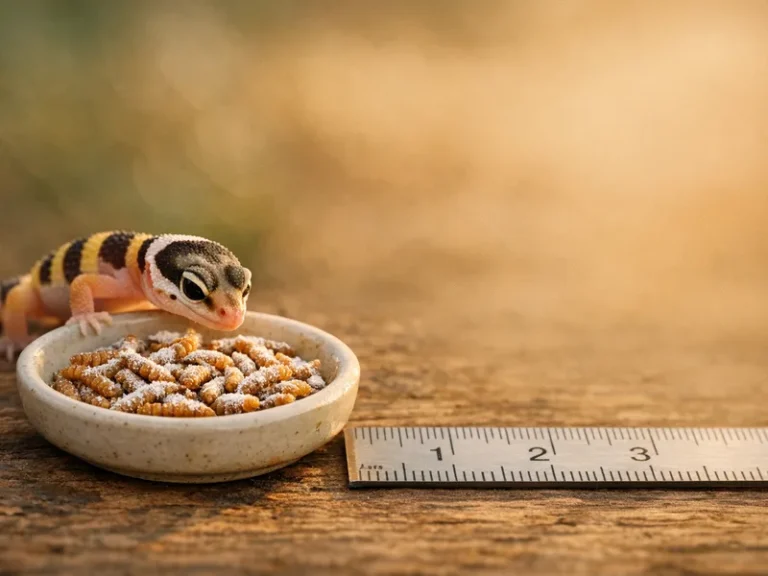
If you run a recurring feeder order, cut it by a third to a half at the start of November for a collection of temperate animals, and to a quarter for a single brumating dragon or gecko. Keep the sizes the same; a dragon that wakes in February wants the same large dubia it ate in October. The subscription page covers how to change the quantity or skip a delivery, and the monthly feeder cost calculator shows what a smaller order does to the bill.
Do not cut it to zero. A collection with one brumating animal usually has another that keeps eating, and a small standing order of long-keeping staples covers the gap and the surprise week when the dragon wakes up hungry. Dubia and mealworms are the two to keep coming; hornworms, silkworms, and fruit flies are the ones to pause.
The feeders that wait out a brumation
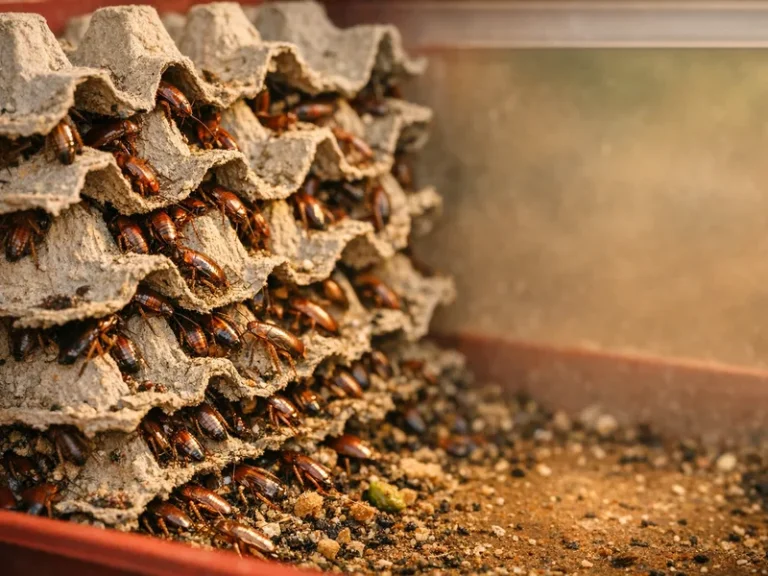
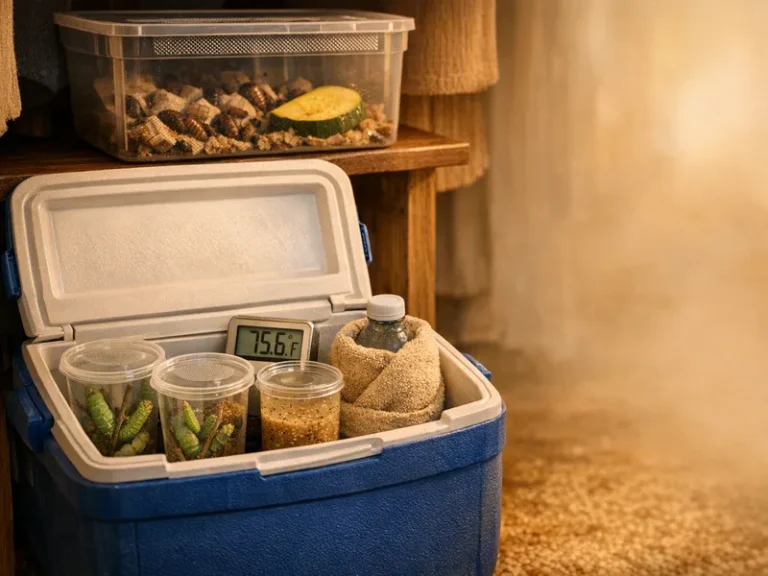
Dubia roaches are the winter feeder because they keep for months: a tub with egg flats, dry chow, a vegetable slice, and water crystals at room temperature holds a cup of large dubia from November to February with almost no loss, and a colony started from a starter group breeds slowly through the winter and is ready when the animal is. The full routine is in storing dubia long term. Mealworms keep for months in the refrigerator in bran. Superworms keep for weeks at room temperature in bran.
Black soldier fly larvae keep a few weeks refrigerated, so they are a good fit for the gecko that eats every fourth day but not for a three-month stock. Hornworms and silkworms grow and die within a couple of weeks and are the wrong feeder to have in the house when an animal is not eating. The refrigerator list covers what goes where. Every size of dubia is in the dubia shop.
Sizing back up in late winter
The signs are simple: the animal is up more days than not, basking, drinking, and taking the small offerings, and its weight is steady or climbing. That is the week to move the standing order back toward its summer size, in two steps rather than one, since an animal coming out of brumation eats lightly for a week or two and then ramps up fast. A dragon that wakes in February is often eating at full summer rate by mid-March.
Order the first spring box a size smaller than you think and a week earlier, so the feeders are in the house when the appetite arrives. Restart hornworms and silkworms when the animal is eating daily again; they are the feeders that help a thin post-brumation animal put weight back on, and they are the ones with no shelf life to waste.
A winter plan for a mixed collection
One adult dragon, one leopard gecko, one chameleon. November: cut the dragon's share to a quarter, the gecko's to half, leave the chameleon's alone, and pause hornworms and silkworms. December and January: a small standing order of large dubia and BSFL for the chameleon, a refrigerated cup of mealworms for the gecko, and a dubia tub that holds the dragon's future. February: watch for the dragon to surface, weigh it, offer a few dubia on a bright day, and restart the spring order in two steps.
Written down, it is one sentence per month. Followed, it saves a winter of wasted feeders and a spring of scrambling for a hungry dragon, and it keeps the one feeder that matters most, the dubia tub, alive and waiting the whole time.
The Winter Buffer Kit
The feeders that wait: dubia and a colony starter, refrigerated mealworms, BSFL for the animals that keep eating.
Frequently Asked Questions
How much less does a bearded dragon eat in winter?+
Often a third to a half of its summer intake, and a fully brumating dragon eats nothing for weeks to a few months. Offer smaller amounts on a longer interval on bright days when the dragon is up and basking, keep water available, and weigh it every week or two; a slow, steady weight is normal.
Should I feed a brumating reptile?+
Only when it is up and active, in small amounts, and never force it. The last full meal should be a week or two before it goes down so the gut is empty. A fast weight drop is the reason to warm the animal, offer food, and call an exotics vet; many keepers get a checkup before a first brumation.
Which reptiles do not slow down in winter?+
Tropical animals kept at steady temperatures and lighting: chameleons, crested and gargoyle geckos, tree frogs, dart frogs, tarantulas, and scorpions. Fast-growing juveniles of most species also keep eating through their first winter. Watch the animal, not the calendar.
How should I change my feeder subscription for winter?+
Cut it by a third to a half in early November for a temperate collection, or to a quarter for a single brumating animal, keeping the same sizes. Keep dubia and mealworms coming, since they store for months, and pause hornworms, silkworms, and fruit flies. Size back up in two steps when the animal is active again.
Which feeders keep through a brumation?+
Dubia roaches keep for months at room temperature in a ventilated tub with egg flats, chow, a vegetable slice, and water crystals, and a colony starter breeds slowly all winter. Mealworms keep for months refrigerated in bran, superworms for weeks in bran at room temperature. BSFL keep a few weeks refrigerated; hornworms and silkworms do not keep.
When should I go back to normal feeding after brumation?+
When the animal is up most days, basking, drinking, taking small offerings, and holding or gaining weight. Ramp the order up in two steps over a couple of weeks, order the first spring box a week early, and restart hornworms and silkworms once the animal is eating daily again.
More helpful guides
Have a care question? Ask our community.
Join Reptile Keepers USA, our free Facebook group for reptile, amphibian and invert keepers. Share your setups, get care help and swap feeder tips.
Join the free group