
Waxworm Care Sheet
Waxworms (Galleria mellonella) are soft, moisture-rich feeders that store easily—but their high fat content means they work best as an occasional treat, not an everyday staple.
Simple to keep, easy to overuse
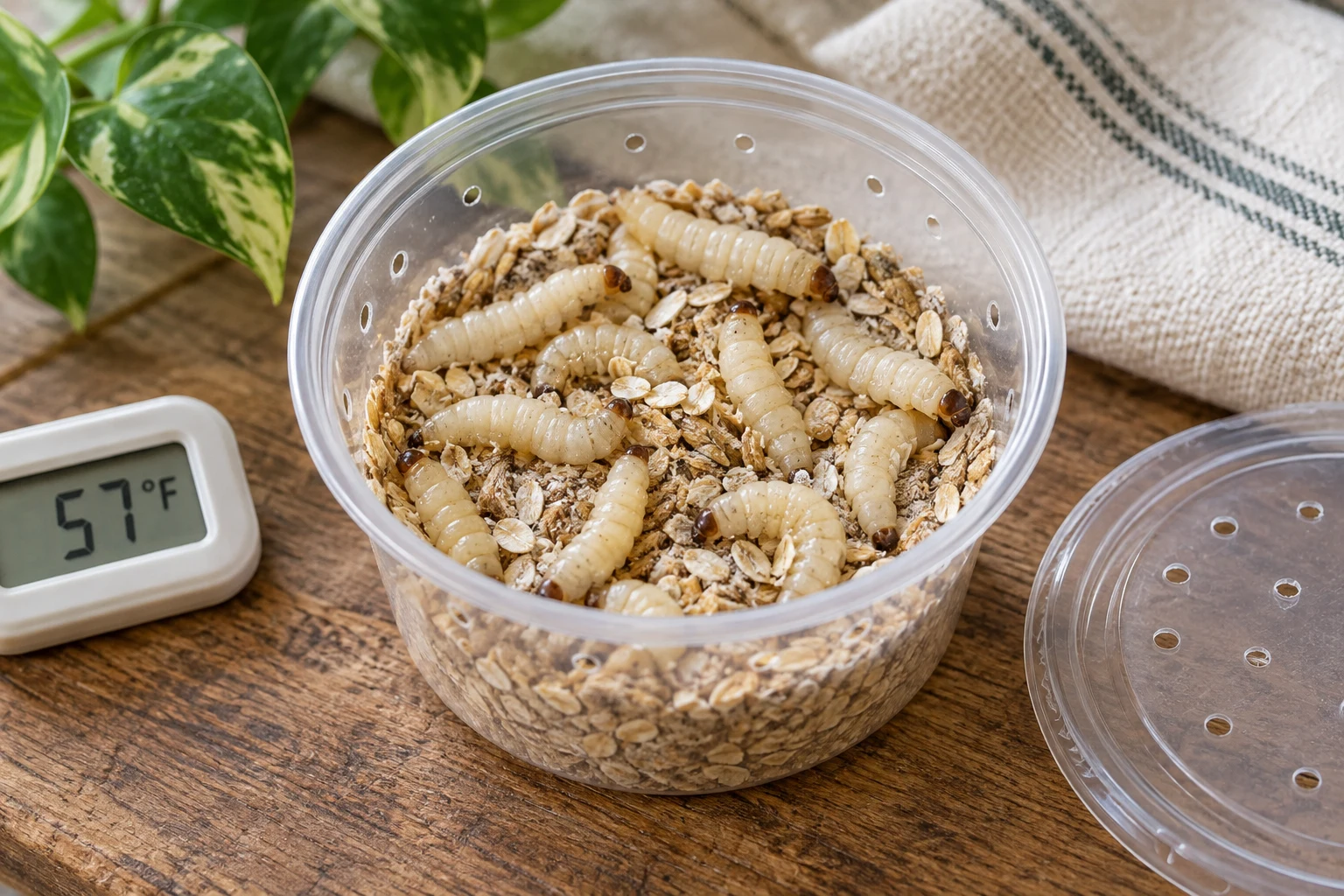
Store waxworms cool—about 55–60°F—to slow their development and delay pupation. A wine fridge is ideal; the warmest area of a normal refrigerator may work if a thermometer confirms the temperature.
Leave them in their bedding, provide airflow, and remove any worms that darken or smell. The bigger rule is dietary: waxworms are rich treats, not staple feeders.
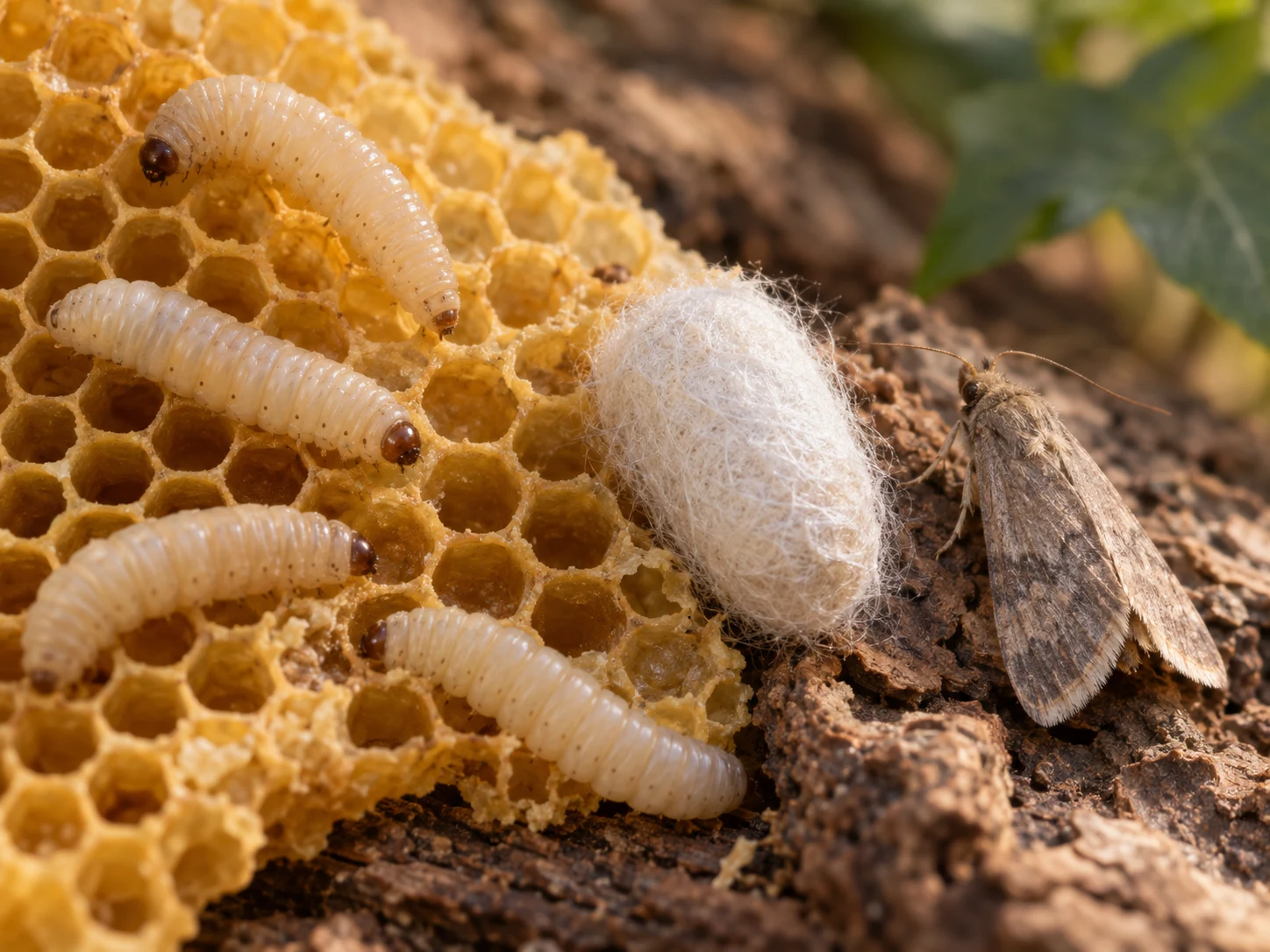
Larvae of the wax moth
Waxworms are the larval stage of the wax moth (Galleria mellonella). In nature they feed on beeswax and honeycomb, which explains both their name and their unusually soft, calorie-rich bodies.
Keep waxworms cool, dry and ventilated
Temperature is the biggest factor in how long a batch lasts. Cool storage slows eating, growth and pupation. Keep the cup in its original dry, grain-based bedding and check it every few days.
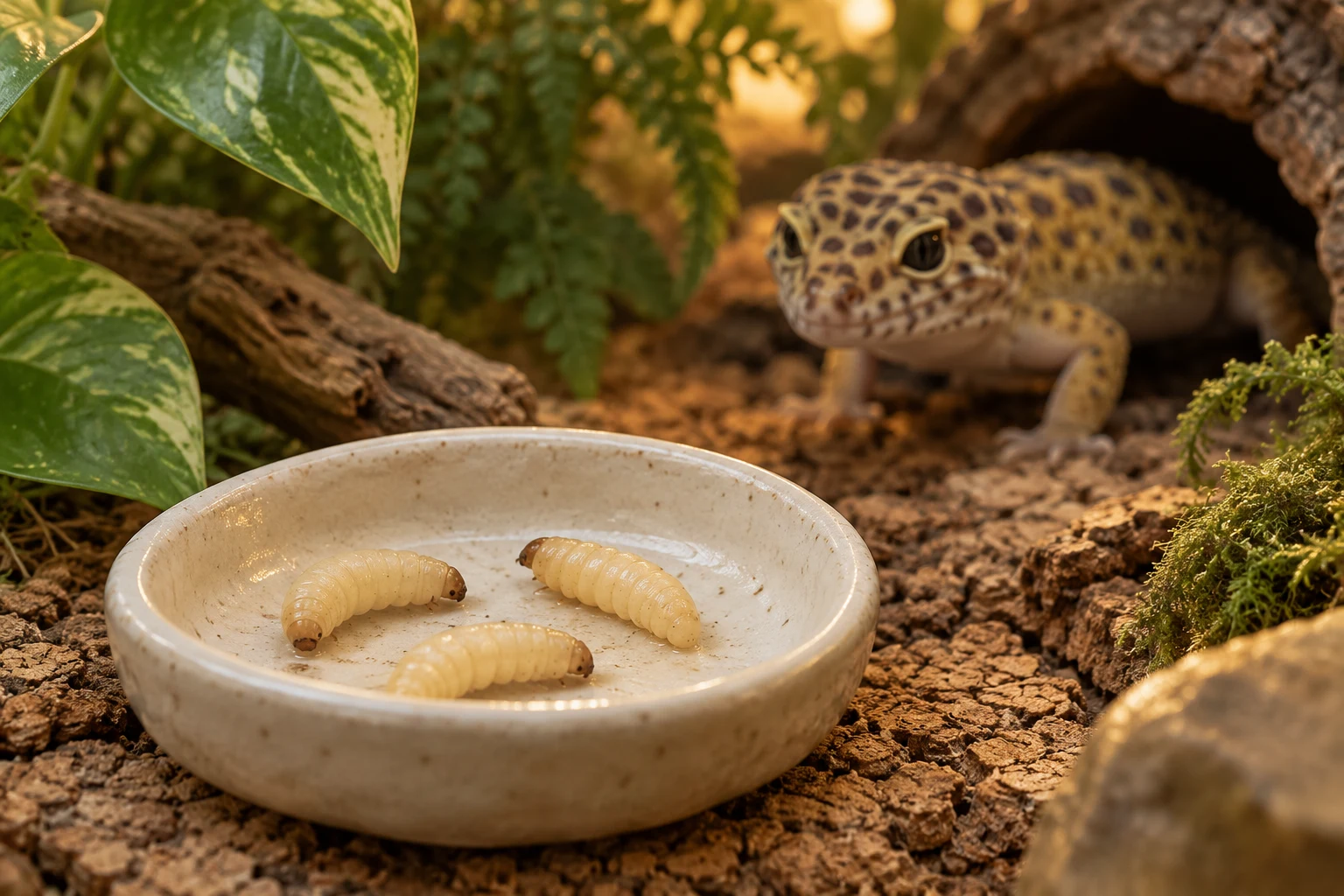
A treat, not a staple
Waxworms are among the highest-fat feeder insects. Offered too frequently, they can contribute to obesity and displace the protein, calcium and variety an animal needs from its regular diet.
Some animals also become fixated on their rich taste and begin refusing healthier staples. Keeping waxworms occasional helps prevent picky feeding.
Useful for a specific job
- Hydration: their soft, moisture-rich bodies are easy to consume.
- Picky or recovering animals: the strong feeding response can help restart appetite.
- Medication: they may help disguise medicine when ordinary food is refused.
- Fishing bait: anglers value their softness and scent.
Why waxworms turn into moths
A waxworm is only the larval stage. Warm temperatures accelerate development, so larvae kept at room temperature will eventually pupate and emerge as wax moths. This is natural, not evidence that the batch was defective.
Cool storage at roughly 55–60°F slows that process and gives you more time. If cocoons or moths appear, remove them and use the remaining healthy larvae sooner—the rest of the batch may be close behind.
Waxworm care FAQ
How do you store waxworms?
Keep them at roughly 55–60°F in their original bedding with ventilation. Check the cup regularly and remove any larvae that turn dark or develop an unpleasant smell.
How long do waxworms last?
They can last several weeks when kept cool because lower temperatures slow development and delay pupation. At room temperature they mature much faster.
Can reptiles eat waxworms every day?
No. Waxworms are high in fat and should be occasional treats. Daily feeding can contribute to obesity and may make an animal refuse healthier staple feeders.
Do waxworms need refrigeration?
They need cool storage, but not the coldest refrigerator temperatures. A wine fridge or verified warm refrigerator shelf near 55–60°F works best.
Why are my waxworms turning into moths?
They are completing their natural life cycle. Warmth speeds pupation; cooler storage slows development and buys more time.
Shop fresh live waxworms
Choose a count for your keeper shelf, or continue exploring species-specific feeding and care guidance.
