Long-Term Bioactive Terrarium Maintenance
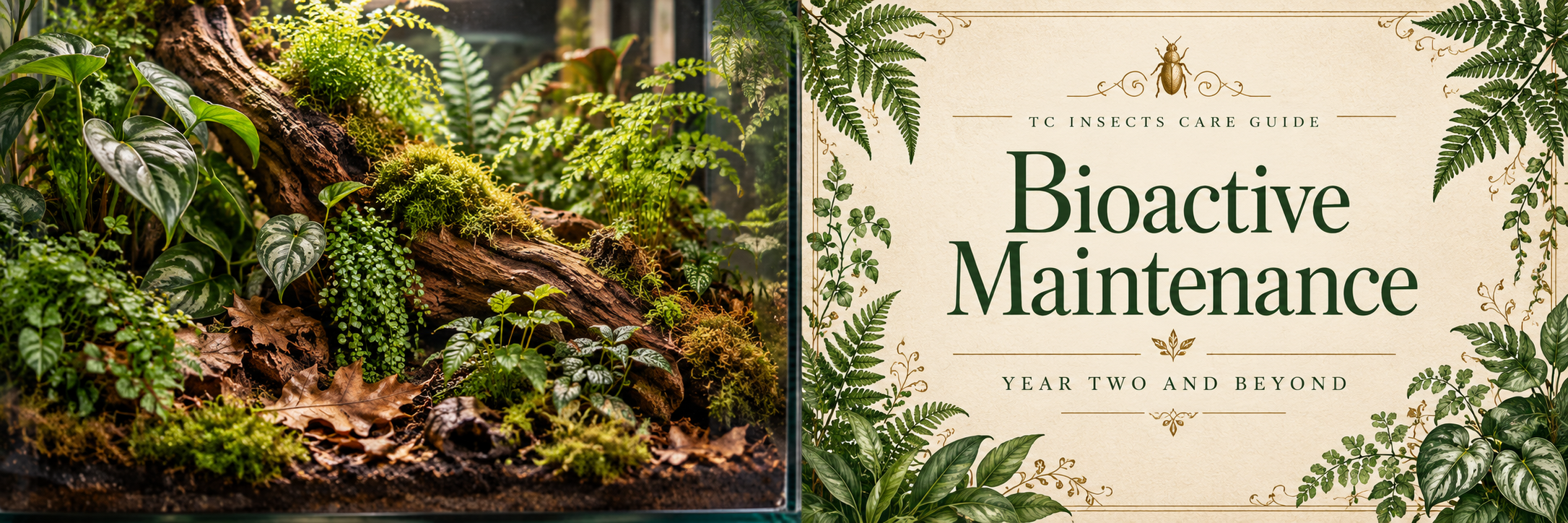
The setup guide covers day one, but a bioactive terrarium has to keep running for years, and that takes a real restocking rhythm rather than good intentions. In practice that means replenishing leaf litter roughly every 4 to 6 months, expecting a full substrate refresh somewhere in the 2 to 5 year range rather than never, watching for the signs that your isopod or springtail crew has quietly thinned out and needs a top-up culture, and nudging humidity and temperature with the seasons instead of leaving the tank on autopilot. None of this is complicated, but it is easy to skip when a tank still looks fine on the surface. Below is the actual schedule, tied to what you restock and when, not just the general philosophy of why a bioactive setup works in the first place.
Add gradually, before the old layer is fully gone
A stable tank can run years without one
The signal it's time for a top-up culture
Why year two looks different from setup week
A freshly built bioactive tank runs on its setup materials, fresh leaf litter, a starter culture, new substrate, and all of that depletes over time even in a healthy, well-run enclosure. A tank that never gets restocked does not collapse overnight. It just gradually thins out, first in leaf litter, then in springtail and isopod numbers, and eventually in substrate quality.
This guide is the dated, ongoing follow-up to the step-by-step setup guide, focused specifically on what a keeper actually reorders and when, rather than general reassurance that bioactive tanks are low maintenance. They are, genuinely, but low maintenance still means some maintenance.
Leaf litter: restock roughly every 4 to 6 months
Leaf litter is both food and cover for isopods and springtails, and it breaks down steadily as the crew processes it. Plan on adding a fresh layer roughly every 4 to 6 months rather than waiting until the old layer has visibly disappeared. Add it gradually, a partial top-up rather than swapping the whole layer at once, so you are not disrupting an established crew's environment all in one go.
If you collect your own leaf litter instead of buying it pre-cleaned, our guide on sterilizing wild leaf litter covers how to do that safely before it goes anywhere near the tank.
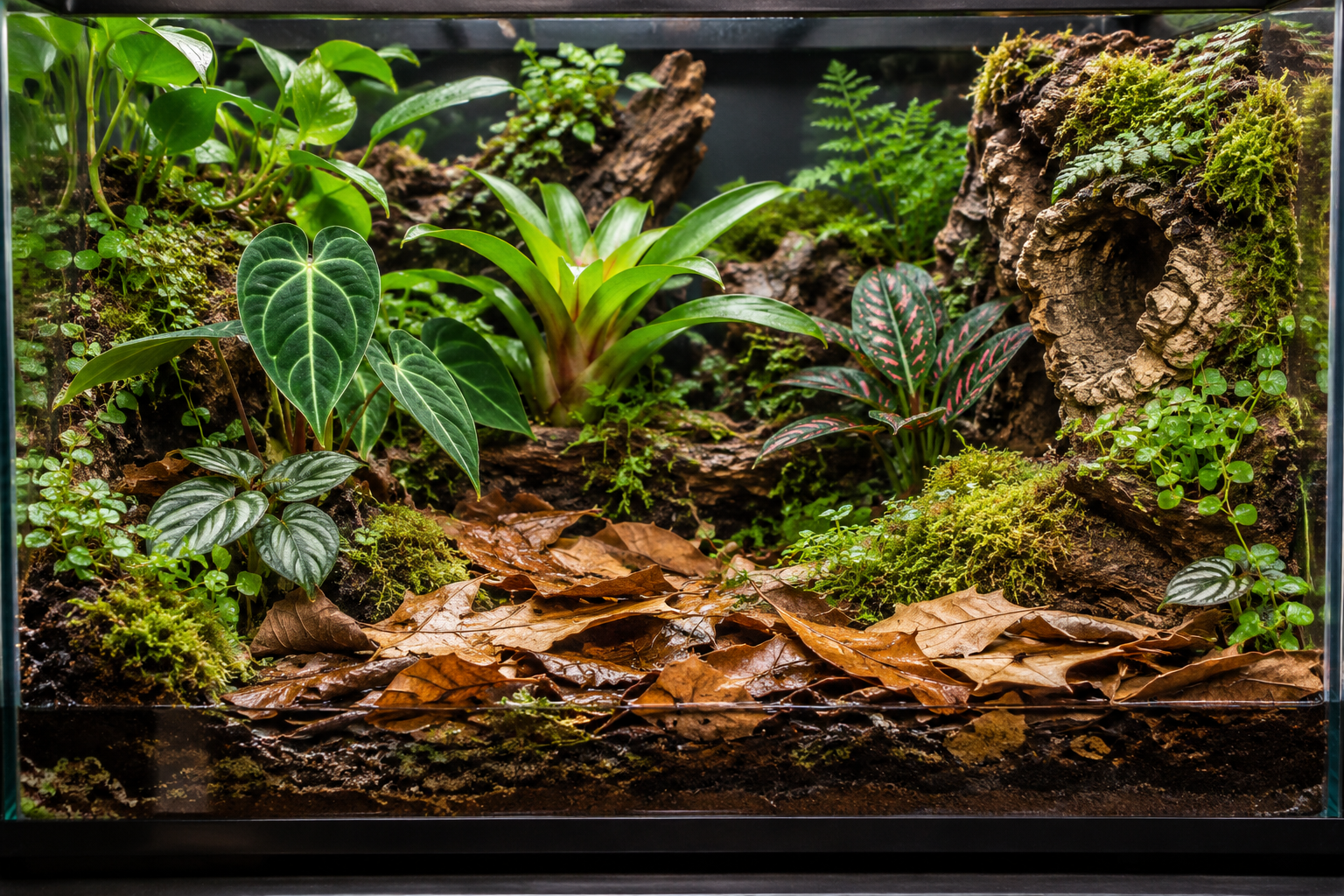
Substrate: a full refresh every 2 to 5 years, not never
A well-built bioactive substrate can run stable for a surprisingly long time, commonly cited in the 2 to 5 year range before it needs a full replacement, longer if it is deep, well-drained, and not overloaded with waste. Signs it is due include a sour or ammonia-like smell that does not clear up, a compacted or waterlogged texture that stays wet rather than drying between mistings, or a mix that has visibly broken down into fine muck instead of a textured blend.
A full substrate swap is more disruptive than a leaf litter top-up, so do it in sections if there is an animal in the enclosure, moving the crew and any plants over gradually rather than emptying the whole tank at once. Our substrate recipe guide covers what a properly built mix looks like, whether it is your first build or your second.
How to tell your cleanup crew has thinned out
Waste lingering longer than it used to, a mold or fungus bloom that springtails would normally graze down, or simply not seeing isopods on the surface during a normal humid evening check are all signs the population has quietly dropped, whether from predation, a dry spell, or ordinary attrition over a couple of years.
The fix is usually a top-up culture rather than troubleshooting from scratch: add fresh stock rather than assuming the whole colony failed outright. If the crew is present but genuinely not growing rather than declining, our guide on why isopod colonies stop breeding covers that separate problem.

Seasonal humidity and temperature adjustments
A tank that was dialed in perfectly over the summer can run noticeably drier and cooler in winter if the room it sits in swings with the seasons, especially near an exterior wall or a window. Check misting frequency and ambient temperature as the seasons change rather than assuming a schedule that worked in July still holds in January.
This is a small, recurring check, not a rebuild. A few minutes with a thermometer and hygrometer a few times a year catches most of the drift before it becomes a real problem for the crew or for any plants sharing the tank.
The actual restock list
Tied together, the concrete, reorderable list looks like this: fresh leaf litter every 4 to 6 months, a calcium source to keep the crew's molts going, a protein feed for a colony that is past its delicate startup phase, and a culture booster or fresh starter culture the moment you notice things thinning out. This is the unglamorous part of bioactive keeping, and it is what actually keeps a tank running for years instead of quietly declining.
If you collect your own leaf litter, start with our guide on prepping it safely, and if you need to top up a thinning springtail culture, our springtail culture medium comparison helps you pick the right one for what is already running in the tank.
What a Mature Tank Actually Needs
The restock list from this guide: leaf litter, substrate, calcium, food, and a culture booster for a thinning crew.
Frequently Asked Questions
Written by the TC INSECTS breeding team · Porter, Texas · Live Arrival Guarantee on every order
Have a care question? Ask our community.
Join Reptile Keepers USA, our free Facebook group for reptile, amphibian and invert keepers. Share your setups, get care help and swap feeder tips.
Join the free group