Isopods for a Hermit Crab Tank
Typical target range for a crabitat, which also suits Dwarf White isopods well
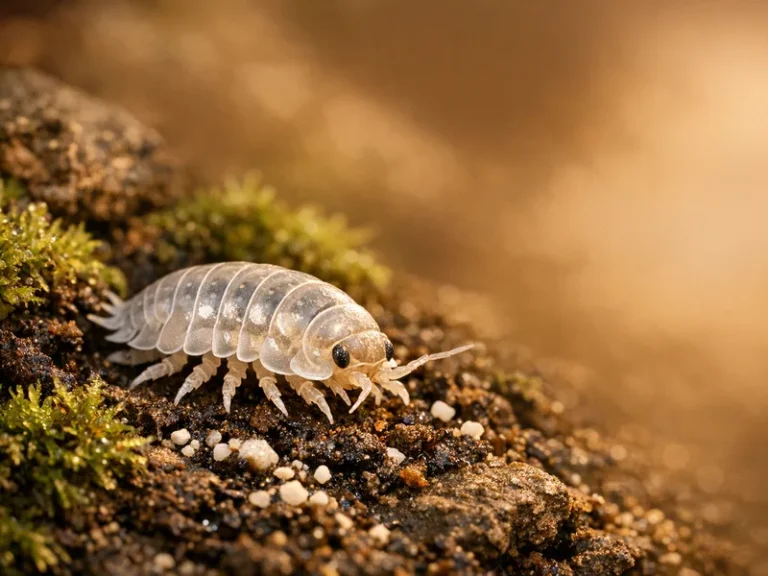
Small-bodied and soft, safe around a defenseless molting crab
Not a safe choice around a soft, freshly molted crab
A cleanup crew for the crabitat
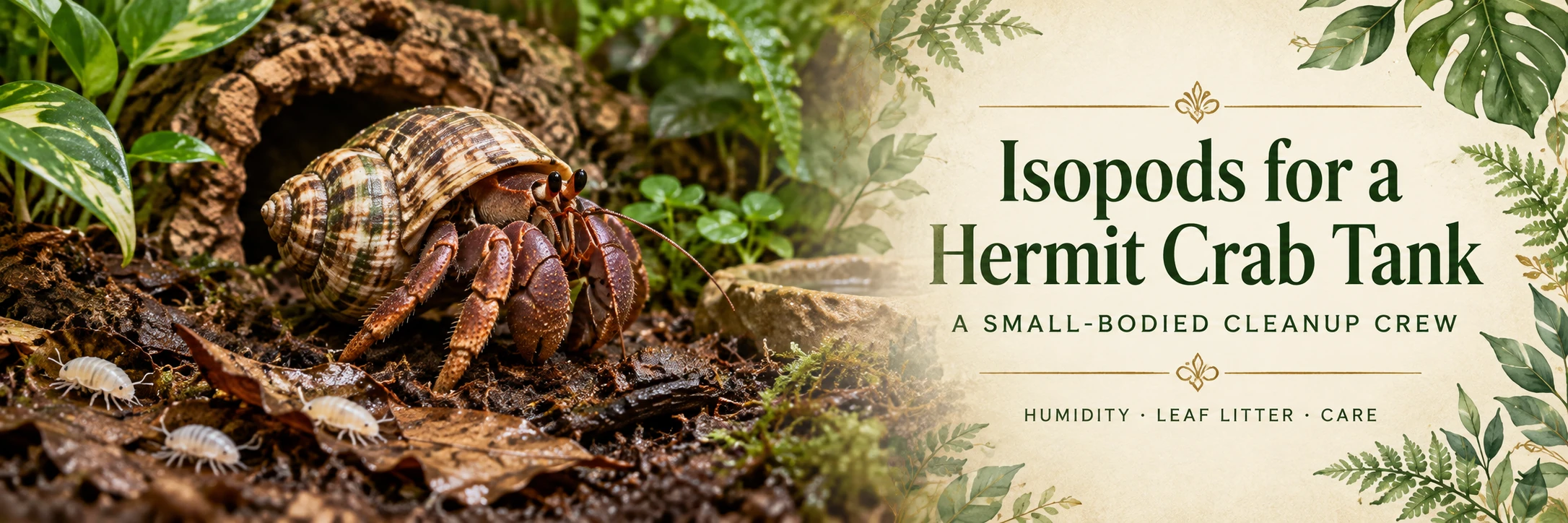
Yes, isopods work well in a hermit crab tank, and Dwarf White isopods, Trichorhina tomentosa, are the standard pick because they thrive in the high humidity a crabitat needs, stay small enough to avoid bothering a molting crab, and clean up leftover food before it molds. Here is why they are a good fit, which species to choose, and what a cleanup crew will and will not do for your setup.
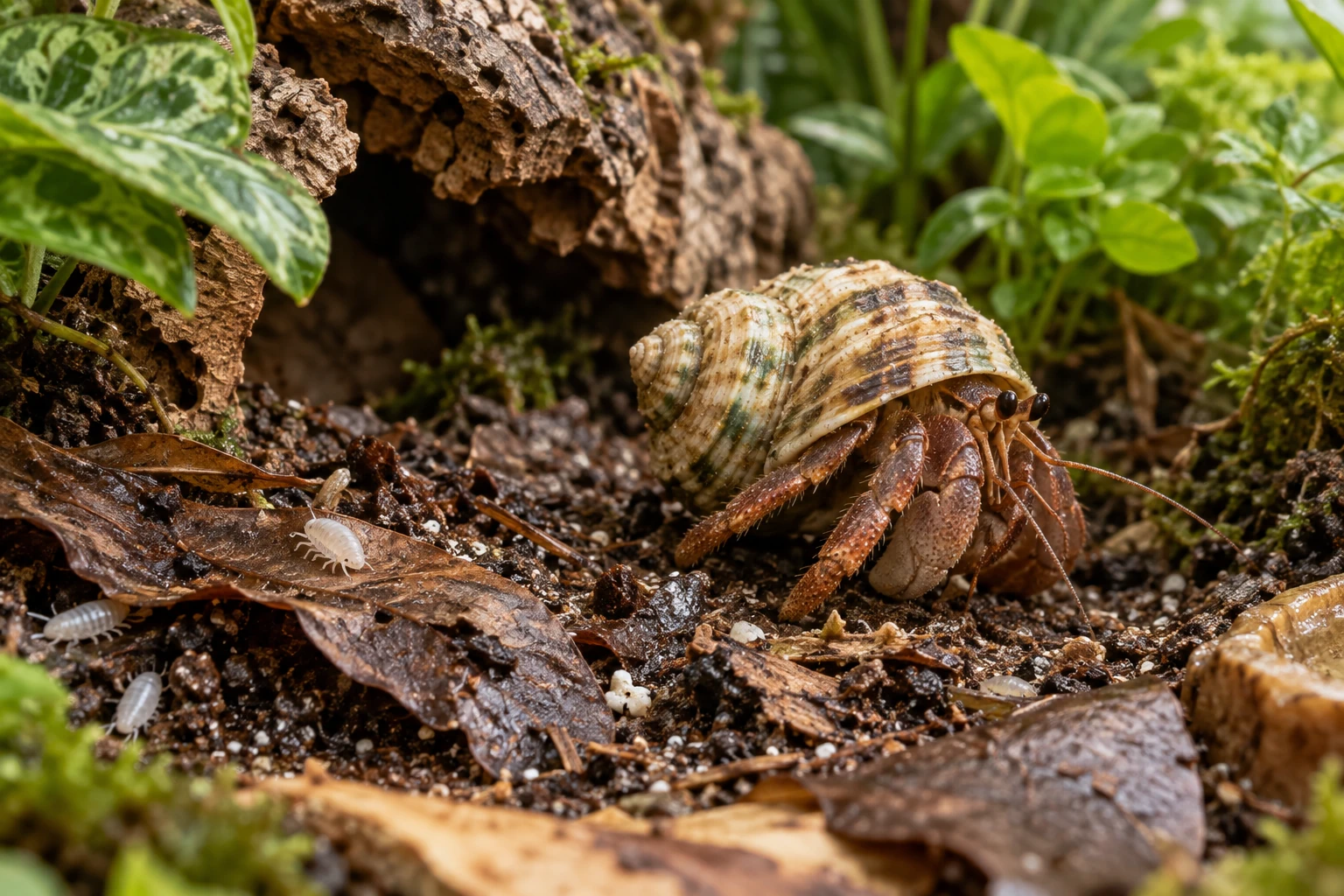
Give the small crew a sheltered start
Introduce a small-bodied starter group into damp, sheltered leaf litter and give the colony time to establish.
Why a crabitat is a good fit for isopods
Hermit crabs need a humid, deep-substrate enclosure to thrive, typically held around 70 to 80% relative humidity with several inches of moist sand or substrate for burrowing and molting. That is close to ideal conditions for a lot of isopod species, especially ones that like it damp. Add in the fact that hermit crabs are messy eaters that leave scraps of fruit, protein, and other food scattered around, and you have a setup that practically calls for a cleanup crew.
Isopods will work through that leftover food before it has a chance to mold or rot, which helps keep the substrate cleaner between full changes. On our farm, a crabitat is one of the more natural pairings we see for a bioactive cleanup crew, since the humidity and food supply line up so well.
Which species to pick
Dwarf Whites are the go-to choice for a crabitat. They are small, only about 3 to 4 millimeters, soft-bodied, and reproduce quickly without needing a pair since they are parthenogenetic, so a starter group builds into a working population on its own. They also tolerate the high humidity a crab tank runs at without issue.
Powder Orange isopods, Porcellionides pruinosus, are a solid second option if any part of the tank tends to run a bit drier, since they tolerate lower humidity than Dwarf Whites while still doing cleanup work. Avoid larger, protein-driven Porcellio species like Dairy Cow in a crabitat. They have documented reports of nibbling other animals when protein is scarce, and a soft, freshly molted crab is not something you want to gamble on. See our beginner isopods for sale to compare Dwarf Whites and Powder Orange.
The molting-safety question, answered honestly
A molting hermit crab buries itself and is essentially defenseless while its new shell hardens, which can take weeks. This is exactly why cleanup crew size matters. Small-bodied, soft isopods like Dwarf Whites are not a threat to a molting crab, they simply are not built to bother an animal that size, and they stick to grazing substrate and leftover food rather than seeking out protein from a living animal.
Larger, more aggressive Porcellio species are a different story, and the same caution that applies to reptile enclosures applies here: keep anything large and protein-hungry out of an enclosure housing a defenseless, molting animal. Stick with the small-bodied crew and you remove the risk entirely.
How to add them and how many
Add a starter group of Dwarf Whites directly onto the substrate, ideally into a slightly damp, sheltered area with some leaf litter or cork bark to hide under while they settle in. A group of 20 to 30 is a reasonable starting point for a standard-sized crabitat, and the population will grow on its own if the humidity and food supply stay consistent.
Give them a few weeks to establish before expecting to see cleanup results ramp up, since a new group needs to acclimate and start reproducing before the population is doing serious work. Our isopod care guide for beginners covers setup basics if this is your first time adding a cleanup crew to any enclosure.
What isopods will and will not fix
Isopods are a helpful supplement to substrate cleanliness, not a replacement for proper crabitat maintenance. They will not replace regular substrate changes, and they do not control humidity or temperature on their own, those still need to be managed with your tank's own setup. Think of them as an ongoing assist that reduces mold and buildup between the maintenance you are already doing, not a shortcut around it.
It is also worth knowing hermit crabs are crustaceans, just like isopods, which is part of why the humidity and substrate needs line up so naturally between the two. If you want more moisture-loving diversity in the tank, springtails are a safe addition alongside isopods and work the surface layer for mold and fine debris. See our springtails for sale page.
The Crabitat Cleanup Kit
A small-bodied cleanup crew sized for a hermit crab tank's humidity and food scraps.
Frequently asked questions
Can you put isopods in a hermit crab tank?
Yes. Isopods, especially Dwarf Whites, do well in a hermit crab tank because the high humidity and leftover food that crabs leave behind suit them well, and they help clean up scraps before mold sets in.
What is the best isopod species for a crabitat?
Dwarf White isopods, Trichorhina tomentosa, are the standard pick because they are small, soft-bodied, tolerate high humidity, and reproduce quickly without needing a pair. Powder Orange is a good second choice for drier areas of the tank.
Will isopods hurt a molting hermit crab?
Small-bodied, soft isopods like Dwarf Whites are not a threat to a molting crab. Avoid larger, protein-driven Porcellio species, which are better kept out of any enclosure housing a defenseless, freshly molted animal.
How many isopods should I add to a hermit crab tank?
A starting group of 20 to 30 Dwarf Whites is reasonable for a standard-sized crabitat. Give them a few weeks to settle and start reproducing before expecting to see full cleanup results.
Do isopods replace substrate changes in a crabitat?
No. Isopods reduce mold and buildup between maintenance, but they do not replace regular substrate changes or humidity and temperature control, which still need to be managed directly.
Are hermit crabs and isopods related?
Yes, both are crustaceans, which is part of why a crabitat's humid, deep substrate environment suits isopods so naturally.
Keep learning
Have a care question? Ask our community.
Join Reptile Keepers USA, our free Facebook group for reptile, amphibian and invert keepers. Share your setups, get care help and swap feeder tips.
Join the free group