
Temperate vs Tropical Springtails
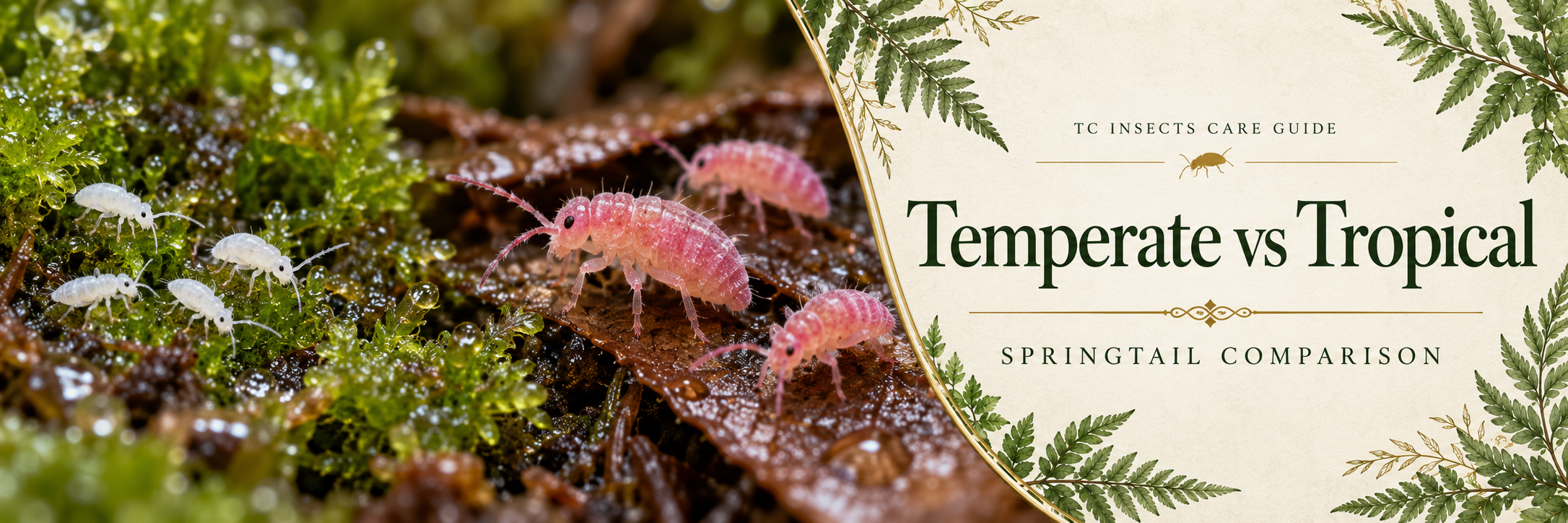
- Temperate white springtails (Folsomia candida) tolerate normal room temperature and are the hardiest, fastest breeding, most beginner friendly choice.
- Tropical springtails want warmer, consistently humid conditions, roughly 75 to 82 F, and can be more sensitive to swings in heat or moisture.
- The common white springtail sold for most cultures and bioactive setups is a temperate species, not a tropical one.
- Both temperate and tropical springtails do the same job: they graze mold and decaying matter and serve as a feeder for froglets.
- Most keepers should default to temperate white springtails unless they are running a dedicated warm tropical vivarium.
Temperate vs Tropical Springtails at a Glance
Both groups are springtails doing the same basic job, but they come from different climates and that shapes what each one needs from your enclosure. Here is the honest side by side.
- Temperature tolerance: Temperate white springtails handle normal cooler room temperatures without complaint. Tropical springtails want it consistently warm, roughly 75 to 82 F.
- Hardiness: Temperate whites are extremely hardy and forgive small mistakes. Tropical types can be more sensitive to swings in temperature and humidity.
- Breeding speed: Temperate white springtails are famously fast breeders. Tropical springtails breed well too, but only when their warmer conditions are met consistently.
- Size and looks: Temperate whites are small and plain. Tropical "giant" or pinkish springtails are noticeably larger and more visible.
- Best fit: Temperate whites suit cultures and most general bioactive setups. Tropical springtails suit warm, humid tropical vivariums where you want a bigger, more visible springtail.

Temperate Springtails (the Common White Springtail)
When people say "springtails" without any other description, they almost always mean the common white springtail (Folsomia candida), a temperate species. It is the workhorse of the hobby for a simple reason: it is extremely hardy and fast breeding at normal room temperature, so it does not need any special heating or a carefully tuned tropical setup to thrive.
That toughness makes temperate white springtails the best all-around choice for a starter culture and for most bioactive enclosures, whether the animal inside is tropical, temperate, or somewhere in between. They are small, pale, and stay mostly out of sight in the substrate, quietly grazing mold and keeping a colony going with very little upkeep.
Tropical Springtails (Giant and Pink Types)
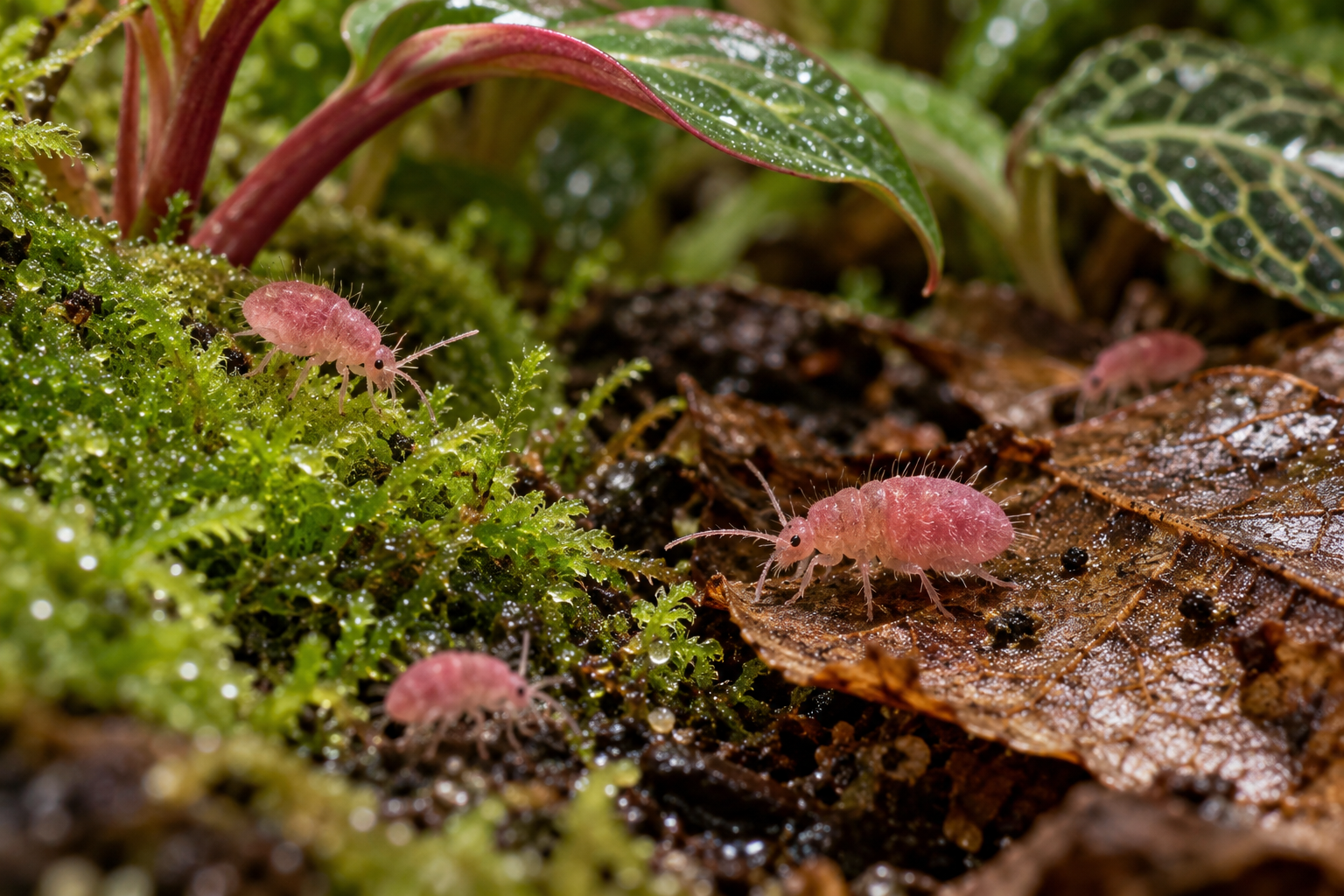
"Tropical springtails" is a looser hobby label covering the larger, often pinkish or grayish springtail types kept for warm, humid tropical vivariums. There is no single agreed scientific name for every springtail sold this way, since a few different tropical species get grouped under names like "giant" or "pink" springtails, but they share the same warm-climate needs.
These springtails want a warmer, consistently humid tropical vivarium, roughly 75 to 82 F, and they can be a bit more sensitive if that warmth or humidity dips for long. In exchange, they are noticeably larger and more visible than the common white, and many keepers like how they look moving around a warm planted tank. Give them a genuinely tropical setup and steady conditions, and they thrive right alongside it.
Which Should You Pick?
For most people, temperate white springtails are the right default. If you are starting your first culture, seeding a general bioactive enclosure, or just want a reliable cleanup crew that does not demand a specific warm climate, the common white springtail is hardier, faster to establish, and far more forgiving of everyday room temperature.
Choose tropical springtails instead if you are running a dedicated warm, humid tropical vivarium, roughly 75 to 82 F, and you specifically want a larger, more visible springtail crawling around a planted display. If your setup already sits at normal room temperature and you are not sure which to get, start with temperate white springtails. That is what most keepers should buy.
Both Do the Same Job
Whichever type you choose, temperate or tropical, they do the exact same core job in an enclosure. Springtails graze mold and decaying organic matter, which helps keep a bioactive substrate clean and healthy, and they are a soft, easy first food that feeds froglets and other tiny, delicate animals that cannot handle larger prey.
So the decision here is not about which one "works" better as a cleanup crew, since both work well. It is purely about matching the springtail's climate needs, temperate or tropical, to the temperature and humidity you are already running.
Frequently Asked Questions
What is the difference between temperate and tropical springtails?
Temperate springtails, most commonly the white springtail (Folsomia candida), tolerate normal cooler room temperatures and are extremely hardy and fast breeding. Tropical springtails, the larger "giant" or pinkish types, want warmer, consistently humid conditions, roughly 75 to 82 F, and can be more sensitive to swings in temperature or moisture. Both do the same job of grazing mold and feeding froglets, the difference is climate tolerance and size.
Which springtails are best for bioactive?
Temperate white springtails are the best all-around choice for most bioactive setups. They are hardy, breed quickly at normal room temperature, and do not require a specific tropical climate to thrive, which makes them the safe default for a general enclosure or a starter culture.
Do tropical springtails need heat?
Yes, tropical springtails do best with consistent warmth, roughly 75 to 82 F, along with steady high humidity. They can be more sensitive than temperate white springtails if kept too cool or if conditions swing, so they are best suited to a genuinely warm, humid tropical vivarium rather than a normal room-temperature setup.
Are white springtails temperate or tropical?
The common white springtail (Folsomia candida) is a temperate species. It is the type most keepers mean when they just say "springtails," and it is prized for tolerating normal room temperature rather than needing a warm tropical setup.
Which springtails reproduce faster?
Temperate white springtails are generally the faster and more reliable breeders, largely because they thrive at ordinary room temperature without needing precise warmth or humidity. Tropical springtails can breed well too, but only when their warmer, consistently humid conditions are actually being met.
Keep comparing: How to Culture Springtails· How to Care for Springtails· Springtails for Dart Frogs· Do Isopods Need Springtails?
