Your Springtails Just Arrived
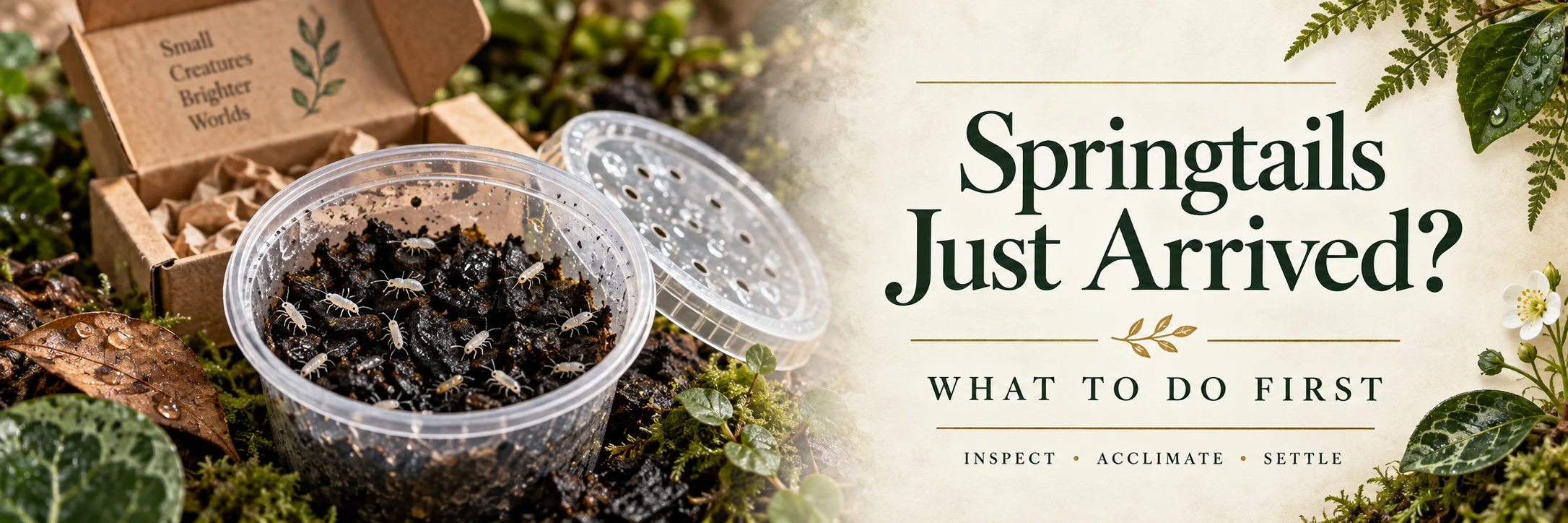
Photo the unopened cup and email customer.service@tcinsects.com after the delivery scan
Fresh air and room temperature bring back most stunned cultures
Crack the lid every few days. It is not a permanent home
A calm start for a newly arrived culture
If your springtails arrived clumped in one corner of the cup and barely moving, open the lid and give them fresh air before you assume the worst. That stillness is almost always shipping stress, not a dead culture. If anything truly looks dead, photograph the unopened cup and email customer.service@tcinsects.com within 1 hour of the delivery scan to protect your Live Arrival Guarantee, then try the steps below while you wait to hear back. Springtails (order Collembola) recover from a rough trip better than most feeders do, and a few honest checks separate a stunned culture from a lost one.
Inspect first, then let the culture settle
This guide covers documentation, temperature, moisture, fresh air, and the move into a permanent culture.
Motionless in the cup? Here's what that almost always means
A springtail that looks dead on arrival is usually just shut down, not gone. Shipping cups are sealed for the trip, and the carbon dioxide that builds up inside can push springtails into a temporary dormant state that looks a lot like death. Keepers who ship and receive cultures regularly report the same pattern: a cup that looked lifeless at the door came back to normal activity once it got fresh air and time to settle.
Cold plays a part too. A cup that sat on a cold truck or a hot delivery van pushes springtails into the same kind of stillness, since both extremes slow them down hard. It is the same carbon dioxide buildup that can stall an established culture over time, which we cover in why a springtail culture stops booming, just compressed into one sealed cup instead of a tub on a shelf. None of this means the culture failed.
Protect your guarantee first, then work on reviving the culture
If the springtails look genuinely dead rather than just still, photograph the unopened cup and email customer.service@tcinsects.com within 1 hour of the delivery scan, or the same day for a Hold for Pickup order. That single step protects your Live Arrival Guarantee no matter what happens next, so do it before you open anything or try to revive the culture.
Once that photo is sent, you are free to try reviving the culture while you wait to hear back, and nothing about documenting a bad shipment first works against you. Plenty of cultures that look completely still in the claim photo are moving again within the hour once they get air and warmth, so send the email, then keep working the steps below.
How long can springtails stay in the shipping cup?
Most springtail cultures hold up fine in their travel cup for one to two weeks, as long as you crack the lid for fresh air every few days and keep the media damp rather than dripping. Isopods work on a tighter clock than that, so if your order included both, check our isopod arrival guide for their shorter timeline. A shipping cup is built to survive the trip, not to serve as a long term home, so treat this window as a grace period rather than a deadline you can ignore.
If the enclosure or a proper culture container is not ready yet, add a very light pinch of yeast once the last feeding is gone, following the same 2 to 4 day feeding rhythm we use for every springtail culture. Skip a feeding if you are not sure, since overfeeding a small travel cup fills it with mold faster than an empty stomach ever hurt a springtail.
Opening the cup: check moisture before you check for movement
Set the closed cup at room temperature, out of direct sun and away from a vent, for 15 to 30 minutes before you open it. Springtails warm up slowly, and a cold cup opened straight into a bright, dry room adds one more shock on top of the trip it just had.
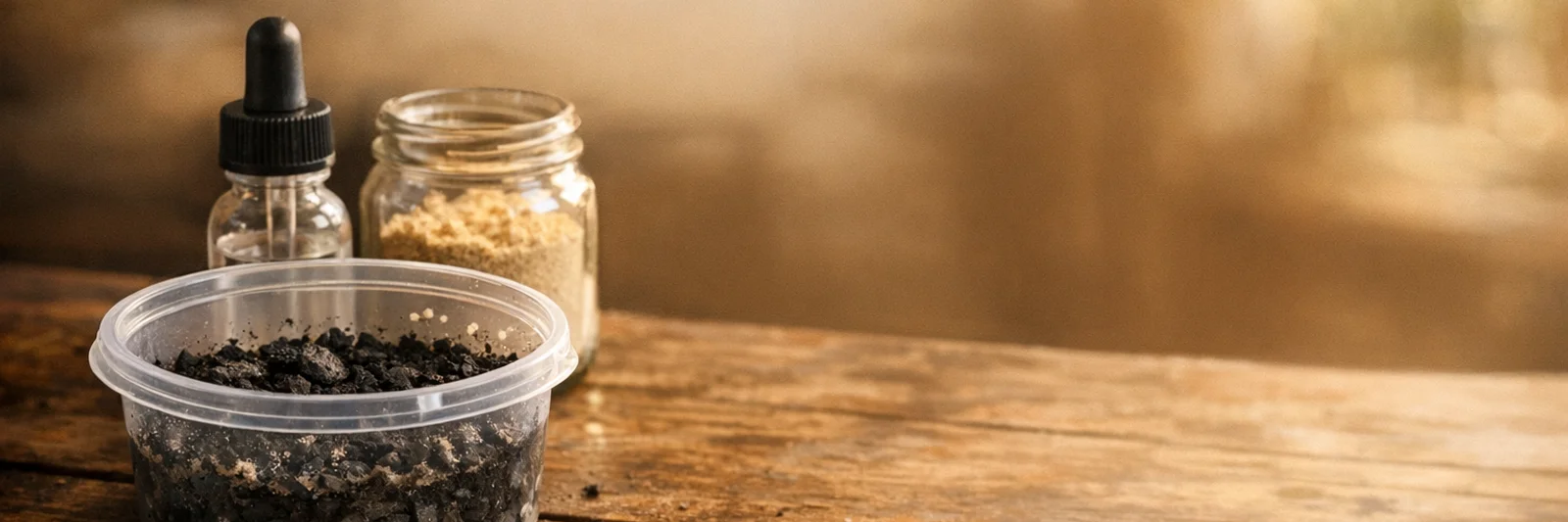
Once it has warmed, check the media. If the paper towel, charcoal, or coco fiber feels dry, add a few drops of dechlorinated water along one edge rather than soaking the whole cup, since standing water in a small container is a real drowning risk for something this size. A damp cup with still, quiet springtails inside is a normal shipment, not a failed one.
Moving into a permanent culture or straight into your bioactive
A culture that arrived to be a standalone colony should move into proper media as soon as you can manage it: rinsed charcoal over a shallow pool of water, or moist coco fiber, following the same setup in our springtail culturing guide. Tip the whole cup in gently rather than dumping it, so you disturb the animals as little as possible on top of the trip they already had.
If the goal is seeding a bioactive terrarium instead, a small, healthy shipment is usually enough, especially into a tank that already had 3 to 4 weeks to settle before any animals moved in, which gives a stressed culture the gentlest landing. If you are working out how many cultures your setup actually needs, our guide to how many cultures you need walks through the numbers.
When it really is a lost shipment
A truly dead springtail looks different from a dormant one once you look closely: the body is shriveled, discolored, or falls apart rather than simply sitting still, and nothing about warmth, air, or time brings any movement back. A small number of losses among dozens of tiny animals is normal in any shipment and is not the same thing as a failed culture.
If the photo you already sent shows a cup that stayed completely lifeless after a full day at room temperature, you have done everything right and the documentation is in. In the meantime, a fresh culture is always ready to ship if you want to try again right away.
Keep reading: Feeders Arrived Dead? What Happens Next, Step by Step
Keep reading: Millipede or Roach Arrived Inactive? What to Check First
What Your Springtails Are Doing, and What It Means
The Springtail Revival Kit
Fresh culture options and the light feeding basics to get a stressed shipment growing again.
Frequently asked questions
Are my springtails dead if they are not moving after shipping?
Almost certainly not. A sealed shipping cup traps carbon dioxide and heat, and that combination pushes springtails into a still, dormant state that looks a lot like death but usually is not. Crack the lid, let the cup sit at room temperature for 15 to 30 minutes, and most cultures show normal activity again well within the hour.
How long can springtails stay in their shipping cup?
Plan on one to two weeks if you crack the lid for fresh air every few days and keep the media damp. A shipping cup works fine as a short term holding spot, but it is not built for the long term, so move the culture into proper charcoal or coco fiber media once your setup is ready.
Why do springtails clump together or go still after shipping?
It is a normal response to a rough trip, not a sign of illness. Cold, heat, and the carbon dioxide that builds up in a sealed container all push springtails toward the same still, huddled behavior, and it typically resolves once they get fresh air and settle back to room temperature.
Can I add new springtails straight into my bioactive terrarium?
Yes, a small, healthy shipment usually does fine seeded straight in, especially if the terrarium already had a few weeks to settle before any animals moved in. If you would rather build a standalone culture first as a backup supply, keep it in charcoal or coco fiber media instead of the terrarium itself.
What if my springtails still are not moving after a few hours?
Give it more time before assuming the worst. Tip the culture into a larger container, give the media a gentle shake to loosen it, and check again in 30 to 60 minutes. Some shipments need a longer stretch of fresh air and warmth than others before activity picks back up.
What do I do if my springtails actually died in shipping?
Photograph the unopened cup and email customer.service@tcinsects.com within 1 hour of the delivery scan, or the same day for a Hold for Pickup order. That documentation is what our Live Arrival Guarantee runs on, and covered orders are replaced or credited, never left unresolved.
Keep learning
Have a care question? Ask our community.
Join Reptile Keepers USA, our free Facebook group for reptile, amphibian and invert keepers. Share your setups, get care help and swap feeder tips.
Join the free group