Cubaris White Shark Care
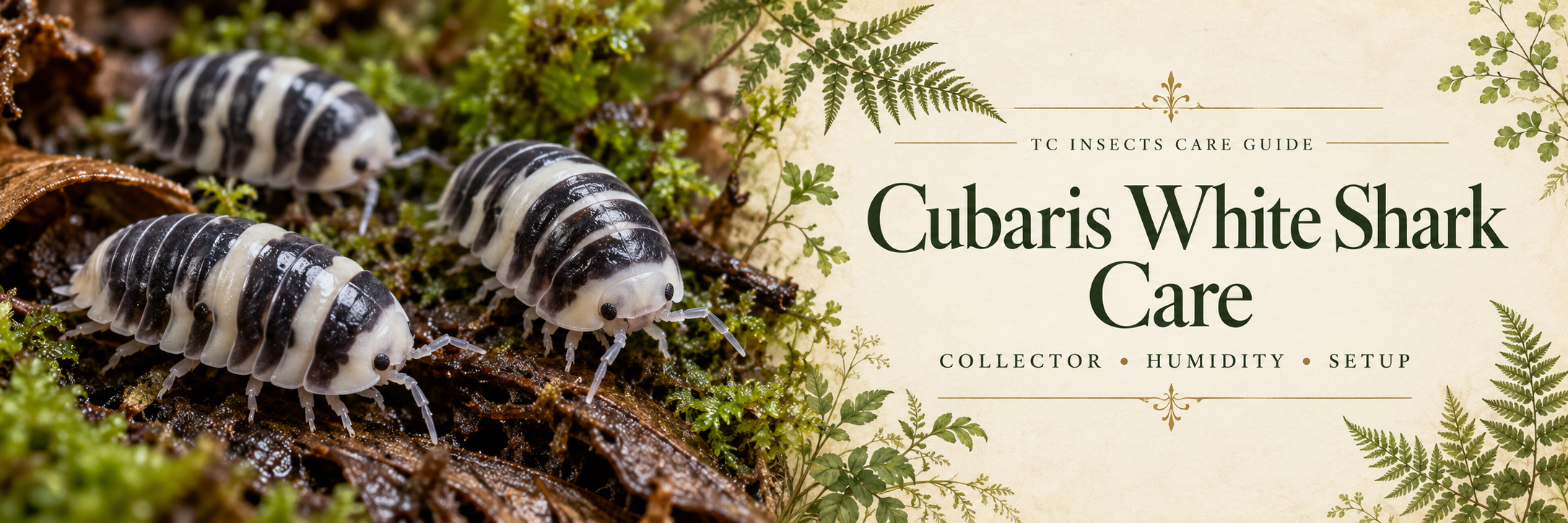
Cubaris sp. 'White Shark' is a small, expensive collector isopod that needs steady warmth around 72 to 80°F and consistently high humidity, and it is not the isopod to start with if you have never kept Cubaris before. At about 1 cm long, it is one of the smallest and most expensive lines TC Insects carries, prized for a bold black and white pattern rather than for being easy to raise. This guide covers what actually sets White Shark apart from other Cubaris isopods for sale, honest breeding timelines, and who should try an easier Cubaris first.
Stay at the warm end; don't let this line drop toward the 65°F Cubaris floor.
Smaller than Panda King or Pak Chong; compact size is part of the collector appeal.
TC's own listing calls this an experienced-keeper Cubaris, not a first purchase.
What Is Cubaris sp. 'White Shark'?
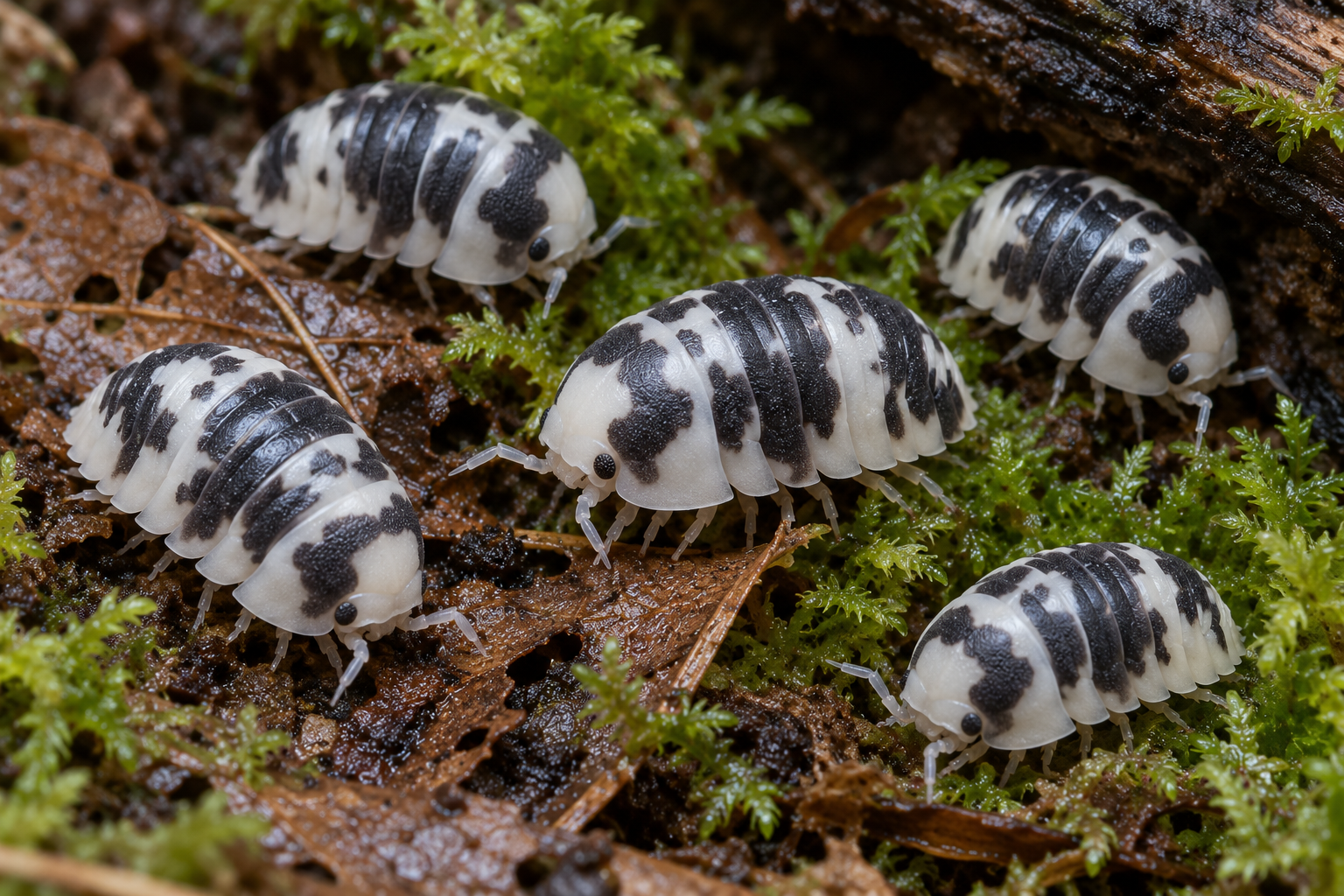
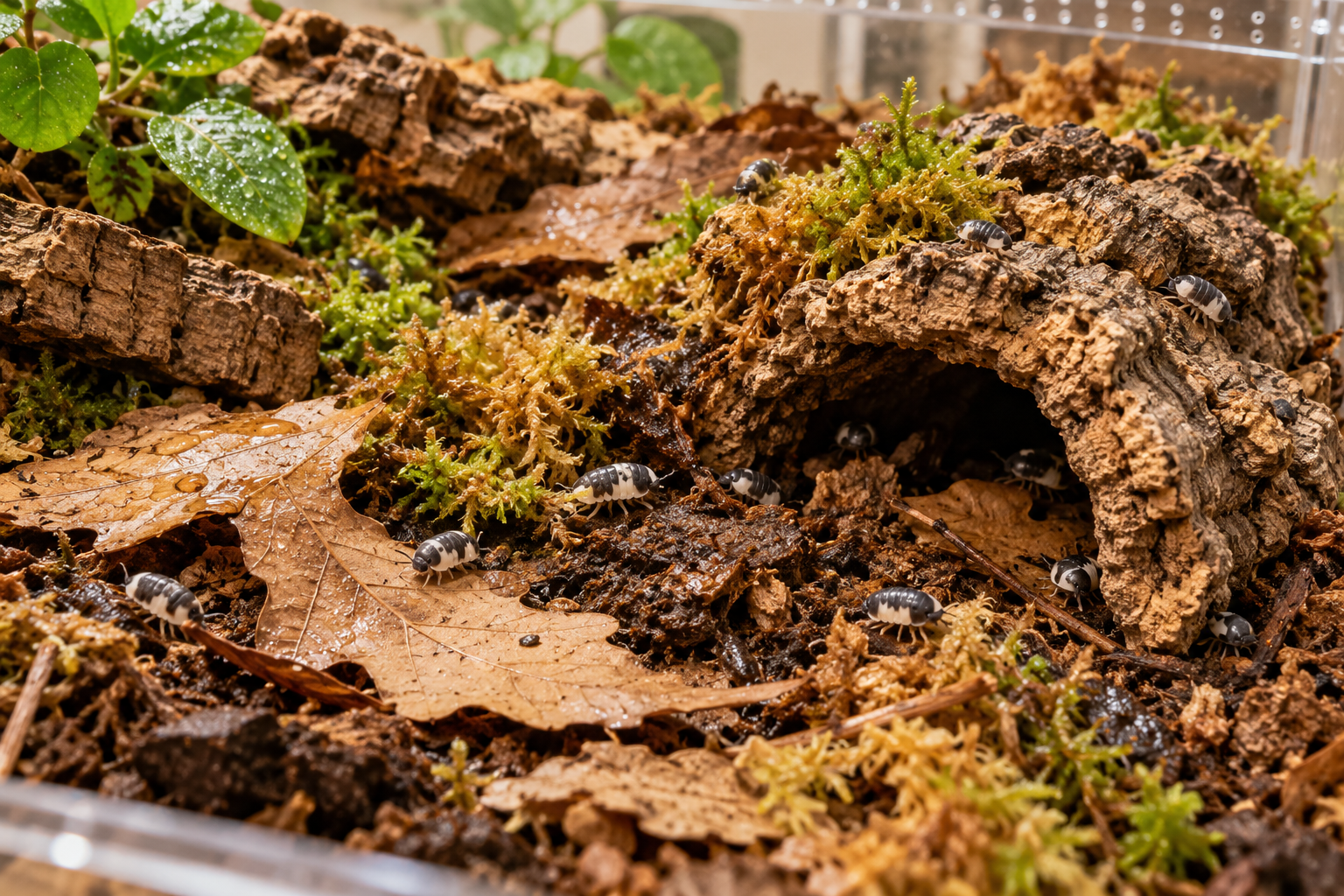
Cubaris sp. 'White Shark' is a true member of the genus Cubaris, not one of the many isopods that only borrow the Cubaris name. Keepers named it for the bold black and white contrast pattern on its small, rounded body, which loosely echoes a shark's coloring. Adults reach only about 1 cm (0.4 inches), noticeably smaller than well-known Cubaris lines like Panda King or Pak Chong. That compact size, combined with a striking pattern, is a big part of why collectors chase this particular line.
This is also one of the highest-priced isopods TC Insects carries, and pack sizes are capped at 5 or 10 individuals instead of the 15 to 20 count typical of a starter culture. That cap reflects genuine scarcity in the trade, not a marketing choice. Reproduction is moderate to strong once a group settles in, which is faster than several other collector-tier Cubaris, but faster than the slowest Cubaris still means patience measured in months, not days.
How Warm and Humid Does It Need to Be?
TC's own listing for this line runs 72 to 80°F, and that is the number to build your setup around. That sits at the warm end of Cubaris husbandry: TC's general Cubaris guidance allows a 65°F cool edge for the genus as a whole, but White Shark's own listing calls for staying at 72°F or above, so keep this line away from that lower floor. Specialist isopod sellers report a similar range, which is reassuring since it means TC's number is not an outlier.
Humidity matters even more than the exact temperature. Aim for high, steady moisture, most keeper sources put it in the 70 to 85 percent range, with a lightly ventilated lid rather than one sealed shut. What Cubaris will not forgive is a swing: a substrate that goes from soaked to bone dry and back is far more dangerous than sitting a few degrees outside the ideal range. For a full breakdown of getting the moisture gradient right, see our Cubaris humidity and substrate guide.
Substrate, Diet, and Setup
Give White Shark at least 3 to 4 inches of moisture-retentive substrate, deeper than the 2 to 3 inches that suits most isopods, since this line spends real time burrowing and needs somewhere to escape any dry patch. A mix of organic topsoil, coco fiber, and decaying hardwood works well, topped with a generous layer of leaf litter. Add multiple hides, cork bark and leaf litter pockets both, since a shy, expensive culture benefits from more places to disappear than a hardier species would need.
Feeding White Shark
Feed the same way you would any Cubaris: leaf litter and soft decaying hardwood as the everyday staple, occasional vegetables, and protein only in small, occasional amounts since too much drives nipping and mites. Keep a calcium source, a piece of cuttlebone works well, in the enclosure at all times, since a slow-growing collector culture cannot afford a bad molt.
How Fast Does It Breed?
Cubaris reproduce sexually, and a female carries fertilized eggs in a brood pouch called a marsupium until she releases live young called mancae, tiny, pale, fully formed copies of the adults. TC's own description of White Shark calls its reproduction moderate to strong once established and notably faster than many other Cubaris species, which lines up with what other breeders report. Once a small starter group settles into stable heat and humidity, that speed is what makes the price easier to justify over time.
Give it real numbers rather than vague reassurance: keepers commonly report the first mancae appearing roughly 3 to 6 months after a settled group is established, with a self-sustaining colony following within about a year. That is quicker than several slower collector Cubaris, though still far from instant. See our isopod growth timeline from mancae to adult for what those young isopods go through as they mature.
Who Should Buy White Shark, and Who Should Wait?
White Shark is not the right first Cubaris. If you have never kept the genus before, or you do not already have a setup that holds humidity steady without daily attention, start somewhere more forgiving and come back once that culture is thriving. Price is part of this decision too: with pack sizes capped at 5 or 10 and prices starting around $110, a mistake here costs a lot more than losing a few Powder Orange isopods to a dry spell.
Better First Cubaris to Start With
TC's own Cubaris murina care guide points new keepers toward a tougher, cheaper line that forgives an off week just as well as our easiest-Cubaris roundup does. Build real confidence with murina or a similar starter species first, watch your humidity hold steady for a month or two without intervention, and White Shark becomes a reasonable next step instead of a gamble.
The Collector Cubaris Setup Kit
Everything a settled White Shark culture needs to hold steady moisture, cover, and calcium.
Frequently Asked Questions
Written by the TC INSECTS breeding team · Porter, Texas · Live Arrival Guarantee on every order
Have a care question? Ask our community.
Join Reptile Keepers USA, our free Facebook group for reptile, amphibian and invert keepers. Share your setups, get care help and swap feeder tips.
Join the free group