Isopod Genus Comparison
All five genera thrive at normal room temperature
Conglobating into a ball is a family trait, not a universal isopod skill
Both are small, prolific cleanup-crew workhorses
Choose the group that fits your habitat
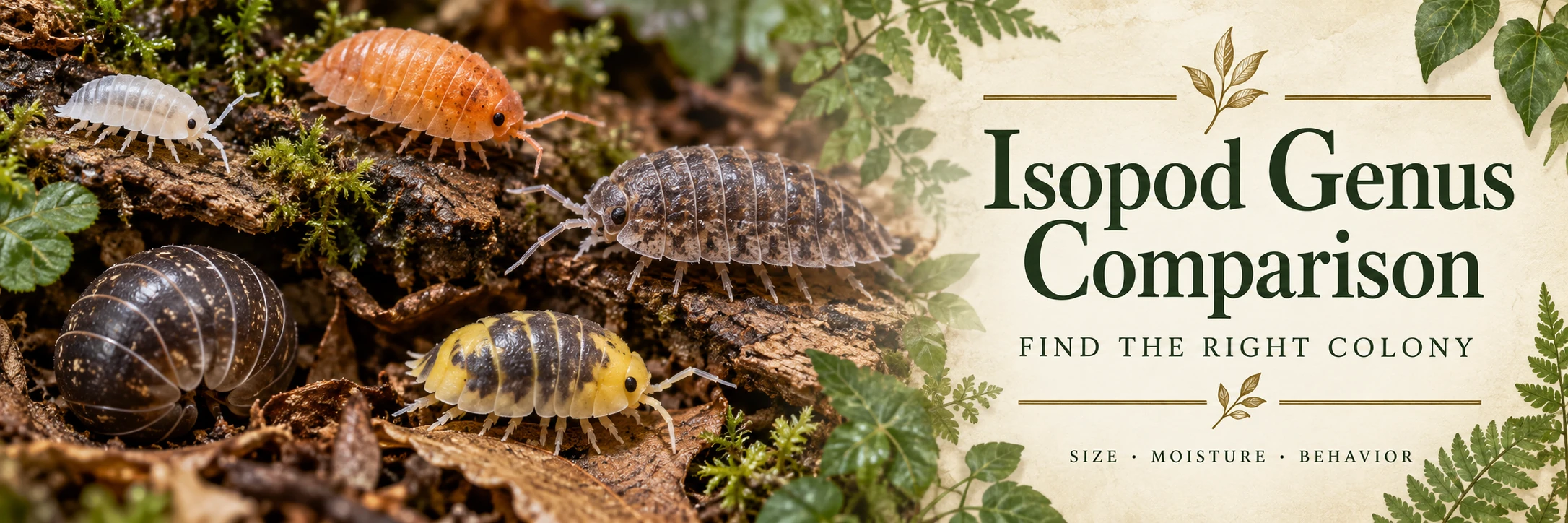
The isopod genera keepers stock differ mainly in size, moisture needs, and behavior: Dwarf Whites are tiny, fast, and safe with almost anything, Powder isopods are small, fast, and drought-tolerant, Porcellio run big and hardy, Armadillidium roll into a tight ball and like it drier, and Cubaris are the fancy, humid-loving, slower group. All five do well at the same room temperature, so the real choice comes down to how much moisture, speed, and personality you want in a bin. Here is how each genus stacks up.
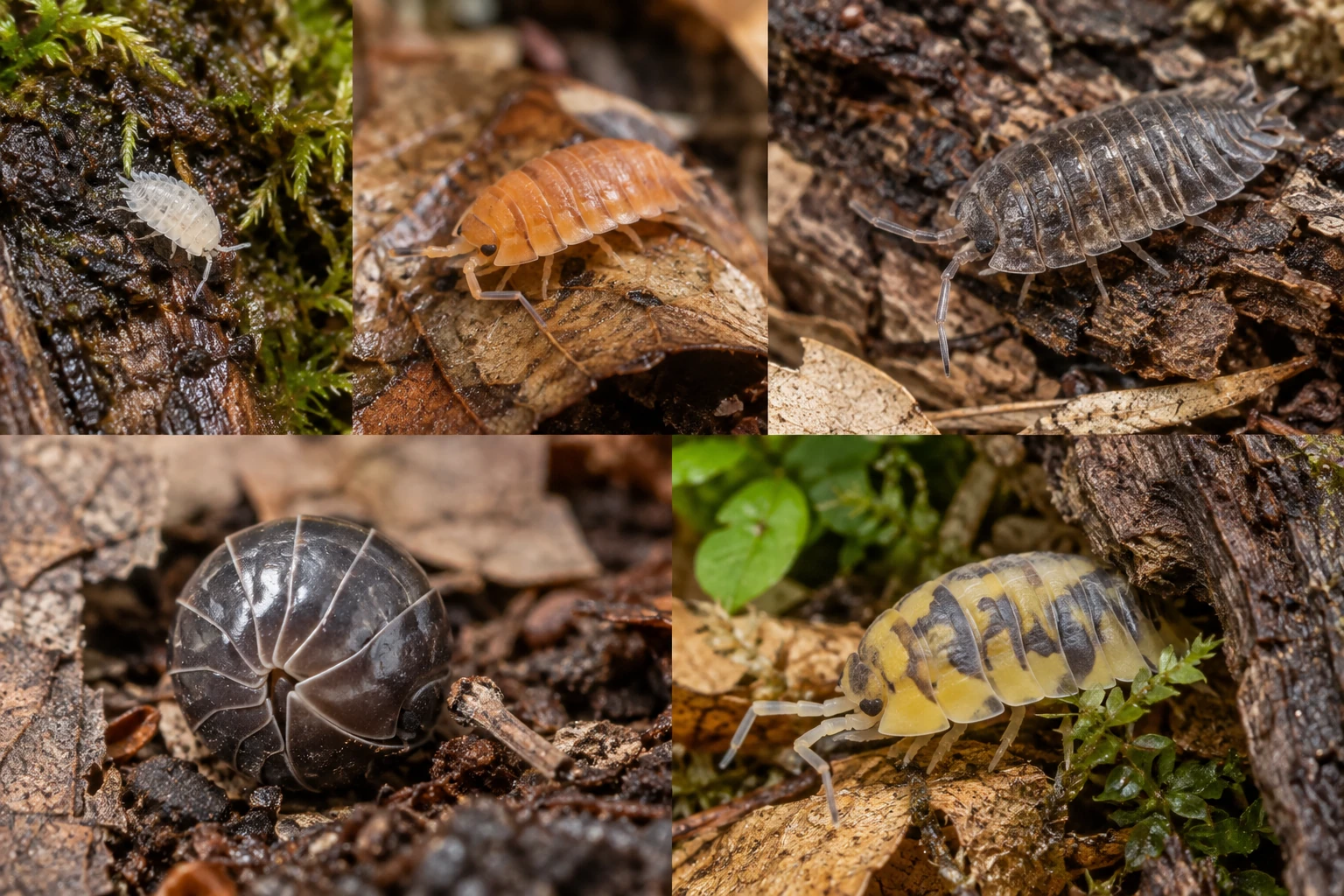
Match moisture, size, and behavior
The groups in this guide differ in care and colony behavior. Compare them against the habitat you want to keep.
Dwarf White: the tiny, safest-with-anything genus
Dwarf White isopods (Trichorhina tomentosa) are the smallest common genus in the hobby, with adults staying around 3 to 4 mm. They are all-female and parthenogenetic, meaning a single starter culture can multiply without needing to pair up, which makes them one of the fastest genera to build a colony. They prefer humid, moist substrate and burrow constantly rather than staying visible on the surface.
Dwarf Whites do not roll into a ball, they just flee and burrow when disturbed. That gentle, non-defensive behavior is exactly why they are considered safe with almost any tankmate, including small geckos and frogs, and why they are the default pick for a cleanup crew inside an occupied enclosure. See the full lineup on our beginner isopods page.
Powder Orange and Powder Blue: small, fast, drought-tolerant
Powder Orange and Powder Blue (Porcellionides pruinosus) are another small, fast-breeding genus, staying in a similar small size range to Dwarf Whites but standing out for how well they tolerate drier setups. They are quick and skittish on the surface rather than constant burrowers, and they rank among the more drought-tolerant genera you can keep.
Like Dwarf Whites, Powder isopods do not conglobate, they just scatter and hide. That combination of speed, drought tolerance, and mellow temperament makes them a top pick for occupied bioactive enclosures too. Browse the color lines on our Powder isopods page.
Porcellio: big, hardy, and the widest range
Porcellio is a large genus, and its members run noticeably bigger than Dwarf White or Powder, with the Dairy Cow (Porcellio laevis) reaching around half an inch and having a big appetite to match. As a genus, Porcellio is hardy, breeds fast, and tolerates a wider temperature and moisture swing than most other groups, which is part of why it is such a popular cleanup crew.
Porcellio does not conglobate, it flattens and moves fast when disturbed instead. The tradeoff with the bigger, protein-driven species like Dairy Cow is that they belong in animal-free display or feeder bins, not inside an enclosure with a live reptile or amphibian, since they have documented reports of nibbling a resting animal. See the full range on our Porcellio page.
Armadillidium: the true pillbugs that like it drier
Armadillidium is the genus most people picture when they hear pillbug or roly-poly, because it is one of only two genera here that can roll into a tight, sealed ball, a defense called conglobating. Armadillidium generally prefers a drier gradient than Cubaris and breeds at a moderate pace, slower than Dwarf White or Powder but steadier than most Cubaris.
Because they hold up well in a less humid bin and come in appealing solid colors and patterns, Armadillidium is a favorite for keepers who want an easy display species that still puts on a show when it rolls up. Shop the color morphs on our Armadillidium page.
Cubaris: the fancy, humid-loving, slower group
Cubaris is the genus most associated with the flashy, expensive designer morphs in the hobby, and it is also the slowest breeding of the five genera here, needing more patience than any other group. Cubaris, and the many Cubaris-type species sold under that name since it is something of a wastebasket taxon, generally want higher, steadier humidity than Armadillidium or Porcellio and do best on a true moisture gradient rather than a mostly dry bin.
Cubaris can conglobate, rolling into a ball like Armadillidium, and tends to move more slowly and stay hidden more than the faster cleanup genera. If you want a forgiving entry point into true Cubaris, Cubaris murina ("Little Sea") is the beginner-friendly pick. Browse the full range on our Cubaris page.
Which genus should you pick?
If you want the fastest, most forgiving cleanup crew, or you are stocking an enclosure with a live animal, start with Dwarf White or Powder Orange/Blue. Both breed quickly, tolerate beginner mistakes, and are mellow enough for occupied enclosures. If you want a display species that rolls into a ball and tolerates a drier bin, Armadillidium is the easy step up.
If you want the showiest colors and are willing to be patient with a slower-breeding, more humidity-sensitive genus, Cubaris is the payoff pick, while Porcellio, outside of Dairy Cow in occupied enclosures, is a great hardy, fast-breeding all-arounder for display or feeder bins. Not sure where to start? Our best beginner isopods guide walks through the easiest species by genus, or browse everything on the beginner isopods page.
Keep reading: Giant Canyon Isopod Care: Size, Humidity and Lifespan and Venezillo parvus Care: The Dalmatian Isopod Guide
Keep reading: Combo Pack or Single Species: Which Isopods Should You Buy? and Isopod Size Chart: How Big Each Species Really Gets
The Try-a-Genus Kit
A starter culture from the easy genera plus the substrate and calcium they share.
Frequently asked questions
What is the easiest isopod genus for beginners?
Dwarf White (Trichorhina tomentosa) and Powder Orange/Blue (Porcellionides pruinosus) are the easiest genera for beginners. Both are small, fast-breeding, tolerant of beginner mistakes, and mellow enough to use as cleanup crew in an occupied enclosure.
Which isopod genera can roll into a ball?
Only Armadillidium and Cubaris conglobate, or roll into a tight ball, as a defense. Dwarf White, Powder, and Porcellio cannot roll up; they flatten out or flee and burrow instead when disturbed.
What is the biggest isopod genus you can keep?
Porcellio runs the largest of the common hobby genera, with the Dairy Cow (Porcellio laevis) reaching around half an inch. Dwarf White and Powder stay much smaller, while Armadillidium and Cubaris fall in between depending on species.
Which isopod genus needs the most humidity?
Cubaris generally wants the highest, steadiest humidity of the common genera and does best on a true moisture gradient. Armadillidium and Porcellio tend to tolerate drier setups better, while Dwarf White and Powder fall in the middle to drier range.
Are all isopods the same temperature requirement?
Yes, essentially. Dwarf White, Powder, Porcellio and Armadillidium all do well at normal room temperature, about 65 to 78 F, with no supplemental heat needed in most homes. Cubaris are the exception worth knowing: published care sheets for them start warmer and disagree with each other, so aim Cubaris at the upper half of that band, roughly the low to mid 70s, rather than the bottom.
Which isopod genus is safe with a pet reptile or amphibian?
Dwarf White and Powder Orange/Blue are the safest genera for an occupied enclosure. Avoid large, protein-driven Porcellio like the Dairy Cow inside an enclosure with a live animal, since they have documented reports of nibbling a resting reptile.
Keep learning
Have a care question? Ask our community.
Join Reptile Keepers USA, our free Facebook group for reptile, amphibian and invert keepers. Share your setups, get care help and swap feeder tips.
Join the free group