Feeder Insect Size Chart
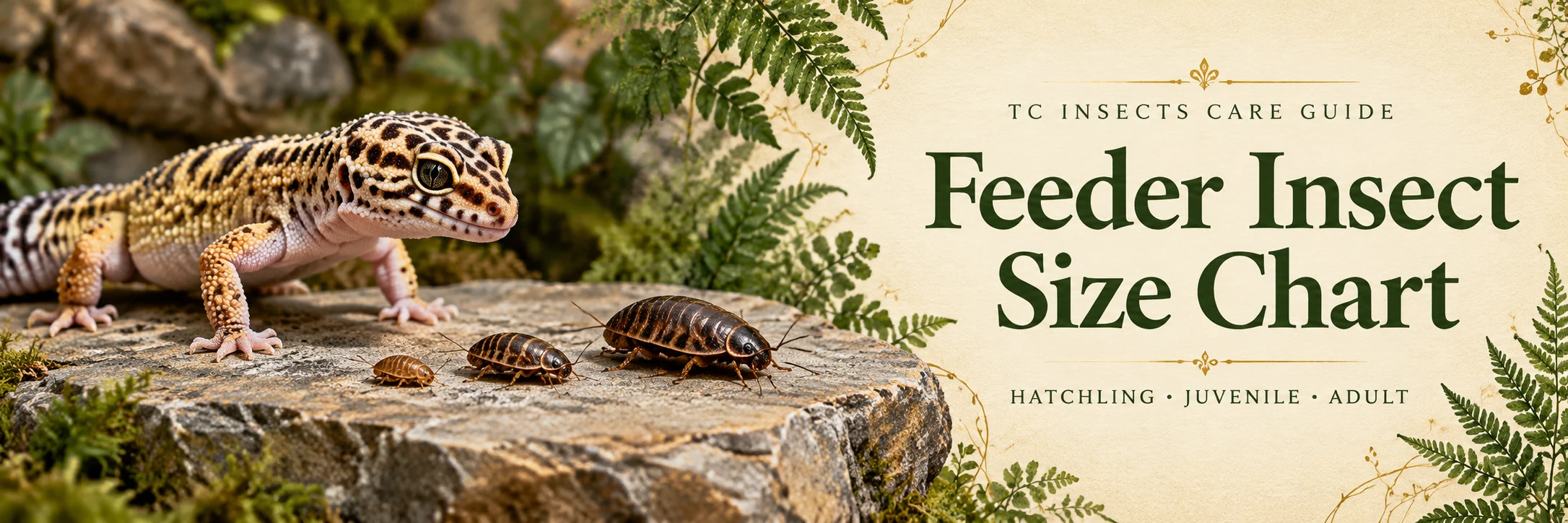
The safe rule of thumb is simple: a feeder insect should never be wider than the space between your reptile's eyes, so the real question is not one fixed size, it is what your animal's current life stage calls for. A hatchling gecko needs something close to pinhead-small, a juvenile bearded dragon needs a size increase every few weeks as it grows, and a full-grown monitor or tegu can handle an adult-size Blaptica dubia roach without any trouble. What makes this page different from a typical size chart is the organization: life-stage-first from hatchling to adult, matched to TC's own graduated dubia and mealworm sizes, with its own tier for bigger lizards like monitors and tegus and a separate body-width sizing rule for the handful of insect-eating snake species that take feeders at all. For the companion chart organized by feeder type instead, mealworms, dubia, superworms, hornworms, and BSFL side by side, see our complete feeder size chart; come back here when you want sizing built around your animal's life stage first.
Prey should never be wider than the space between your reptile's eyes
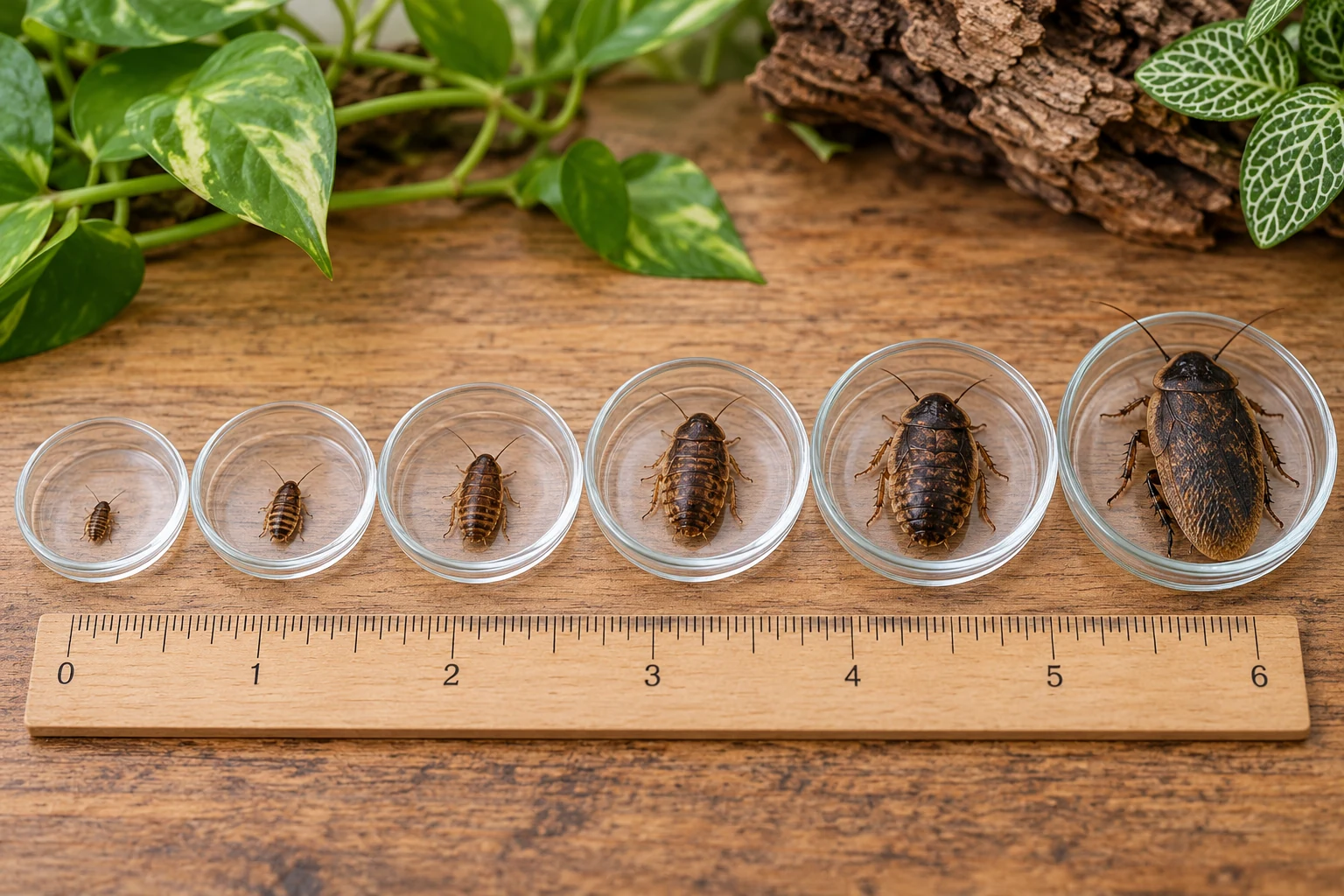
Extra small dubia or mini mealworms fit best
Large or adult dubia and large mealworms fit grown reptiles
The gape rule, explained simply
The rule keepers actually use is the eye-gap rule: a feeder insect should be no wider than the space between your reptile's eyes. It is a simple visual check you can do at a glance, it scales naturally as your animal grows, and it works across geckos, dragons, and most other insectivorous lizards.
The reason it matters is real, not theoretical. Prey that is too wide is the leading cause of choking and impaction in captive insectivores, and it catches growing juveniles the most, since keepers often forget to size up as often as the animal is actually growing. When you are between two sizes, go smaller. A slightly small feeder is a non-issue. A slightly large one is a genuine risk.
Hatchling and juvenile geckos
Hatchling geckos, leopard geckos and crested geckos included, do best on extra small dubia at around 1/4 inch or mini mealworms in that same range. Their gape is tiny and their appetite is modest, so smaller, more frequent feedings beat one oversized meal.
As a juvenile gecko grows, size up to small dubia around 1/2 inch. Geckos grow quickly in their first year, so plan on checking feeder size against the animal every few weeks rather than assuming last month's size still fits.

Juvenile to adult bearded dragons
Bearded dragons follow the same hatchling-to-adult size progression as the geckos above, small feeders early on, stepped up every few weeks, and large or adult-size dubia once fully grown. Rather than repeat that table here, see our full feeder guide by age for bearded dragons for the exact size at every stage.
The one distinction worth adding here: size and portion are two different questions. Getting the size right prevents choking and impaction, but an adult dragon still does not need an unlimited quantity at every feeding, which the age-specific guide above covers as a diet question in its own right.
Larger lizards: monitors, tegus, and big adult dragons
Larger, more established lizards, big monitors, tegus, and the largest adult bearded dragons, can typically handle adult-size dubia at around 1 1/4 inch and up, the largest single roach size we carry. These bigger feeders are efficient, since one large roach covers more nutrition per feeding than several small ones.
Even with a big lizard, the eye-gap rule still applies to the individual animal in front of you, not just the general species reputation. A large species with a smaller-than-average individual, or one recovering from illness or a fast, should still be sized down until it is clearly back to its normal self.
A quick note on snakes
Most pet snakes eat rodents, not insects, so the eye-gap rule above is really a lizard and gecko guideline first. The handful of smaller, more insectivorous snake species that do take feeder insects generally follow a body-width rule instead, roughly matching the feeder's width to the snake's own body width at its thickest point, rather than the eye-gap measurement used for lizards.
If you keep one of these less common insect-eating snakes, treat this as a starting point and confirm sizing against species-specific guidance, since this is a smaller, more specialized category than the gecko and dragon sizing above.
When you are between sizes, or keeping mixed reptiles
If you are ever unsure between two sizes, choose the smaller one. It is a far smaller mistake than sizing up, and most reptiles are perfectly happy eating a few extra small feeders rather than one that is a stretch to swallow. Our feeder insect mix packs bundle a few sizes and species together, which is a genuinely useful way to test what fits before committing to a full bag of one size.
One regional note: TC does not ship dubia or red runner roaches to Florida. Florida keepers sizing feeders for their reptiles should lean on BSFL, mealworms, superworms, hornworms, or silkworms instead, all of which come in a similar range of graduated sizes.
Match the Size to Your Reptile
Graduated sizes from hatchling to adult, plus a mixed pack if you are not sure yet.
Frequently Asked Questions
Written by the TC INSECTS breeding team · Porter, Texas · Live Arrival Guarantee on every order
Have a care question? Ask our community.
Join Reptile Keepers USA, our free Facebook group for reptile, amphibian and invert keepers. Share your setups, get care help and swap feeder tips.
Join the free group