Stop Mites From Spreading Between Feeder Bins: The Shelf Routine
Grain mites do not fly between feeder bins. They travel by contact, on a shared scoop, a hand, or two containers pushed together, and they can also arrive already inside a fresh bag of bran. If one bin in your mealworm or superworm rack has a bloom, the rest of the shelf is only at risk through the routes you actually control. This guide covers the shelf, not the bin: a dedicated scoop for every container, a quarantine shelf for anything new, real spacing, and the order to work in when you feed a whole rack.
Shared scoops, hands, and touching containers move them between bins
A quarantine shelf for new bran or cultures covers roughly one mite generation
Hygiene and separation are the fix; pesticides near feeders your pets eat are not
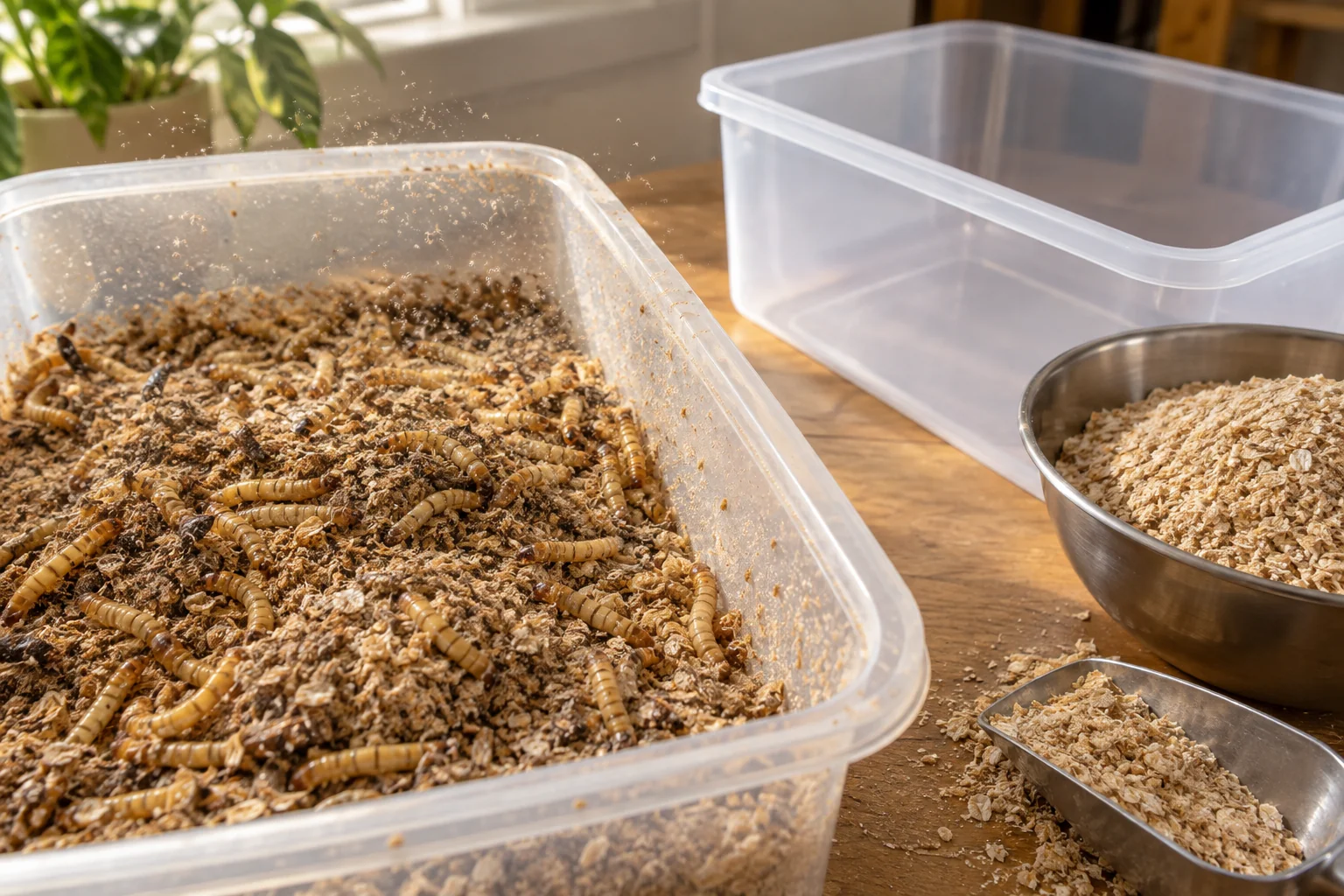
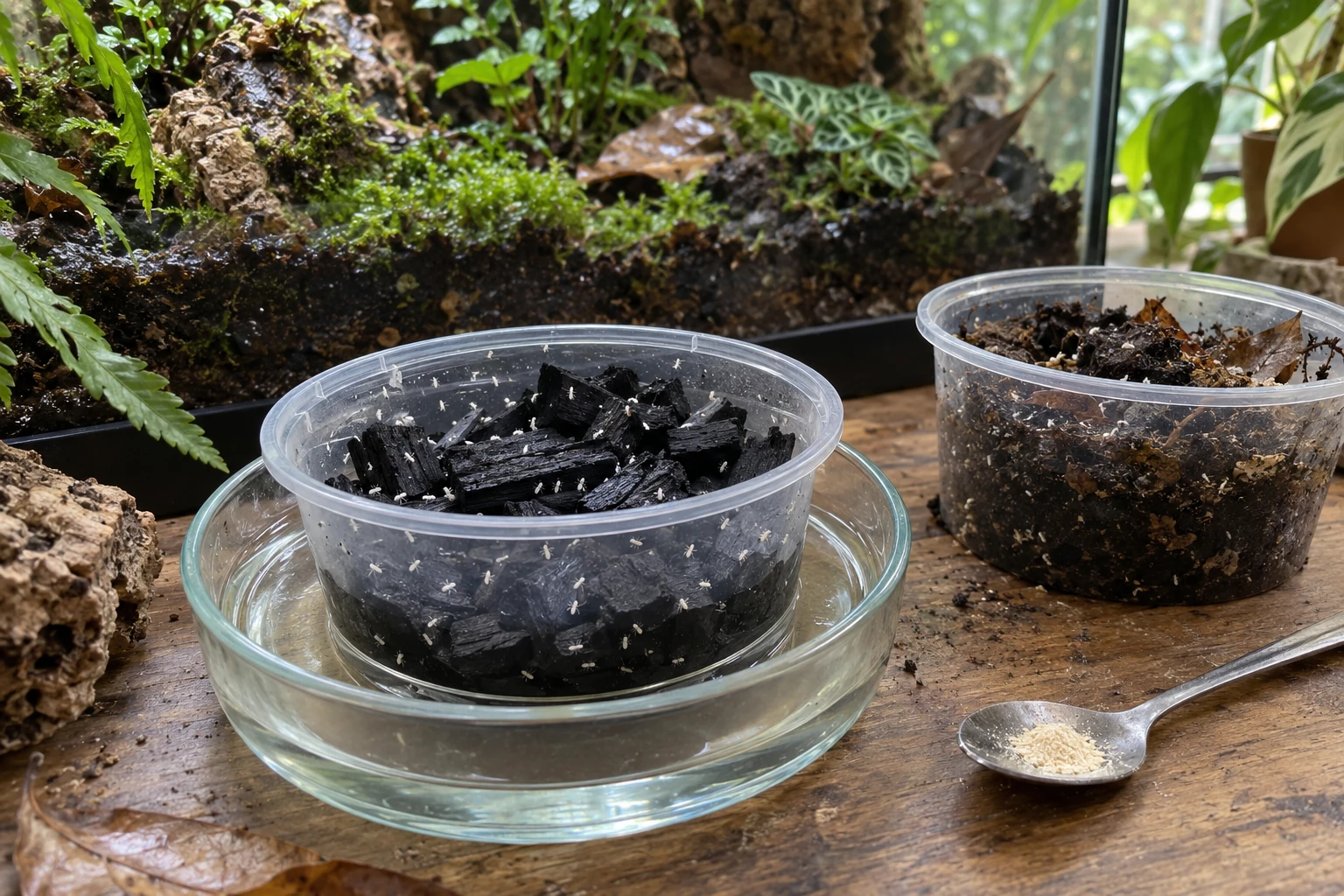
How Mites Actually Cross From One Bin to Another
Grain mites (Acarus siro and close relatives) have no wings at any life stage, so they cannot fly from one container to the next the way a fruit fly can. Research on how they get around points to a short list of real routes: they crawl short distances toward food and moisture, they hitch a ride on another small creature or a tool that touches them, and a lot of infestations simply arrive already inside a bag of grain product rather than developing on their own. Wind plays a role in industrial grain storage, but on a home feeder shelf it is a minor factor next to the routes you actually touch every day.
That is good news, because every real route runs through something you control. Our own guide to clearing a bran mite bloom confirms the same pattern from the keeper side: mites spread fastest when bins share a scoop, a sieve, or shelf space, or sit close enough to wander between them. Stop the sharing and the touching, and a bloom in one container mostly stays in that container.
Give Every Bin Its Own Scoop
A scoop, sieve, or spoon that moves from an infested bin to a clean one carries mites on the food residue clinging to it, and it takes only a few seconds to do the damage. The fix costs almost nothing: keep a dedicated scoop living inside each bin, even a cheap plastic spoon, so nothing ever needs to travel between containers. If you would rather share one tool across a small rack, wash it in hot, soapy water and let it dry completely between bins instead of just wiping it on a sleeve.
The same logic covers hands. Feed your bins in a fixed order rather than jumping around at random, and rinse your hands between an established bin and a new or suspect one. It feels like overkill for a two bin setup and starts paying for itself the moment you are running five or six.
Freeze or Bake Every New Bag of Bran Before It Joins the Shelf
Bulk grain products can carry mite eggs before they ever reach your house, so treat every new bag as if it might already be seeded, not just the ones you already suspect. Our worm bran guide covers the exact freezer and oven settings we use to knock down an active bloom; apply that same freeze-or-bake step to a sealed, unopened bag before it ever joins the shelf, and it works as prevention instead of cleanup.
Write the treatment date on the bag once you have frozen or baked it, since a scoop of untreated bran mixed back in later undoes the whole step. Treat it as a routine intake habit for every new bag, not a one time fix reserved for the bag that is already giving you trouble.
Give Bins Real Space, Not Just Lids
A sealed lid stops mites from walking out the top, but it does nothing if two containers are touching side by side or stacked with lids pressed together. Leave a real gap between bins on the shelf, and never stack one container directly on top of another. A vented lid on every bin also matters here: it lets humidity escape instead of condensing back down, and a damp bin is exactly the environment a mite population needs to take off.
New arrivals deserve their own shelf, not just their own space on the existing one. Set aside a separate quarantine shelf, even a single closet shelf across the room, for anything new: a fresh culture, a colony from a different source, or bran you have not frozen yet. About two weeks is a reasonable watch period. Published research on grain mites shows a population can complete an entire generation, egg to adult, in under two weeks under warm, humid conditions, so two weeks on its own gives a hidden light infestation enough time to become visible before it ever reaches the rest of your rack.
Feed Clean Bins First, Suspect Bins Last
The order you work in during a feeding round matters as much as anything on this list. Start with your newest, most recently quarantined bins, move on to your established, healthy colonies, and save any bin you already suspect or know has mites for dead last. Wash your hands or swap tools before that final bin, not after it.
This single habit, feed clean to dirty, catches the risk that scoop discipline and spacing alone can miss: the mites that are already on your hands from touching a bin earlier in the round. It costs nothing but the order you already work in. If a bin does bloom despite all of this, our isopod and springtail mite guides cover those two ecosystems, and our bran mite guide above covers the clearance steps for a mealworm or superworm bin itself; none of them replace the shelf level habits here, they pick up once a bloom has already started.
Where Mites Actually Get In
The Bin Biosecurity Kit
Fresh bran, a dedicated cup and lid, and a clean restart, so one bin's mites never reach the rest of your shelf.
Frequently Asked Questions
Written by the TC INSECTS breeding team · Porter, Texas · Live Arrival Guarantee on every order
Have a care question? Ask our community.
Join Reptile Keepers USA, our free Facebook group for reptile, amphibian and invert keepers. Share your setups, get care help and swap feeder tips.
Join the free group