Springtail Food Comparison Chart
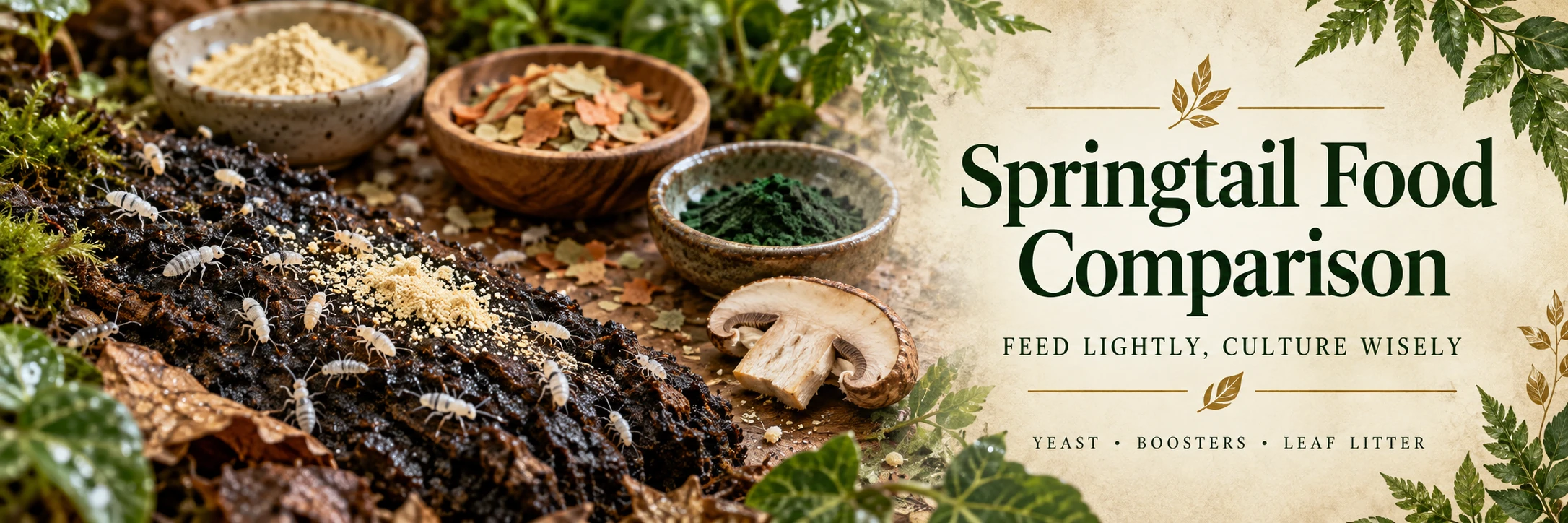
A very light sprinkle of yeast is the house staple, less is always more
Springtails graze the mold and microbes that grow on the food, not the food itself
If the last feeding is still visible on the next check, do not feed again yet
Choose a food and keep portions light
The best everyday springtail food is a light sprinkle of baker's or brewer's yeast, and while alternatives like spirulina, fish flake, and mushroom bits also work, each one trades off how fast it grows biofilm, how much protein it adds, and how much mold and mess it risks. The golden rule for all of them is the same: feed a tiny amount every 2 to 4 days, and skip the next feeding entirely if the last one is still visible.
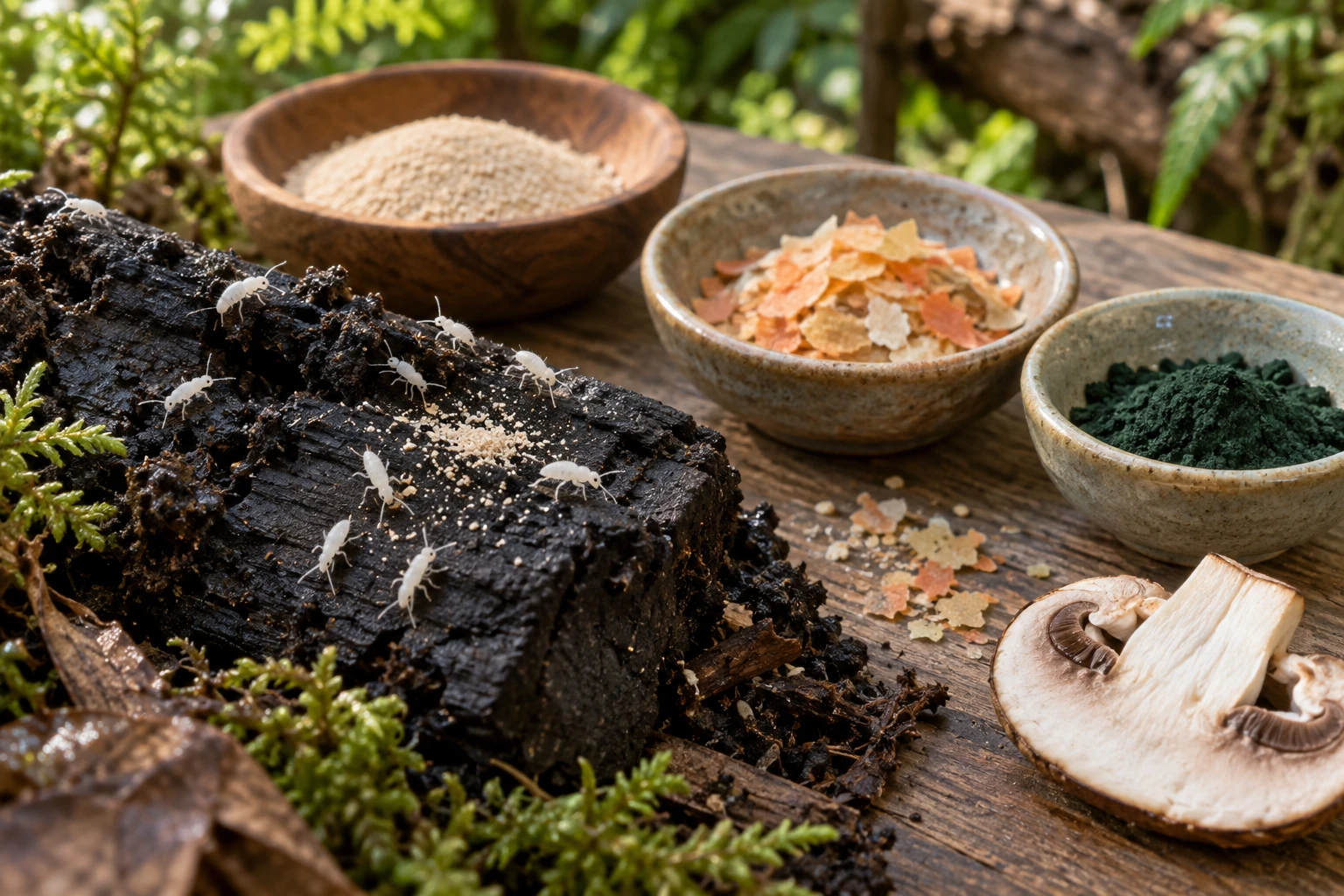
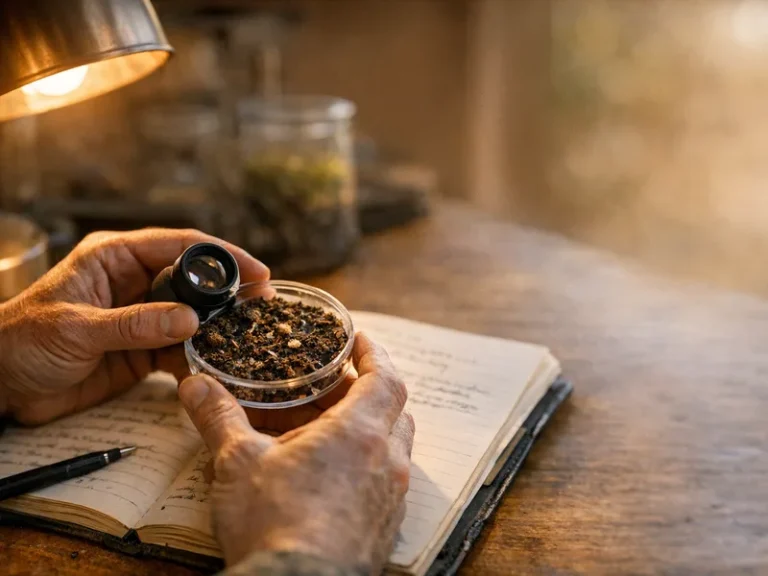
Watch what remains before feeding again
A light feeding gives the culture time to graze. Check for leftovers before adding more.
The golden rule before you pick a food
Whatever you feed a springtail culture, the amount matters more than the food itself. Springtails (order Collembola) do not actually eat most foods directly, they eat the biofilm, the thin layer of mold, fungus, and bacteria that grows on the food as it sits in a humid culture. That is the whole reason a tiny pinch works better than a generous scoop.
Overfeeding is the number one cause of a mold or mite crash, so the rule in our own culture room is simple: feed a very light sprinkle every 2 to 4 days, and if the last feeding is still sitting there untouched, skip it. Every food below follows that same rule, just with different trade-offs.
Yeast: the reliable everyday staple
Baker's or brewer's yeast is what we feed most cultures most of the time, and for good reason. It grows a biofilm fast, springtails take to it quickly, and a light sprinkle goes a long way without fouling the culture.
The only real downside is that it is easy to overdo, since a heavier hand than needed can still bloom into mold if the culture is not eating it fast enough. Stick to a genuinely light dusting and you get fast, low-mess results almost every time.
Spirulina, fish flake, and mushroom: the protein boosters
Spirulina or algae powder is a nutritious option that grows biofilm a bit slower than yeast, so it lasts longer in the culture without immediately molding over, which makes it a good rotation food. A tiny amount of fish flake adds more protein and springtails take to it well, but it also carries a higher risk of odor and mold if you feed too much, so use less of it than you would yeast.
Small mushroom slices or bits are a natural option that works the same way, growing a slow, manageable biofilm, but use genuinely tiny amounts since a big chunk of mushroom can mold faster than it gets eaten. All three are fine as an occasional swap, not a full replacement for a yeast-based routine.
Rice, grain, and leaf litter: the slow and free options
A few grains of rice or other plain grain is a classic springtail food, but it molds fast if you overfeed it, more so than yeast, so treat it as an occasional extra rather than a staple. Decaying leaf litter is the opposite end of the spectrum: it is free, breaks down slowly, and is essentially always safe since it is exactly the kind of natural debris springtails already graze on in a bioactive setup.
Leaf litter will not fuel the same fast population boom that a yeast feeding schedule does, so it works best as a background food source in an enclosure rather than the main feed in a dedicated production culture.
Matching food to a booming culture vs a small quiet one
A dense, fast-growing production culture can handle a slightly more generous feeding schedule since there are more mouths to clear the biofilm before it turns to mold. A small, quiet, or newly split culture needs the opposite: feed less and less often until the population catches up, since there is not enough grazing pressure yet to keep a heavier feeding from going bad.
Whichever food you choose, check our springtail culture guide for the full setup and our post on whether springtails eat mold for more on how the biofilm relationship actually works. If you would rather skip the guesswork and start with a proven setup, we sell live springtail cultures already established and feeding well, and our live springtail care guide covers ongoing upkeep.
Keep reading: Mites in Your Springtail Culture: How to Get Rid of Them
The Springtail Feeding Kit
A healthy culture and the foods that keep it producing.
Frequently asked questions
What is the best food for springtails?
A light sprinkle of baker's or brewer's yeast every 2 to 4 days is the most reliable everyday food. It grows biofilm quickly, springtails take to it fast, and a genuinely small amount keeps mold risk low.
Do springtails eat the food or the mold that grows on it?
Springtails eat the biofilm, the mold, fungus, and bacteria that grow on food as it sits in a humid culture, not the food itself in most cases. That is why a tiny amount of food goes further than a large one, it just needs to grow enough biofilm to graze.
How often should I feed a springtail culture?
Feed a very light sprinkle every 2 to 4 days, and skip the next feeding if the last one is still visible. Less is more, and overfeeding is the top cause of mold and mite crashes in an otherwise healthy culture.
Can I feed springtails fish flakes?
Yes, a tiny amount of fish flake works and adds protein, but it carries more odor and mold risk than yeast if you feed too much. Use less than you would with a yeast feeding and watch closely for any smell or mold building up.
What happens if I overfeed a springtail culture?
Overfeeding is the number one cause of mold and mite crashes in a springtail culture. Uneaten food sits, molds over, and can foul the whole container, so the rule is always to skip a feeding if the last one is still visible rather than adding more.
Is spirulina good for springtails?
Yes, spirulina or algae powder is a nutritious option that grows biofilm a bit more slowly than yeast, which makes it a good rotation food that is less likely to mold over quickly. Feed it in the same tiny amounts as any other springtail food.
Keep learning
Have a care question? Ask our community.
Join Reptile Keepers USA, our free Facebook group for reptile, amphibian and invert keepers. Share your setups, get care help and swap feeder tips.
Join the free group