Why Springtail Scientific Names Keep Changing
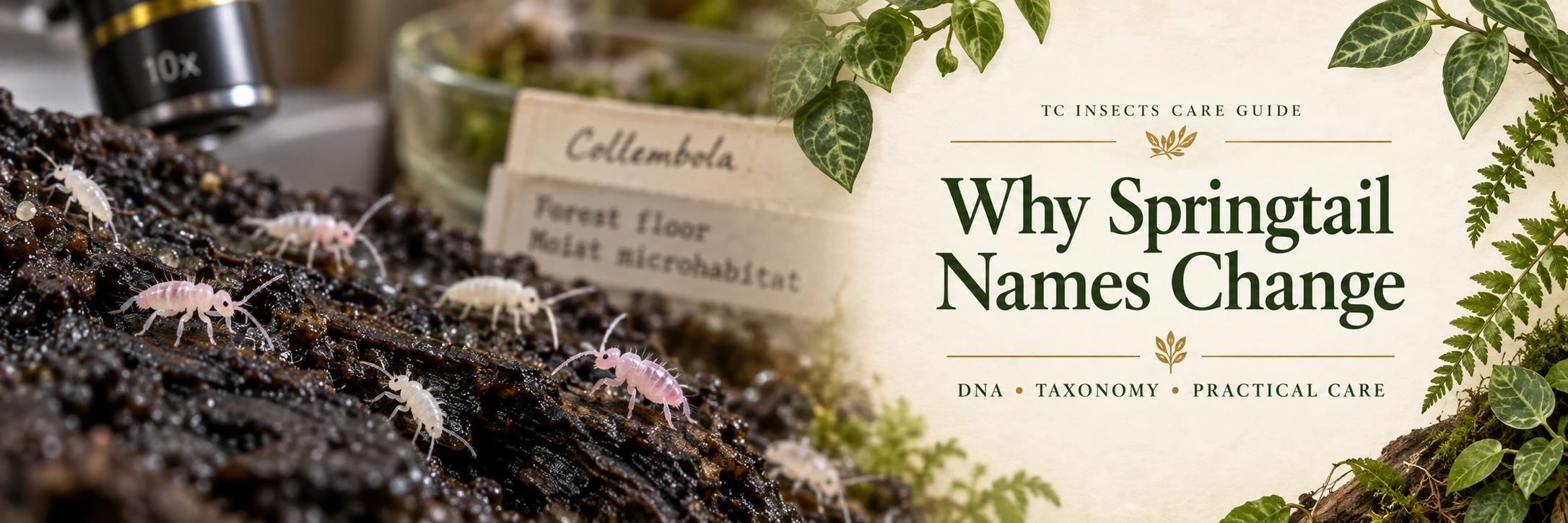
Collembola is a large, still growing group, and hobby names lag well behind the formal science
Between strains sold under a single springtail species name, far below what normally counts as the same species
Springtails are a separate hexapod group, close relatives of insects but classified outside the insect class
New names, the same practical care
Springtail names keep changing because DNA sequencing keeps revealing that animals sold under one hobby name are actually several different species, so sellers relabel stock as the science catches up, while the common trade names stay stable even when the Latin does not. This is not sloppiness on any one seller's part, it is just what happens when a group of 1 to 6 millimeter animals gets studied with genetic tools instead of a magnifying glass. Here is the plain English version, with real examples, and what it actually means for you as a buyer.
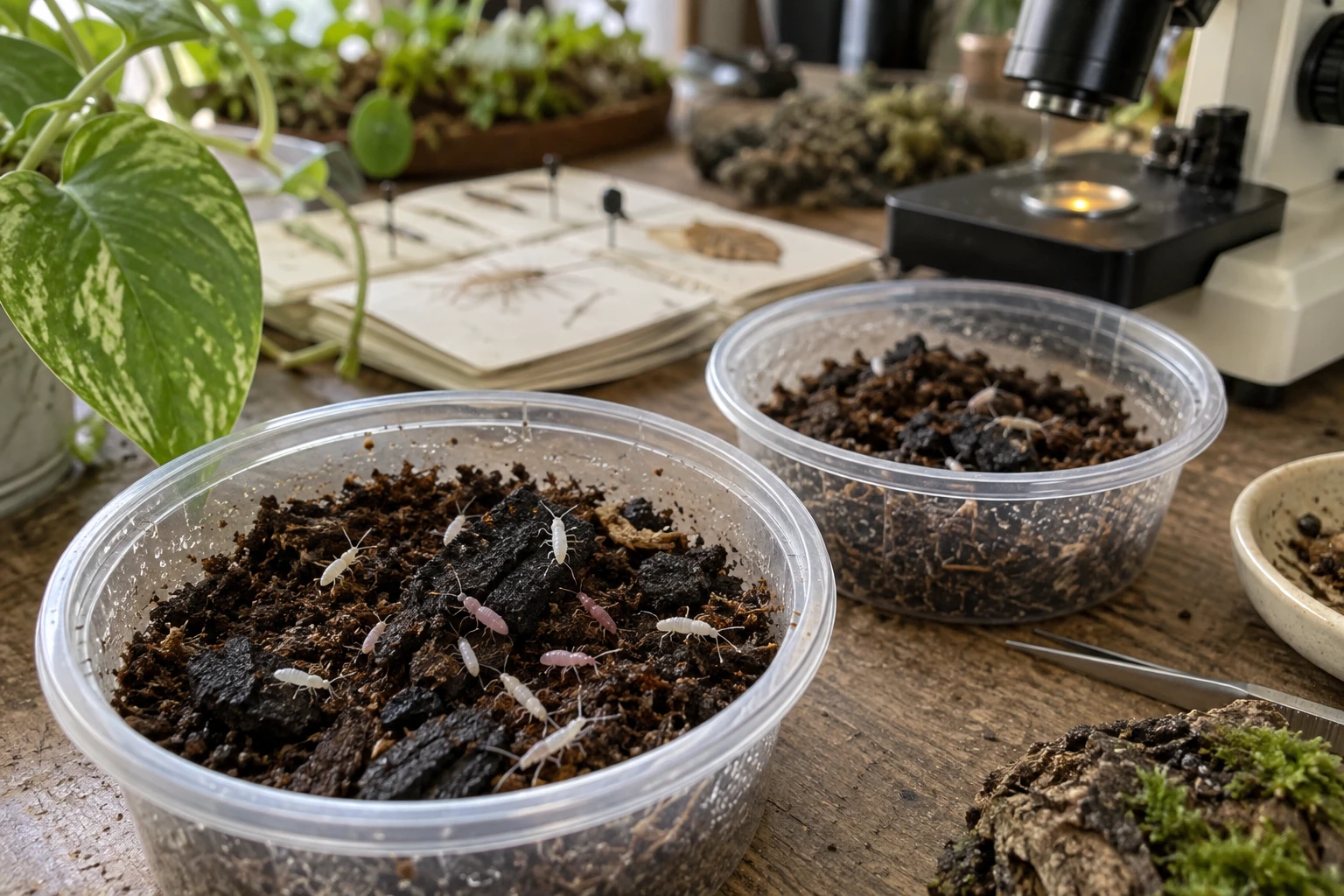
Choose cultures by their real-world needs
Compare size, hardiness and temperature preferences while keeping the scientific and trade names in context.
Why the names keep moving
Long before DNA sequencing was affordable or common, hobby trade names for springtails were assigned mostly by appearance, size, and color under a hand lens or a cheap microscope. That works fine for telling a white springtail from a pink one at a glance, but it is a poor tool for actually separating true species in a group of animals that are typically only 1 to 6 millimeters long and share a lot of the same basic body plan.
As genetic sequencing has become cheaper and more common in the last couple of decades, researchers have started running DNA comparisons on animals that look identical to the eye and finding that what was sold and studied as one species is sometimes genuinely several. When that happens, the scientific name changes to reflect the new understanding, but the hobby trade name people already know usually stays the same, because renaming a product line every time a paper comes out is not practical for sellers or buyers.
A real example: the white springtail split
The temperate white springtail (Folsomia candida) is the most cultured springtail in the hobby, and it is also a good example of this exact problem. One genetic study comparing standard DNA barcodes across different lab and culture strains, all sold and studied under that same species name, found a pairwise match as low as roughly 81 percent between some strains, well below what normally counts as the same species. A separate genomic study estimated that two of those strains diverged from each other around 10 million years ago, long enough for them to now be treated as distinct species by researchers.
We want to be careful here and not overstate this: it does not mean the culture you bought is secretly a different animal than advertised, or that care changes. It means that under a microscope everyone agreed it was one species, and DNA sequencing showed the hidden diversity was much bigger than anyone assumed. That is the pattern behind a lot of these name changes across the hobby, not just this one species.
Pink, white, and the 'tropical' mixup
Another real example lives in the tropical springtails. What is commonly sold today as the tropical pink springtail (Coecobrya cf. tenebricosa) spent years in the hobby under older names like Sinella curviseta before a closer look reclassified it. To make things more confusing, some sellers have historically called this same general group 'tropical white,' a name that can get mixed up with the temperate white springtail from our first example, even though the two are not closely related and have different temperature preferences.
The 'cf.' you sometimes see in that scientific name, short for the Latin conferatur, is itself an honest hedge researchers use to say 'this appears to match this species, but we are not fully certain yet.' It is a good example of how even the current best guess in this hobby is openly provisional, not a settled final answer. See our temperate vs tropical springtail guide for how to tell these groups apart by care needs rather than name alone.
Wait, springtails are not insects?
Here is a fact that surprises a lot of keepers: springtails are not technically insects. They belong to Collembola, a separate group of hexapods, six legged animals, that is closely related to insects but is classified outside the formal insect class because of differences in their mouthparts and other internal features that go back to how the group is defined.
It is a large group too, with more than 8,000 described species found worldwide in soil and leaf litter, and new species are still being described regularly. That scale is part of why the naming keeps shifting: taxonomists are working through a genuinely huge, understudied group, and the springtails you culture at home are a tiny visible slice of it.
What this actually means for you as a buyer
The practical takeaway is simple: buy and choose springtails based on described performance, size, and temperature tolerance rather than chasing an exact Latin name, since names on any seller's site, ours included, can lag behind the newest research by months or years. A culture correctly described as a hardy, cool tolerant, white springtail is going to behave that way regardless of which specific name a future paper eventually settles on.
On our farm, we treat husbandry as the constant regardless of what a species is called this year. Temperature, humidity, and food drive care, not the current scientific name. If you want the full care rundown once you have picked a species, our springtail culture care guide and live springtail care guide cover setup from there, and our springtails for sale page has current stock.
Keep reading: Isopod Trade Names vs Scientific Names: What Sellers Really Mean
The Proven Culture Kit
A springtail culture chosen for real world performance, not for whichever Latin name is current.
Frequently asked questions
Why do springtail scientific names keep changing?
Because DNA sequencing keeps revealing that animals sold under one hobby name are sometimes several genetically distinct species. As that research catches up, the scientific name changes, though the common trade name people already use usually stays the same.
Are springtails actually insects?
No. Springtails belong to Collembola, a separate hexapod group that is closely related to insects but classified outside the formal insect class. For how they compare to other backyard hexapods, see our isopods vs pillbugs vs roly polies guide.
What is the difference between tropical pink and tropical white springtails?
Tropical pink springtail is the current preferred name for the species covered above, which has gone by older names like Sinella curviseta in the hobby. It is sometimes confused with 'tropical white,' which can also get mixed up with the unrelated temperate white springtail.
If a springtail's scientific name changes, do I have a different animal than I bought?
No. A name change reflects updated science about how to classify an animal that has not itself changed. The care needs and behavior of the springtail you have stay the same.
How many species of springtail are there?
More than 8,000 described species of Collembola exist worldwide, and new ones are still being described. Only a small handful are commonly cultured in the hobby.
Should I choose springtails by scientific name or common name?
Common trade names and a seller's description of temperature tolerance, size, and hardiness are more reliable for choosing a culture than chasing an exact Latin name, since scientific names can lag behind the newest research.
Keep learning
Have a care question? Ask our community.
Join Reptile Keepers USA, our free Facebook group for reptile, amphibian and invert keepers. Share your setups, get care help and swap feeder tips.
Join the free group